Artwork
Evening Glow at Seta (Seta sekisho), from the series "Fashionable Eight Views of Omi (Furyu Omi hakkei)"
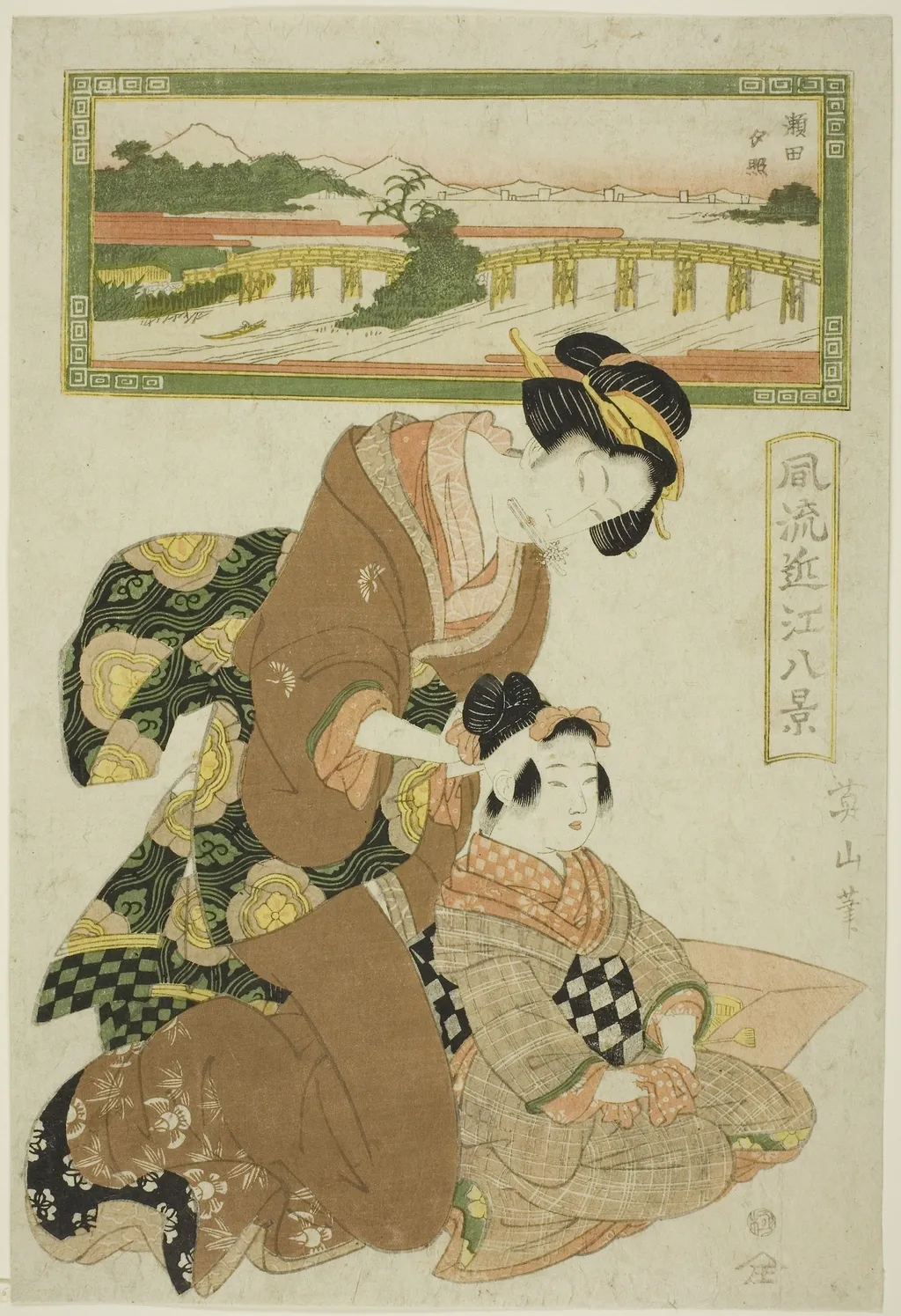
Evening Glow at Seta (Seta sekisho), from the series "Fashionable Eight Views of Omi (Furyu Omi hakkei)" is an unspecified painting by the Ukiyo-e artist Kikukawa Eizan. It dates from 1815 and is held in the collection of the Art Institute of Chicago.
About this work
Overview
Evening Glow at Seta, created in 1815 by the Edo‑period artist Kikukawa Eizan, belongs to his series titled Fashionable Eight Views of Omi. The work is a hand‑colored woodblock print now in the collection of the Art Institute of Chicago. It depicts a tranquil twilight scene at the historic Seta checkpoint, rendered in a delicate palette that emphasizes the soft illumination of the setting sun.
Subject & Meaning
The composition centers on two women seated on the floor. The figure on the left leans toward her companion, both attired in richly patterned kimono—one in brown with green‑yellow motifs, the other in tan with a black‑white check. Their poised posture and attentive gazes suggest a moment of private conversation, while the surrounding landscape hints at the broader cultural significance of the checkpoint as a place of transition.
Technique & Style
Eizan employed the traditional ukiyo‑e woodblock method, combining line work with subtle color washes. The background is rendered in a light beige field edged by a green band that frames a distant bridge and rolling mountains. Fine brushstrokes delineate the textures of the kimono fabrics and hairstyles, showcasing the artist’s skill in balancing detailed figuration with atmospheric landscape.
History & Provenance
Printed shortly after the series’ inception in the early nineteenth century, the piece entered the Western market during the late Meiji period, eventually being acquired by the Art Institute of Chicago. Its presence in the museum’s collection reflects the broader 19th‑century interest in Japanese prints among European and American collectors.
Context
The series draws on the classic “Eight Views” motif, adapting it to the Omi region’s famed scenic spots. By focusing on fashionable attire within a historic setting, Eizan merges contemporary urban culture with traditional landscape conventions, offering viewers a glimpse of Edo‑era leisure and the evolving tastes of the merchant class.
Artist & collection

Artist
Kikukawa Eizan was a designer of ukiyo-e style Japanese woodblock prints. He first studied with his father, Eiji, a minor painter of the Kanō school, and subsequently with Suzuki Nanrei (1775–1844), of the Shijō…

 Untitled
 Untitled
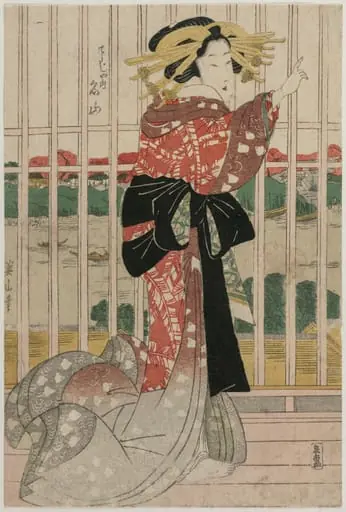 The Courtesan Meizan of the Chojiya on a Balcony Overlooking the Sumida River
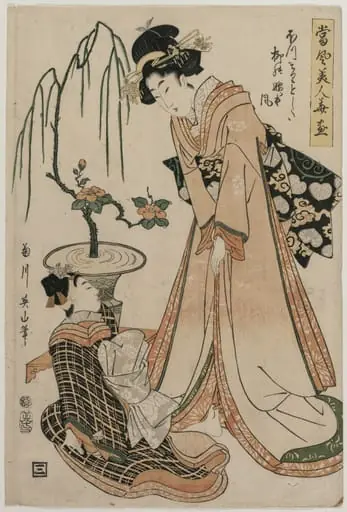 A Lady-in-Waiting with Waist as Slender as a Willow from the series Flowers and Modern Beauties
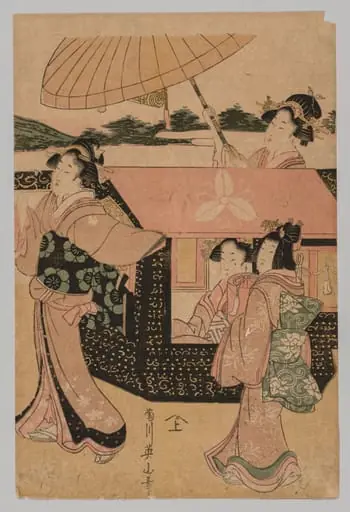 No Title
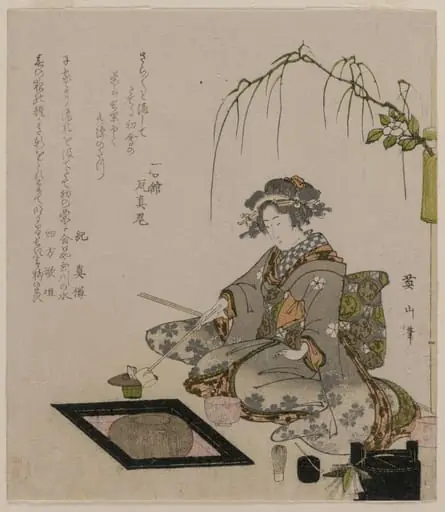 Woman Performing the Tea Ceremony
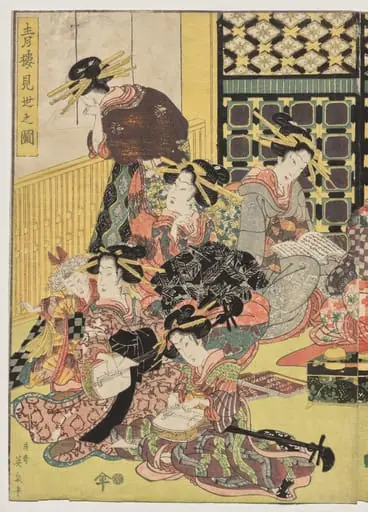 A Picture of the Viewing in the Pleasure Quarters
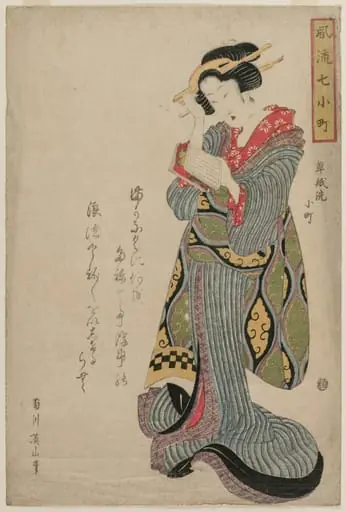 Komachi Washes the Book (from the series Seven Elegant Episodes from the Life of the Poetess Ono no Komachi)
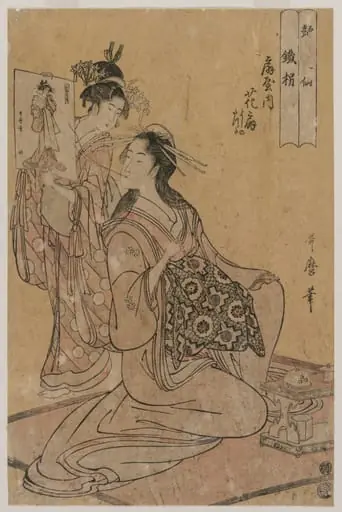 The Courtesan Hana-ogi of Ogiya as the Sennin Tekkai (from the series Eight Immortals of Sensuality)
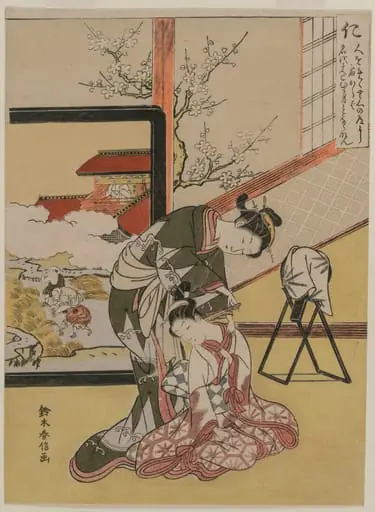 Benevolence, from The Five Virtues
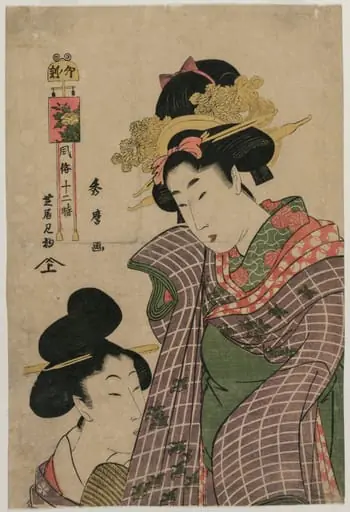 Going to the Kabuki Theater in the Hour of the Hare (From the Series The Twelve Hours with Daily Events)
 Chinese Embroidery (from the series Instructive Patterns for Women's Handicraft)
 Haze on a Clear Day at Stone Bridge (From the series Eight Elegant Views of Chanted Accompanimnets for Kabuki Plays)
 Oshichi and Kichisaburo (from the series Music on the Theme of Constancy in Love)
 Woman Measuring a Man's Gown (from the series Twelve Occupations of Women)
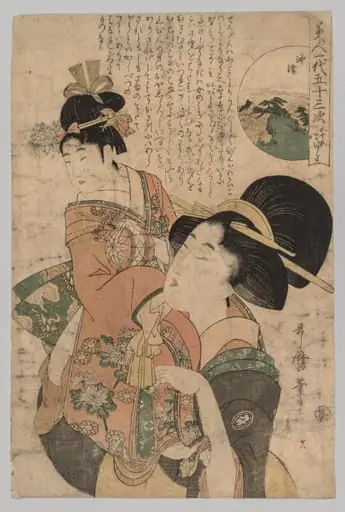 Nakatsu, from the series Fifty-three Stations in the Life of a Beauty
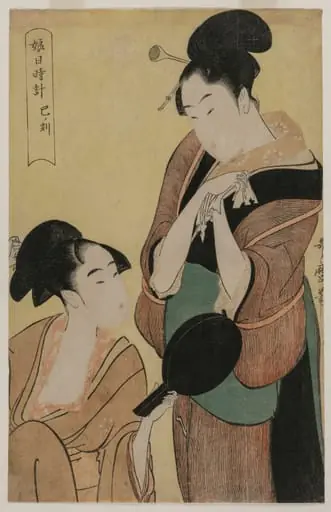 The Hour of the Snake (from the series A Clock for Young Women)