Artwork
Benevolence, from The Five Virtues
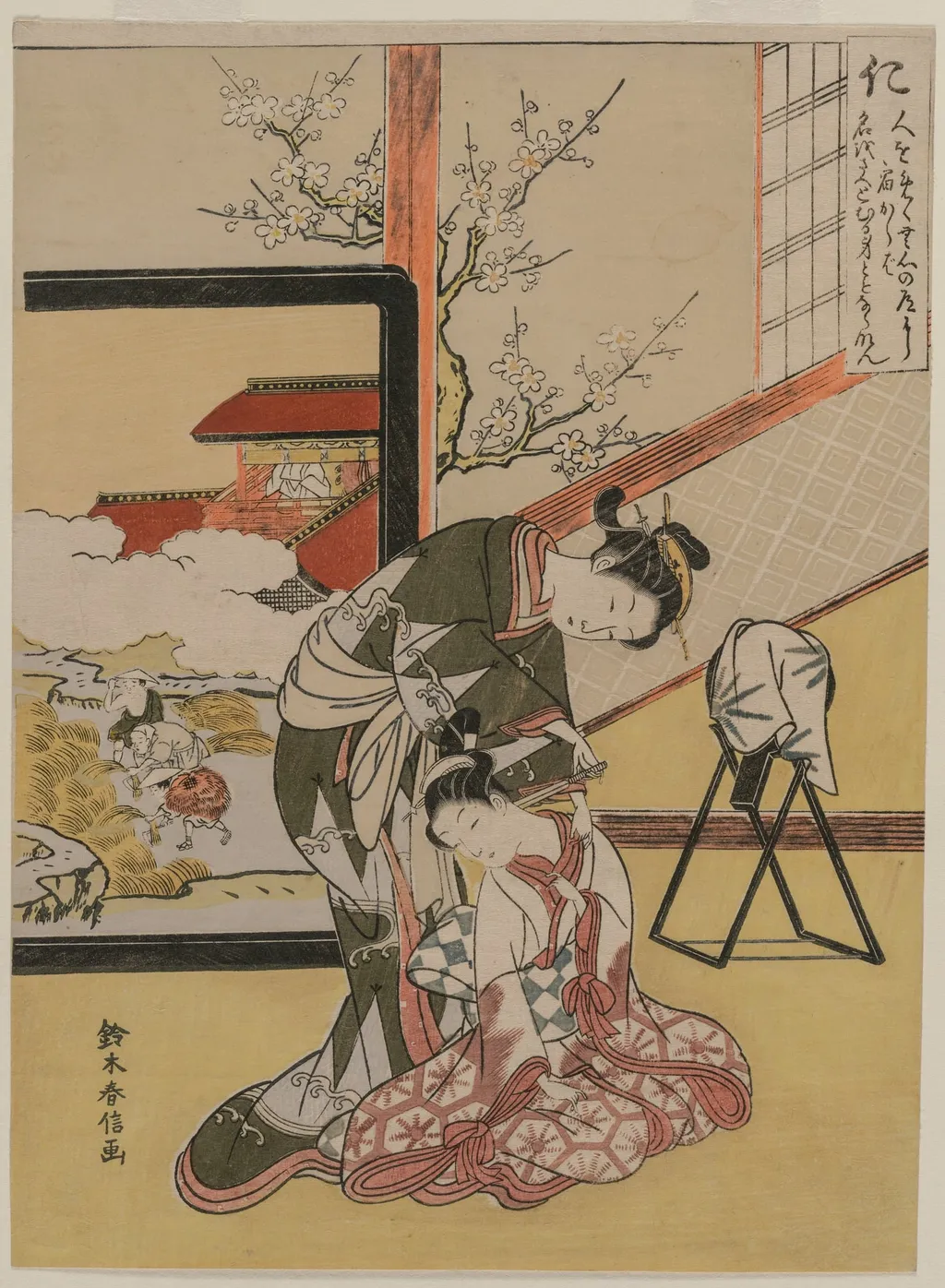
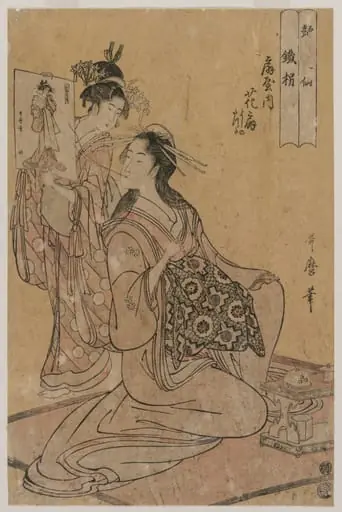
Benevolence, from The Five Virtues is a print by the Romanticist artist Suzuki Harunobu. It dates from 1767 and is held in the collection of the Cleveland Museum of Art. Benevolence is a print from The Five Virtues series, illustrating the cardinal virtues of Confucianism through everyday scenes.
About this work
This painting shows a courtesan shaving her attendant's neck.
The scene is part of a series depicting the cardinal virtues of Confucianism. It's interesting that the artist chose a simple act of kindness to show benevolence, and the poem at the top adds a layer of depth to the image.
You can learn more about this style by looking at the work of artist: Suzuki Harunobu (Japanese, 1724–1770).
Overview
Benevolence is a print from The Five Virtues series, illustrating the cardinal virtues of Confucianism through everyday scenes.
Subject & Meaning
The print depicts a courtesan demonstrating benevolence by shaving her attendant’s neck, highlighting kindness to others. An accompanying poem emphasizes humility and selflessness, encouraging suppression of personal recognition for altruistic actions.
Technique & Style
While specific techniques used in 'Benevolence' are not detailed here, the work is associated with a style comparable to that of Suzuki Harunobu, suggesting meticulous woodblock printing and nuanced composition, characteristic of 18th-century Japanese ukiyo-e.
History & Provenance
Provenance details for 'Benevolence' are not provided, though its creation context aligns with 18th-century Japan, given its thematic and stylistic references.
Context
Part of a broader series, 'Benevolence' is complemented by prints representing righteousness, decorum, knowledge, and fidelity, collectively promoting Confucian ethical values.
Legacy
The legacy of 'Benevolence' reflects the enduring influence of Confucian virtues in Japanese art, with the simple, poignant scene contributing to a lasting representation of benevolence in cultural heritage.
Artist & collection

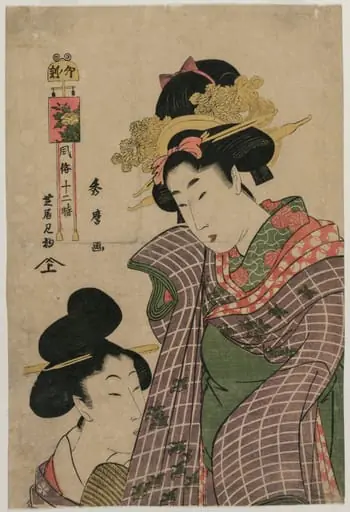 Going to the Kabuki Theater in the Hour of the Hare (From the Series The Twelve Hours with Daily Events)
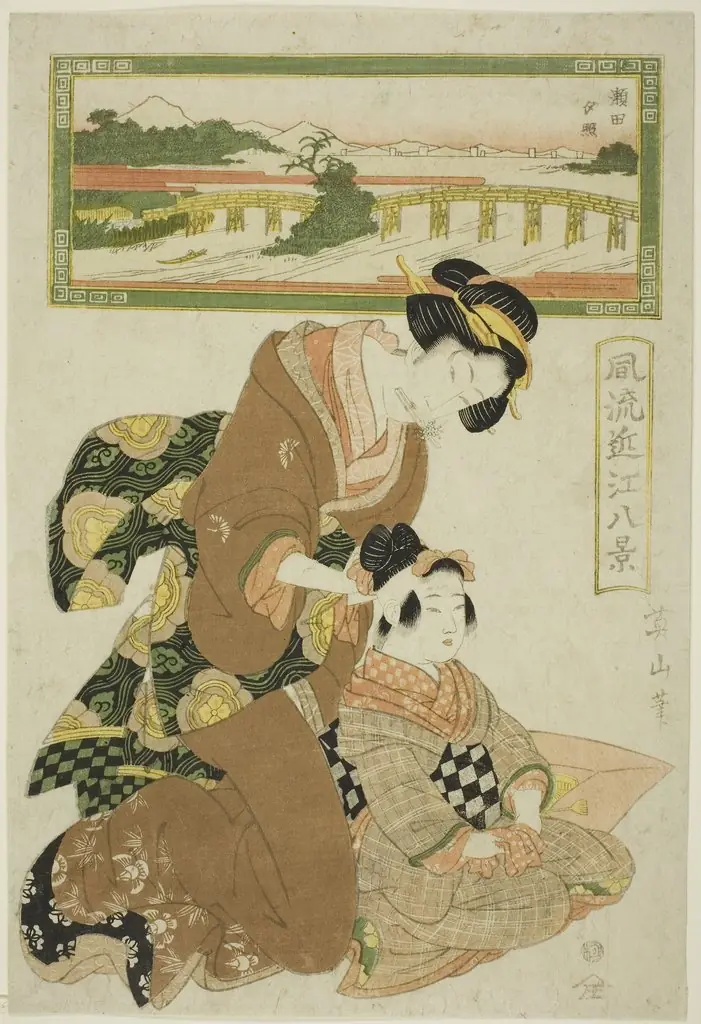 Evening Glow at Seta (Seta sekisho), from the series "Fashionable Eight Views of Omi (Furyu Omi hakkei)"
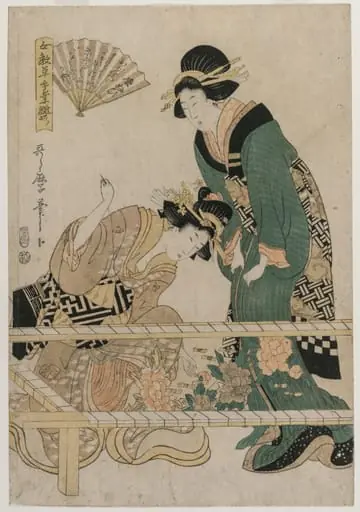 Chinese Embroidery (from the series Instructive Patterns for Women's Handicraft)
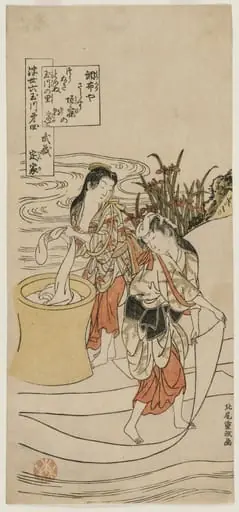 The Chofu Tama River in Musashi Province (from the series The Six Tama Rivers of the Floating World)
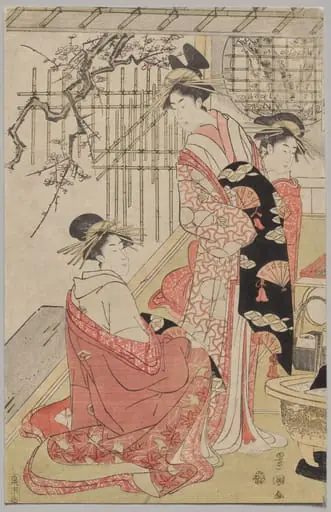 Courtesans of the Ōgiya on a Spring Outing
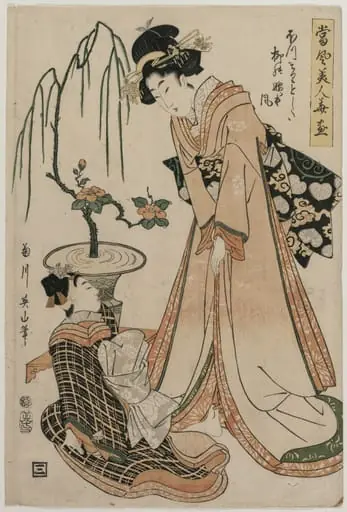 A Lady-in-Waiting with Waist as Slender as a Willow from the series Flowers and Modern Beauties
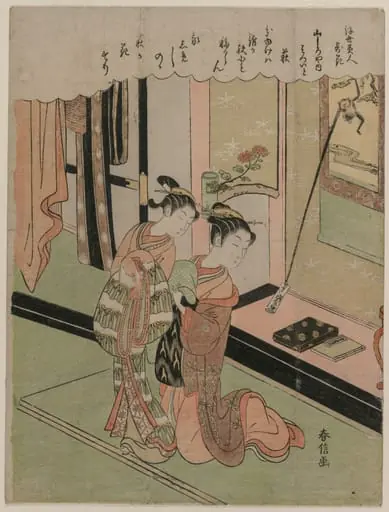 Hatsuito of the Yamashiroya Likened to Bush Clover, from Beauties of the Floating World Compared to Flowers
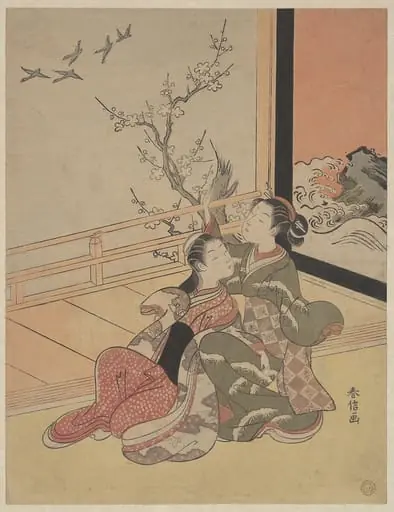 Untitled
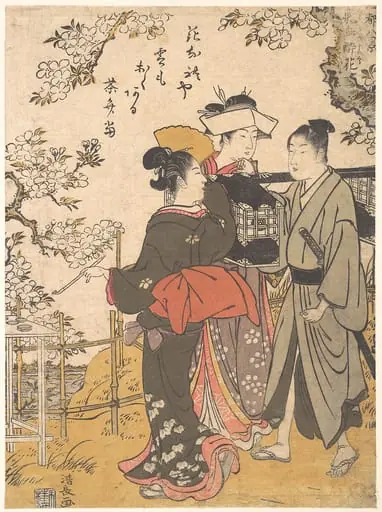 Untitled
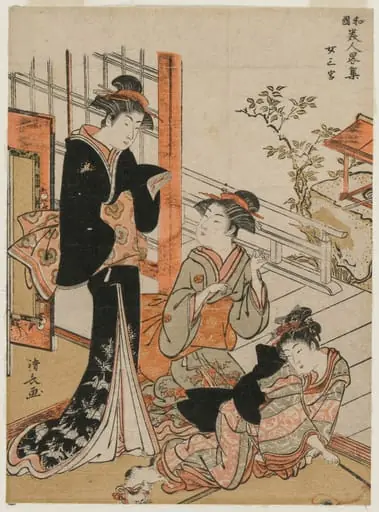 Three Women (from the series A Brief Collection of Japanese Beauties)
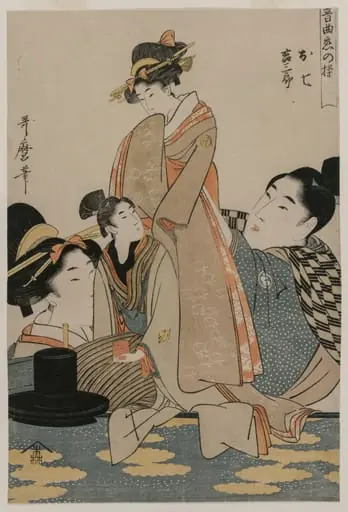 Oshichi and Kichisaburo (from the series Music on the Theme of Constancy in Love)
 The Courtesan Hana-ogi of Ogiya as the Sennin Tekkai (from the series Eight Immortals of Sensuality)