Artwork
Untitled
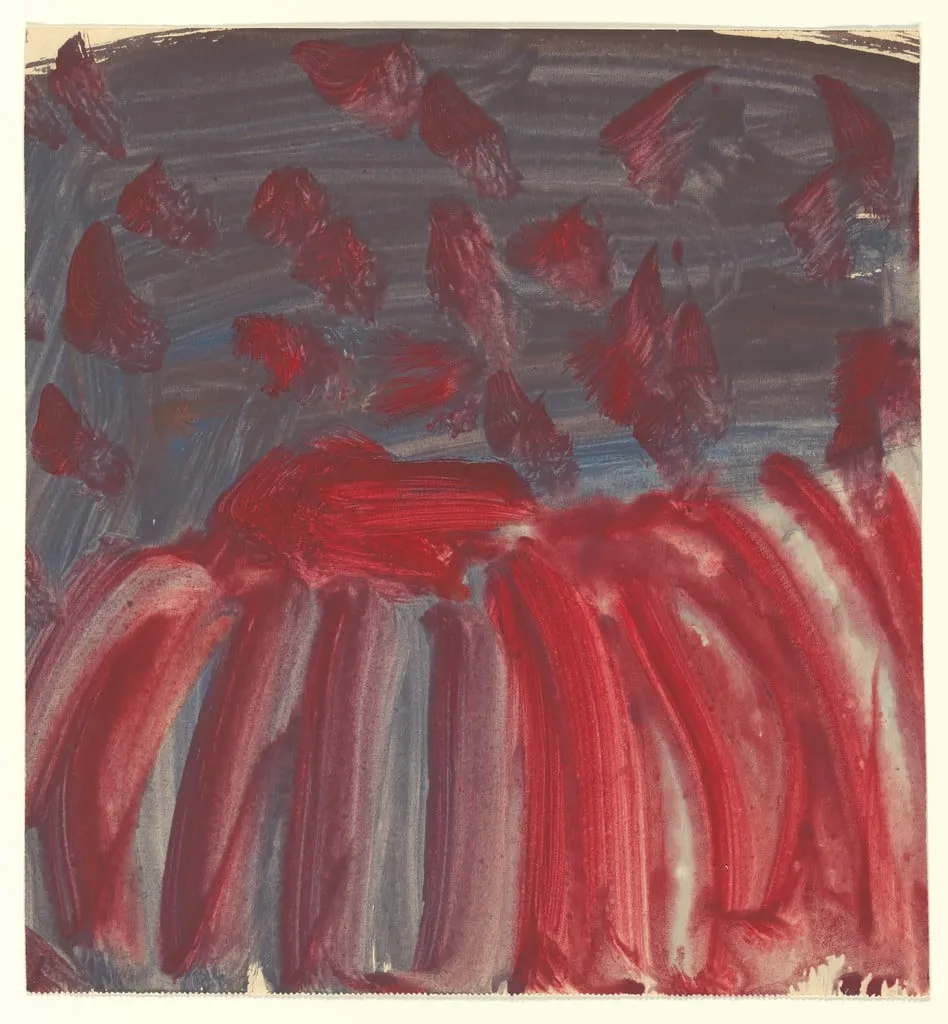
Untitled is a drawing by Kimber Smith. It dates from 1959 and is held in the collection of the Museum of Modern Art.
About this work
Overview
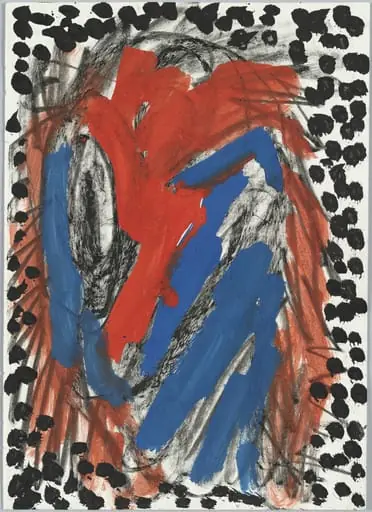
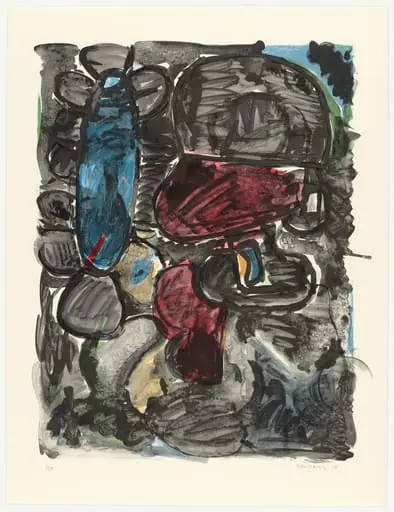
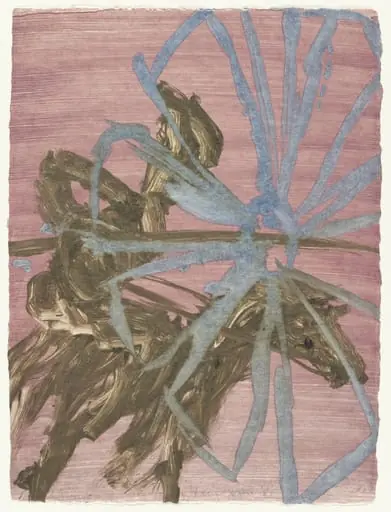
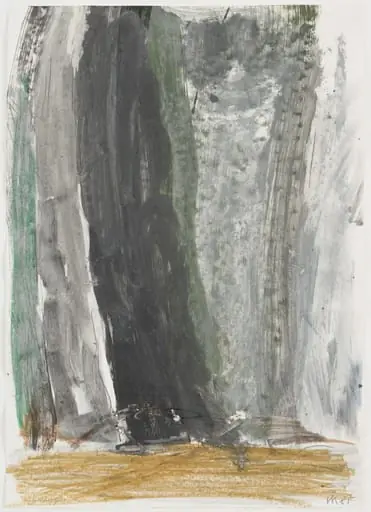
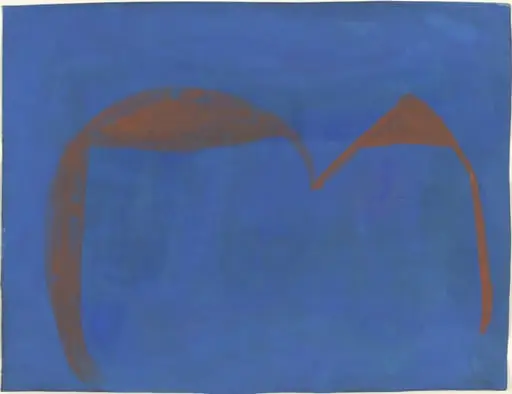
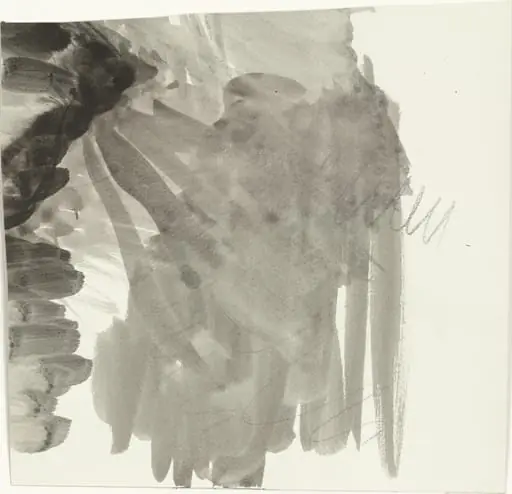
Created in 1959 by Kimber Smith, this drawing is executed in dry pigment and aqueous medium on paper. It resides in the collection of The Museum of Modern Art. The work presents a non-representational composition dominated by red and dark blue, with a tactile surface that emphasizes materiality over refinement. Its unfinished appearance suggests a focus on process rather than final form.
Subject & Meaning
The piece avoids figurative or symbolic content, instead engaging with pure abstraction. The large, undulating forms and scattered red marks do not denote specific objects but evoke movement and residue. The work invites attention to the physical act of mark-making, suggesting emotional or rhythmic energy rather than narrative meaning.
Technique & Style
Smith applied pigment in a coarse, layered manner, resulting in a dry, granular texture. The red areas appear thick and uneven, as if pressed or slapped onto the surface, creating a sense of immediacy. The aqueous medium likely bound the pigment minimally, preserving its powdery quality. This approach prioritizes material presence over polished finish.
History & Provenance
The work entered The Museum of Modern Art’s collection following its creation in 1959. No public record indicates prior ownership or exhibition history before its acquisition. Its inclusion in the museum’s holdings reflects an institutional interest in postwar American drawings that emphasized material experimentation over traditional composition.
Context
Made during a period when many American artists were exploring abstraction and process, Smith’s work aligns with contemporaneous interests in gesture and medium specificity. While not part of a named movement, its raw aesthetic resonates with tendencies in Abstract Expressionist drawing, particularly the valorization of spontaneity and physicality in mark-making.
Legacy
The drawing contributes to a broader understanding of mid-century American drawing as a site of material inquiry. Its unpolished surface and emphasis on process have influenced later artists interested in the physicality of media. Though not widely reproduced, it remains a quiet example of how drawing could challenge conventions of finish and representation.
Artist & collection