Artwork
H Beard Print Collection
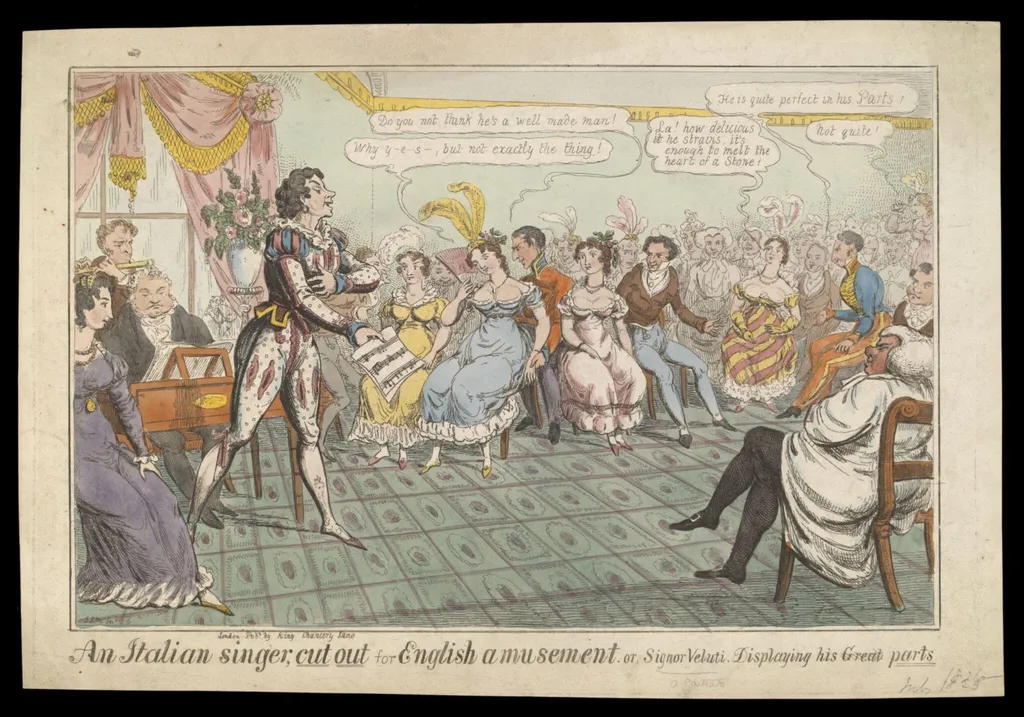
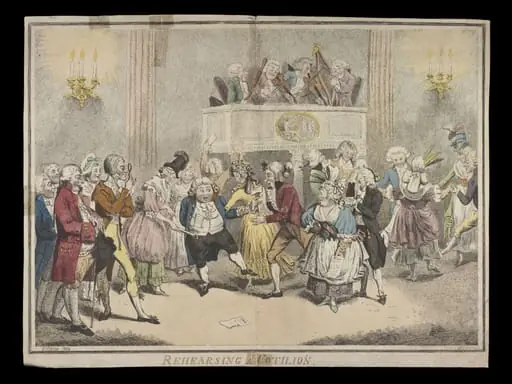
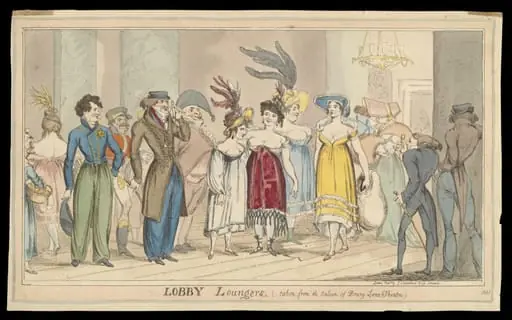
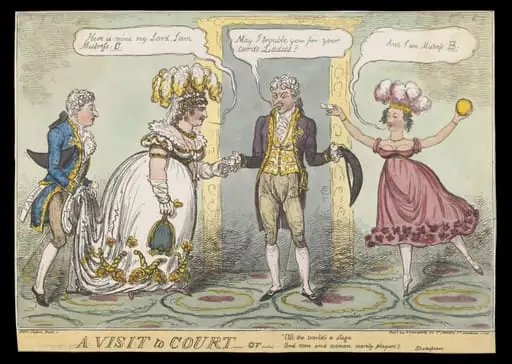
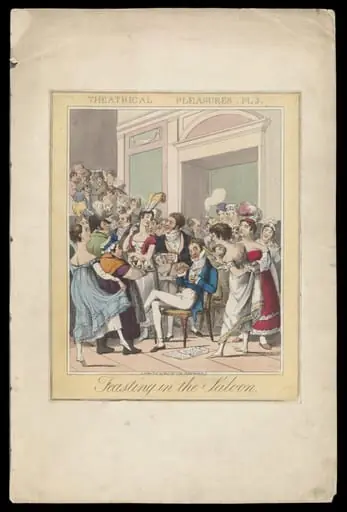
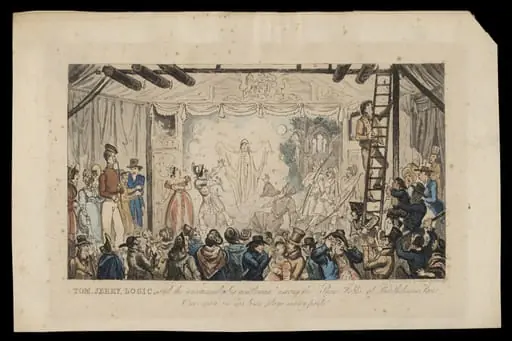
H Beard Print Collection is a print by E. King. It dates from 1850 and is held in the collection of the Victoria and Albert Museum. This satirical print from early 19th-century London depicts the Italian castrato singer Signor Veluti performing on stage.
About this work
Overview
The scene captures a moment of theatrical spectacle, framed by an audience whose expressions and gestures underscore the ridicule directed at him.
This satirical print from early 19th-century London depicts the Italian castrato singer Signor Veluti performing on stage. Created by publisher E. King, the image mocks his public persona by juxtaposing his celebrated vocal artistry with gossip about his romantic liaisons. The scene captures a moment of theatrical spectacle, framed by an audience whose expressions and gestures underscore the ridicule directed at him.
Subject & Meaning
Veluti, renowned for his soprano voice, was a figure of fascination and scorn in London. The print exploits the contradiction between his revered musical status and rumors of his personal conduct, particularly his relationships with women. The audience’s mocking reactions highlight societal discomfort with his identity as a castrato, while the sheet music on stage anchors his professional legitimacy amid the satire.
Technique & Style
Executed as a hand-colored print, the work employs caricature and exaggerated facial expressions to amplify its comedic critique. Linework is crisp, with attention to costume and gesture to distinguish characters. The composition directs focus to Veluti at center stage, while the surrounding crowd forms a framing device that reinforces the theme of public judgment and performative spectacle.
History & Provenance
Produced around 1820, the print emerged during Veluti’s brief but notable London engagements. It was distributed by E. King, a known publisher of satirical prints. The work entered the H. Beard Collection, now held at the Victoria and Albert Museum, where it remains part of a broader archive documenting Regency-era popular culture and the intersection of music, gender, and public opinion.
Context
In early 1800s Britain, castrati were increasingly viewed as relics of a foreign, outdated tradition. Veluti’s popularity clashed with moral anxieties about gender norms and sexuality. Satirical prints like this reflected broader cultural tensions, using humor to navigate the discomfort surrounding bodies that defied conventional categories, while also capitalizing on public fascination with celebrity.
Legacy
The print endures as a document of how public figures were scrutinized through visual satire. It illustrates the role of print media in shaping perceptions of artists, particularly those whose identities challenged social norms. Today, it contributes to scholarly understanding of gender, performance, and the mechanics of public ridicule in the Romantic era.
Artist & collection
Artist
Printmaker in early 19th-century Britain, E. King turned crisp lines into social scenes and portraits that circulated widely. Look for the *H Beard Print Collection*—a set of finely detailed etchings that show…