Artwork
Noa Noa: Noa Noa (Fragrant Scent)
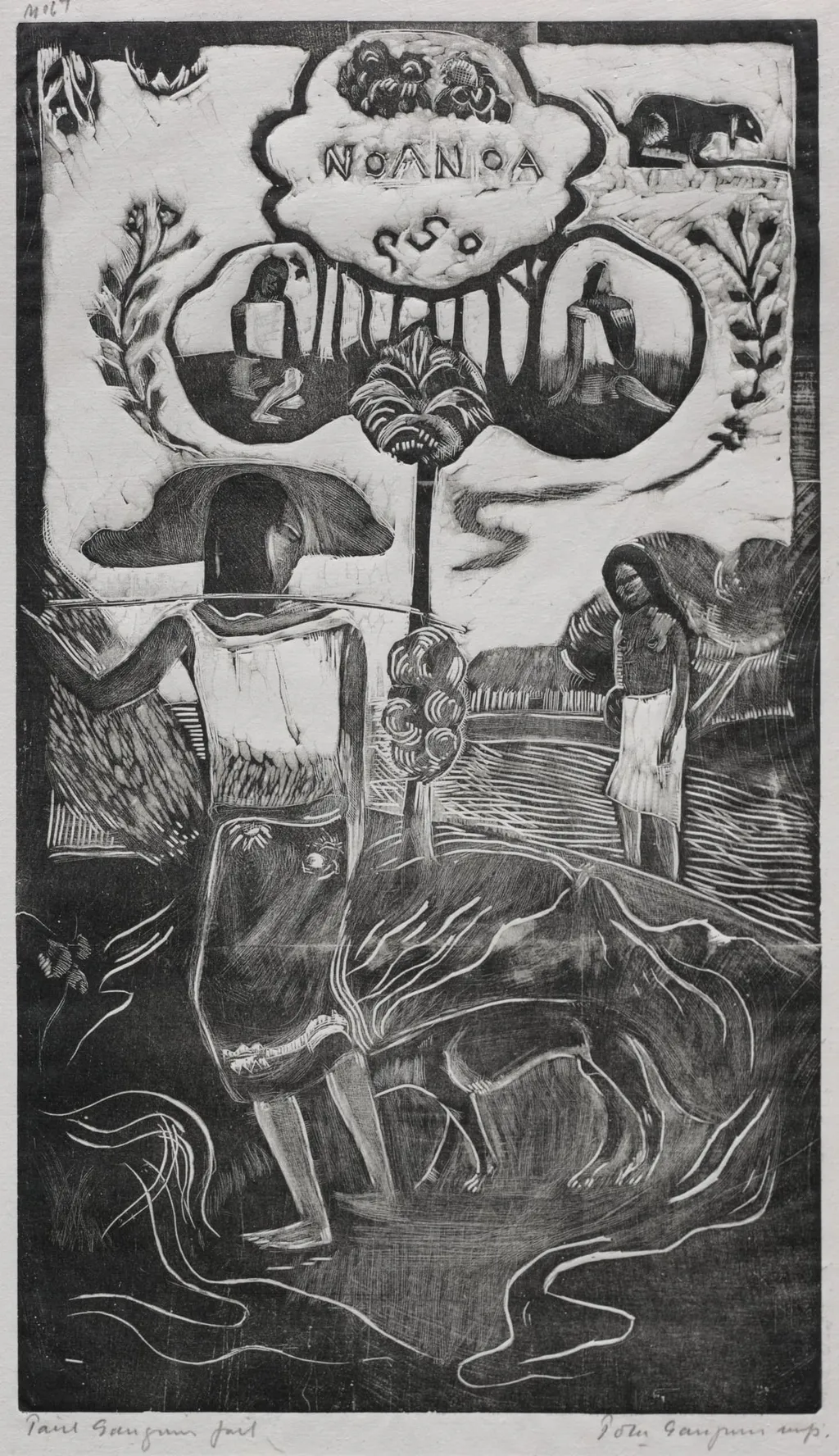
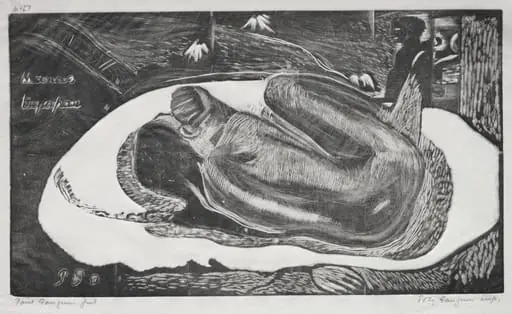
Noa Noa: Noa Noa (Fragrant Scent) is a print by the Impressionist artist Paul Gauguin. It dates from 1894 and is held in the collection of the Cleveland Museum of Art.
About this work
Overview
Paul Gauguin produced the woodcut print Noa Noa in 1894 as part of his exploration of printmaking during his time in Tahiti. The work is one of several he created to accompany a manuscript of the same name, blending visual art with written narrative. It reflects his departure from Western naturalism toward symbolic forms and flattened compositions, characteristic of his Synthetist approach.
Subject & Meaning
Two figures are depicted beneath a stylized cloud inscribed with the title 'Noa Noa,' a Tahitian term for 'fragrant scent.
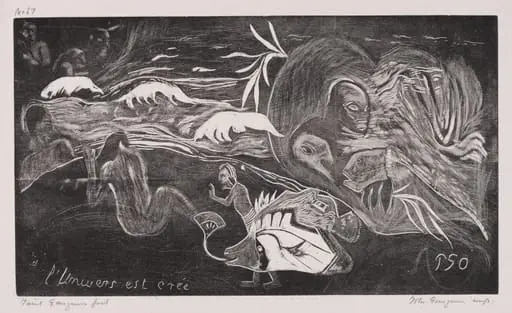
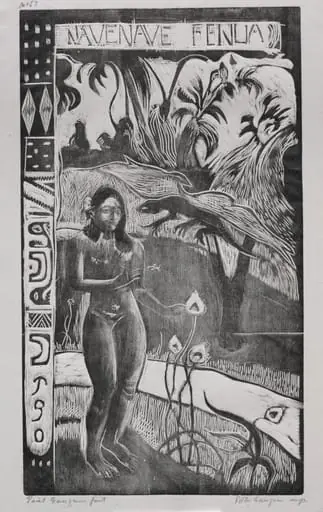
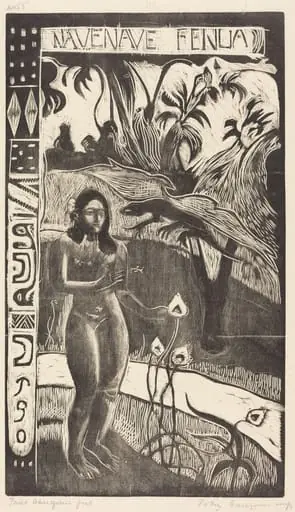
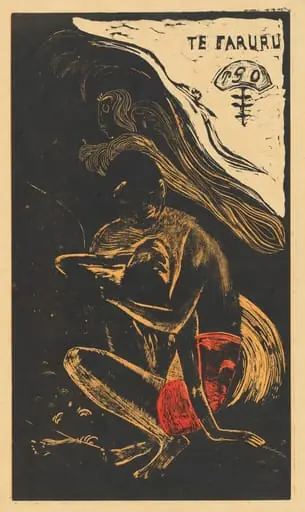
Two figures are depicted beneath a stylized cloud inscribed with the title 'Noa Noa,' a Tahitian term for 'fragrant scent.' One sits on the ground holding flowers; the other stands nearby, dressed in a long skirt and hat. The cloud, adorned with fruit and leaves and surrounded by birds, evokes a mythic or spiritual atmosphere. The scene suggests an idealized Tahitian world, infused with symbolic rather than literal meaning.
Technique & Style
Gauguin employed wood engraving to achieve bold, simplified forms and strong outlines. The image is rendered in high contrast, with minimal tonal variation, giving it the appearance of a carved relief. Shapes are reduced to essential contours, and perspective is abandoned in favor of decorative flatness. This technique aligns with his broader interest in non-Western art and the expressive potential of print media.
History & Provenance
Created during Gauguin’s second stay in Tahiti, Noa Noa was intended as an illustration for his autobiographical text of the same title. The print was not widely distributed in his lifetime and remained largely private. It entered the collection of The Cleveland Museum of Art in the 20th century, where it is now preserved as part of a small but significant group of his printed works.
Context
Gauguin’s engagement with Tahiti was both personal and ideological, driven by a search for cultural authenticity and escape from European modernity. Noa Noa emerged alongside other works that reimagined Polynesian life through a lens of romanticized symbolism. His prints from this period reflect broader 19th-century European fascination with the 'exotic,' filtered through his own artistic and philosophical aims.
Legacy
Though not widely exhibited during his lifetime, Noa Noa contributed to Gauguin’s reputation as a pioneer of modern printmaking. Its synthesis of text and image, along with its stylized forms, influenced later Symbolist and Expressionist artists. The work remains a key example of how printmaking could serve as a vehicle for personal myth-making and cultural reinterpretation.
Artist & collection
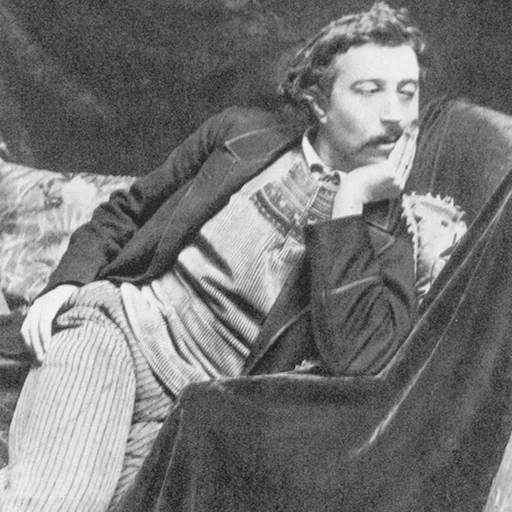
Artist
Eugène Henri Paul Gauguin (; French: ; 7 June 1848 – 8 May 1903) was a French painter, sculptor, printmaker, ceramist, and writer, whose work has been primarily associated with the Post-Impressionist and Symbolist movements.