Artwork
Nude Dancer
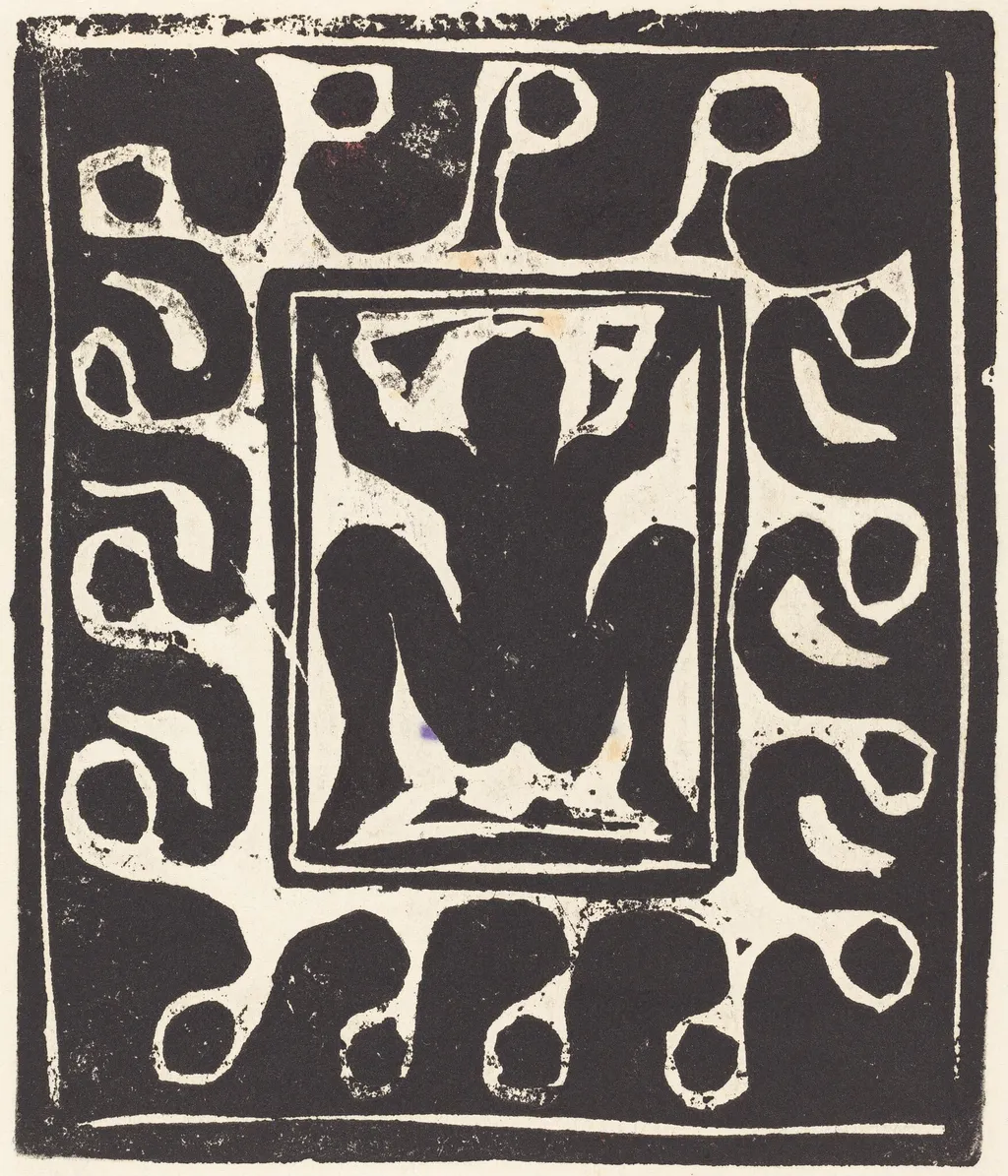
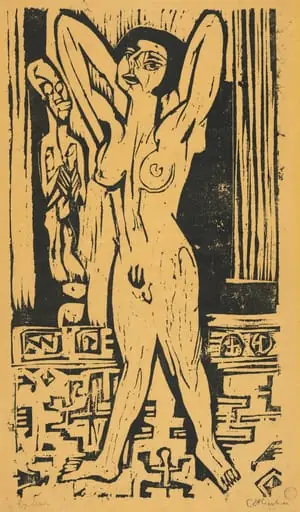
Nude Dancer is an ink print by Ernst Ludwig Kirchner. It dates from 1906 and is held in the collection of the National Gallery of Art.
About this work
Overview
The work exemplifies the graphic immediacy and reductive forms that defined the early output of *Die Brücke*, the collective he co-founded.
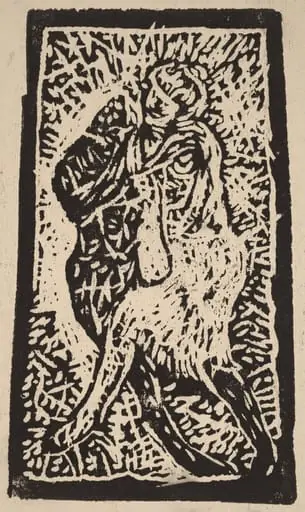
Ernst Ludwig Kirchner produced *Nude Dancer* in 1906 as a woodcut printed in black ink on buff paper. The work exemplifies the graphic immediacy and reductive forms that defined the early output of *Die Brücke*, the collective he co-founded. Executed in a medium demanding decisive incision, the print distills bodily movement into a compact, rhythmic composition framed by repetitive ornamental motifs.
Subject & Meaning
The image centers on a solitary female figure captured mid-motion, her elongated limbs and arched posture evoking the fluid gestures of dance. Rather than anatomical precision, Kirchner prioritizes expressive distortion, condensing the body into angular planes that convey energy and spontaneity. The surrounding circular and spiral patterns suggest a contained, almost ritualistic space, reinforcing the tension between freedom and structure.
Technique & Style
Kirchner carved directly into a woodblock, leaving raised ridges to hold ink while gouging away negative space. The resulting print bears the medium’s inherent roughness—visible grain, uneven pressure, and stark tonal contrast—heightening the work’s raw, improvisational quality. This approach aligns with *Die Brücke*’s rejection of academic polish in favor of visceral, immediate mark-making, a hallmark of German Expressionist printmaking.
History & Provenance
Created during Kirchner’s formative years in Dresden, *Nude Dancer* emerged amid *Die Brücke*’s collaborative experiments in woodcut. The print’s survival contrasts with the fate of many later works, confiscated or destroyed under Nazi censorship campaigns targeting “degenerate” art. Its current location and ownership history reflect the dispersal of Kirchner’s oeuvre following his persecution and subsequent exile.
Context
The print reflects broader early-20th-century shifts in European art, particularly the embrace of non-naturalistic representation and primitive influences. Kirchner’s focus on the nude—stripped of idealization—parallels contemporaneous explorations of bodily expression by artists like Matisse and Picasso. Within *Die Brücke*, such works served as visual manifestos, challenging bourgeois aesthetics while asserting the primacy of subjective experience.
Legacy
Though modest in scale, *Nude Dancer* encapsulates Kirchner’s pivotal role in redefining printmaking as a vehicle for emotional intensity rather than mere reproduction. Its formal economy and expressive economy influenced subsequent generations of artists, particularly those engaged with the woodcut’s potential for bold, graphic impact. The work remains a touchstone for studies of German Expressionism’s radical departure from representational conventions.
Artist & collection
Artist
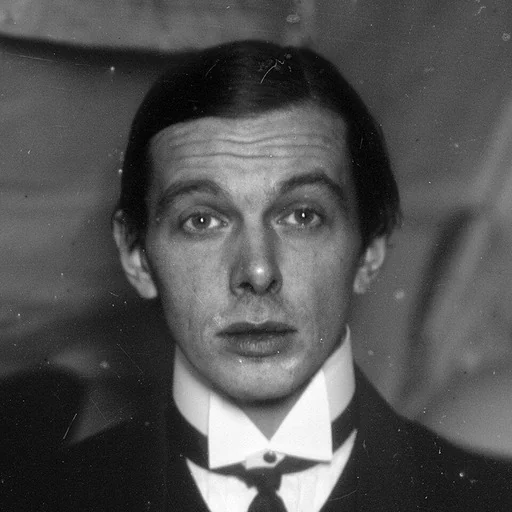
Ernst Ludwig Kirchner (6 May 1880 – 15 June 1938) was a German expressionist painter and printmaker.

![Dance Hall Bellevue [obverse], by Ernst Ludwig Kirchner](https://artifactworldgallery.com/img/ernst-ludwig-kirchner--dance-hall-bellevue-obverse--d1e14aac4297c69e-w320.webp)
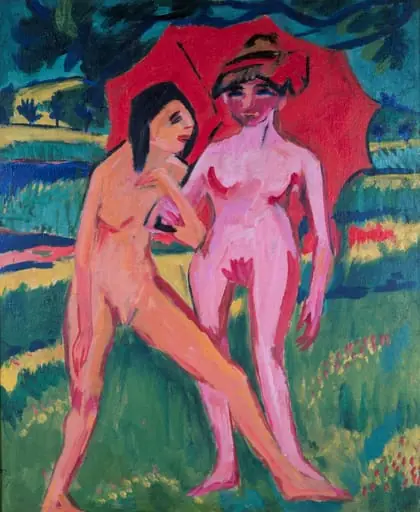
![Nude Figure [reverse], by Ernst Ludwig Kirchner](https://artifactworldgallery.com/img/ernst-ludwig-kirchner--nude-figure-reverse--4b135f0364753e98-w320.webp)
![Two Nudes [obverse], by Ernst Ludwig Kirchner](https://artifactworldgallery.com/img/ernst-ludwig-kirchner--two-nudes-obverse--eb3914183f0bc96d-w320.webp)
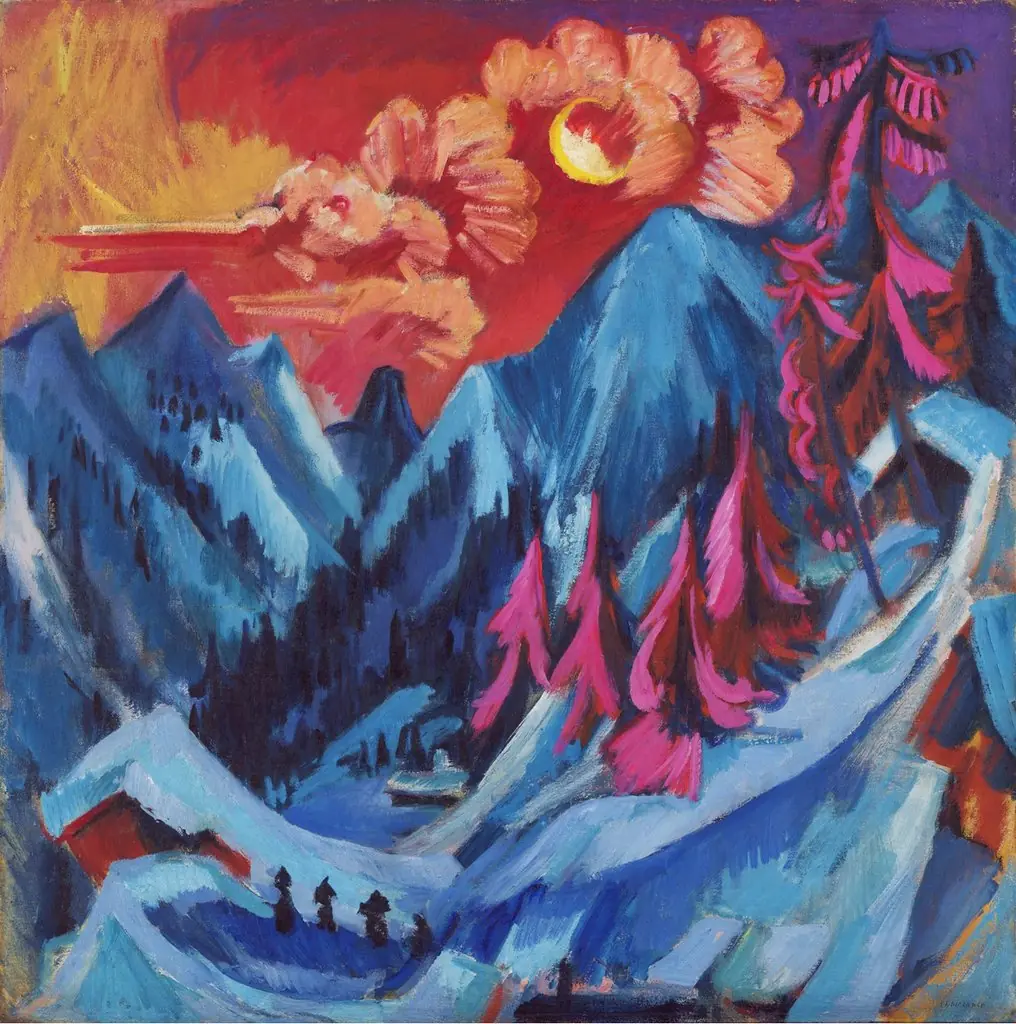
![Dancing Couple in the Snow [reverse], by Ernst Ludwig Kirchner](https://artifactworldgallery.com/img/ernst-ludwig-kirchner--dancing-couple-in-the-snow-reverse--87ca007d7c05b553-w320.webp)