Artwork
Self-Portrait in the Studio (Selbstbildnis im Atelier)
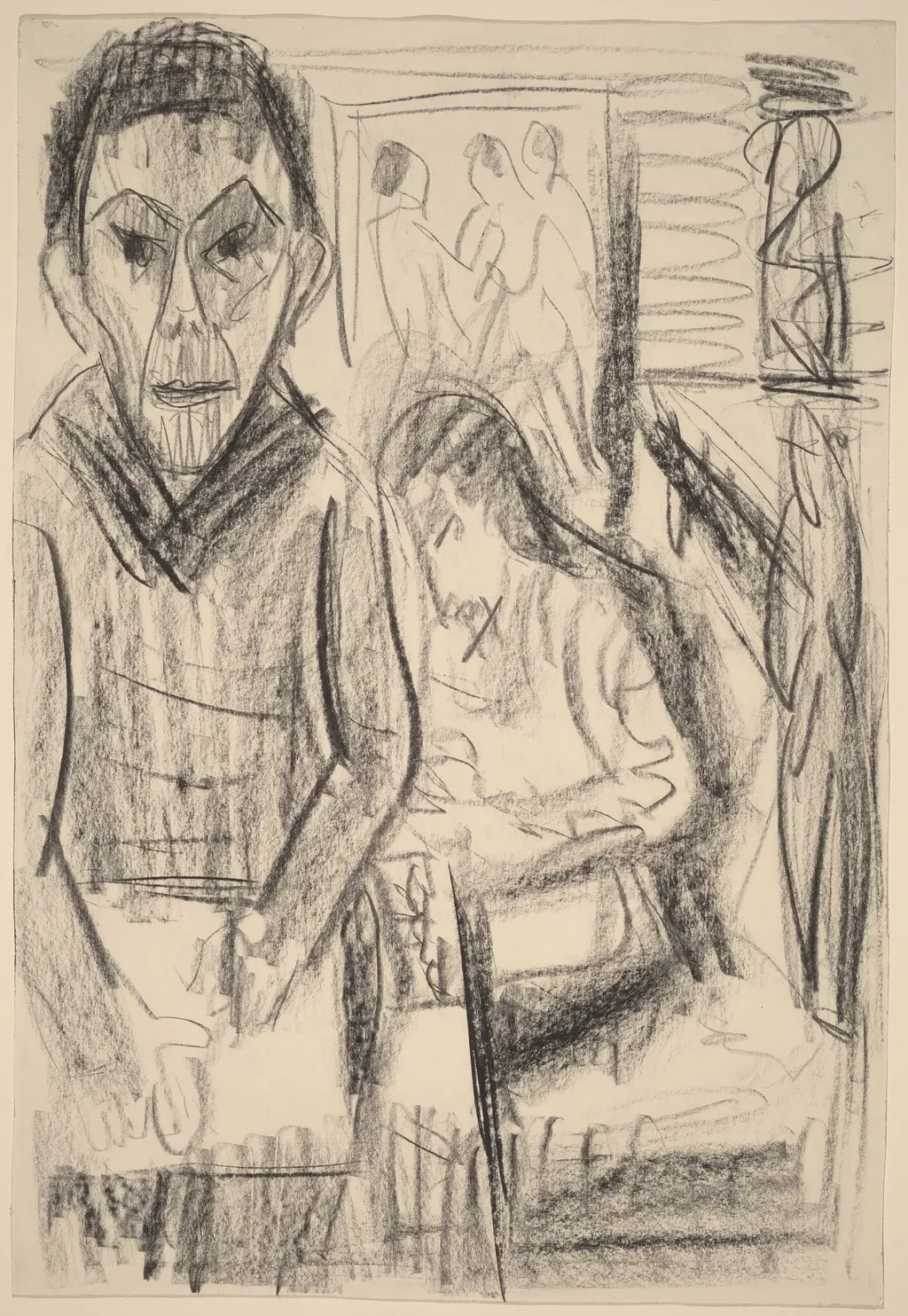
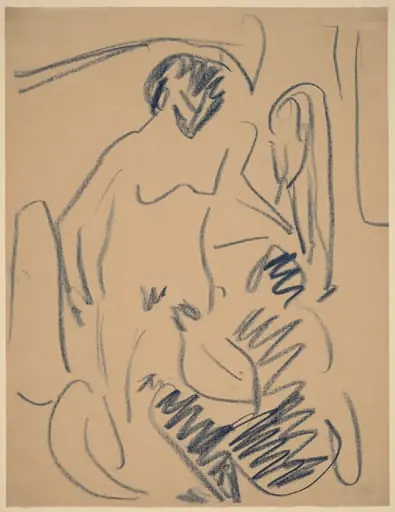
Self-Portrait in the Studio (Selbstbildnis im Atelier) is a crayon drawing by Ernst Ludwig Kirchner. It dates from 1923 and is held in the collection of the National Gallery of Art.
About this work
Overview
The medium’s raw, linear quality aligns with his expressive approach, emphasizing emotional presence over polished detail.
Ernst Ludwig Kirchner created this black crayon drawing in 1923, depicting himself within his studio space. Executed on board, the work belongs to a series of introspective self-representations made during his time in Davos, Switzerland, where he lived after relocating from Berlin. The medium’s raw, linear quality aligns with his expressive approach, emphasizing emotional presence over polished detail.
Subject & Meaning
Kirchner portrays himself standing before a window, facing the viewer with a stern, shadowed gaze. The surrounding figures and indistinct architectural forms suggest the lingering presence of others in his creative environment, yet he remains isolated. The drawing conveys psychological tension, reflecting his ongoing struggle with mental health and the dislocation he felt after wartime trauma and artistic marginalization.
Technique & Style
Using black crayon on a rigid board, Kirchner employed bold, angular strokes and dense shading to define form and mood. The rough texture of the medium enhances the drawing’s immediacy, rejecting smooth finish in favor of expressive urgency. Lines are deliberately fractured, and contours are simplified, characteristic of Expressionist priorities over naturalism—emphasizing inner state over external accuracy.
History & Provenance
Created during Kirchner’s years in Davos, the drawing emerged after his 1915 mental collapse and subsequent retreat from urban artistic circles. It predates the Nazi campaign against 'degenerate art,' during which over 600 of his works were seized or destroyed. This piece survived, likely due to its private nature and later acquisition by institutions committed to preserving Expressionist output.
Context
Kirchner co-founded Die Brücke in 1905, a group that sought to break from academic traditions through emotional intensity and simplified forms. By 1923, Expressionism had lost its initial radical momentum, and Kirchner, isolated in the Swiss Alps, turned inward. This drawing reflects both his enduring commitment to self-examination and the growing alienation he felt from the German art world.
Legacy
Though overshadowed in public memory by his larger paintings, this drawing remains a key document of Kirchner’s later years. Its unflinching self-portrayal influenced postwar artists exploring psychological depth through drawing. Today, it is recognized as a quiet but potent testament to an artist navigating personal crisis and cultural hostility through the discipline of line and shadow.
Artist & collection
Artist
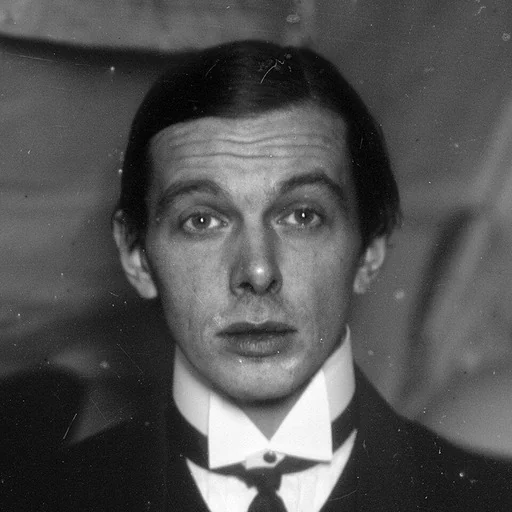
Ernst Ludwig Kirchner (6 May 1880 – 15 June 1938) was a German expressionist painter and printmaker.

![Dance Hall Bellevue [obverse], by Ernst Ludwig Kirchner](https://artifactworldgallery.com/img/ernst-ludwig-kirchner--dance-hall-bellevue-obverse--d1e14aac4297c69e-w320.webp)
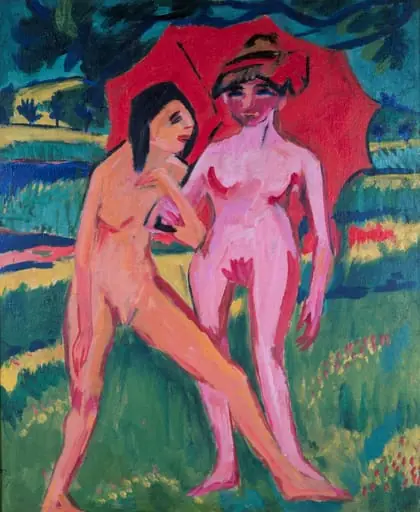
![Nude Figure [reverse], by Ernst Ludwig Kirchner](https://artifactworldgallery.com/img/ernst-ludwig-kirchner--nude-figure-reverse--4b135f0364753e98-w320.webp)
![Two Nudes [obverse], by Ernst Ludwig Kirchner](https://artifactworldgallery.com/img/ernst-ludwig-kirchner--two-nudes-obverse--eb3914183f0bc96d-w320.webp)
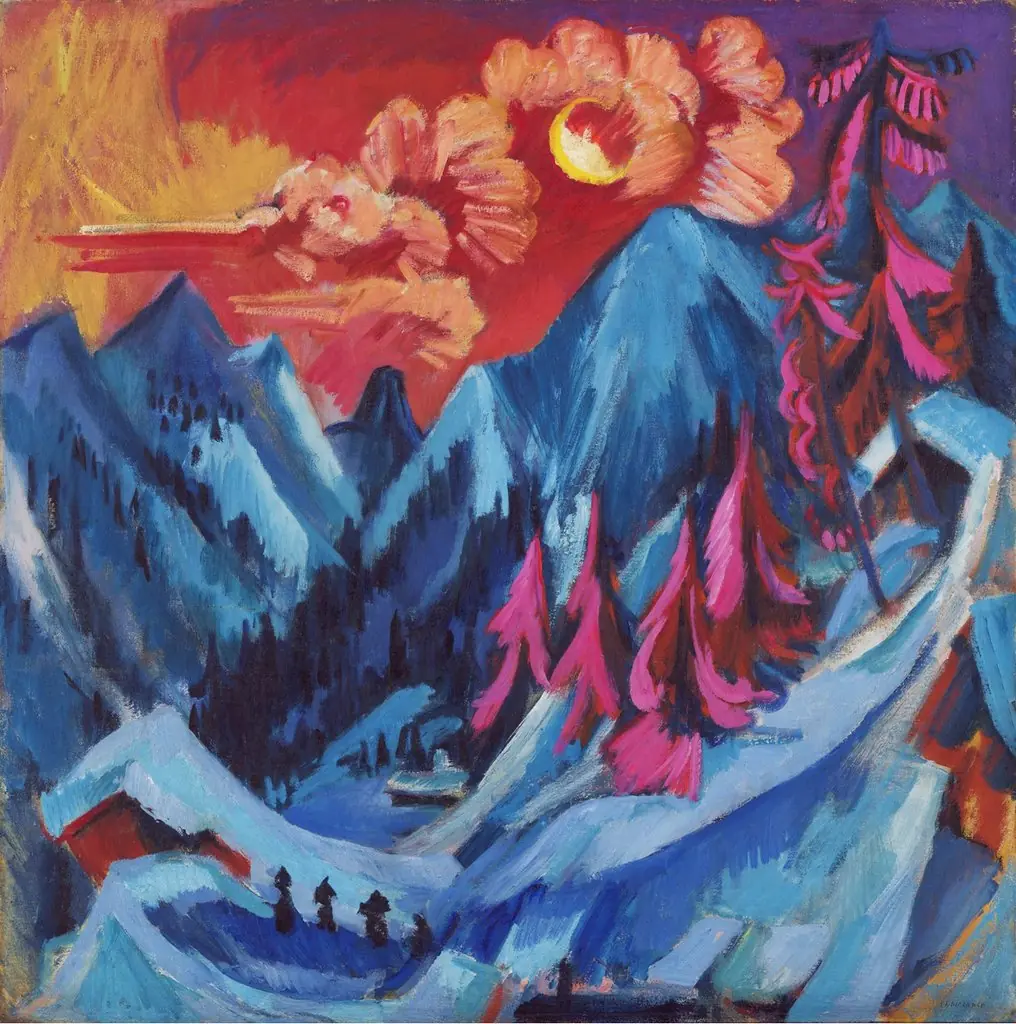
![Dancing Couple in the Snow [reverse], by Ernst Ludwig Kirchner](https://artifactworldgallery.com/img/ernst-ludwig-kirchner--dancing-couple-in-the-snow-reverse--87ca007d7c05b553-w320.webp)