Artwork
Taunus Firs
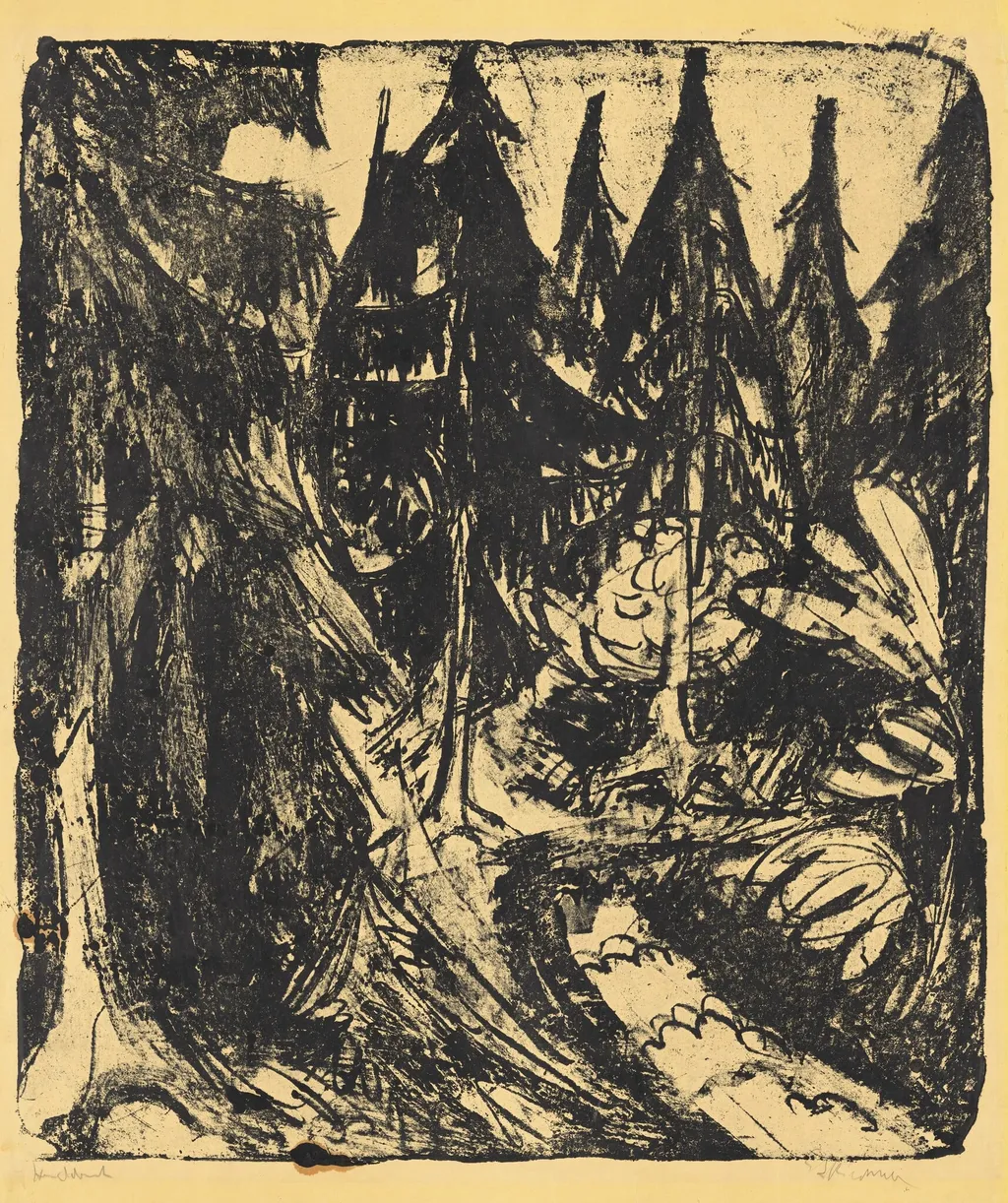
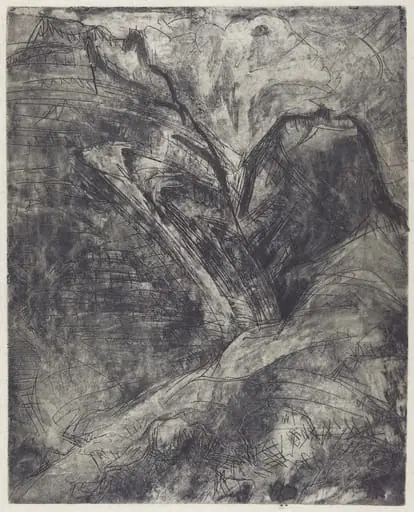
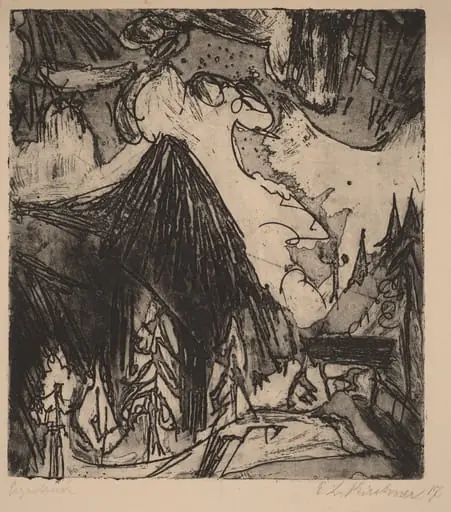
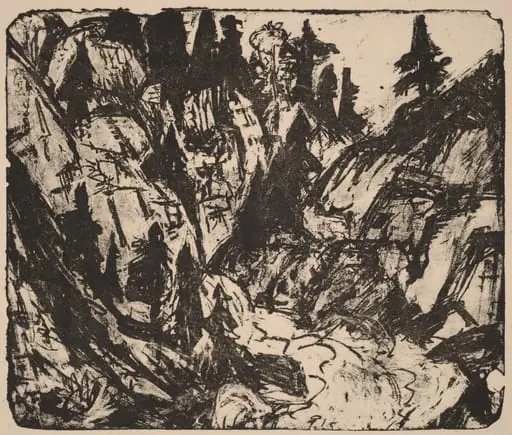
Taunus Firs is an ink print by Ernst Ludwig Kirchner. It dates from 1916 and is held in the collection of the National Gallery of Art.
About this work
Overview
Ernst Ludwig Kirchner produced *Taunus Firs* in 1916 as a lithograph on yellow wove paper.
Ernst Ludwig Kirchner produced *Taunus Firs* in 1916 as a lithograph on yellow wove paper. Created during his time in the Taunus region of Germany, the work belongs to a series of prints reflecting his engagement with landscape under personal and political strain. As a co-founder of Die Brücke, Kirchner used printmaking to explore emotional resonance through simplified forms and heightened contrasts, moving beyond naturalism toward psychological expression.
Subject & Meaning
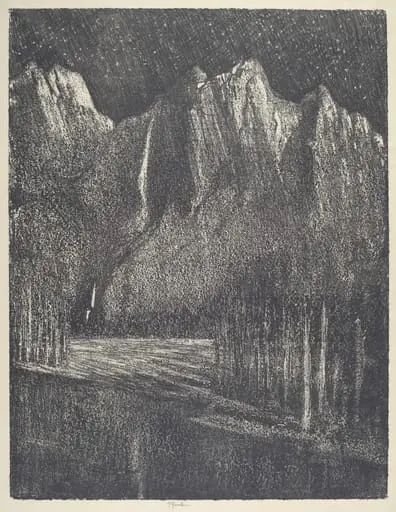
The print depicts a sparse woodland scene with slender, vertically elongated fir trees and faint architectural forms in the distance. The absence of detail and the dominance of dark tones suggest isolation or inner turmoil. Rather than documenting a specific place, Kirchner translates the forest into a symbolic space—its rigid lines and compressed perspective evoke a sense of unease, mirroring his own psychological state during wartime.
Technique & Style
Kirchner employed lithography to achieve sharp, incisive lines and flat areas of tone. The yellow paper grounds the composition in a muted warmth, contrasting with the heavy black ink used for the trees and shadows. Forms are reduced to essential contours, with no modeling or gradation—emphasizing rhythm over realism. The bold, angular strokes convey movement and tension, characteristic of Expressionist aesthetics that prioritized emotional impact over optical accuracy.
History & Provenance
Created during World War I, the work emerged from a period when Kirchner was seeking refuge from urban life and grappling with deteriorating health. After the Nazi rise to power, *Taunus Firs* and over 600 of his works were confiscated from German museums as part of the 'degenerate art' campaign. Many were destroyed or sold abroad; the survival of this print reflects its presence in private or institutional collections that escaped seizure.
Context
In 1916, Kirchner was living in the Taunus hills, away from Berlin’s artistic circles, yet still immersed in the ideological tensions of wartime Germany. His prints from this era reflect a retreat into nature that was neither pastoral nor serene. The Expressionist movement, which he helped shape, rejected academic traditions in favor of raw emotional expression—a stance increasingly at odds with state-sanctioned cultural norms in the years leading to Nazi censorship.
Legacy
Kirchner’s lithographs, including *Taunus Firs*, remain central to understanding early 20th-century German printmaking. Their influence extends beyond Expressionism, informing later generations of artists who valued subjective vision over objective representation. The work’s survival amid Nazi persecution underscores its role as both artistic testimony and cultural resistance, preserved as a quiet but forceful record of an era’s dissonance.
Own this work as a print
Artist & collection
Artist
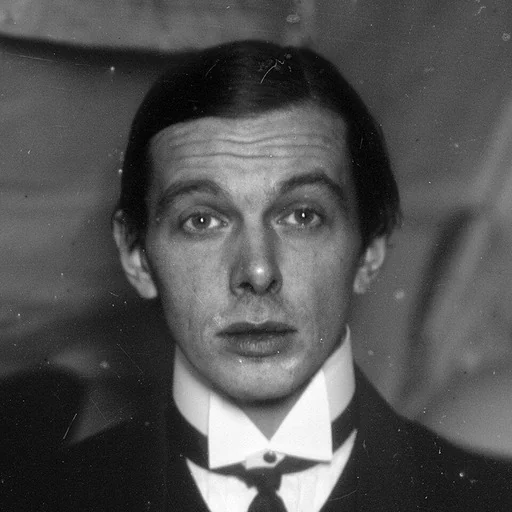
Ernst Ludwig Kirchner (6 May 1880 – 15 June 1938) was a German expressionist painter and printmaker.

![Dance Hall Bellevue [obverse], by Ernst Ludwig Kirchner](https://artifactworldgallery.com/img/ernst-ludwig-kirchner--dance-hall-bellevue-obverse--d1e14aac4297c69e-w320.webp)
![Nude Figure [reverse], by Ernst Ludwig Kirchner](https://artifactworldgallery.com/img/ernst-ludwig-kirchner--nude-figure-reverse--4b135f0364753e98-w320.webp)
![Two Nudes [obverse], by Ernst Ludwig Kirchner](https://artifactworldgallery.com/img/ernst-ludwig-kirchner--two-nudes-obverse--eb3914183f0bc96d-w320.webp)
![Dancing Couple in the Snow [reverse], by Ernst Ludwig Kirchner](https://artifactworldgallery.com/img/ernst-ludwig-kirchner--dancing-couple-in-the-snow-reverse--87ca007d7c05b553-w320.webp)