Artwork
Standing, Sitting, and Bathing Girls near a Tree (Stehende, sitzendes und badendes Madchen am Baum)
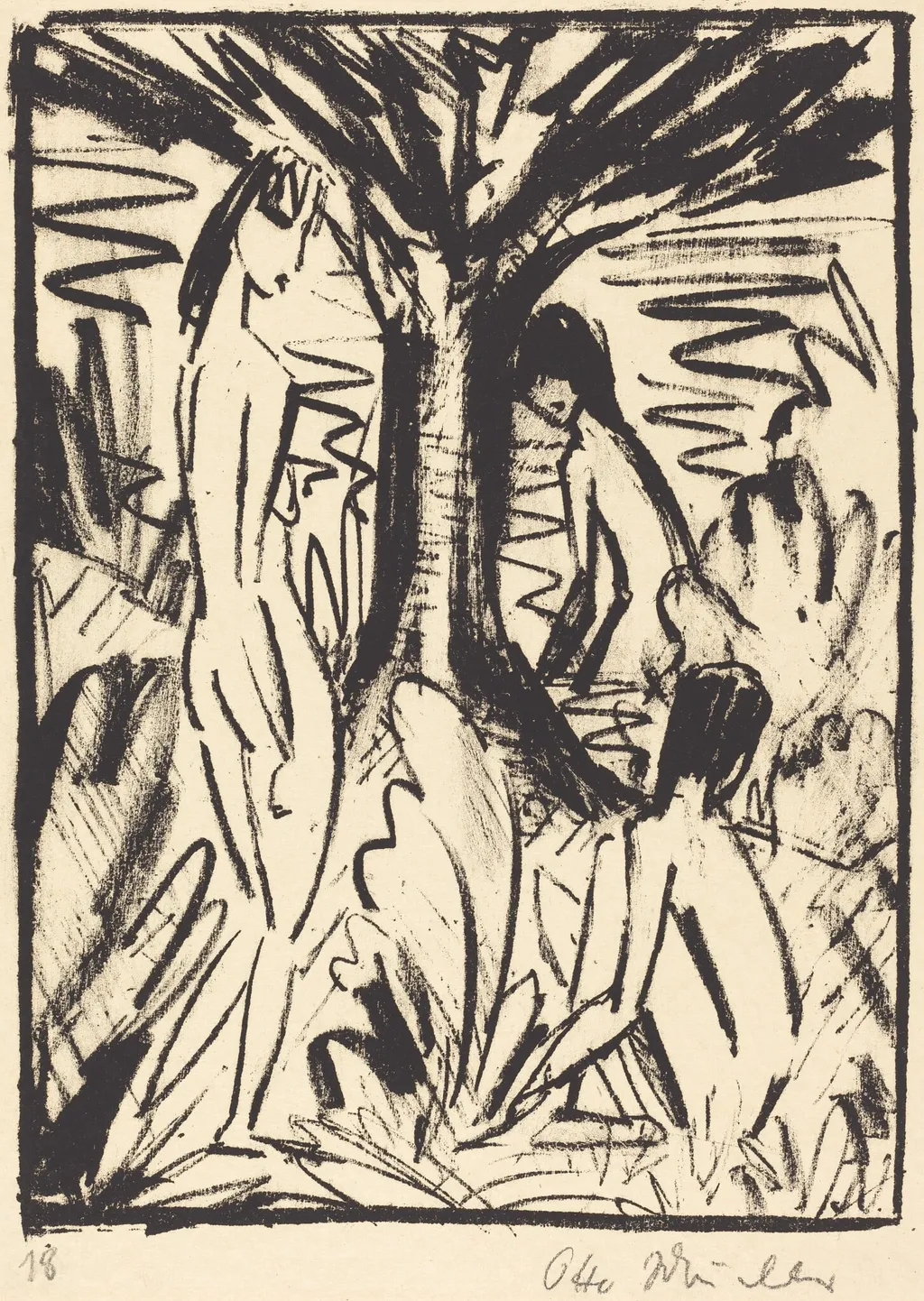
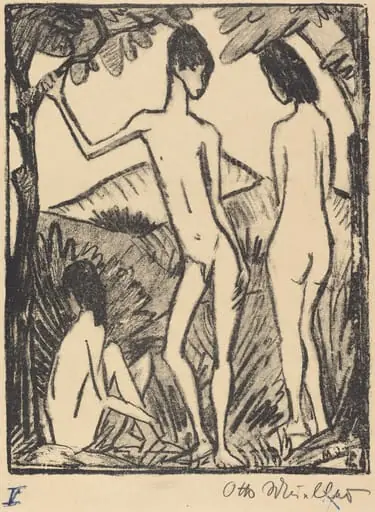
Standing, Sitting, and Bathing Girls near a Tree (Stehende, sitzendes und badendes Madchen am Baum) is an ink print by Otto Mueller. It dates from 1920 and is held in the collection of the National Gallery of Art.
About this work
Overview
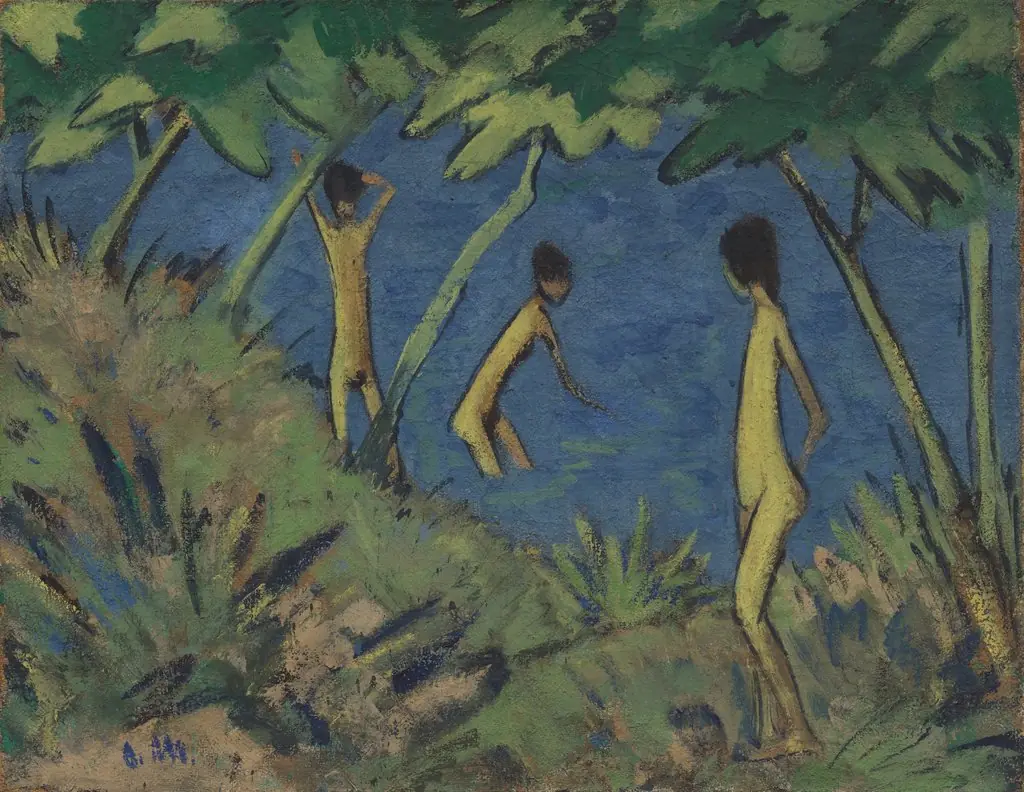
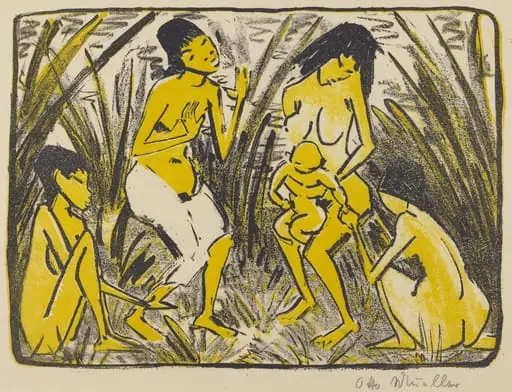
Created in 1920, this lithograph by Otto Mueller captures three nude female figures in a natural setting near a tree. As a member of Die Brücke, Mueller favored direct, unidealized representations of the human form. The work is part of his broader engagement with printmaking, where the tactile qualities of lithography allowed him to emphasize raw, gestural lines over polished detail.
Subject & Meaning
The three figures—standing, seated, and bending—engage in quiet, private moments, suggesting intimacy with nature rather than theatrical display.
The three figures—standing, seated, and bending—engage in quiet, private moments, suggesting intimacy with nature rather than theatrical display. Their poses are unposed, avoiding classical ideals of beauty. The tree, rendered with angular foliage, acts as both frame and counterpart, reinforcing a connection between the human body and the organic world, a recurring theme in Mueller’s expressionist vision.
Technique & Style
Lithography enabled Mueller to draw directly onto a stone surface, producing lines that appear scratched or hurried. The ink sits unevenly, creating a textured, sketch-like surface. Sharp, irregular contours define the figures and foliage, rejecting smooth academic rendering. This method amplified the work’s immediacy, aligning with Die Brücke’s preference for emotional authenticity over technical refinement.
History & Provenance
Made during Mueller’s mature period, the print emerged after his time with Die Brücke but retained the group’s ethos. It was likely produced in limited editions for private collectors and art circles. No major public collection records its early ownership, but its survival reflects its resonance among German modernists interested in primal, nature-bound imagery.
Context
In postwar Germany, artists sought new modes of expression beyond traditional academies. Mueller’s focus on nude figures in natural settings responded to broader cultural interest in bodily freedom and spiritual renewal. His work contrasted with urban modernism, instead drawing from rural life and folk traditions, positioning nature as a site of emotional and physical authenticity.
Legacy
The print exemplifies how printmaking became a vehicle for expressionist ideals outside painting. Mueller’s use of lithography influenced later artists exploring the body through direct, unembellished mark-making. While not widely exhibited during his lifetime, the work now contributes to understanding how German modernists redefined the nude through simplicity, gesture, and material honesty.
Own this work as a print
Artist & collection

Artist
Otto Mueller (16 October 1874 – 24 September 1930) was a German painter and printmaker of the Die Brücke expressionist movement.

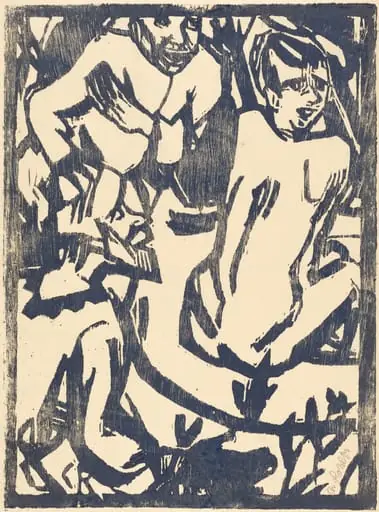 Susanna and the Elders
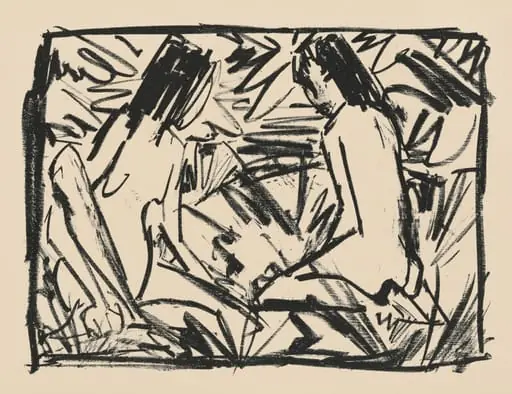 Badende (Bathers) from Deutsche Graphiker der Gegenwart (German Printmakers of Our Time)
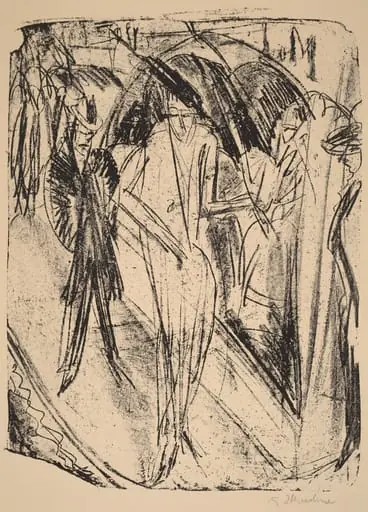 Lady in the Rain
 The Fall of Man (Der Sündenfall)
 Taunus Firs
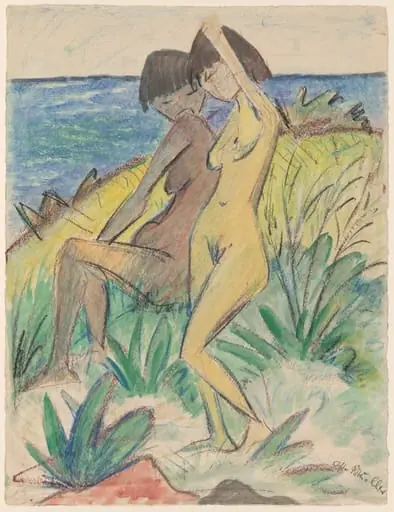
 Two Bathers on the Fehmarn Coast (Zwei Badende am hoher Fehmarnküste)
 The Hilltop
 Untitled
 Standing Boy and Two Girls (second version) (Stehender Knabe und zwei Mädchen 2 )