Artwork
The Holy Family
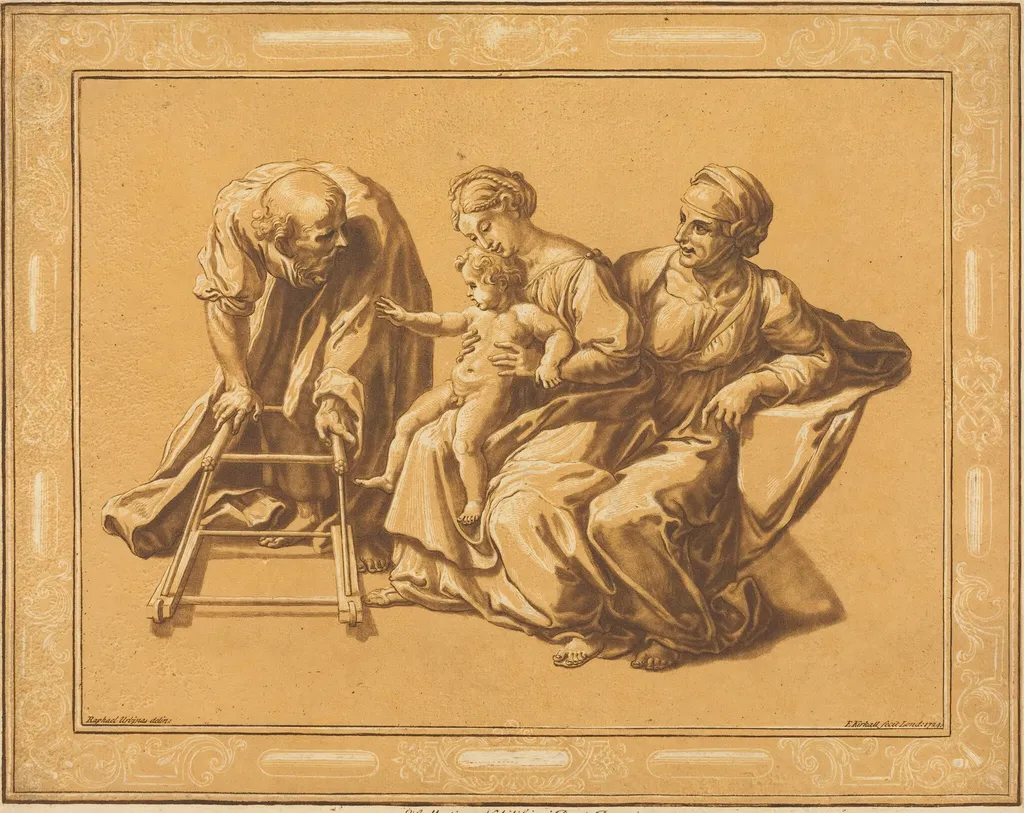
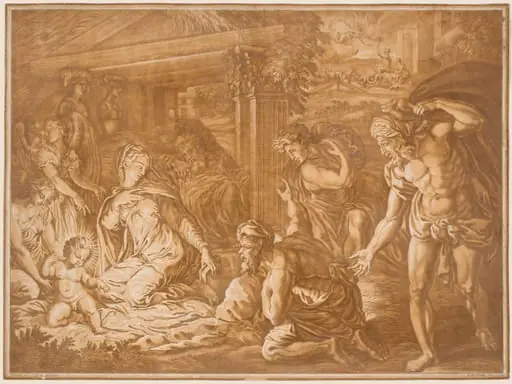
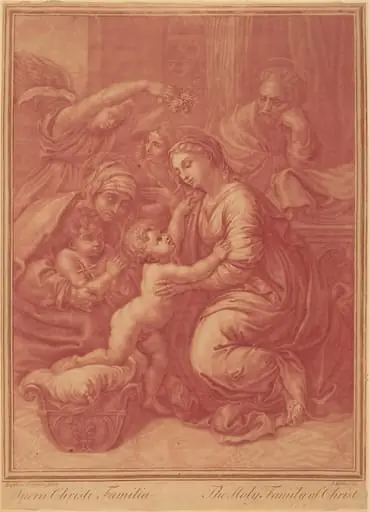
The Holy Family is an ink print by the Baroque artist Elisha Kirkall. It dates from 1724 and is held in the collection of the National Gallery of Art.
About this work
Overview
The work belongs to the tradition of religious imagery adapted for domestic devotion, produced not as a painting but as an accessible reproductive print.
Created in 1724 by Elisha Kirkall, this print depicts the Holy Family using a combination of etching, mezzotint, and woodcut techniques. Printed in brown and ocher tones on laid paper, it reflects the technical experimentation common in early 18th-century printmaking. The work belongs to the tradition of religious imagery adapted for domestic devotion, produced not as a painting but as an accessible reproductive print.
Subject & Meaning
The composition centers on the Virgin Mary, Joseph, and the infant Jesus, arranged in a quiet, intimate grouping. Surrounding objects—simple textiles, a basket, a lamp—ground the sacred scene in domestic realism. The imagery draws from biblical narratives of Christ’s early life, intended to foster contemplation and private prayer among viewers who could not access original altarpieces.
Technique & Style
Kirkall layered etching for fine lines, mezzotint for soft tonal gradients, and woodcut for bold, flat areas. The use of brown and ocher inks evokes the warmth of aged parchment, enhancing the devotional tone. The blending of techniques allowed for both detail and atmospheric depth, a practical response to the limitations of print reproduction at the time.
History & Provenance
The print was produced during a period of growing demand for religious imagery in middle-class British households. Few original impressions survive, and those that do are held in institutional collections, suggesting limited circulation. Kirkall, primarily known as an engraver and publisher, likely issued this as part of a series of devotional prints for private use.
Context
In early 18th-century England, religious prints served as affordable alternatives to paintings in homes and chapels. While the Church of England discouraged overt Catholic iconography, depictions of the Holy Family remained acceptable as symbols of familial piety. Kirkall’s work aligns with a broader trend of printmakers adapting sacred subjects for lay audiences.
Legacy
Kirkall’s print exemplifies the technical hybridity of early printmaking and the role of reproductive imagery in shaping domestic spirituality. Though not widely celebrated in art history, it contributes to understanding how religious narratives were disseminated beyond ecclesiastical spaces, influencing later generations of printmakers and devotional practices.
Artist & collection


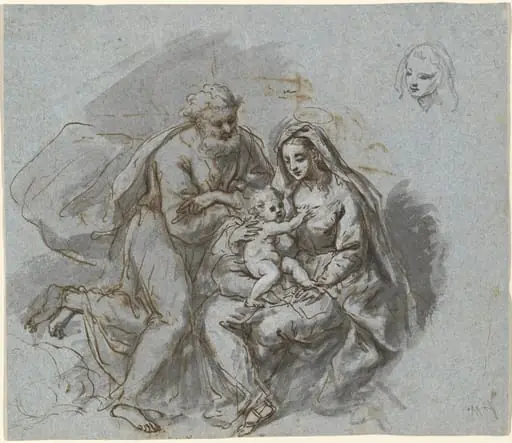 The Holy Family
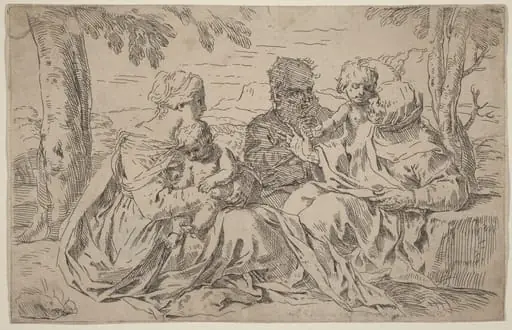 The Holy Family
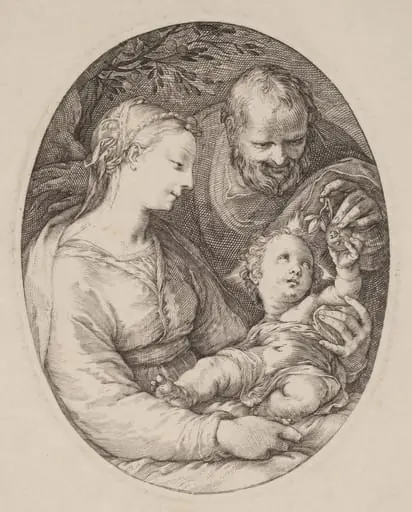 The Holy Family
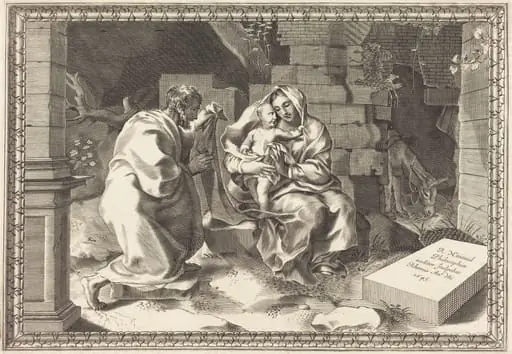 The Holy Family
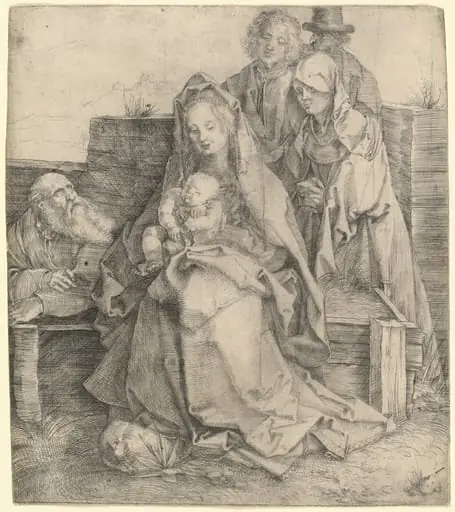 The Holy Family
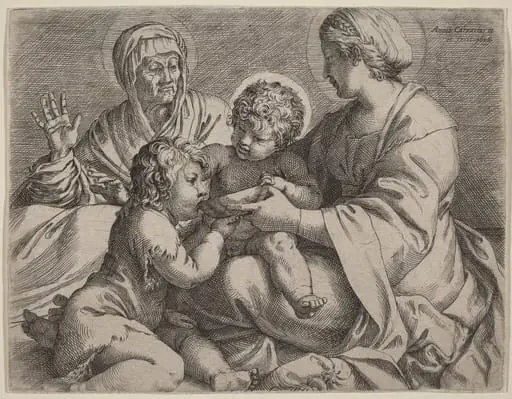 Madonna and Child with Saints Elizabeth and John the Baptist (La Madonna della Scodella)
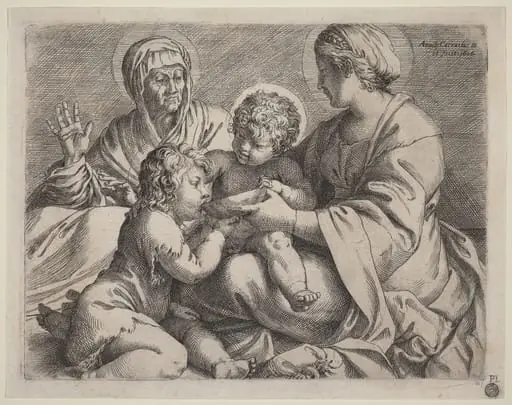 The Madonna della Scodella
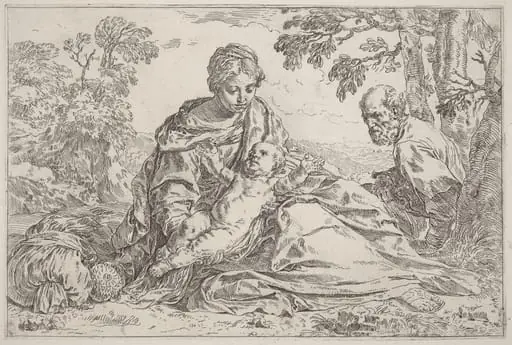 The Rest on the Flight into Egypt
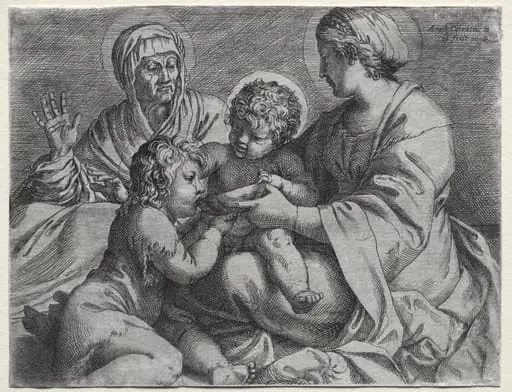 Madonna with the Bowl
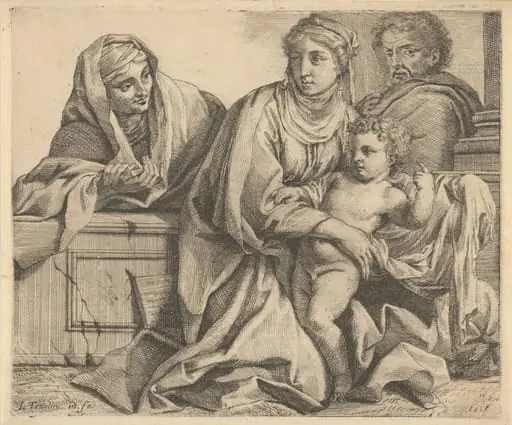 The Holy Family with Saint Anne
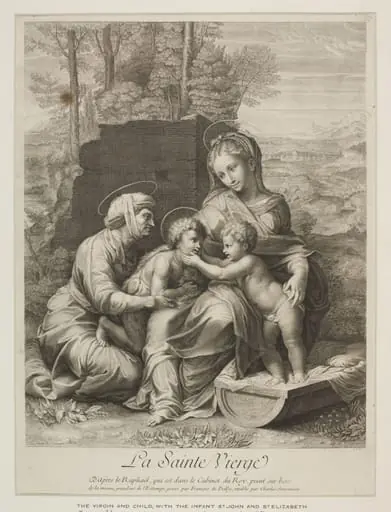 LA SAINTE VIERGE
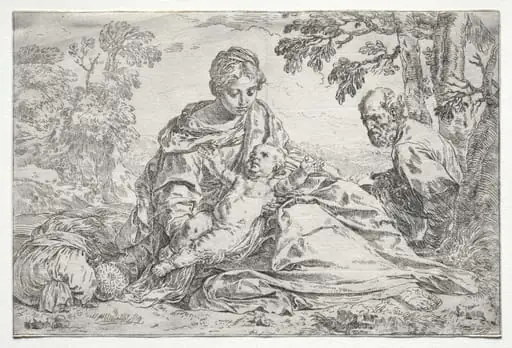 Rest on the Flight into Egypt