Artwork
Maharaja Shiraj Rawatji Sri Pirthi Singh
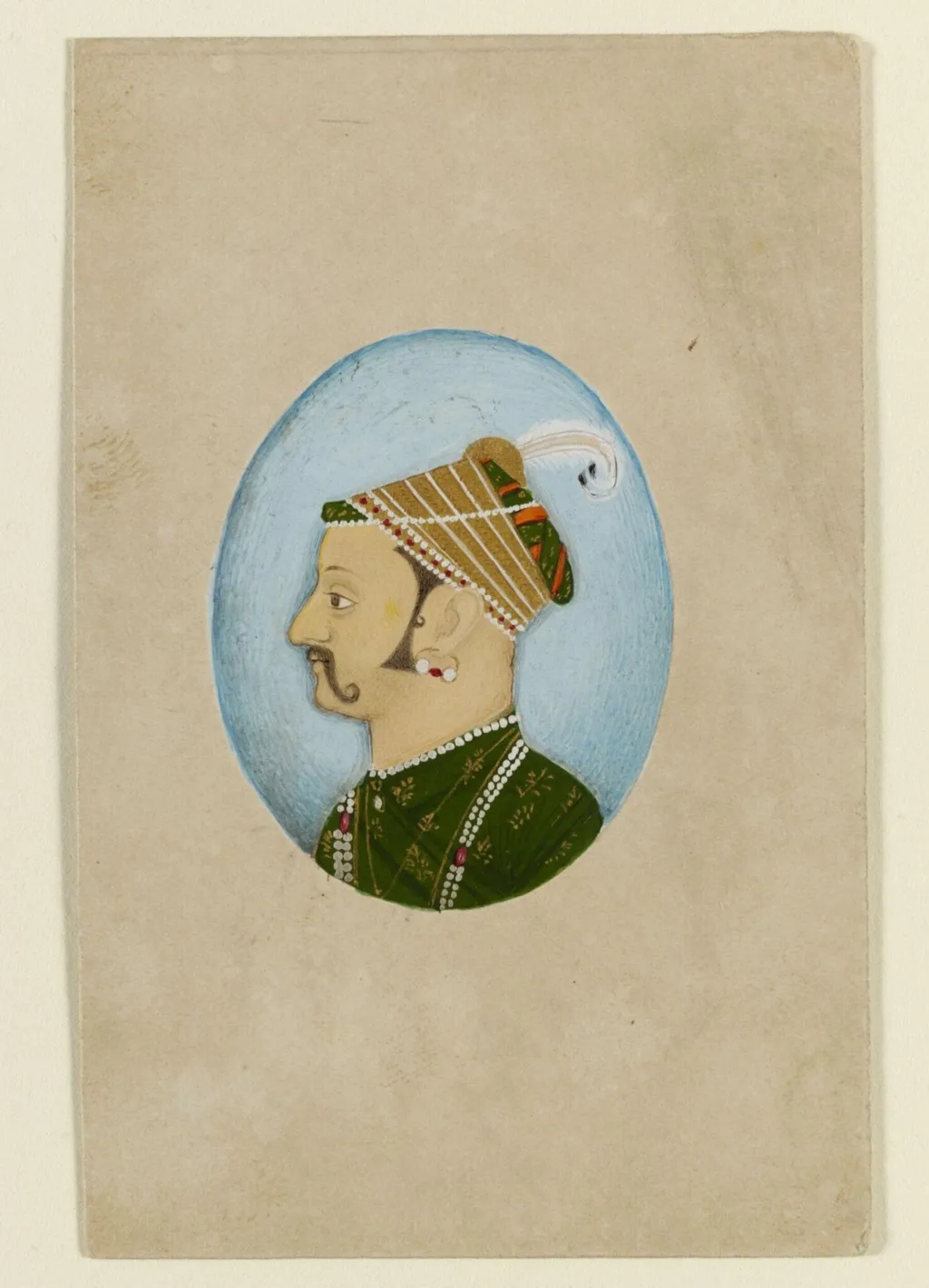
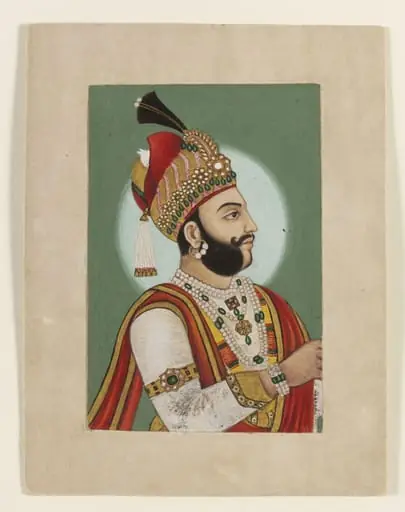
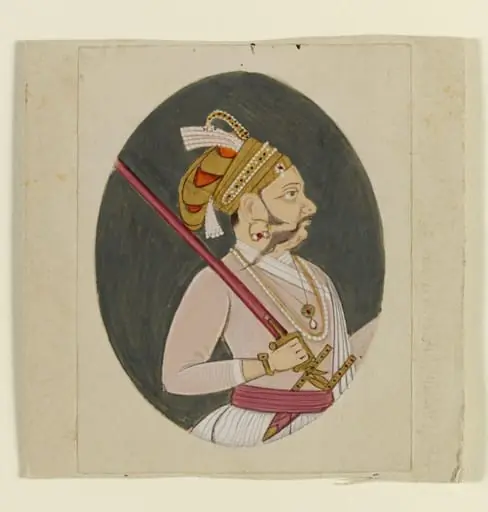
Maharaja Shiraj Rawatji Sri Pirthi Singh is a paint painting by the Patna School of Painting artist Kirparam. It dates from 1850 and is held in the collection of the Victoria and Albert Museum.
About this work
Overview
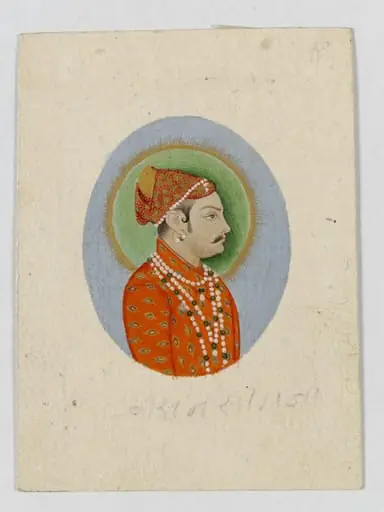
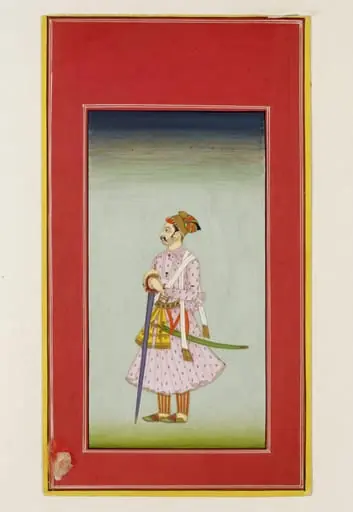
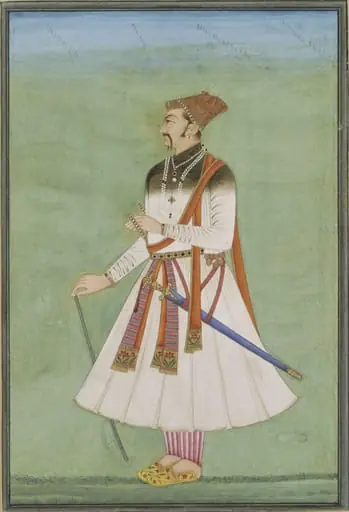
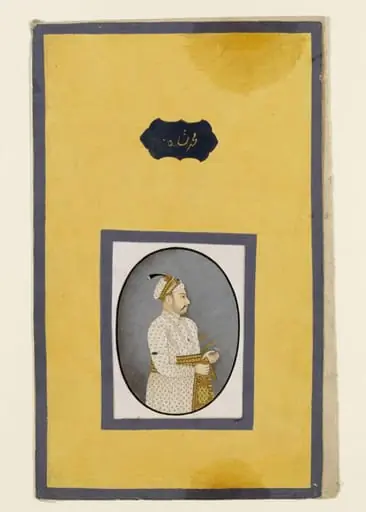
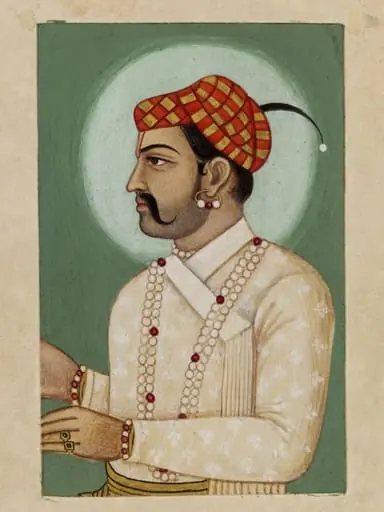
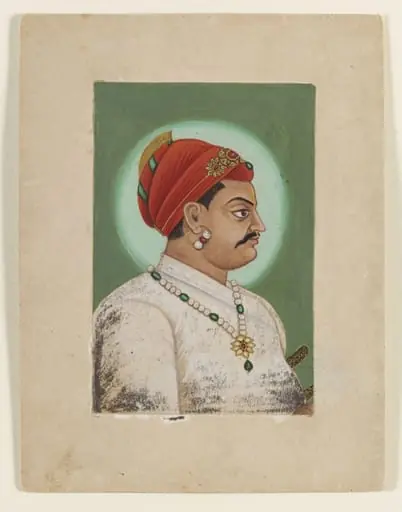
This portrait depicts Maharaja Shiraj Rawatji Sri Pirthi Singh in opaque watercolor and gold on paper, mounted on cardboard. The figure is centered within a blue circular frame, emphasizing his presence against a flat, unadorned background. The composition avoids depth or perspective, focusing entirely on the subject’s attire and facial features, rendered with precise hand-painted detail.
Subject & Meaning
His tall, ornate hat with a feather, beaded green garment, and gold embellishments reflect ceremonial dress customary among Rajput nobility.
The subject, a regional ruler, is portrayed in formal regalia to signify status and authority. His tall, ornate hat with a feather, beaded green garment, and gold embellishments reflect ceremonial dress customary among Rajput nobility. The direct gaze and centered positioning convey dignity, aligning with conventions of portraiture used to assert lineage and power in early 20th-century North India.
Technique & Style
The painting employs opaque watercolor with gold leaf accents on paper, a technique common in Rajasthani and Pahari court art. Colors are vivid but flat, with no modeling or shadowing. Details in the hat’s embroidery and jewelry are meticulously rendered by hand, highlighting craftsmanship over naturalism. The circular format suggests a devotional or commemorative intent, common in miniature traditions.
History & Provenance
Created likely in the early 1900s, the portrait originates from the court of Rawatji in Rajasthan. It was probably commissioned to mark a significant occasion, such as succession or a public ceremony. The mounting on cardboard indicates later preservation efforts, possibly by collectors or institutions seeking to stabilize the fragile paper support.
Context
This work belongs to a regional school of painting that persisted alongside Western influences in princely states during the colonial era. While European portraiture introduced realism, many Indian courts retained traditional methods—flat planes, symbolic color, and ornamental detail—to uphold cultural identity. Such portraits served both personal and political functions within courtly networks.
Legacy
The painting exemplifies the endurance of indigenous artistic practices amid colonial modernization. Though less widely exhibited than Mughal miniatures, works like this remain vital to understanding regional royal aesthetics. Collections such as the Victoria and Albert Museum hold similar pieces, preserving the visual language of India’s princely states for scholarly and public study.
Artist & collection
Artist
Kirparam made portraits of Indian royalty in the 1800s. Their brush recorded Maharaja Shiraj Rawatji Sri Pirthi Singh dressed in rich colors and fine details. These paintings belong to the tradition of royal portraiture…