Artwork
Summer Flowers
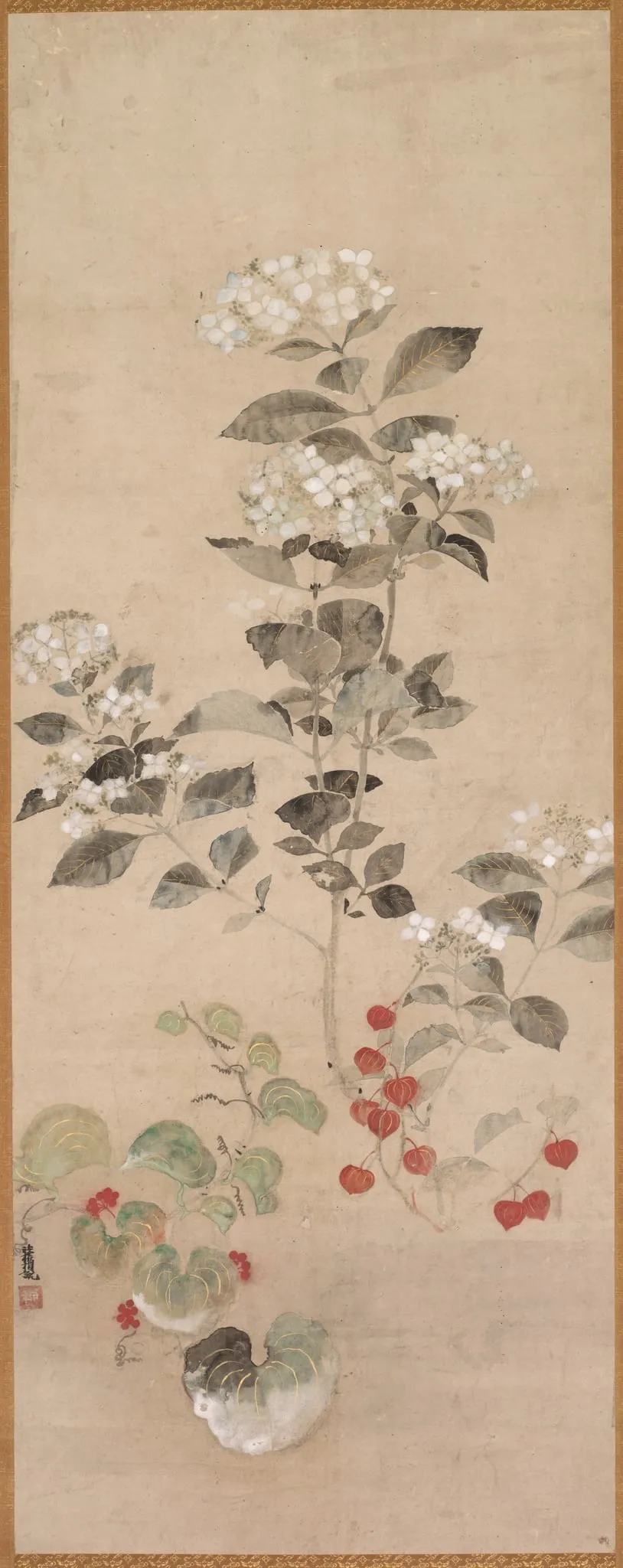
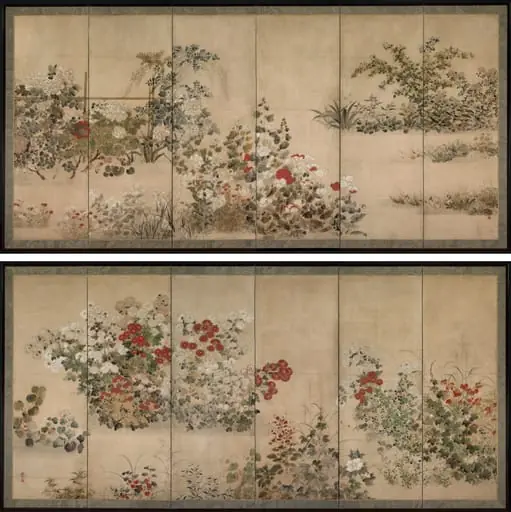
Summer Flowers is an unspecified painting by the Baroque artist Kitagawa Sōsetsu. It dates from 1604 and is held in the collection of the Cleveland Museum of Art.
About this work
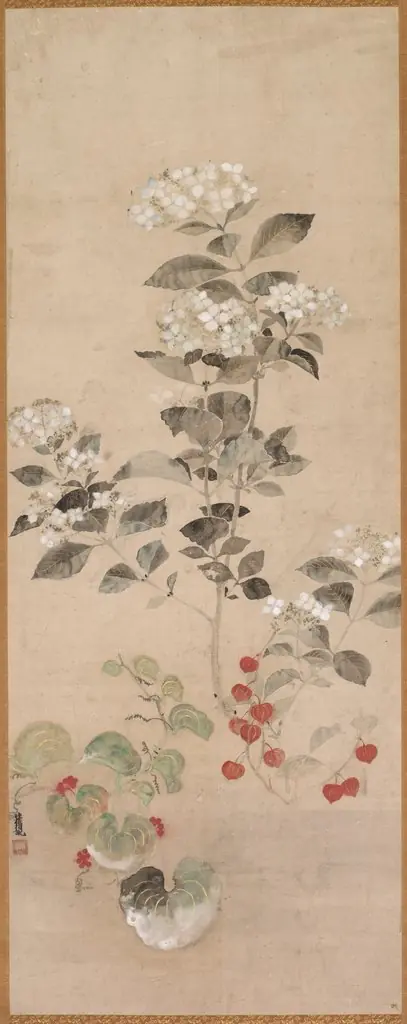
This scroll shows delicate white hydrangeas, fiery orange lantern flowers, and tangled greenbrier vines against a blank background.
This scroll shows delicate white hydrangeas, fiery orange lantern flowers, and tangled greenbrier vines against a blank background. The artist layered wet ink and color so it bleeds between petals and leaves, creating soft edges and depth. Thin gold lines trace veins and pods for extra shine.
This method, called *tarashikomi*, lets colors merge right on the paper. It’s a trick used to show nature’s soft edges without harsh outlines.
Look next at Kitagawa Sōsetsu (Japanese, active 1639–50).
Overview
The hanging scroll titled *Summer Flowers* presents a composition of white hydrangea blossoms, orange lantern‑shaped flowers, and twisting greenbrier vines set against an unadorned background. The arrangement emphasizes the delicate interplay of color and form, allowing each botanical element to stand out while contributing to a unified natural scene.
Subject & Meaning
The work juxtaposes three plant types—hydrangea, a lantern‑like orange flower, and greenbrier vine—suggesting a seasonal celebration of summer flora. By placing these species together, the artist highlights the contrast between the soft, pale petals of the hydrangea and the vivid, fiery hue of the lantern flowers, while the tangled vines provide a sense of organic growth and interconnection.
Technique & Style
The artist employed the Japanese tarashikomi method, applying a wet brush loaded with a high water‑to‑ink ratio so that pigments bleed into one another on the paper. This creates subtle, blended edges that convey depth in the leaves and petals. Fine gold lines are added to delineate leaf veins and pod seams, lending a luminous accent to the otherwise muted palette.
History & Provenance
The scroll is attributed to the early Edo period, aligning with the active years of Kitagawa Sōsetsu (1639–1650). While the piece itself is not signed, stylistic parallels to Sōsetsu’s known works suggest a possible connection to his workshop or circle, situating the painting within mid‑17th‑century Japanese ink painting traditions.
Context
During the mid‑1600s, Japanese artists often explored botanical subjects using monochrome ink combined with selective color and gold detailing. This approach reflected both a reverence for nature and an interest in the technical possibilities of tarashikomi, which allowed for nuanced representation of texture and translucency without relying on strong outlines.
Artist & collection


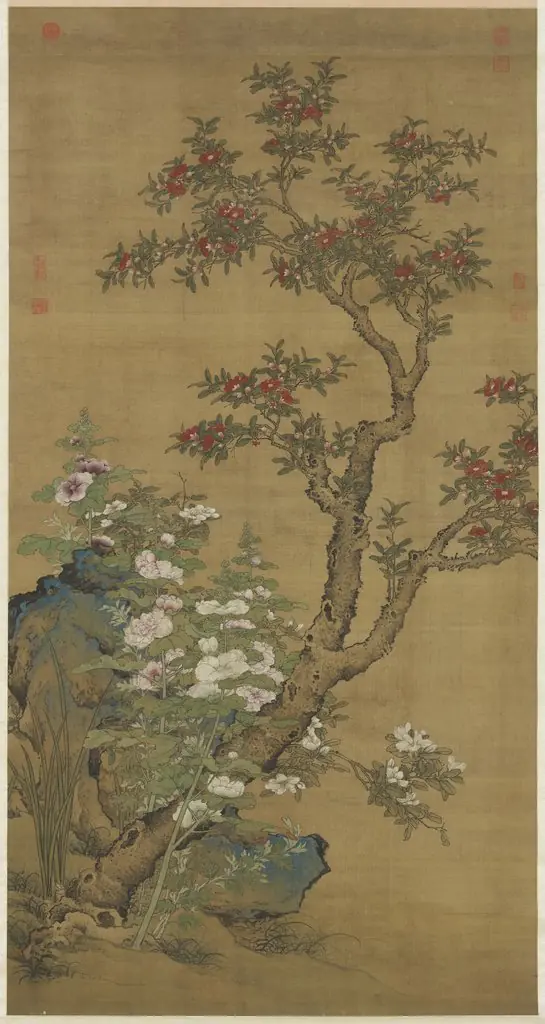 Auspicious Flowers
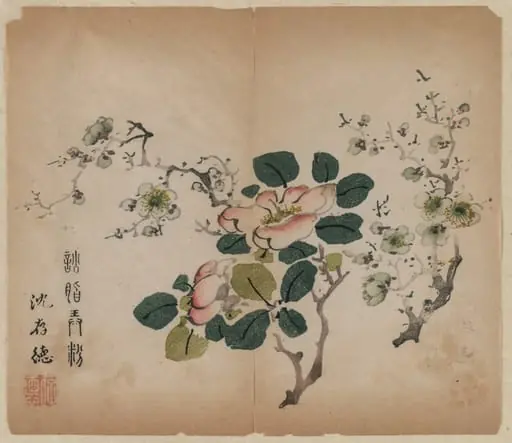 Flowering Prunus
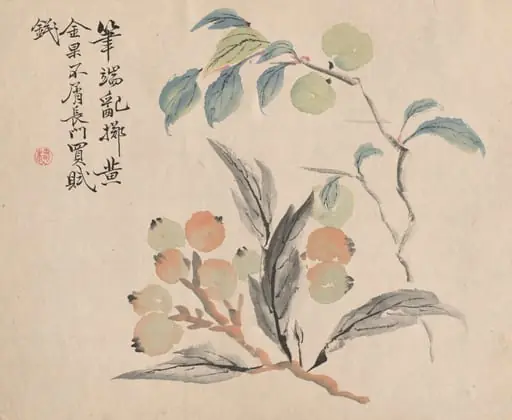 Loquat Tree of Japan
 清 惲冰 花卉圖 册页|Flower Study
 Dan gui hua
 「四時清雅」|"Refined Elegance in the Four Seasons" (Shiji seiga), Album of Flower Paintings
 Untitled
 Untitled
 清 汪士慎 山水花卉圖 冊|Landscapes and Flowers
 椿椿山筆 紅白桃花図(付・画稿)|Red and White Peach Blossoms, Preparatory Sketch
 明/清 佚名 梅竹圖 冊頁|Flowering Plum and Bamboo