Artwork
Flowers and Grasses
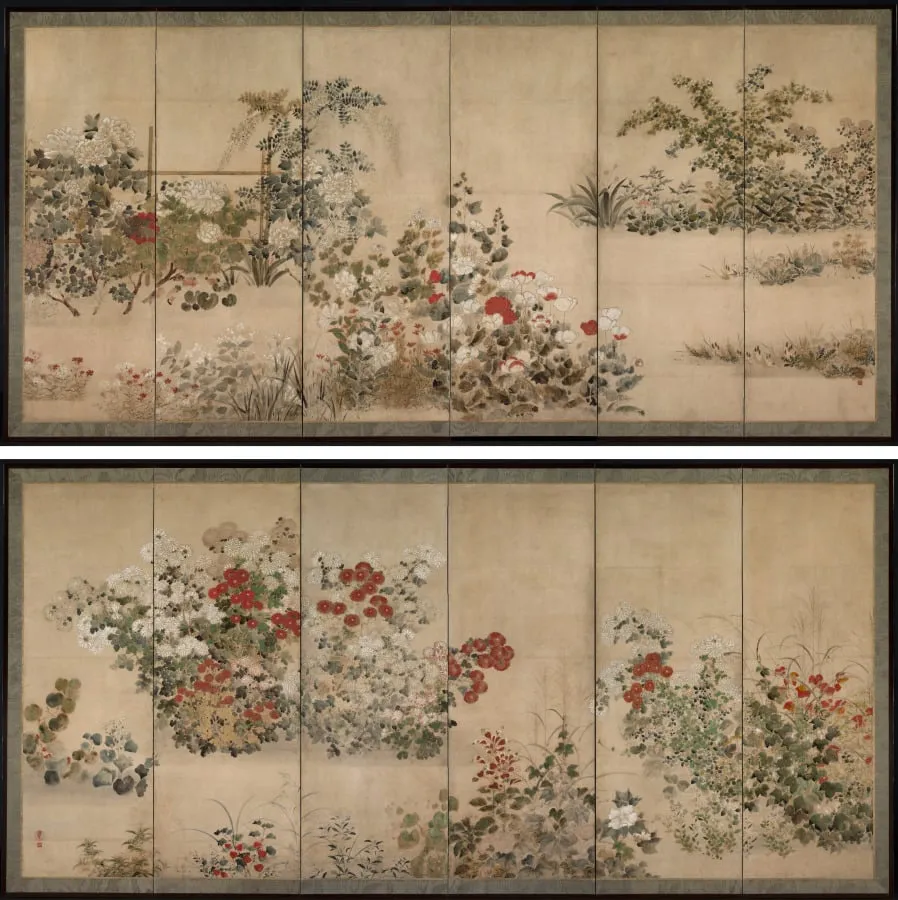
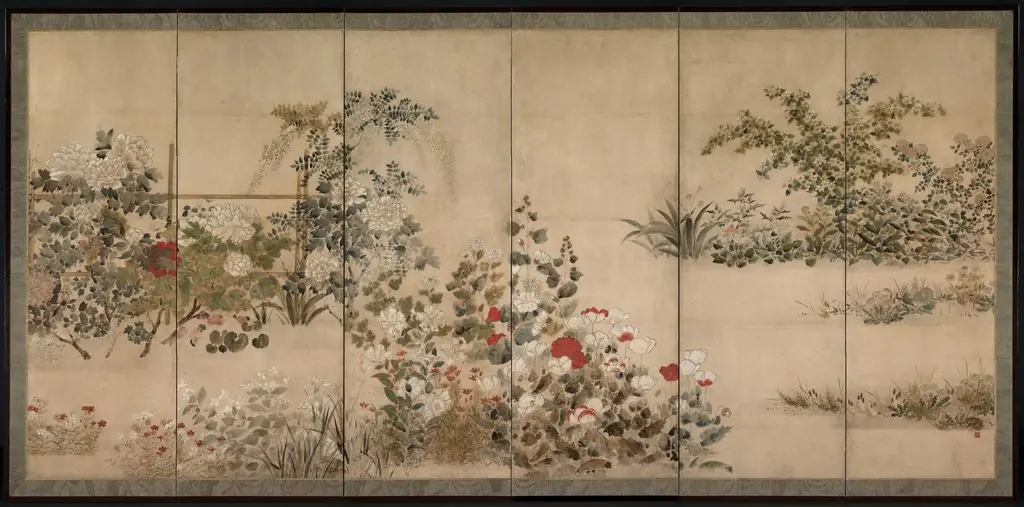
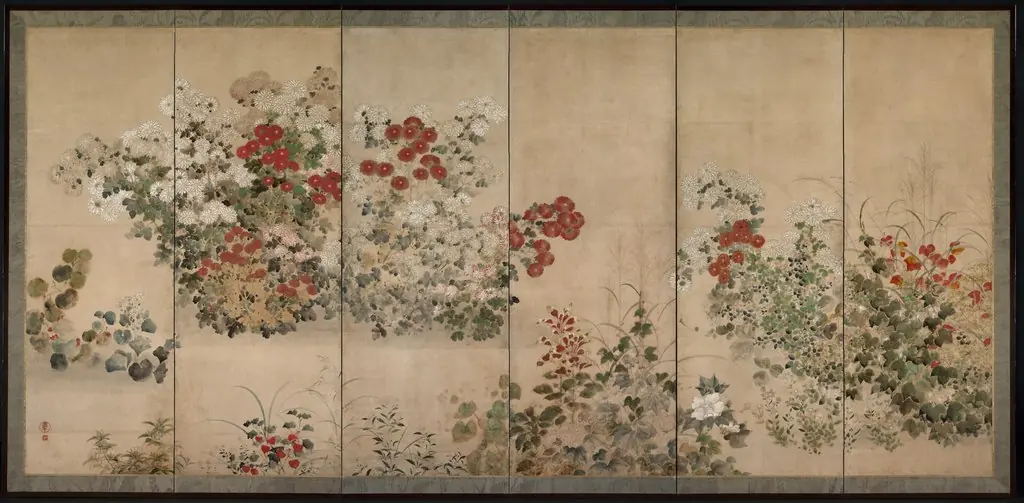
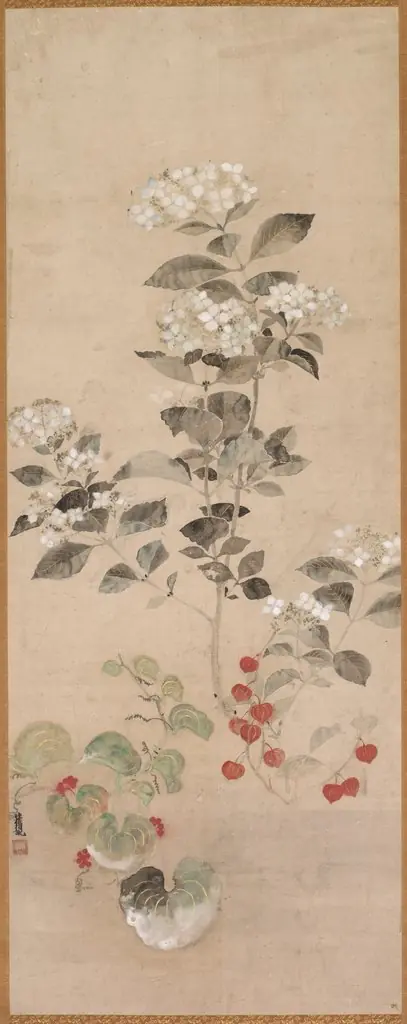
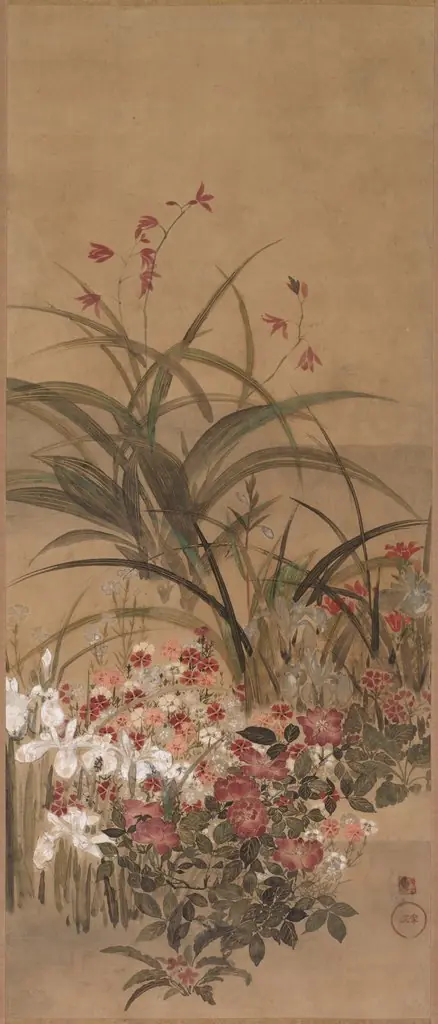
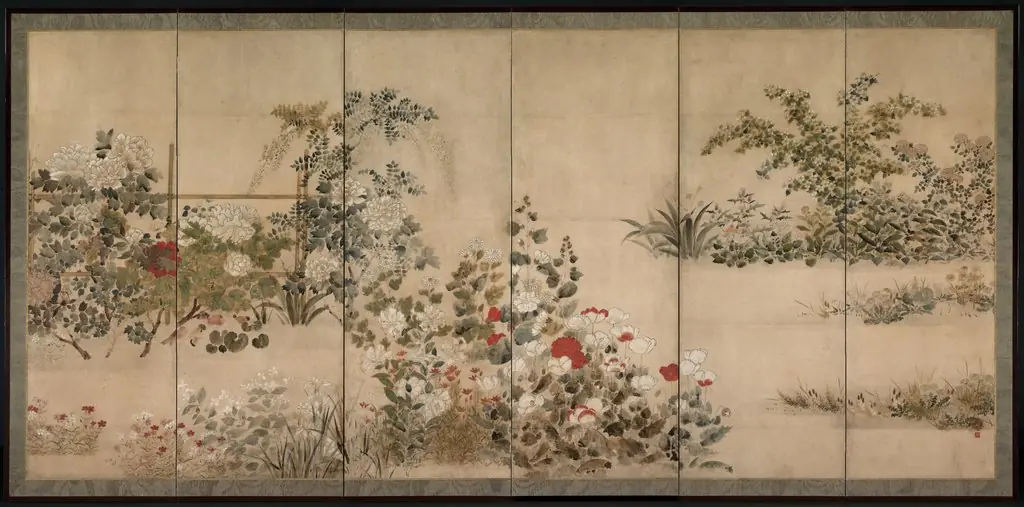
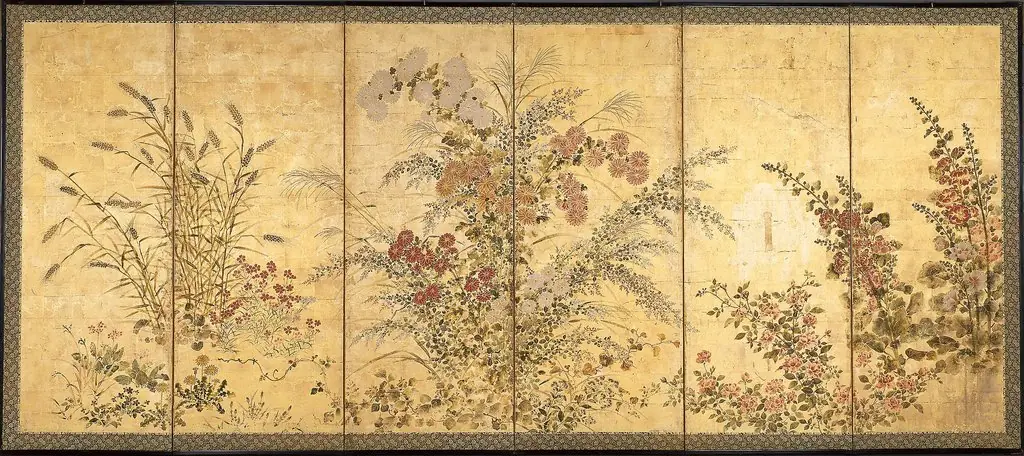
Flowers and Grasses is an unspecified painting by the Baroque artist Kitagawa Sōsetsu. It dates from 1604 and is held in the collection of the Cleveland Museum of Art.
About this work
The screen was made to stand behind a ruler’s chair, so the plants feel like a private garden you’re allowed to peek at.
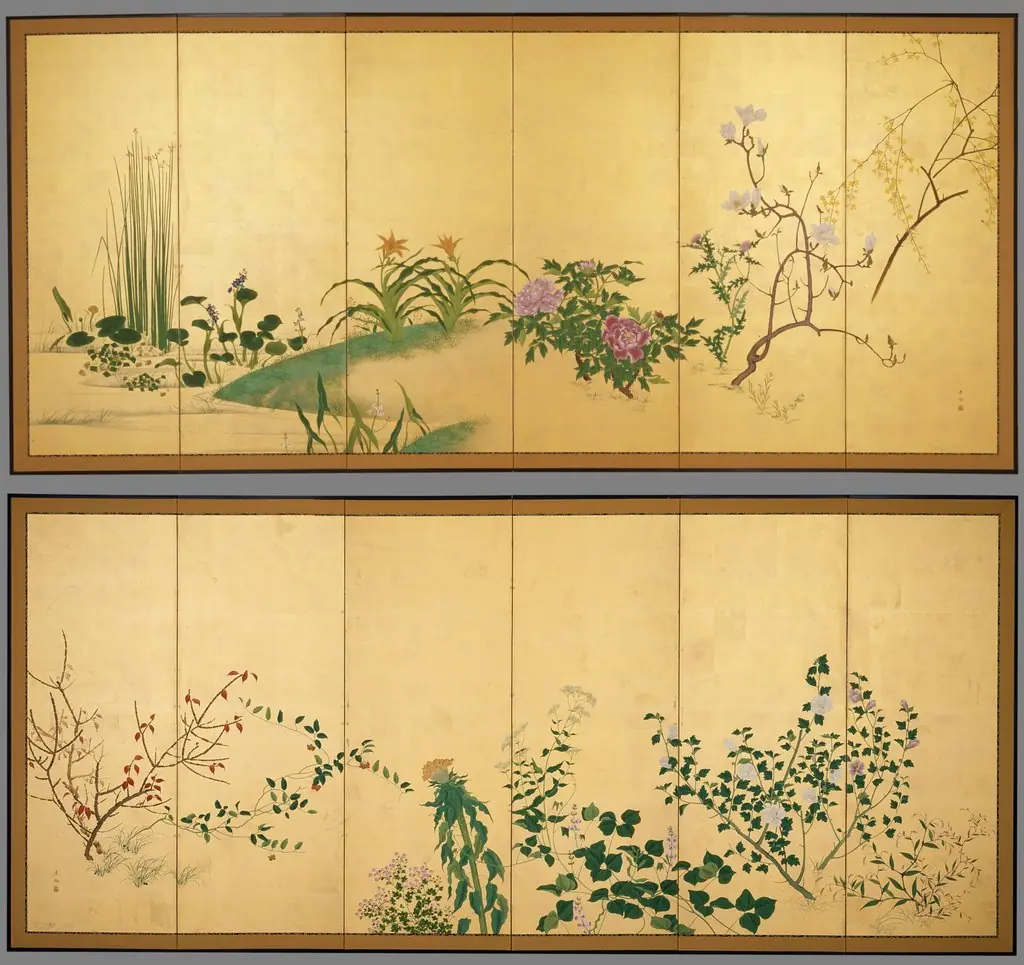
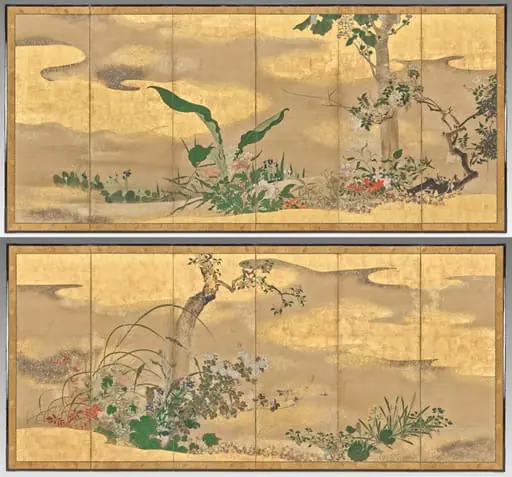
You see a tall folding screen covered in ink-and-color flowers and grasses swaying in an empty gold field.
The screen was made to stand behind a ruler’s chair, so the plants feel like a private garden you’re allowed to peek at. Each stem is drawn with a single brushstroke—no sketch underneath—so the artist had to trust his hand completely.
Look up *Japan, Edo period (1615–1868)* to see more screens that turned rooms into quiet gardens.
Overview
This six-panel folding screen, titled *Flowers and Grasses*, was created by Kitagawa Sōsetsu for the Maeda clan, the ruling family of present‑day Ishikawa Prefecture. Executed in ink and color on paper, the panels depict stylized blossoms and foliage set against a luminous gold background, forming a decorative backdrop for a formal space.
Subject & Meaning
The composition presents an imagined garden of swaying stems and blossoms, arranged to evoke a private, tranquil outdoor scene. Positioned behind a ruler’s chair, the screen offers a visual extension of the interior, suggesting an intimate glimpse of nature that underscores the patron’s cultivated taste.
Technique & Style
Each plant is rendered with a single, confident brushstroke, without preliminary sketches, demonstrating the artist’s mastery of line and spontaneity. The work follows the Rinpa aesthetic—characterized by bold outlines, flat areas of color, and decorative gold leaf—linking it to the tradition established by Tawaraya Sōtatsu.
History & Provenance
Kitagawa Sōsetsu, likely a disciple of Tawaraya Sōsetsu and thus a descendant of the Rinpa school, was commissioned by the Maeda family, who employed such screens to divide rooms in their grand residences. The piece remained in the clan’s collection for generations before entering the museum’s holdings.
Context
During the Edo period, folding screens were commonly used to transform interior spaces into stylized gardens, reflecting a broader cultural interest in integrating nature and art. The Maeda’s choice of a Rinpa‑affiliated painter signaled an alignment with the artistic standards of the imperial capital, reinforcing their elite status.
Artist & collection