Artwork
Dragon and Tiger
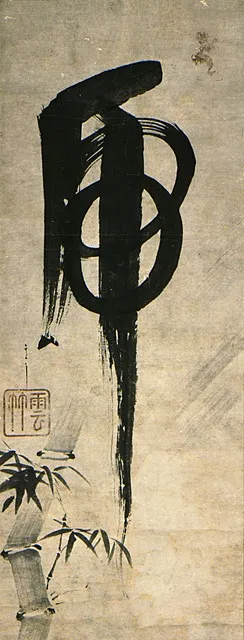
Dragon and Tiger is an unspecified painting by the Ukiyo-e artist Kitamuki Unchiku. It dates from 1650 and is held in the collection of the Los Angeles County Museum of Art.
About this work
Overview
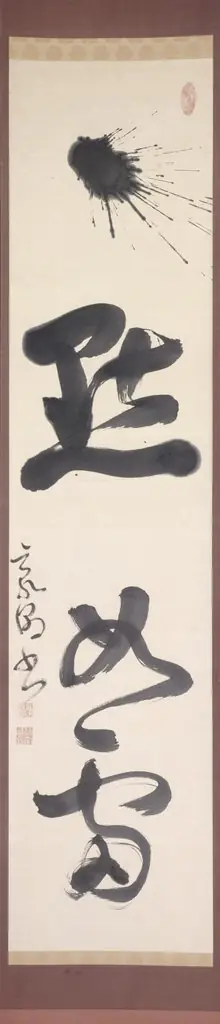
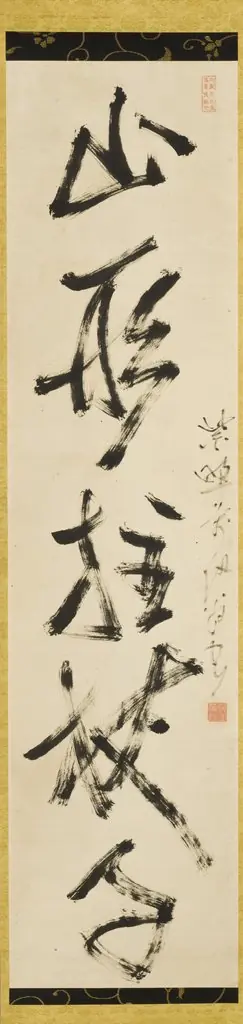
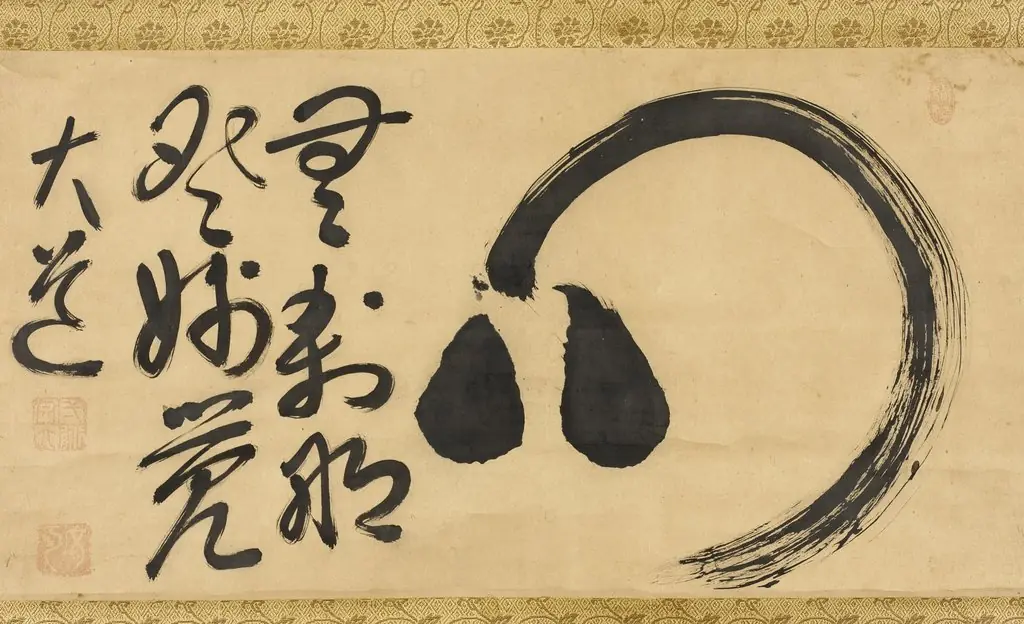
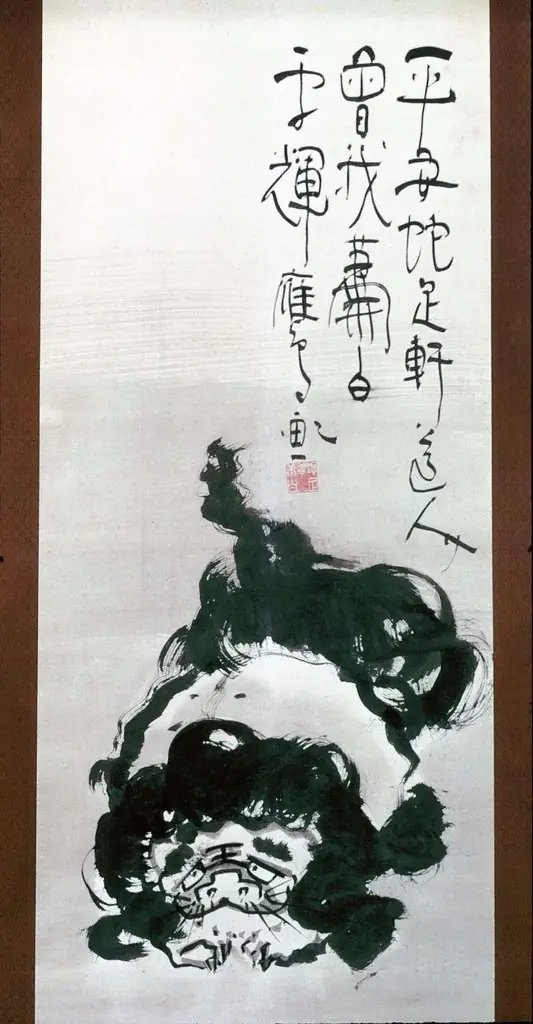
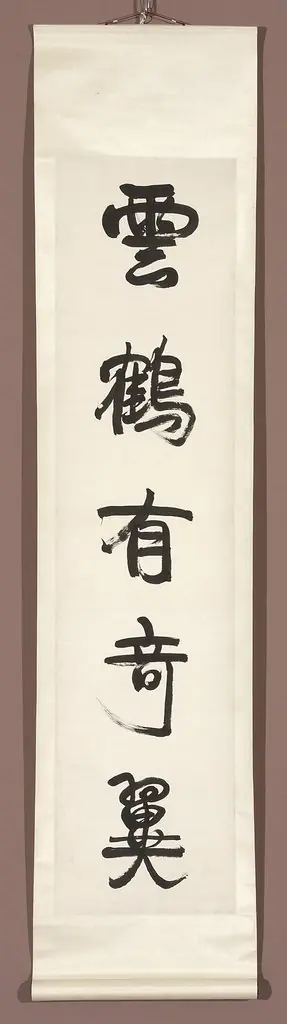
Created around 1650 by the Japanese artist Kitamuki Unchiku, this ink painting presents a single abstract character rendered in bold, fluid brushwork.
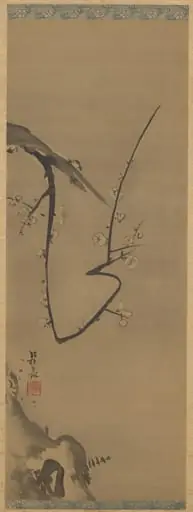
Created around 1650 by the Japanese artist Kitamuki Unchiku, this ink painting presents a single abstract character rendered in bold, fluid brushwork. Set against a pale beige ground, the form suggests movement through its energetic strokes and textured surface. A small cluster of dark green leaves in the lower left corner introduces a quiet, organic counterpoint to the dominant gesture, grounding the composition in natural observation.
Subject & Meaning
Though titled Dragon and Tiger, the painting does not illustrate the animals literally. Instead, the abstract character may symbolize their combined energies—strength and dynamism—through calligraphic form. The delicate plant beside it evokes resilience and growth, suggesting a balance between primal force and quiet vitality. The title likely references traditional East Asian motifs, reinterpreted here through abstraction rather than representation.
Technique & Style
The work employs a loose, gestural ink technique characteristic of Zen-inspired brushwork. Thick, rapid strokes create a sense of motion, while variations in ink density and brush pressure produce texture and rhythm. The background remains largely untouched, emphasizing the spontaneity of the gesture. The plant, rendered with finer lines, contrasts in scale and delicacy, enhancing the composition’s dynamic tension.
History & Provenance
The painting entered the collection of the Los Angeles County Museum of Art, where it remains today. Its origins trace to mid-17th century Japan, a period when ink painting was evolving under Zen Buddhist influence. While specific early ownership records are not documented, its style aligns with the expressive traditions of Japanese monochrome brushwork from the Edo period.
Context
This work emerged during a time when Japanese artists increasingly favored minimalism and spontaneity in ink painting, influenced by Chinese Chan (Zen) aesthetics. The abstraction of animal symbolism into calligraphic form reflects a broader trend of distilling natural forces into essential gestures. Such works were often created for contemplative settings, inviting viewers to perceive energy beyond literal depiction.
Legacy
Kitamuki Unchiku’s approach exemplifies the enduring Japanese tradition of conveying power through restraint. The painting’s emphasis on brush rhythm over detail influenced later generations of ink artists who sought to capture inner vitality rather than external form. Its presence in a major Western museum underscores its role in bridging East Asian aesthetics with global modernist sensibilities.
Artist & collection
Artist
This artist’s brush brought ink-washed tigers and dragons to life in the 17th century.