Artwork
Reishō: Paragon of Filiel Piety; Chinese Blue Magpie with Flowering Plum; Sparrows, Willow, and Rose
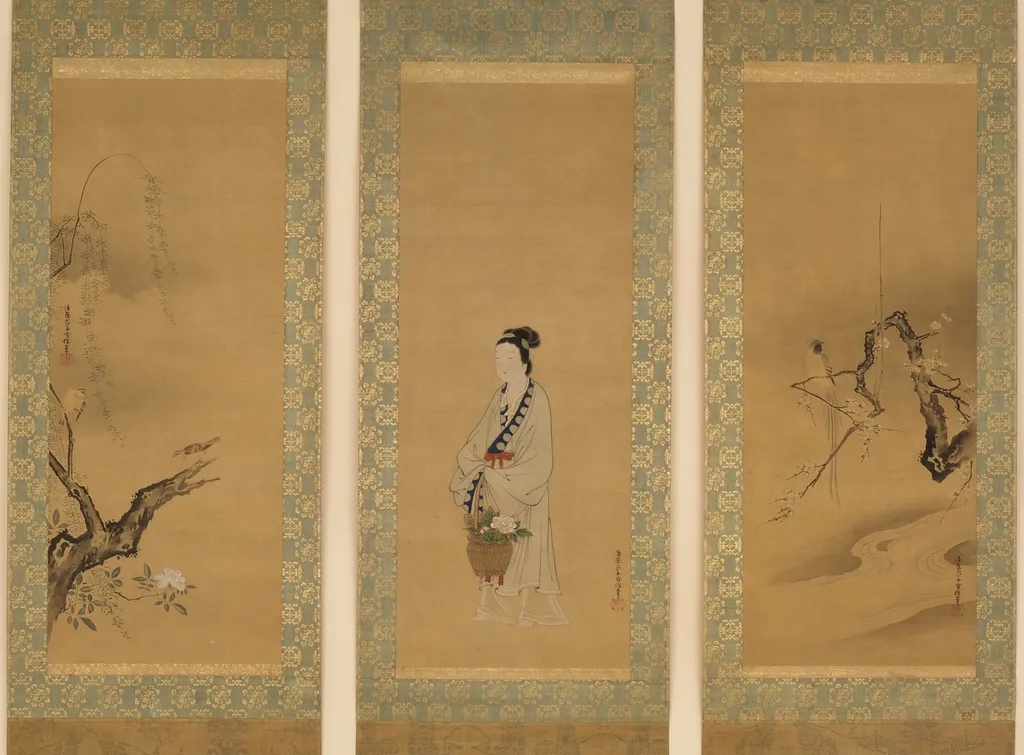
Reishō: Paragon of Filiel Piety; Chinese Blue Magpie with Flowering Plum; Sparrows, Willow, and Rose is an unspecified painting by Kiyohara Yukinobu. It dates from 1650 and is held in the collection of the Los Angeles County Museum of Art.
About this work
Overview
Reishō: Paragon of Filiel Piety; Chinese Blue Magpie with Flowering Plum; Sparrows, Willow, and Rose, created around 1650 by Kiyohara Yukinobu, is a tripartite painting housed at the Los Angeles County Museum of Art, featuring distinct scenes across its three sections.
Subject & Meaning
The central figure, a woman in traditional Japanese attire with a blue sash and updo, holds a basket of flowers, embodying filial piety (Reishō). The left and right sections, with sparse flowering branches, contextualize her within a serene, natural setting.
Technique & Style
The painting is characterized by muted colors, delicate brushstrokes, and a subtle, patterned light brown background, collectively conveying a sense of serenity.
History & Provenance
Created circa 1650 by Kiyohara Yukinobu, the work's history prior to its acquisition by the Los Angeles County Museum of Art is not detailed here.
Context
The piece reflects 17th-century Japanese artistic values, blending natural imagery with human subjects to convey moral virtues like filial piety.
Legacy
As part of a prominent museum collection, it contributes to the understanding and appreciation of 17th-century Japanese painting techniques and thematic focuses.
Artist & collection


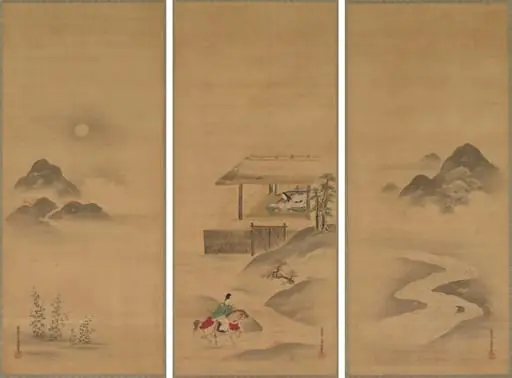
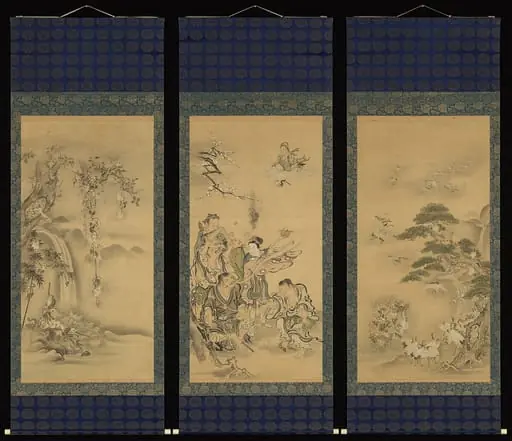 八仙猿鶴図|Eight Daoist Immortals, Cranes, and Gibbons
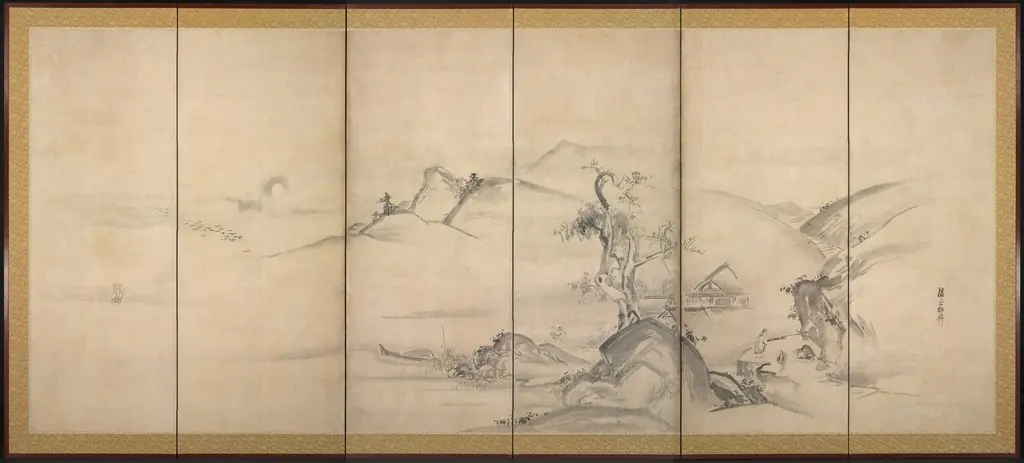 Eight Views of the Xiao and Xiang Rivers
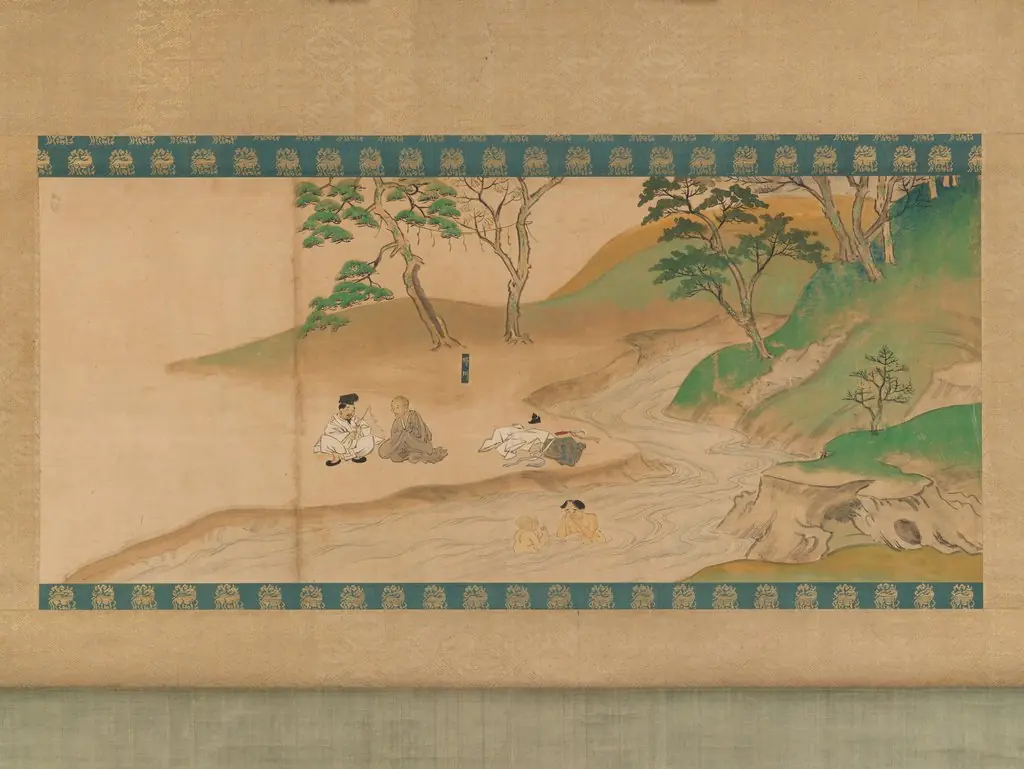 Section of Jin'o-ji Engi Emaki (Konin Shonin E-den)
 Scene from A Long Tale for an Autumn Night
 Untitled
 Spring and Autumn Farming (Spring)
 Spring and Autumn Farming (Spring)
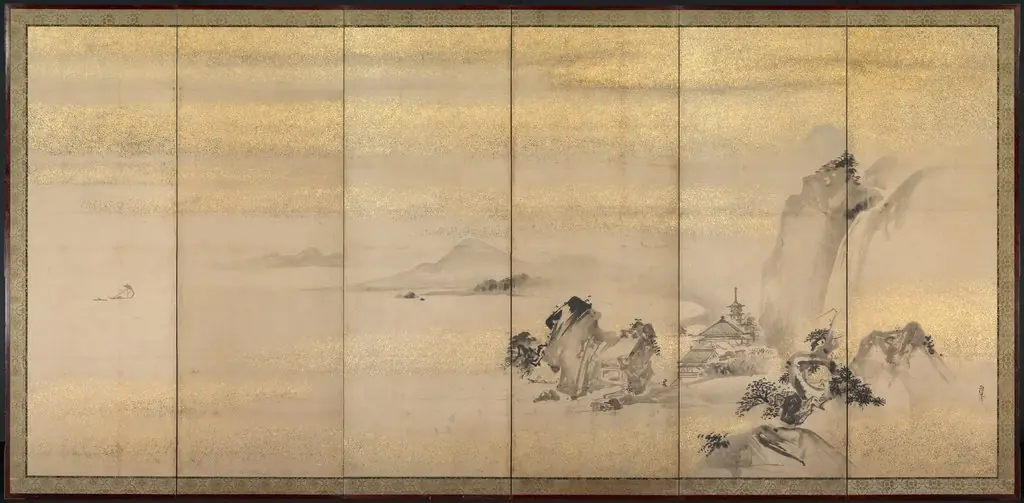 Summer and Winter Landscapes (one of a pair)
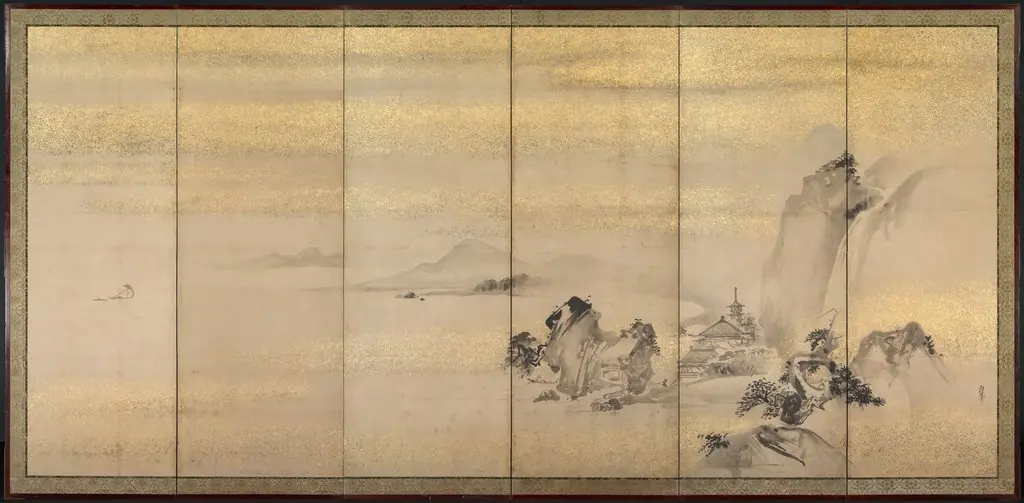 Summer and Winter Landscapes
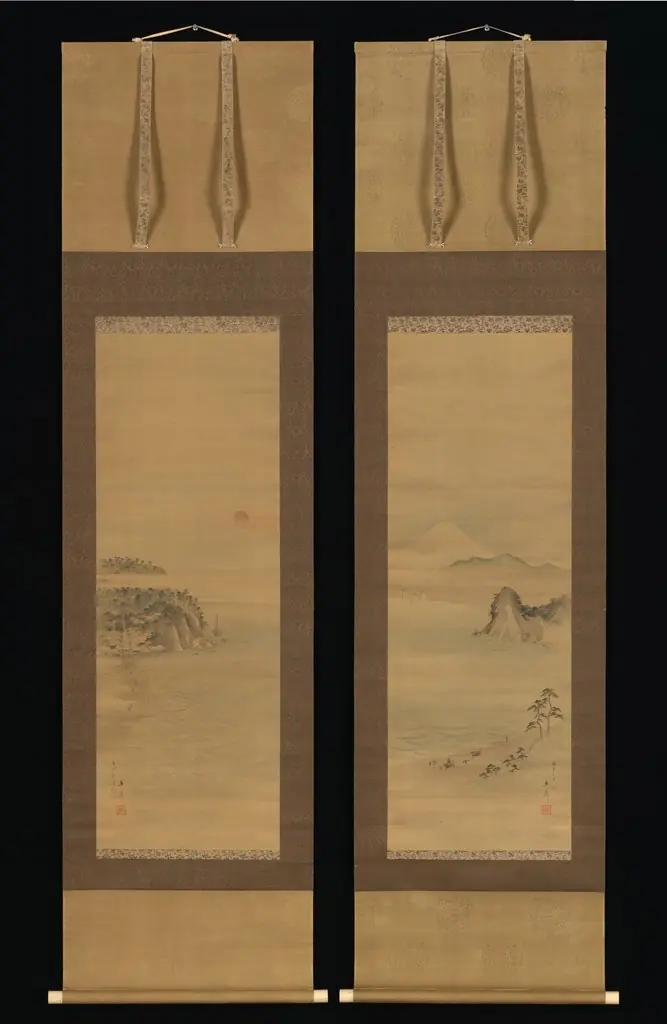 Shichirigahama and Enoshima
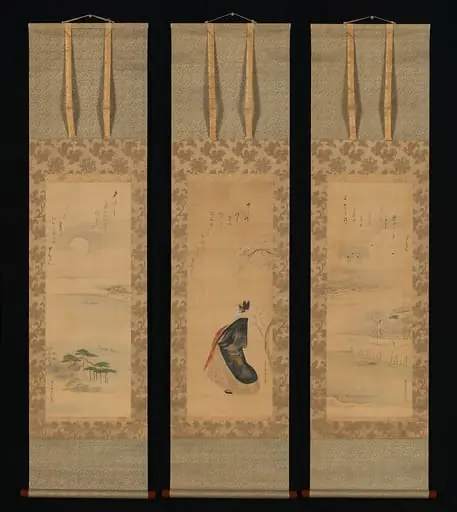 蜀山人(大田 南畝)賛 雪・月・花図 |Snow, Moon, and Cherry Blossoms (Yoshiwara in Three Seasons)
 Flowers and Birds