Artwork
Minamoto no Nakakuni Visits Lady Kogō
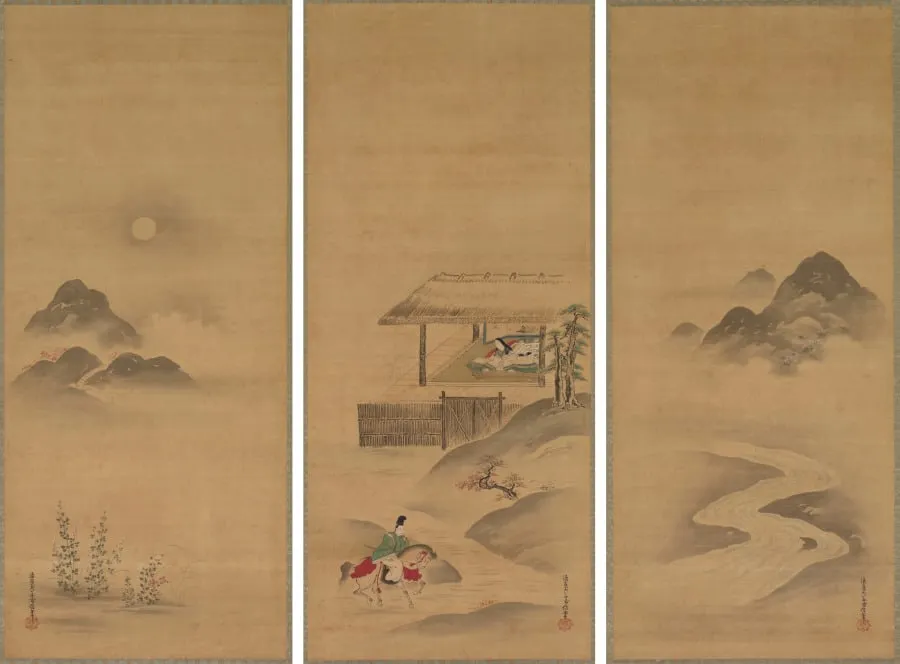
Minamoto no Nakakuni Visits Lady Kogō is an unspecified painting by the Baroque artist Kiyohara Yukinobu. It dates from 1604 and is held in the collection of the Cleveland Museum of Art.
About this work
The artist was a rare woman working in Edo-period Japan, and she signed her name in bold red—a quiet claim in a field dominated by men.
A man on horseback climbs a winding path toward a house where a woman plucks a koto. To the right, cherry blossoms bloom under blue sky; to the left, autumn leaves fall under moonlight. The three panels tell one story.
This painting shows a moment from *The Tale of the Heike*, a 12th-century epic. The artist was a rare woman working in Edo-period Japan, and she signed her name in bold red—a quiet claim in a field dominated by men.
To see more quiet power in small details, look up *japan, edo period (1615–1868)*.
Overview
The painting 'Minamoto no Nakakuni Visits Lady Kogō' is a triptych that depicts a scene from a classic Japanese epic. It shows a nobleman on horseback approaching a residence where a woman plays a traditional stringed instrument.
Subject & Meaning
The artwork illustrates an episode from 'The Tale of the Heike', a 12th-century narrative. Minamoto no Nakakuni, sent by the emperor, visits Lady Kogō, and the scene captures the moment of his arrival.
Technique & Style
The triptych format allows for a contrast between day and night scenes, with a spring landscape on one side and an autumnal scene on the other. The artist's use of these juxtaposed settings adds depth to the narrative.
History & Provenance
Created during the Edo period, the painting is notable for being the work of a female artist, who signed her name prominently in red, a gesture that asserts her presence in a male-dominated field.
Artist & collection


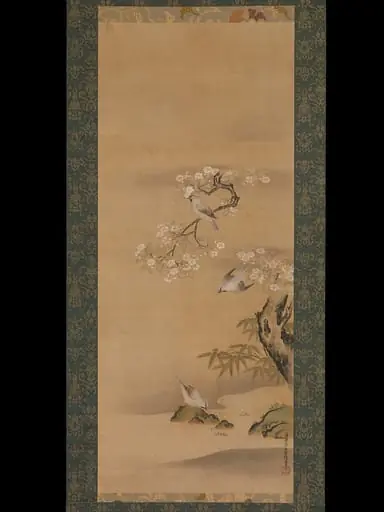 清原雪信筆 緋連雀桜竹図|Waxwings, Cherry Blossoms, and Bamboo
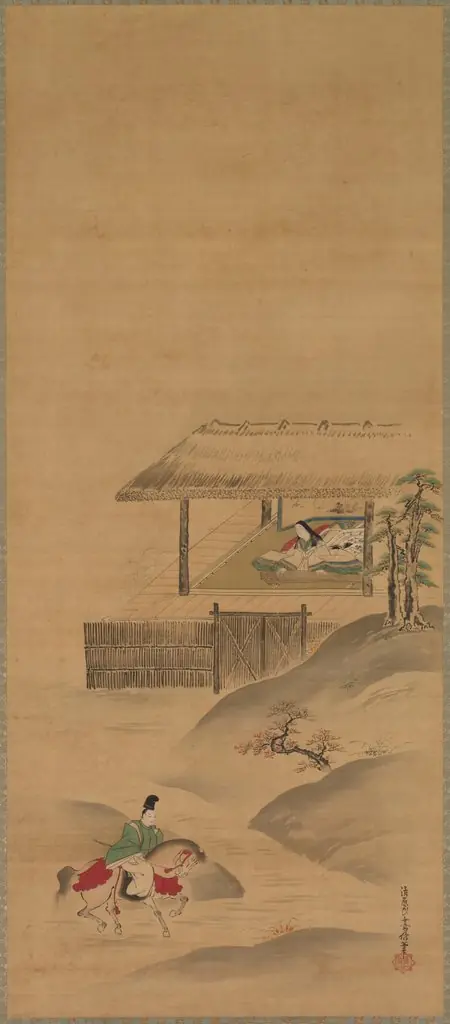 Minamoto no Nakakuni Visits Lady Kogō
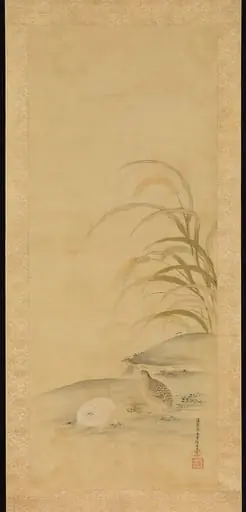 粟に鶉図|Quail and Millet
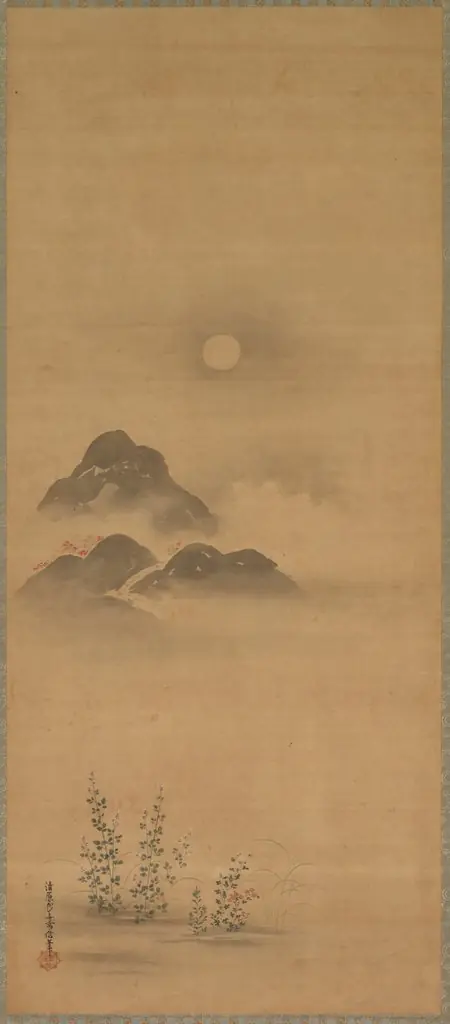 Minamoto no Nakakuni Visits Lady Kogō
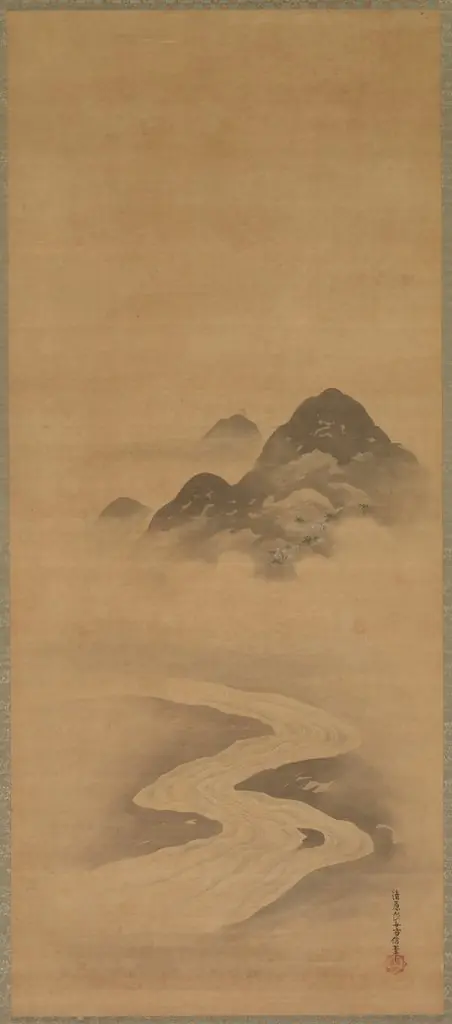 Minamoto no Nakakuni Visits Lady Kogō
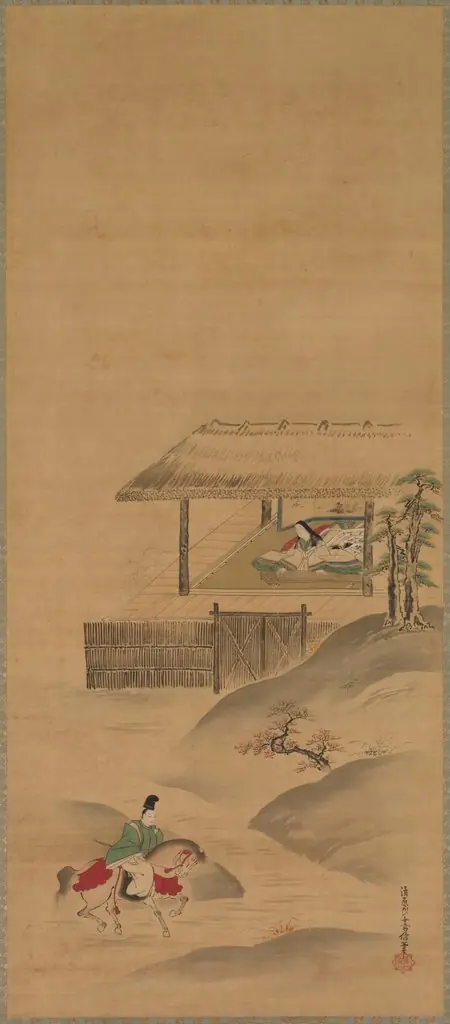 Minamoto no Nakakuni Visits Lady Kogō
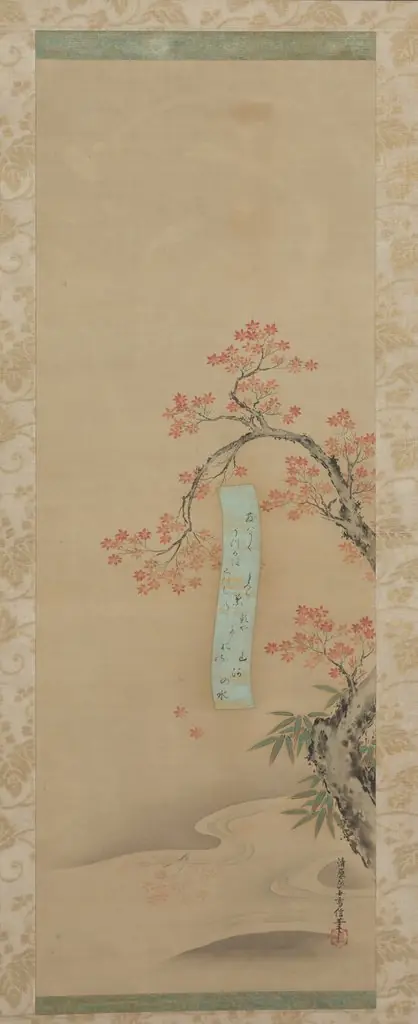 Autumn in Takao
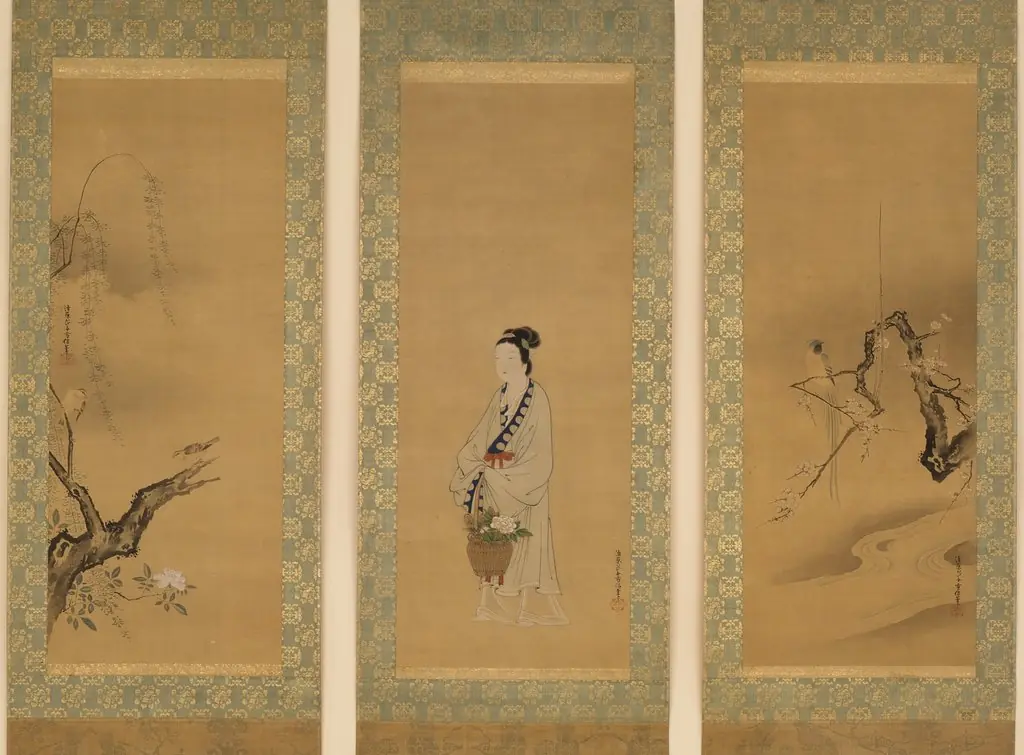 Reishō: Paragon of Filiel Piety; Chinese Blue Magpie with Flowering Plum; Sparrows, Willow, and Rose
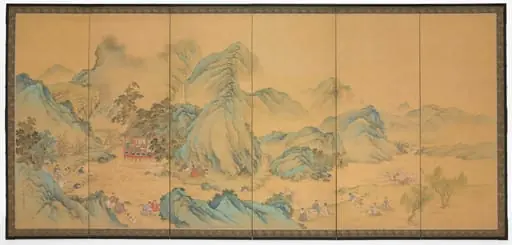 The Gathering at the Orchid Pavilion (front); Geese among Reeds (back)
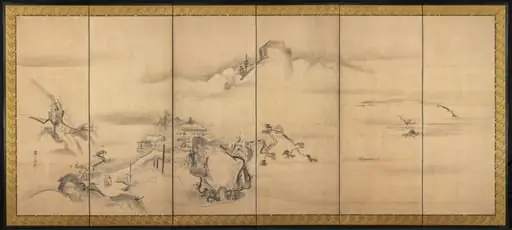 Eight Views of the Xiao and Xiang Rivers
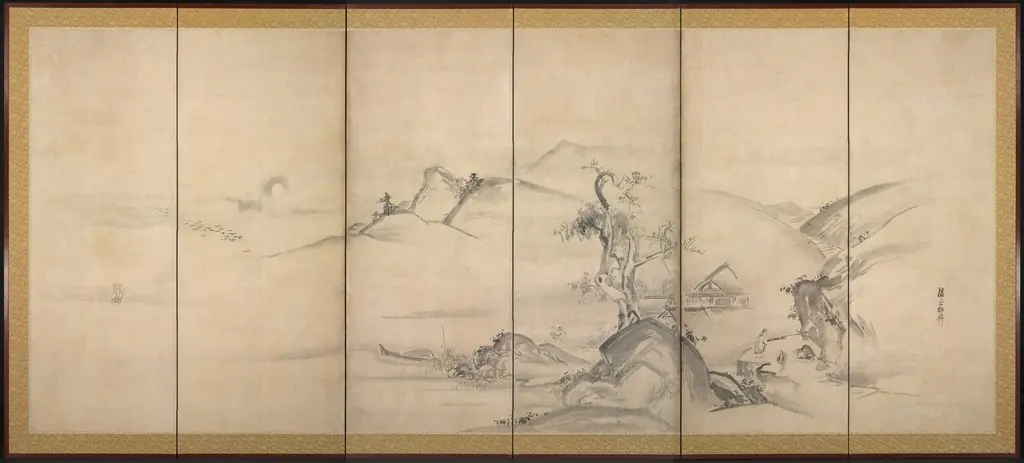 Eight Views of the Xiao and Xiang Rivers
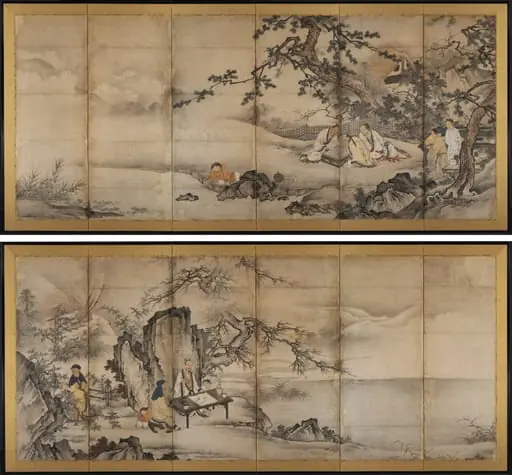 The Four Accomplishments
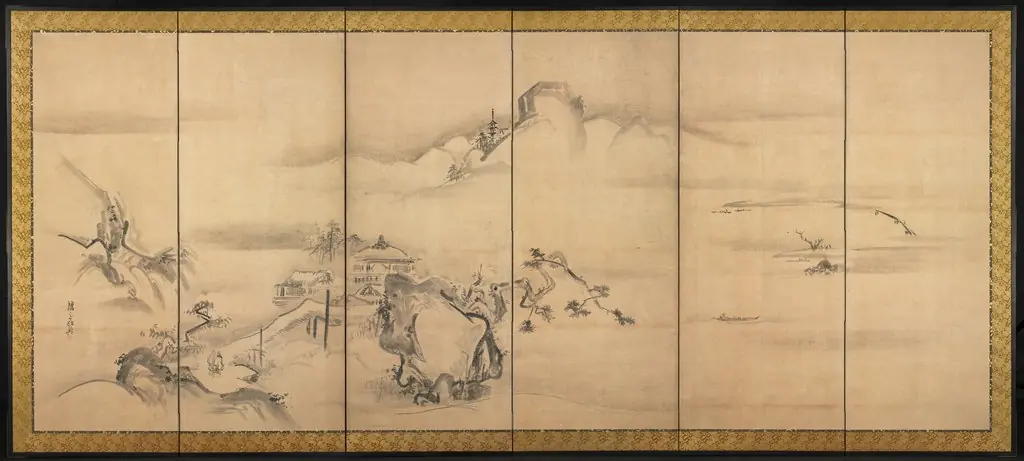 Eight Views of the Xiao and Xiang Rivers
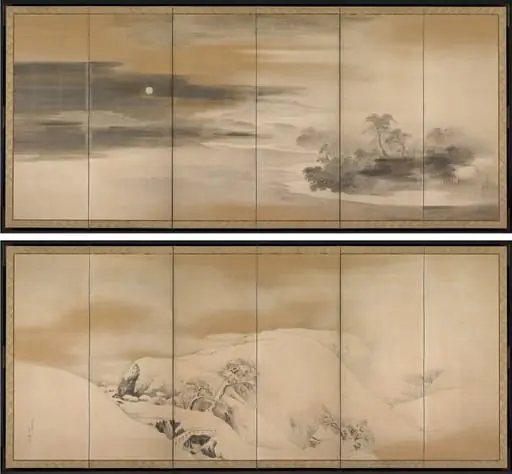 Summer Night; Winter Day
 Moonlit Landscape (one of a pair)
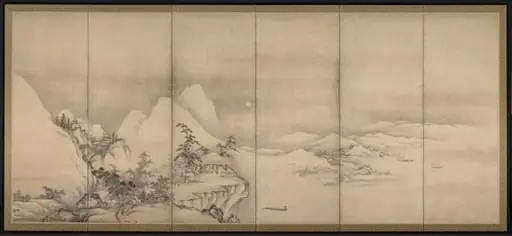 Chinese Landscape
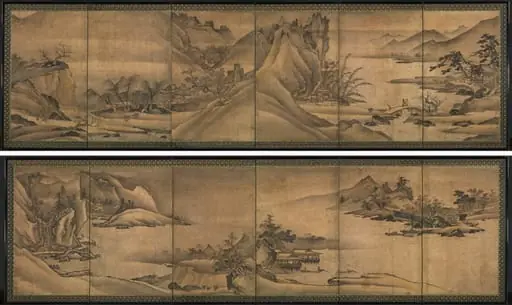 Landscape of the Four Seasons