Artwork
Carle Vanloo
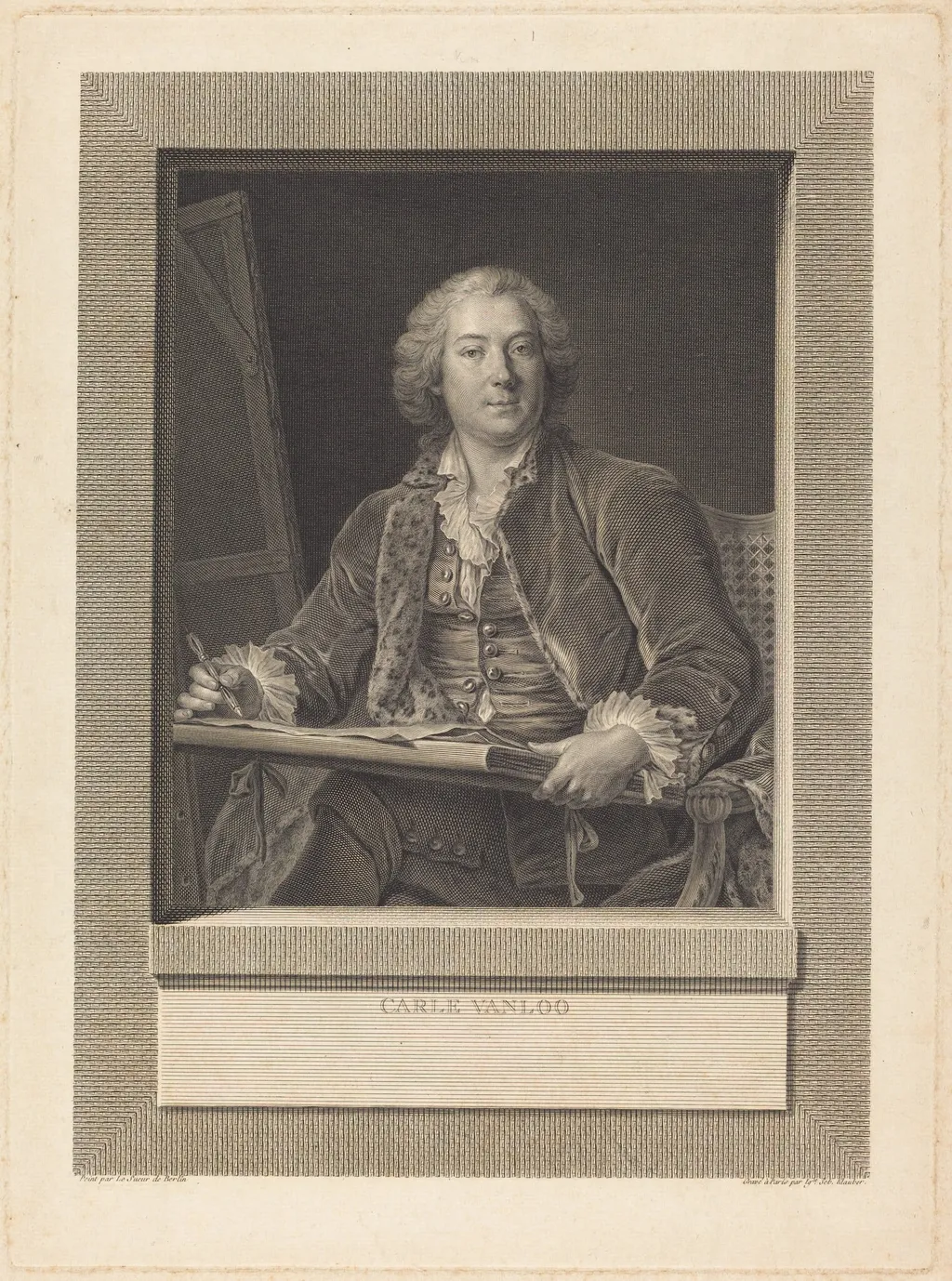
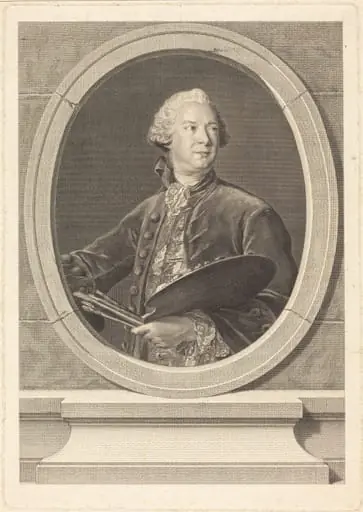
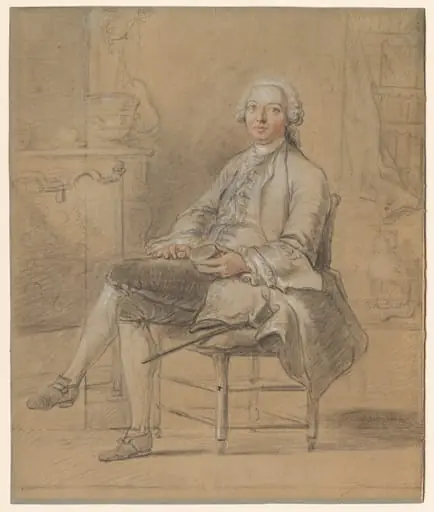
Carle Vanloo is an ink print by the Romanticist artist Ignaz Sebastian Klauber. It dates from 1785 and is held in the collection of the National Gallery of Art.
About this work
Overview
Executed in black and white on laid paper, the print presents a seated figure positioned near a window, rendered with meticulous linear detail.
This 1785 engraving by Ignaz Sebastian Klauber reproduces a portrait of the French painter Carle Vanloo. Executed in black and white on laid paper, the print presents a seated figure positioned near a window, rendered with meticulous linear detail. The subject’s attire and setting reflect conventions of eighteenth-century portraiture, while the medium itself—engraving—demonstrates the period’s reproductive printmaking techniques.
Subject & Meaning
The engraving depicts Carle Vanloo, a prominent Rococo artist, shown in a moment of contemplation. He holds an open book in one hand and a flower in the other, suggesting intellectual and artistic pursuits. The composition, with light accentuating his features, emphasizes his status as a figure of cultural significance, reinforcing the era’s association of artists with refinement and learning.
Technique & Style
Klauber employed engraving methods characteristic of the late eighteenth century, using fine incised lines to model form and texture. Cross-hatching and stippling create tonal variations, particularly in the drapery and facial features, while the controlled precision of the lines enhances the illusion of depth. The style aligns with reproductive printmaking, which aimed to faithfully translate paintings into printed form.
History & Provenance
Created in 1785, this engraving served as a means of disseminating Vanloo’s likeness to a broader audience. Reproductive prints of this kind were often commissioned to honor artists or reproduce celebrated works. The print’s survival reflects the period’s interest in preserving and circulating images of notable figures, though its specific early ownership and circulation remain unrecorded.
Context
The engraving reflects the eighteenth-century practice of reproducing portraits of artists, scholars, and aristocrats in print form. Such works were collected by connoisseurs and circulated in salons, contributing to the public’s familiarity with prominent cultural figures. The medium of engraving, requiring technical skill, underscored the value placed on precision and craftsmanship in the visual arts of the period.
Artist & collection