Artwork
Blick auf einen Fluss (View on a River)
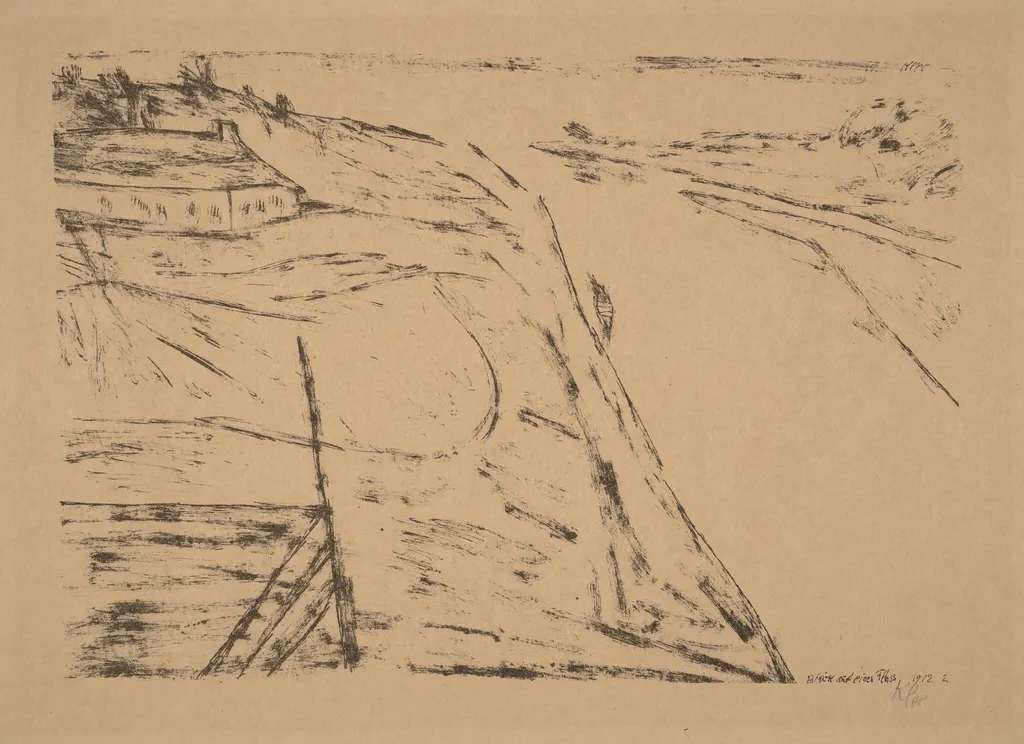
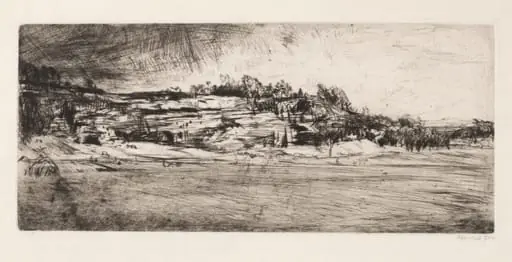
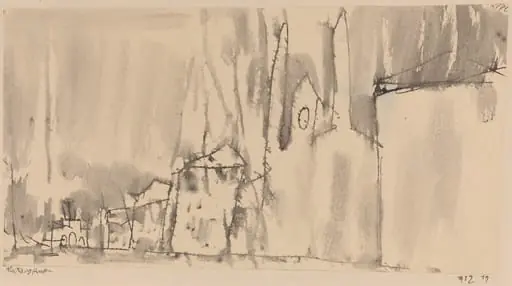
Blick auf einen Fluss (View on a River) is an ink print by Paul Klee. It dates from 1912 and is held in the collection of the National Gallery of Art.
About this work
Overview
Paul Klee produced *Blick auf einen Fluss* in 1912 as a lithograph, marking an early phase in his printmaking practice.
Paul Klee produced *Blick auf einen Fluss* in 1912 as a lithograph, marking an early phase in his printmaking practice. Created during his formative years in Germany, the work reflects his exploration of abstraction and simplified form. Though often associated with color experimentation, this piece emphasizes tonal restraint and structural clarity, signaling his transition from figurative representation toward more conceptual landscapes.
Subject & Meaning
The image depicts a quiet riverside scene with a single dwelling on the left and a winding river receding into the distance. Trees frame the composition, their forms reduced to minimal outlines. The absence of human figures and the subdued environment suggest a contemplative stillness. Klee avoids narrative, instead inviting observation of spatial relationships and the quiet rhythm of nature, aligning with his interest in inner harmony over external realism.
Technique & Style
Using lithography, Klee employed fine lines and subtle tonal gradations to build the scene with economy. Shapes are flattened and geometric, with the river rendered as a series of parallel strokes and the house as a compact, angular mass. The palette is limited to earth tones—browns, grays, and soft blacks—enhancing the work’s meditative quality. His approach merges observational detail with abstract reduction, anticipating his later theoretical writings on form and line.
History & Provenance
Created in 1912, the lithograph emerged during Klee’s time in Munich and his association with the Blaue Reiter group. It was made shortly before his pivotal trip to Tunisia, which profoundly influenced his use of color. While not widely exhibited at the time, it belongs to a series of early prints that document his technical development. The work remains in private and institutional collections, valued for its role in tracing his artistic evolution.
Context
In 1912, European art was shifting toward abstraction, with movements like Expressionism and Cubism challenging traditional representation. Klee, influenced by these currents, began distilling natural forms into essential elements. This lithograph reflects his position between observation and invention—neither fully realistic nor purely nonobjective. It aligns with contemporaneous experiments by artists seeking new visual languages for inner experience.
Legacy
Though modest in scale, *Blick auf einen Fluss* exemplifies Klee’s foundational approach to composition and line, which later informed his teaching at the Bauhaus. Its restrained aesthetic and structural clarity became hallmarks of his mature style. The work contributes to a broader understanding of early 20th-century printmaking as a medium for conceptual exploration, not just reproduction, influencing generations of artists interested in abstraction and poetic minimalism.
Artist & collection
Artist
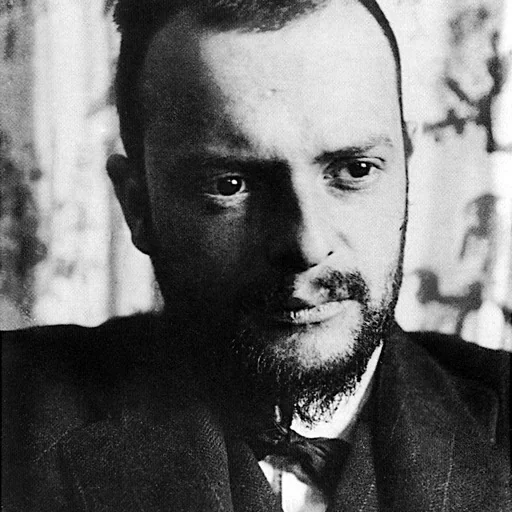
Paul Klee (German: ; 18 December 1879 – 29 June 1940) was a Swiss-born German artist.

 Spring at Cardross
 Untitled
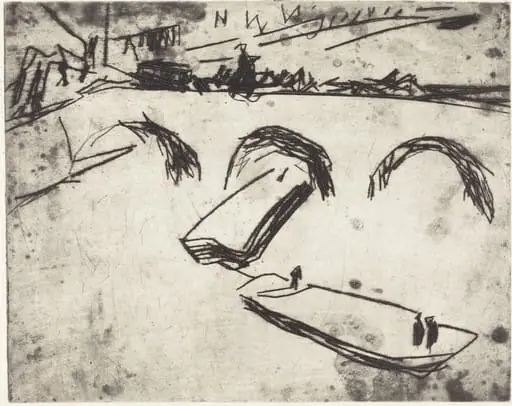 Bridge on Crown Prince Embankment (Brucke am Kronprinzenufer)
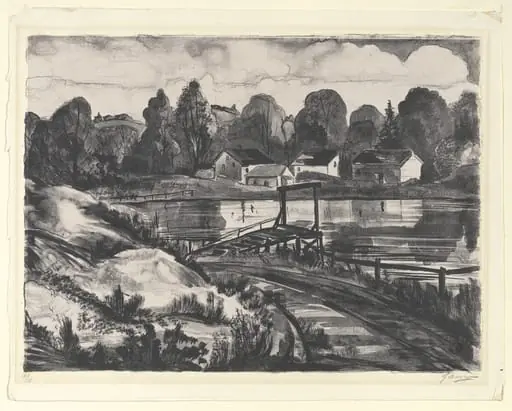 Untitled
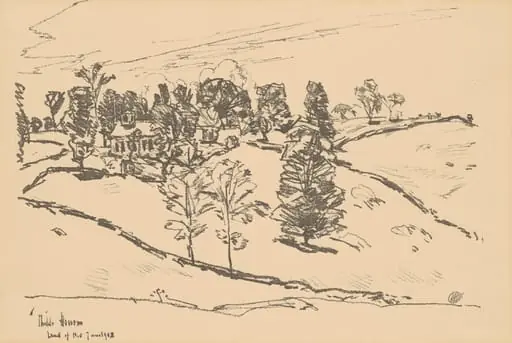 The Little School House, Land of Nod
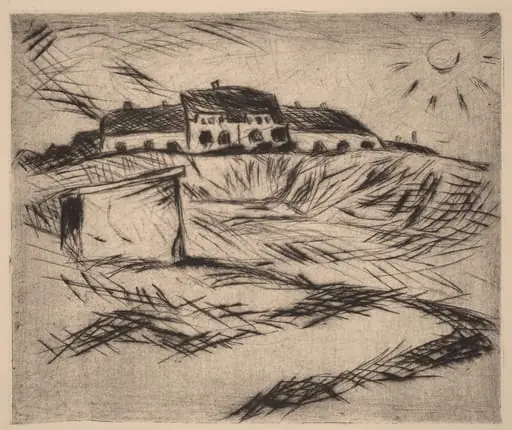 Barracks (Kaserne)
 Beach
Beach Valley of the Tay
 Ludwigstrasse
 On the Ways
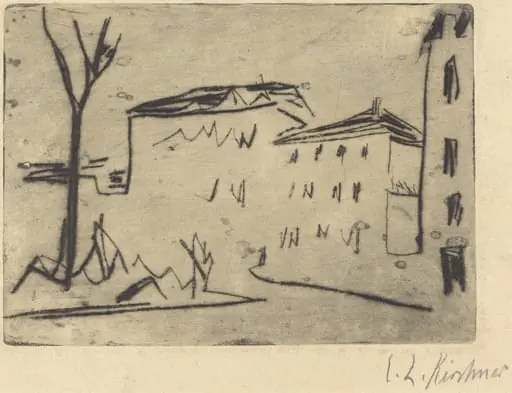 Street Corner in Dresden (Strassenecke Dresden)
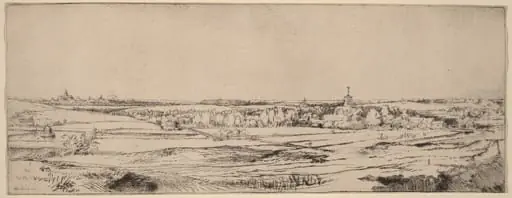 Landscape with a View toward Haarlem (The Goldweigher's Field)