Artwork
Barracks (Kaserne)
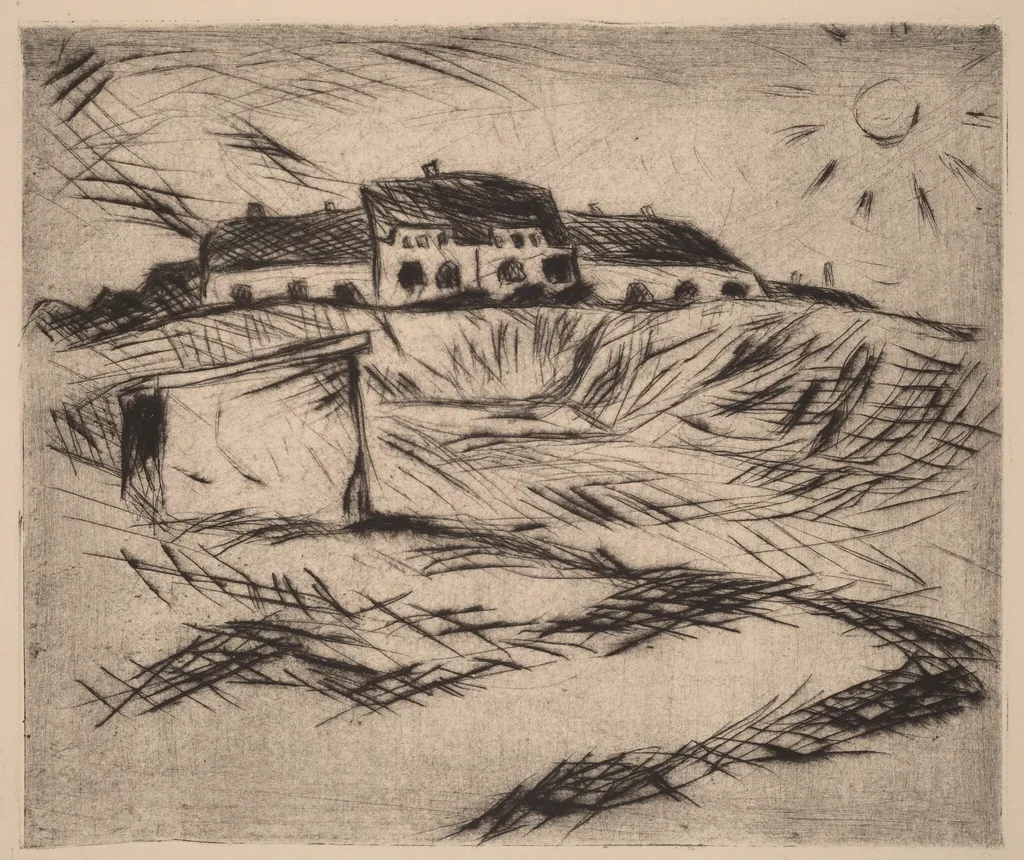
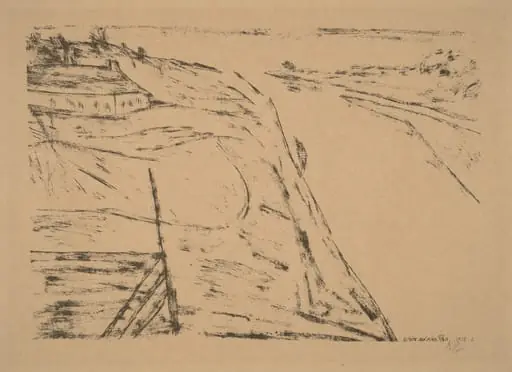
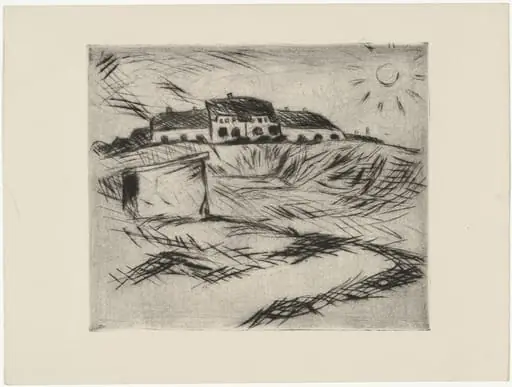
Barracks (Kaserne) is an ink print by Walter Gramatté. It dates from 1916 and is held in the collection of the National Gallery of Art.
About this work
Overview
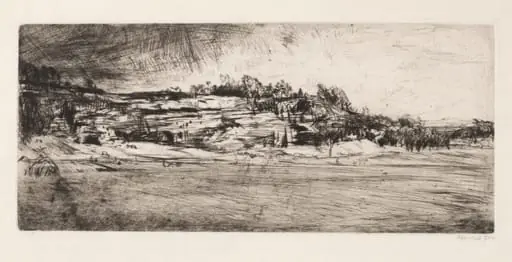
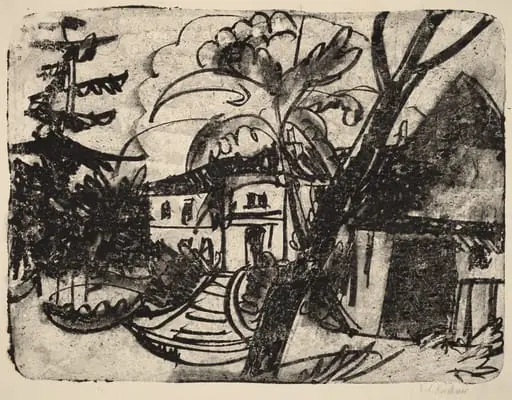
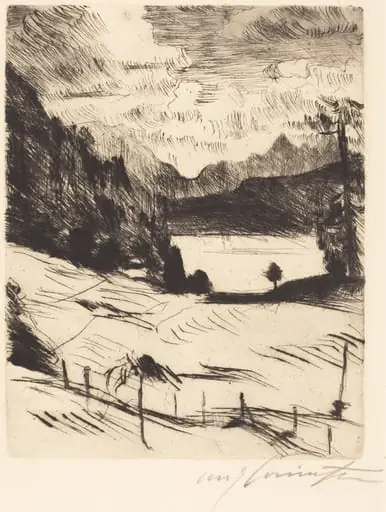
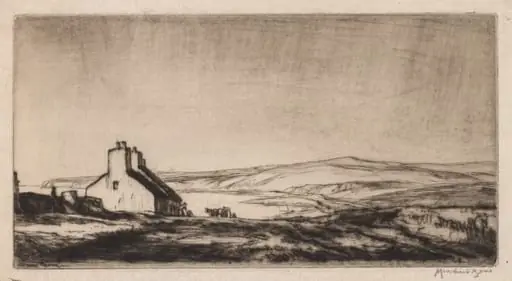
Created in 1916, *Barracks (Kaserne)* is a drypoint print on cardstock by German artist Walter Gramatté. The work presents a modest building with a sloping roof, set behind a low stone wall and framed by a field of tall, wavering grass. Its line work is loose, scratchy, and reminiscent of a rapid sketch, conveying a sense of immediacy.
Subject & Meaning
The composition depicts a military barracks, a motif drawn from Gramatté’s personal experience of World War I. The stark architecture and the surrounding grass evoke the quiet, isolated atmosphere of a wartime outpost, reflecting the artist’s own illness and the broader emotional weight of the conflict.
Technique & Style
Gramatté employed a drypoint needle to incise the image directly into the cardstock, producing jagged, burr‑laden lines that remain visible in the final print. This method yields a raw, unfinished quality, aligning with the expressionist tendency toward emotive, gestural mark‑making.
History & Provenance
The print originates from Gramatté’s productive period across several European cities, including Berlin, Hamburg, Hiddensee, and Barcelona. While specific ownership details are scarce, the work is representative of his wartime output and has been documented in collections focusing on early 20th‑century German expressionism.
Context
During the First World War, Gramatté’s art increasingly turned to themes of confinement, illness, and the psychological impact of military life. *Barracks (Kaserne)* fits within this broader shift, illustrating how personal and collective trauma informed his visual language.
Own this work as a print
Artist & collection

Artist
Walter Gramatté (8 January 1897 in Berlin – 9 February 1929 in Hamburg) was a German expressionist painter who specialized in magic realism.

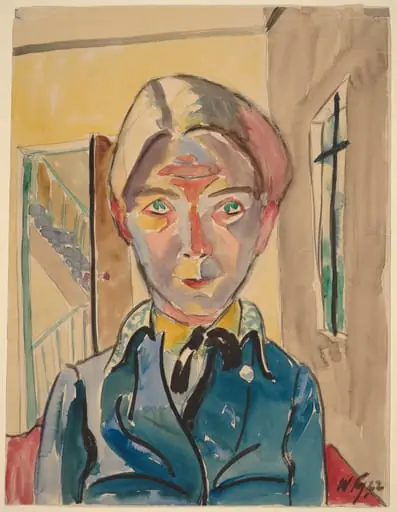 Self-Portrait in Front of Stairs (Selbst vor Treppe)
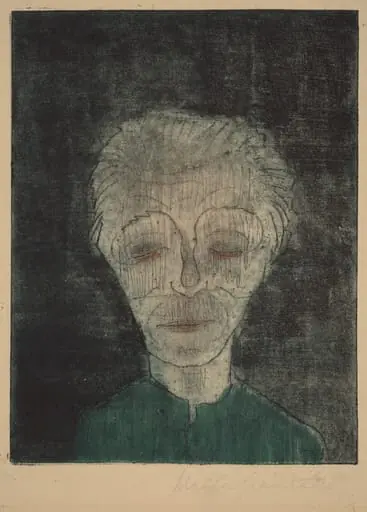 Tired Man (Self-Portrait)
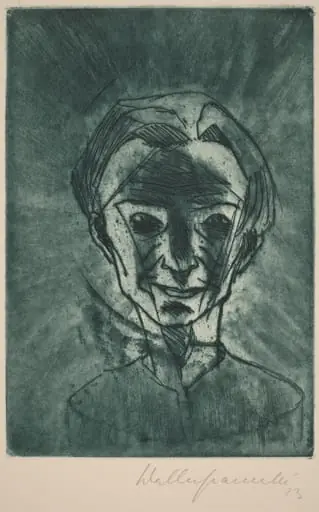 Smiling Head, Self-portrait (Lächelnder Kopf, Selbstporträt)
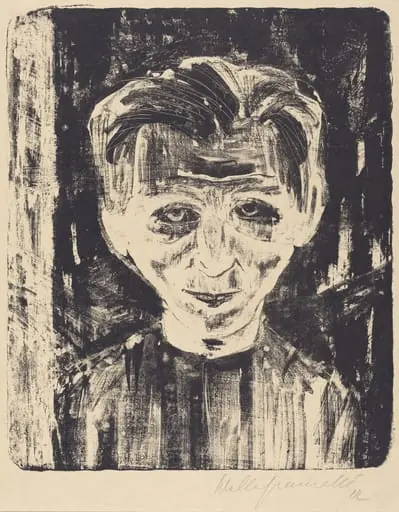 Self-Portrait
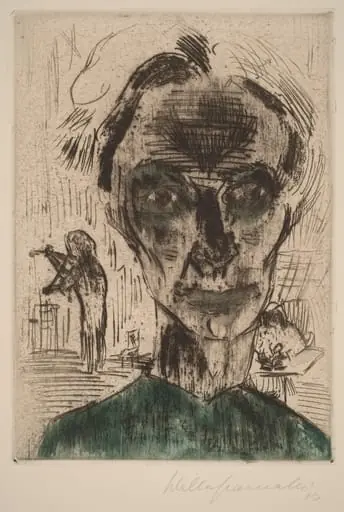 Man in a Room, Self-portrait
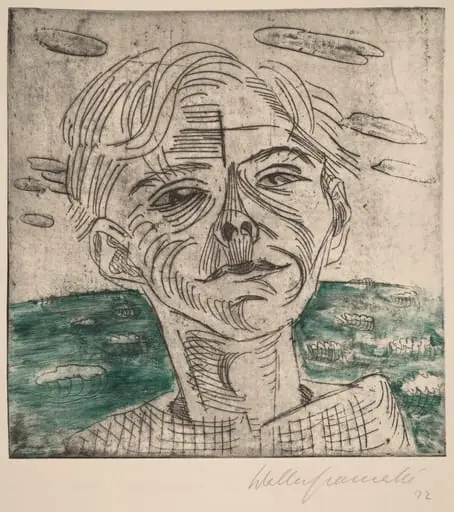 Man at the Sea, Self-portrait (Mann am Meer, Selbstporträt)
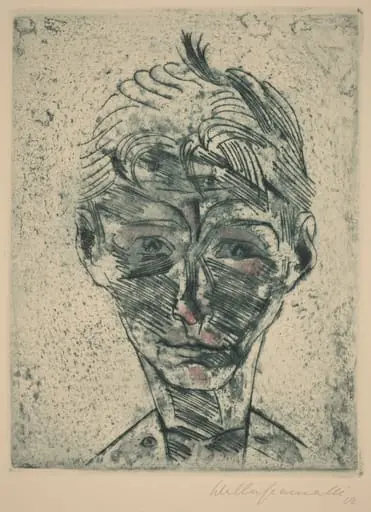 Bust of a Young Man, Self-portrait (Knabenkopf, Selbstporträt)
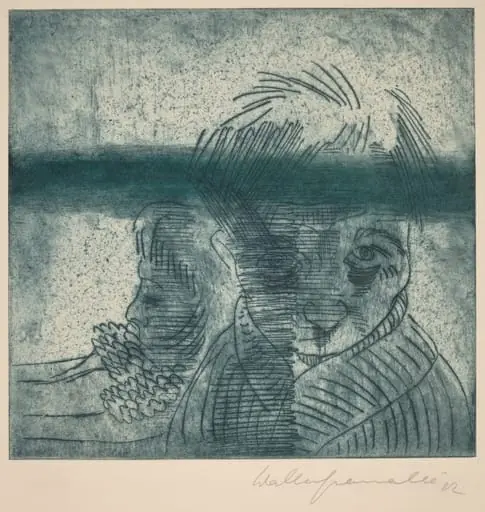 The Couple, Self-Portrait with Wife (Das Paar, Selbstporträt mit Frau)