Artwork
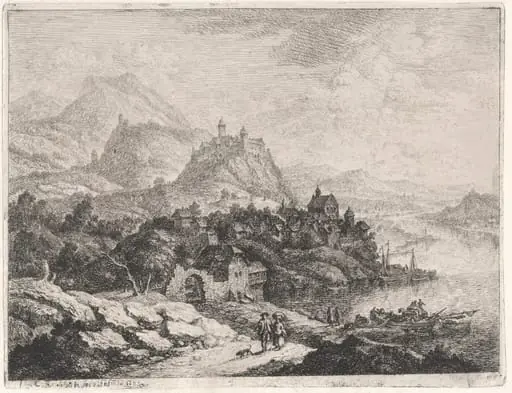
Ansicht von St. Helena und des Schlosses Rauhenstein bey Baden
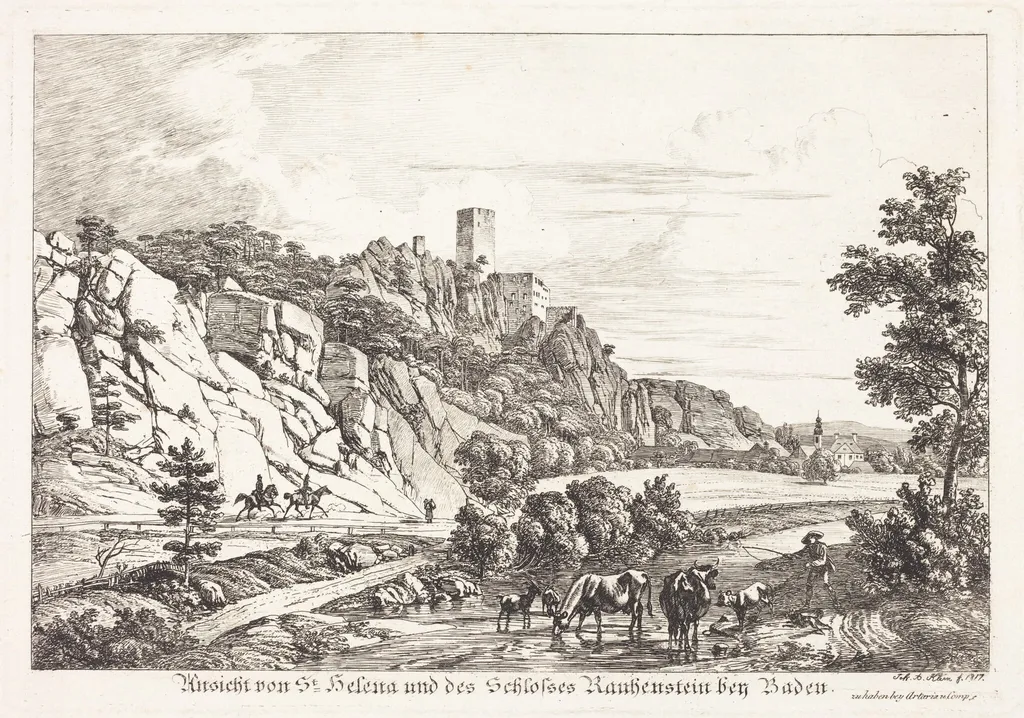
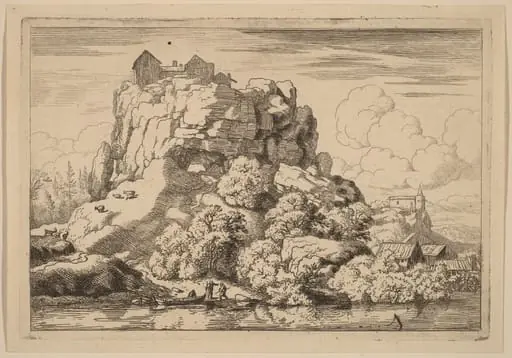
Ansicht von St. Helena und des Schlosses Rauhenstein bey Baden is an ink print by the Romanticist artist Johann Adam Klein. It dates from 1817 and is held in the collection of the National Gallery of Art.
About this work
Overview
Rendered on wove paper, the work captures a quiet rural landscape with subtle attention to topography and architectural detail.
Created in 1817 by Johann Adam Klein, this etching depicts a tranquil stretch of the Rhine valley near Baden. Rendered on wove paper, the work captures a quiet rural landscape with subtle attention to topography and architectural detail. The composition balances natural elements—rolling hills, a winding river—with human structures, suggesting a harmonious coexistence between settlement and terrain.
Subject & Meaning
The scene centers on St. Helena’s chapel and the fortified Rauhenstein Castle, both perched on a rugged cliffside. Below, grazing cattle and a lone pedestrian evoke daily rural life, while horseback riders cross a bridge, hinting at movement through the landscape. The absence of grandeur or drama suggests a documentary intent—recording the quiet endurance of place rather than celebrating it.
Technique & Style
Klein employed fine, controlled etching lines to render textures with precision: the roughness of rock faces, the weave of fabric on riders’ garments, and the delicate branching of trees. The wove paper’s smooth surface enhanced the clarity of these lines, allowing for nuanced gradations of tone. The composition is carefully structured, with depth achieved through diminishing scale and atmospheric perspective rather than dramatic contrast.
History & Provenance
The print was made during Klein’s early career, shortly after he began documenting Swiss and southwestern German landscapes. It likely originated as part of a series commissioned to record regional landmarks for scholarly or aristocratic audiences. No definitive early ownership records survive, but its technical refinement suggests it was produced for a discerning market interested in topographical accuracy.
Context
In early 19th-century Germany, topographical prints served both scientific and aesthetic purposes, bridging cartography and art. Klein’s work aligns with a broader movement to record regional heritage amid political upheaval. The depiction of Rauhenstein Castle, a medieval ruin, reflects a growing interest in historical preservation and the romanticized value of decayed architecture within a changing landscape.
Legacy
Though not widely exhibited today, the etching remains a representative example of Klein’s contribution to German topographical printmaking. Its restrained detail and observational fidelity influenced later artists documenting regional landscapes. The work endures as a quiet record of a specific place at a specific time, valued more for its precision than its novelty.
Artist & collection


 A Wide Riverscape with a View of Heidelberg Castle
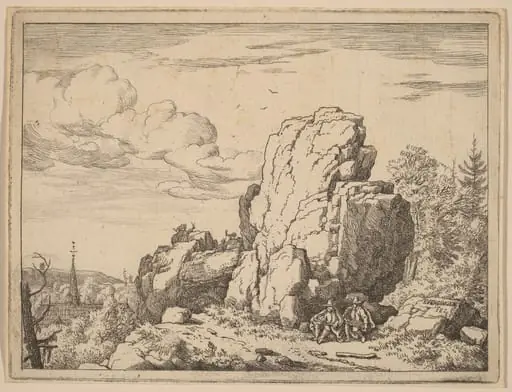 Two Men Seated at the Foot of a High Rock
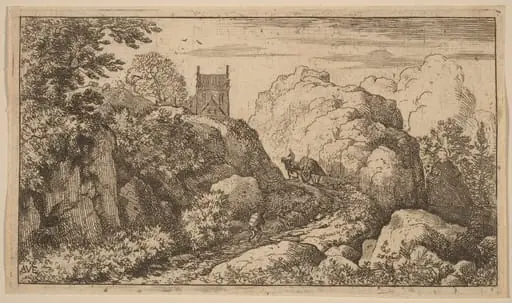 Cart in a Narrow Pass
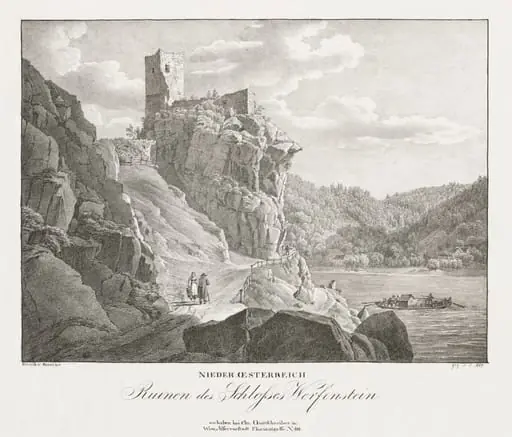 Nieder-oesterreich, Ruinen des Schlosses Werfenstein
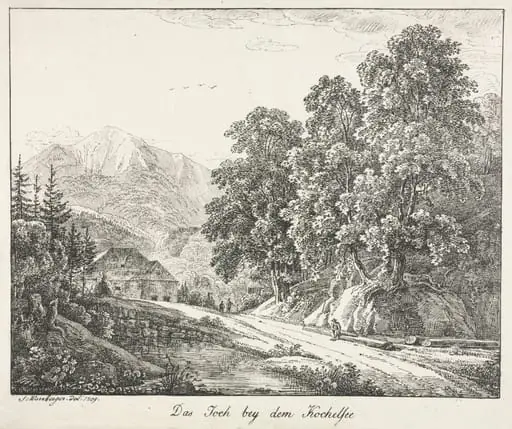 The Path by the Kochelsee
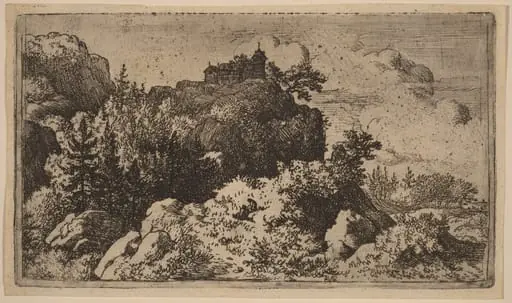 Firs in the Defile
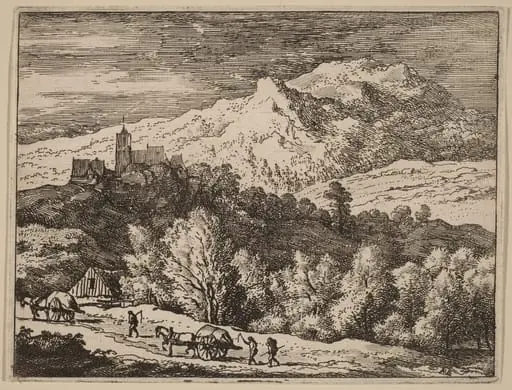 Two Carts
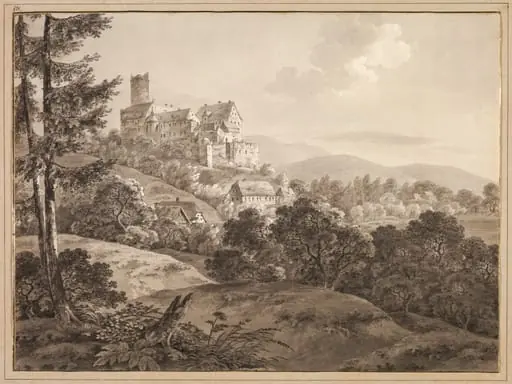 View of the Castle Gnandstein
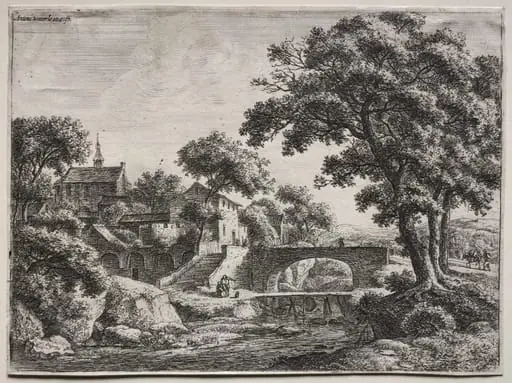 Twelve landscapes (H.95-106): The Two Bridges
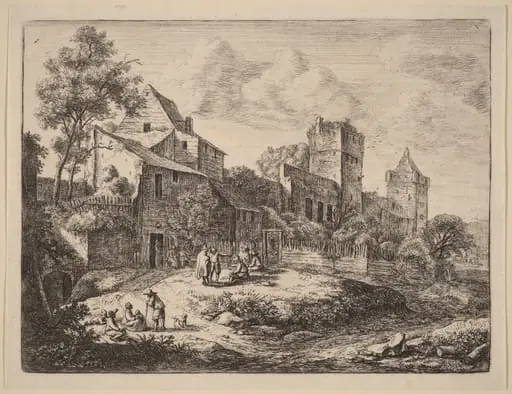 Square in Front of an Inn
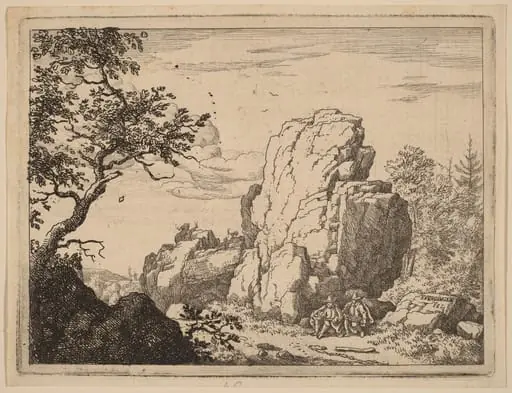 Two Men Seated at the Foot of a High Rock
 River at the Foot of a High Rock