Artwork
Tivoli and the Roman Campagna
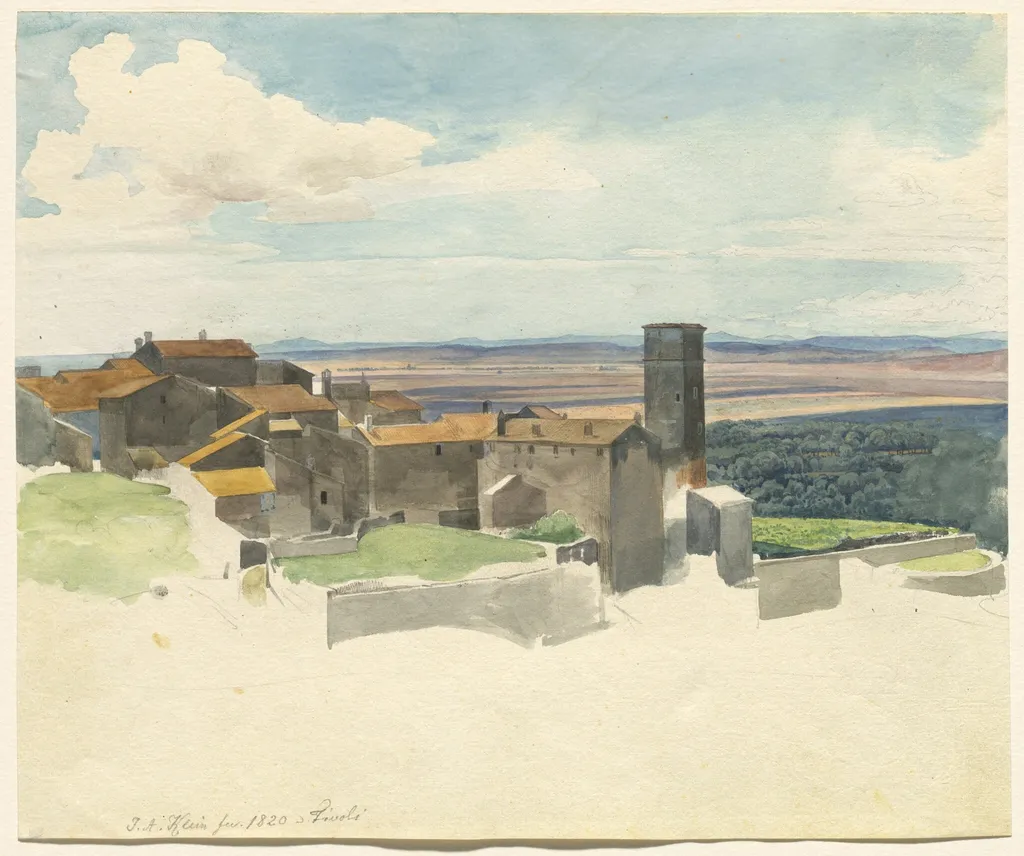
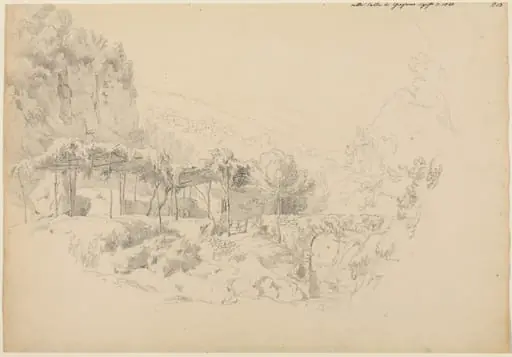
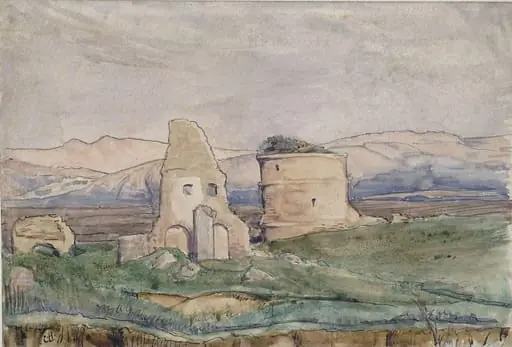
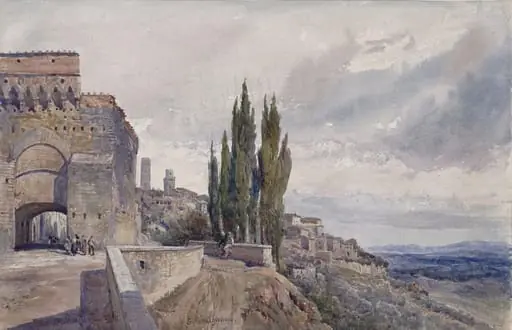
Tivoli and the Roman Campagna is a graphite drawing by the Romanticist artist Johann Adam Klein. It dates from 1820 and is held in the collection of the National Gallery of Art.
About this work
Overview
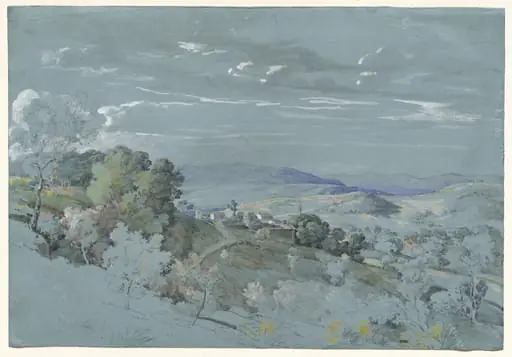
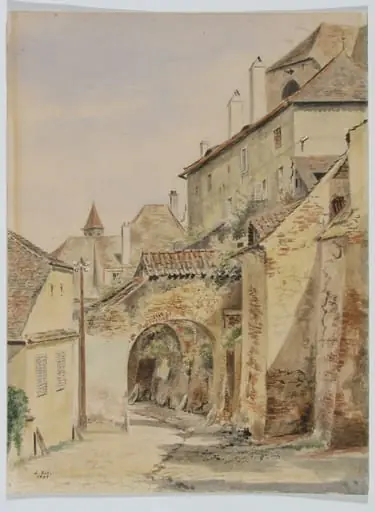
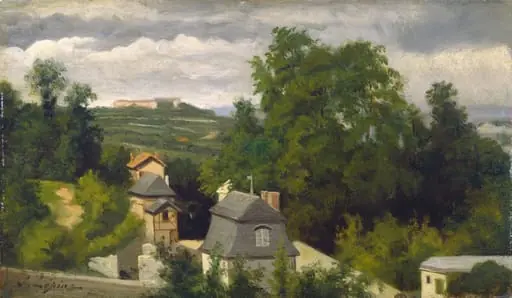
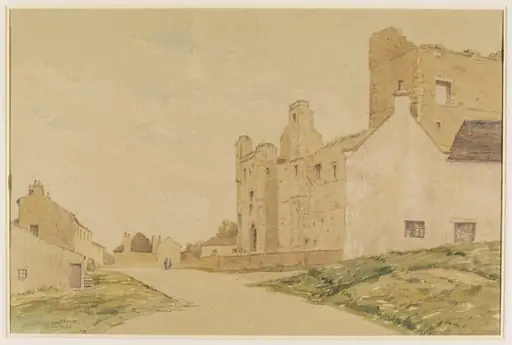
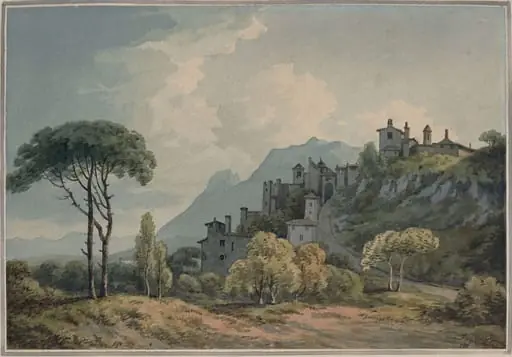
Created in 1820, this watercolor on wove paper by Johann Adam Klein captures a tranquil scene near Tivoli in the Roman Campagna. Executed in delicate washes over graphite underdrawing, the work conveys a quiet, contemplative mood. The composition emphasizes stillness and distance, with no human figures present, inviting quiet observation rather than narrative engagement.
Subject & Meaning
The painting depicts a cluster of weathered stone buildings nestled in a valley, dominated by a solitary tower rising above the rooftops. Rolling hills fade into the horizon, softened by atmospheric perspective. The absence of people and the muted activity suggest a meditation on time, solitude, and the enduring presence of rural architecture amid the Italian landscape.
Technique & Style
The soft blending of tones—warm browns for roofs, pale blues for the sky, and muted greens for distant hills—creates depth without sharp definition.
Klein employed light, transparent watercolor washes over a precise graphite sketch to achieve a hazy, ethereal quality. The soft blending of tones—warm browns for roofs, pale blues for the sky, and muted greens for distant hills—creates depth without sharp definition. This restrained palette and gentle handling align with Romantic-era tendencies to evoke emotion through atmosphere rather than detail.
History & Provenance
Johann Adam Klein, a German artist active in Italy during the early 19th century, produced this work during his travels through the Roman countryside. Likely made as a study or personal record, it reflects the interest of Northern European artists in Italy’s ancient and pastoral landscapes. The piece remains within the tradition of topographical watercolors favored by travelers of the period.
Context
In the 1820s, artists from Northern Europe increasingly visited Italy to study classical ruins and rural scenery, drawn by Romantic ideals of nature and antiquity. Klein’s work fits within this trend, offering a quiet alternative to grand historical or dramatic landscapes. His focus on unpopulated villages and subtle light reflects a shift toward introspective, lyrical observation in landscape art.
Legacy
Though not widely exhibited during his lifetime, Klein’s watercolors contributed to a broader European appreciation for the Italian countryside as a subject worthy of quiet reverence. His technique influenced later generations of landscape artists who valued atmospheric suggestion over detailed realism, helping to shape the aesthetic of 19th-century topographical drawing.
Artist & collection