Artwork
Cossack Horses in a Courtyard
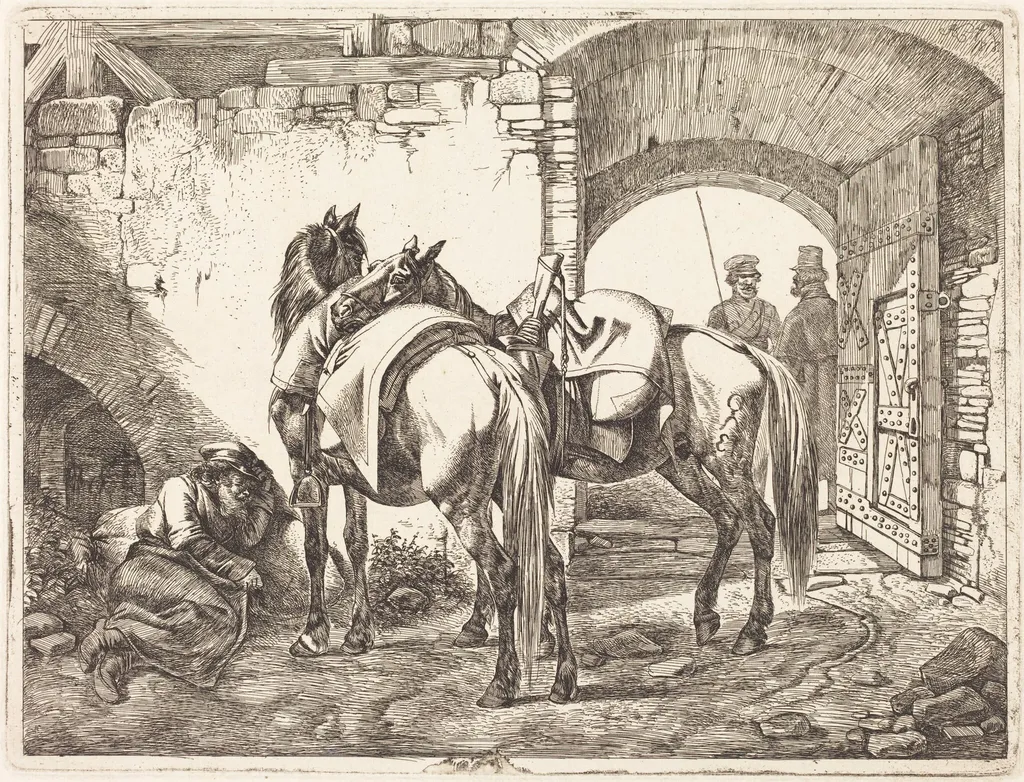
Cossack Horses in a Courtyard is an ink print by the Romanticist artist Johann Adam Klein. It dates from 1818 and is held in the collection of the National Gallery of Art.
About this work
Overview
Created in 1818, this etching by Johann Adam Klein depicts a quiet moment in a courtyard where two Cossacks stand beside agitated horses. Executed on wove paper as a proof, the work reflects Klein’s interest in military subjects and animal behavior. The composition captures motion and tension without narrative climax, emphasizing atmosphere over action.
Subject & Meaning
The scene portrays Cossack cavalrymen and their mounts in a moment of stillness before potential movement. The horses, tense and alert, suggest readiness for departure or danger, while the figures remain passive observers. The lack of overt conflict invites contemplation of the bond between rider and animal, and the quiet unease of military life in repose.
Technique & Style
Klein employed fine, controlled lines to render the texture of horsehide and the roughness of wooden structures. Subtle variations in ink density create depth and volume, particularly in the animals’ coats where light catches their flanks. The shadowed courtyard and sparse background focus attention on the figures, enhancing the sense of immediacy and restraint.
History & Provenance
This print is one of many by Klein documenting military life in Eastern Europe during the early 19th century. As a proof, it predates the final edition, offering insight into the artist’s working process. Its survival as a single impression suggests limited circulation, likely retained by the artist or a close associate.
Context
Klein worked during a period of heightened European interest in Cossack culture following the Napoleonic Wars. His prints, often based on sketches from military campaigns, catered to a public fascinated by exoticized soldierly life. This work reflects that trend, presenting Cossacks not as combatants but as figures embedded in daily, unsettled routine.
Legacy
Though not widely exhibited today, Klein’s etchings remain valuable for their observational precision and quiet emotional tone. This piece exemplifies his ability to convey psychological tension through animal behavior and lighting, influencing later 19th-century printmakers who sought realism over romanticism in military subjects.
Artist & collection


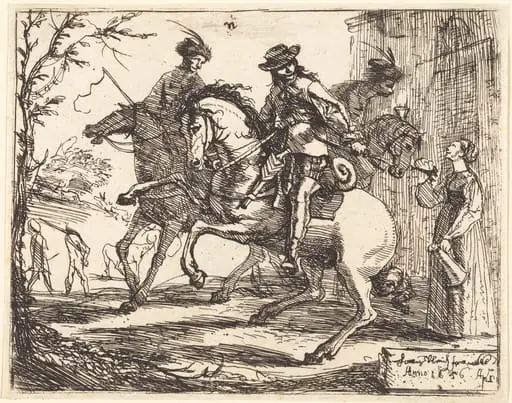 Three Riders before an Inn
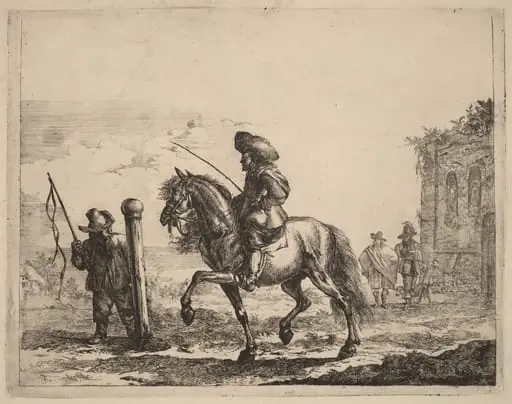 Riding School
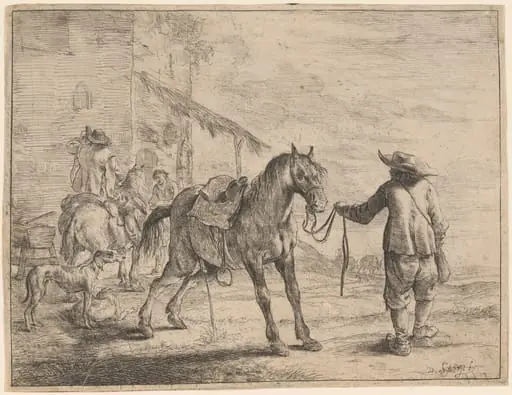 A Pissing Horse Held by a Man
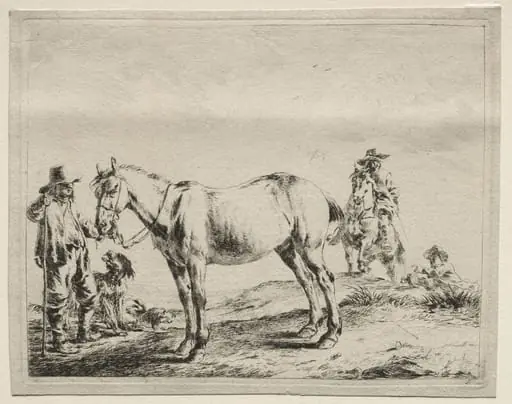 Man holding a horse by the bridle
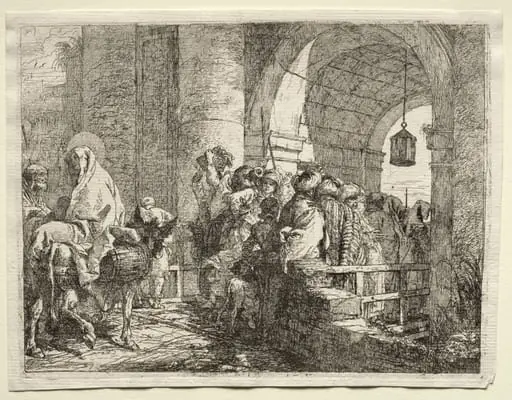 Flight into Egypt: The Holy Family Passing under an Arch
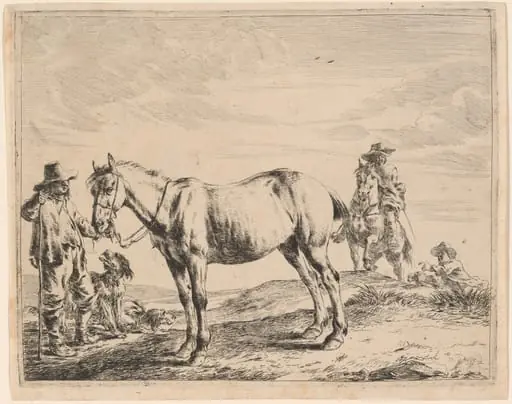 A Man Holding a Horse by His Bridle
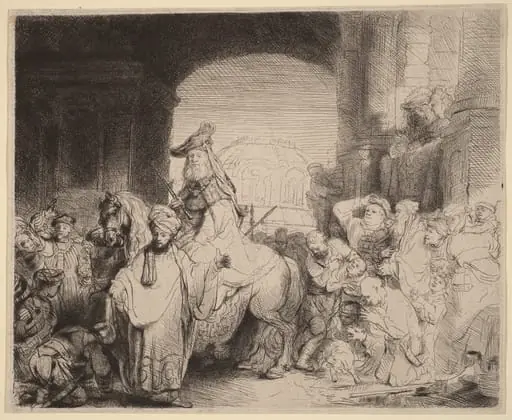 The Triumph of Mordecai
 View of Saint-Andeol
 Mother with Two Children and a Horse in Front of an Inn
 Robbers on Horseback