Artwork
Halkojaala Helsingin edustalla
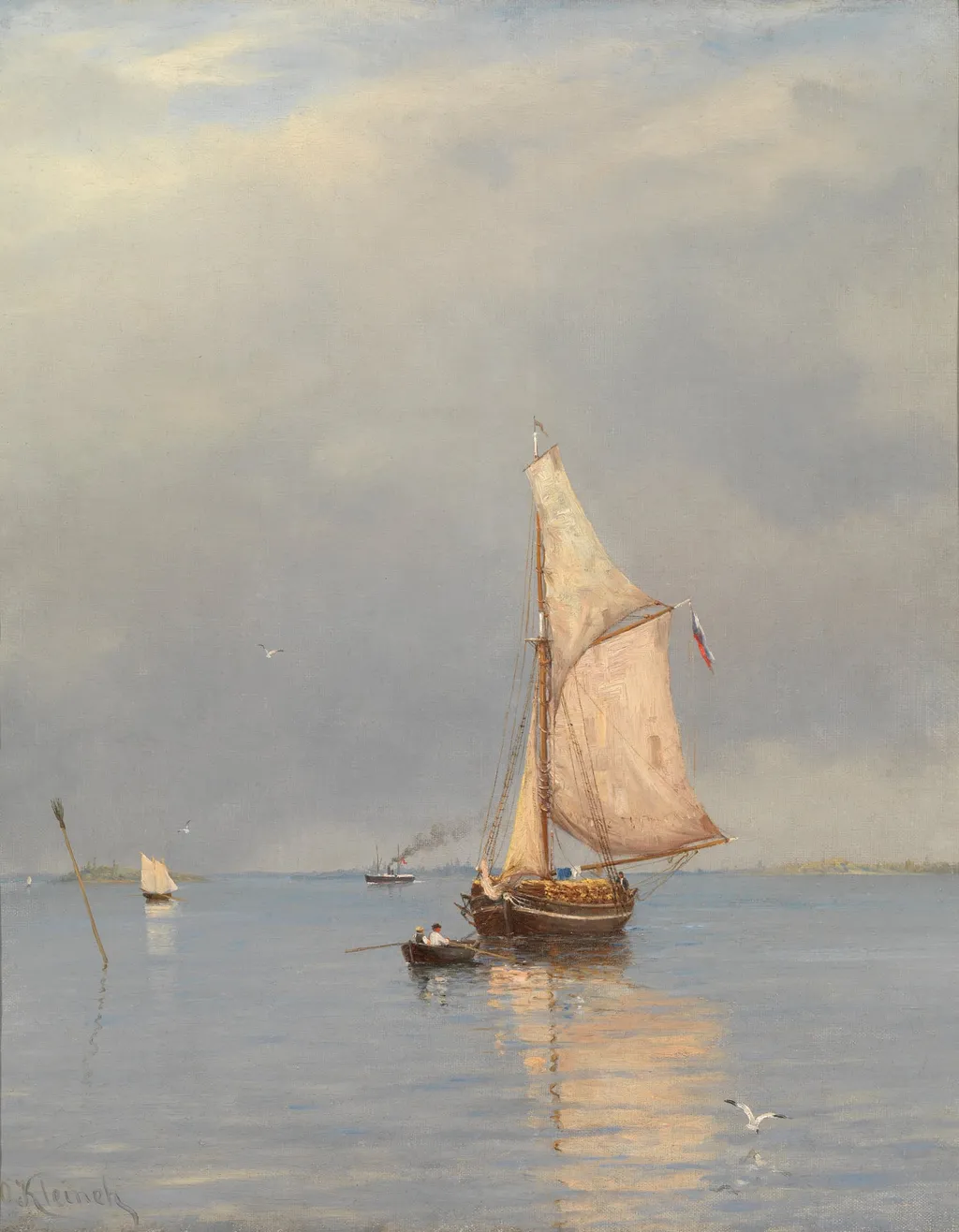
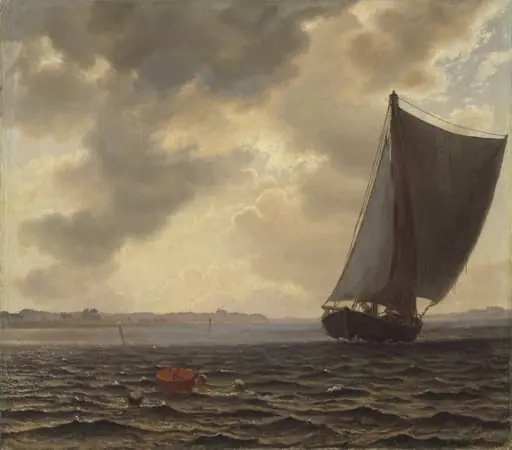
Halkojaala Helsingin edustalla is a drawing by Oskar Conrad Kleineh. It is held in the collection of the Helsinki City Museum. This painting captures a quiet marine moment off the coast of Helsinki, featuring a single sailboat centered on the canvas.
About this work
Overview
This painting captures a quiet marine moment off the coast of Helsinki, featuring a single sailboat centered on the canvas. The vessel moves gently across calm waters, its sails filled with wind, while the sky above is muted in pale grays and blues, softened by thin cloud streaks. The composition emphasizes stillness and movement in balance, evoking a sense of solitary harmony with the sea.
Subject & Meaning
The sailboat, isolated and unadorned, suggests a quiet journey or contemplative passage. No figures are visible, and the absence of landmarks or activity reinforces a mood of solitude. The scene does not depict labor or arrival but rather the quiet rhythm of wind and water, inviting reflection rather than narrative.
Technique & Style
The artist employs soft brushwork to blend sky and sea, using subtle tonal shifts to suggest depth and atmosphere. Waves are rendered with delicate, rhythmic strokes, avoiding sharp definition to maintain a hazy, atmospheric quality. Color is restrained, with cool hues dominating, enhancing the painting’s tranquil tone without dramatic contrast.
History & Provenance
The work is held in the collection of the Museum of Ethnography, though its origin and acquisition history are not detailed in available records. Its presence there suggests a possible connection to Finnish maritime culture or ethnographic documentation of coastal life, though the painting itself is not overtly anthropological in subject.
Context
Created during a period when Finnish artists increasingly turned to landscape and seascape themes, the painting reflects a broader interest in natural quietude over dramatic narrative. It aligns with late 19th- to early 20th-century Nordic tendencies toward subdued, mood-driven realism, distinct from the grandeur of Romanticism.
Legacy
Though not widely exhibited beyond its institutional home, the painting contributes to a quieter strand of Finnish art that values atmosphere over spectacle. Its preservation in the Museum of Ethnography underscores its role as a cultural artifact of place and mood, rather than a celebrated work of individual genius.
Artist & collection
Artist
Oskar Conrad Kleineh made pencil drawings of Helsinki’s shoreline and islands in the early 1900s.

 Bărci pe mare (Napoli)
 Calm Sea
 Marine View
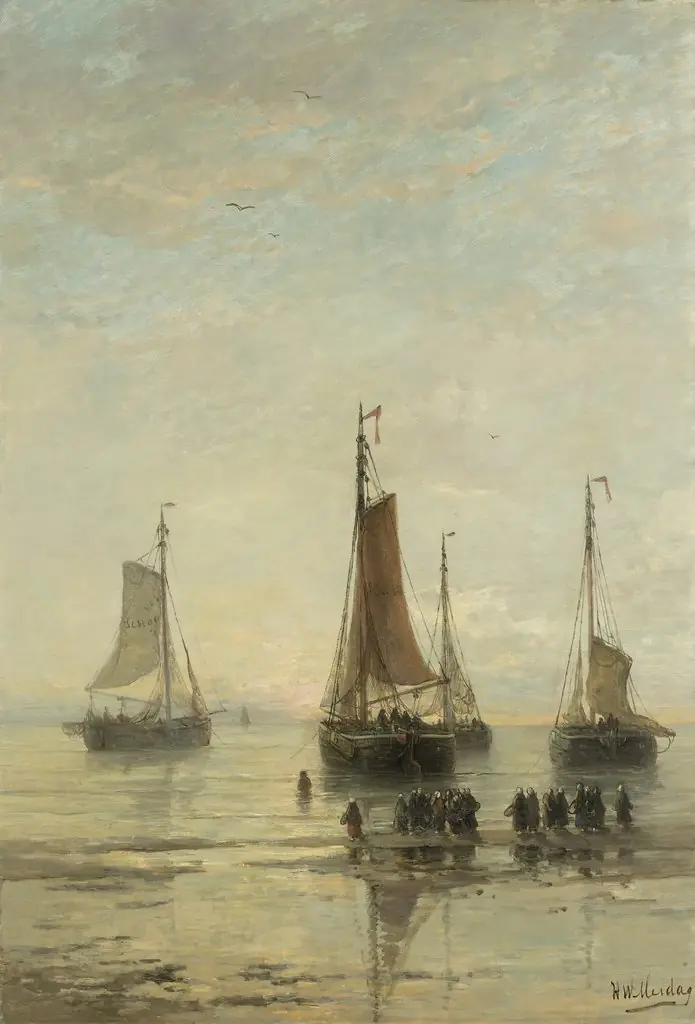 Fishing Boats from Scheveningen Anchored
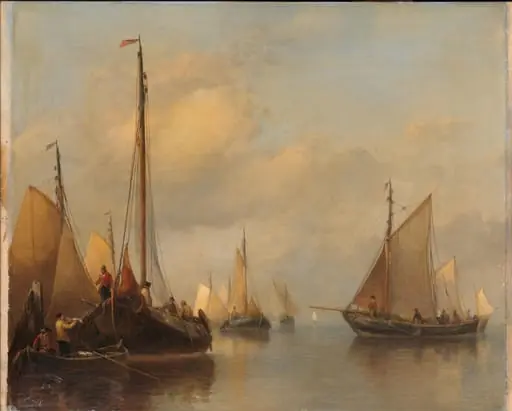 Fishing Boats on calm Water
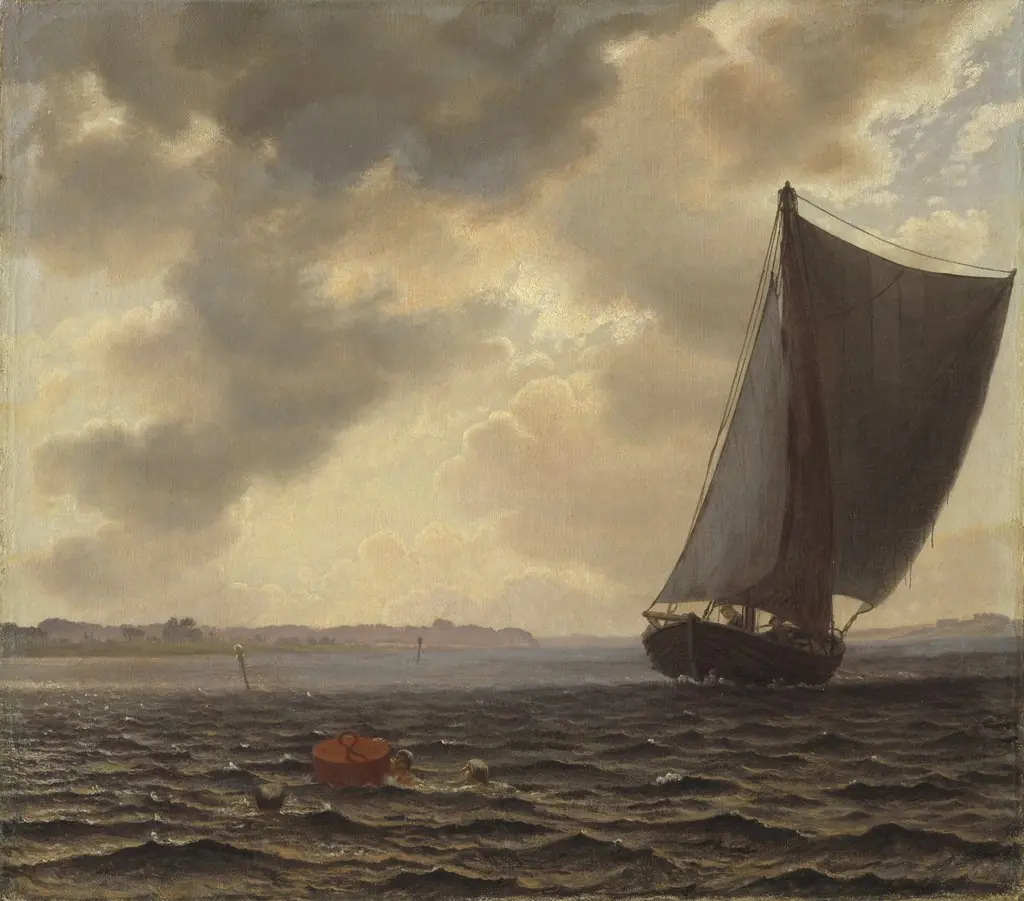 Sailing Boats in Guldborg Sound
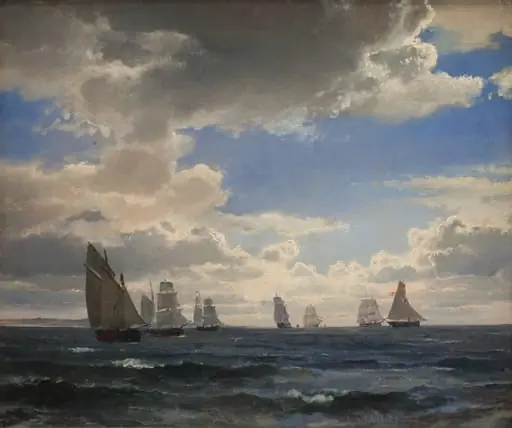 Sailing Ships in the Sound south of Kronborg
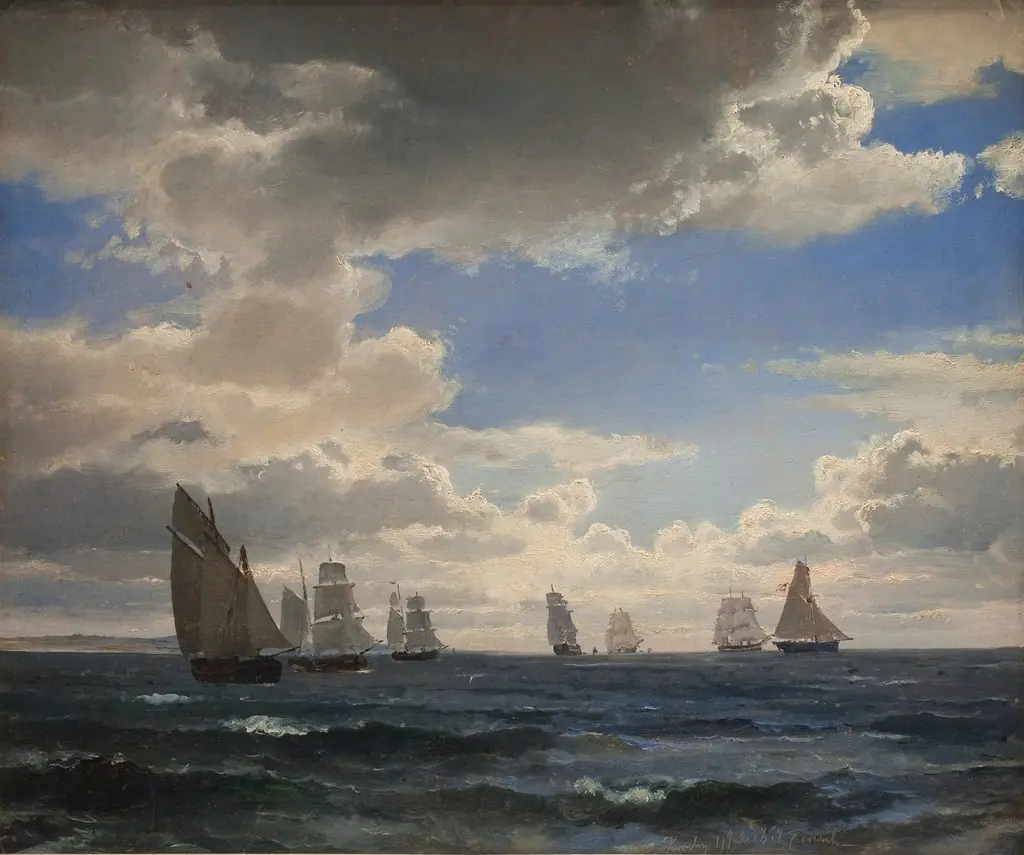 Sailing Ships in the Sound south of Kronborg
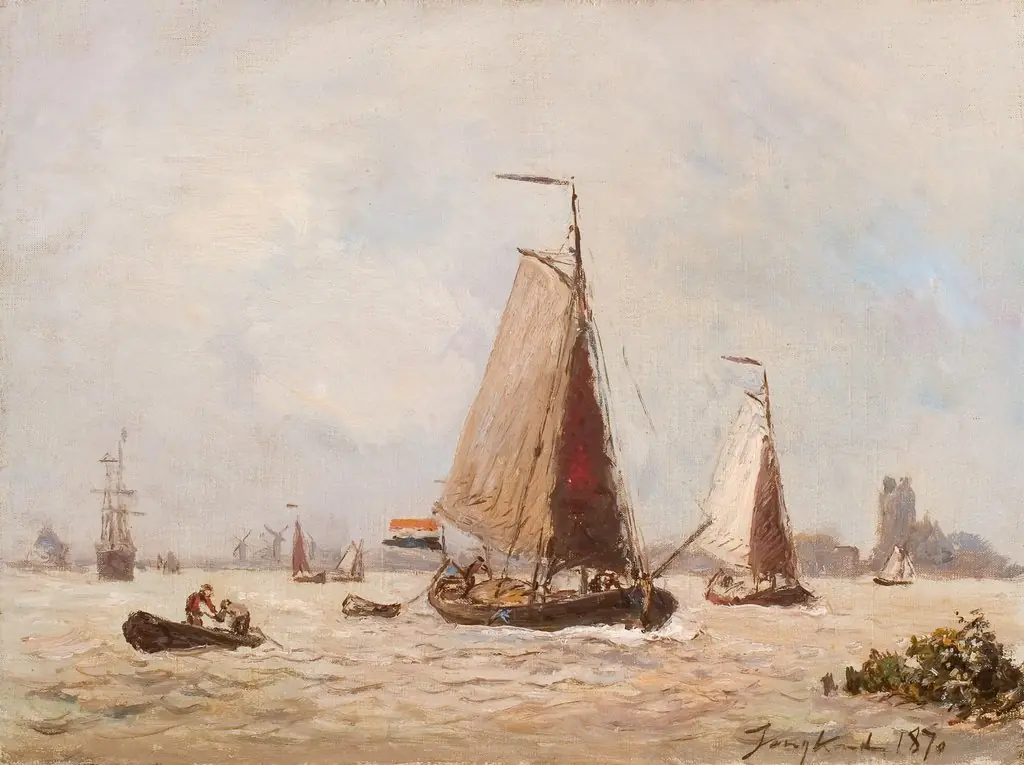 Zeilschepen voor de haven van Dordrecht
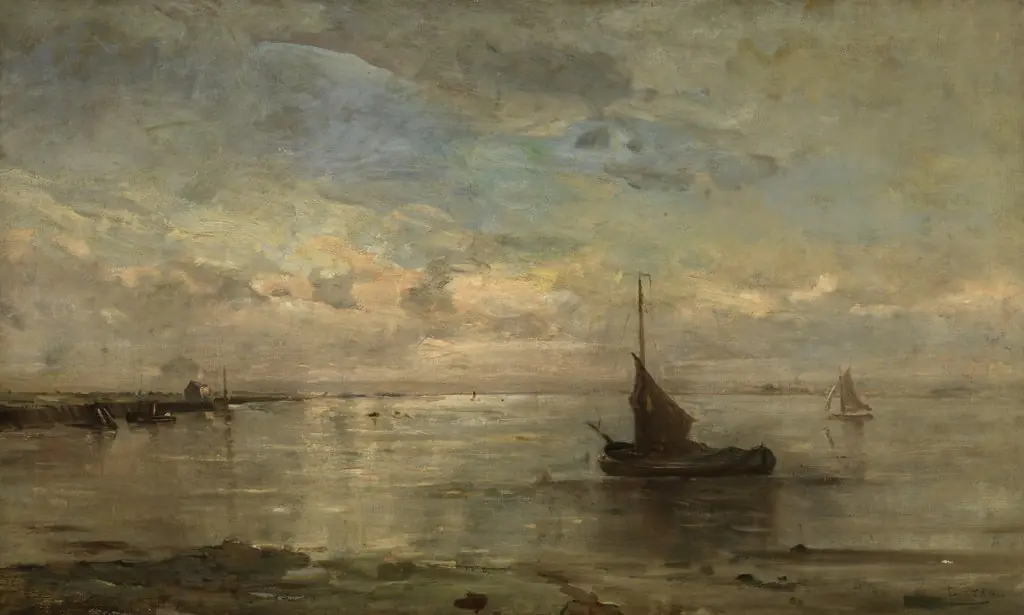 Seascape
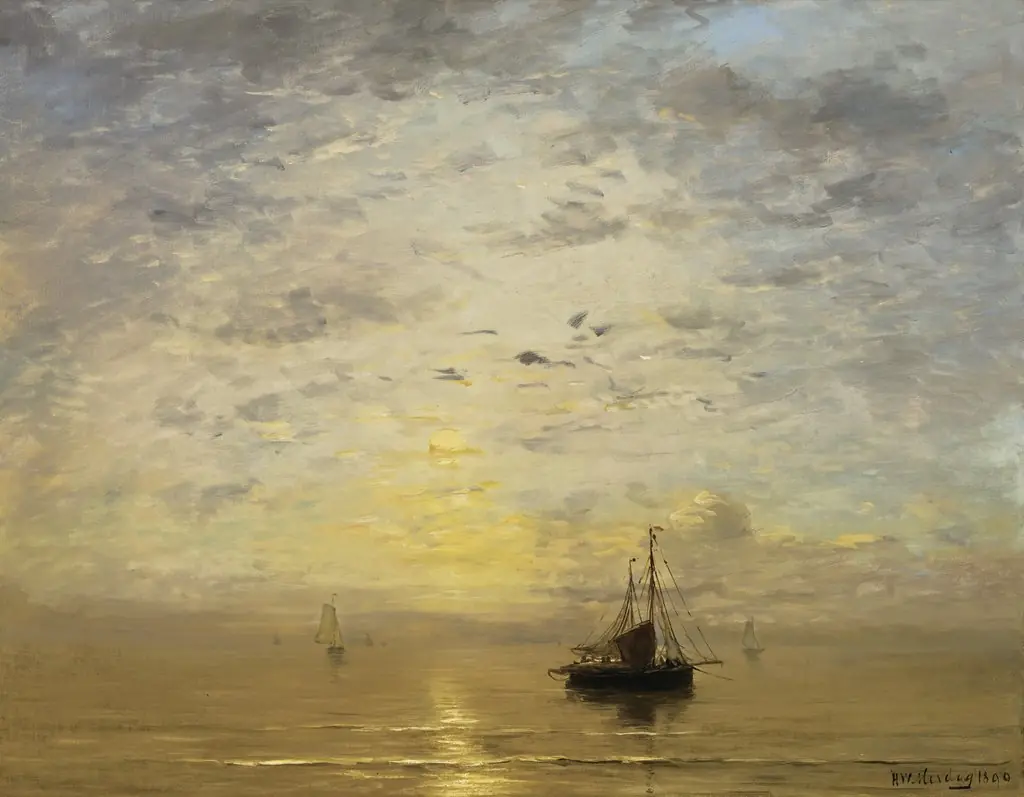 Marine
 Sailing Boats in Guldborg Sound