Artwork
Bear and Elf (Bär und Elfe): pl.1
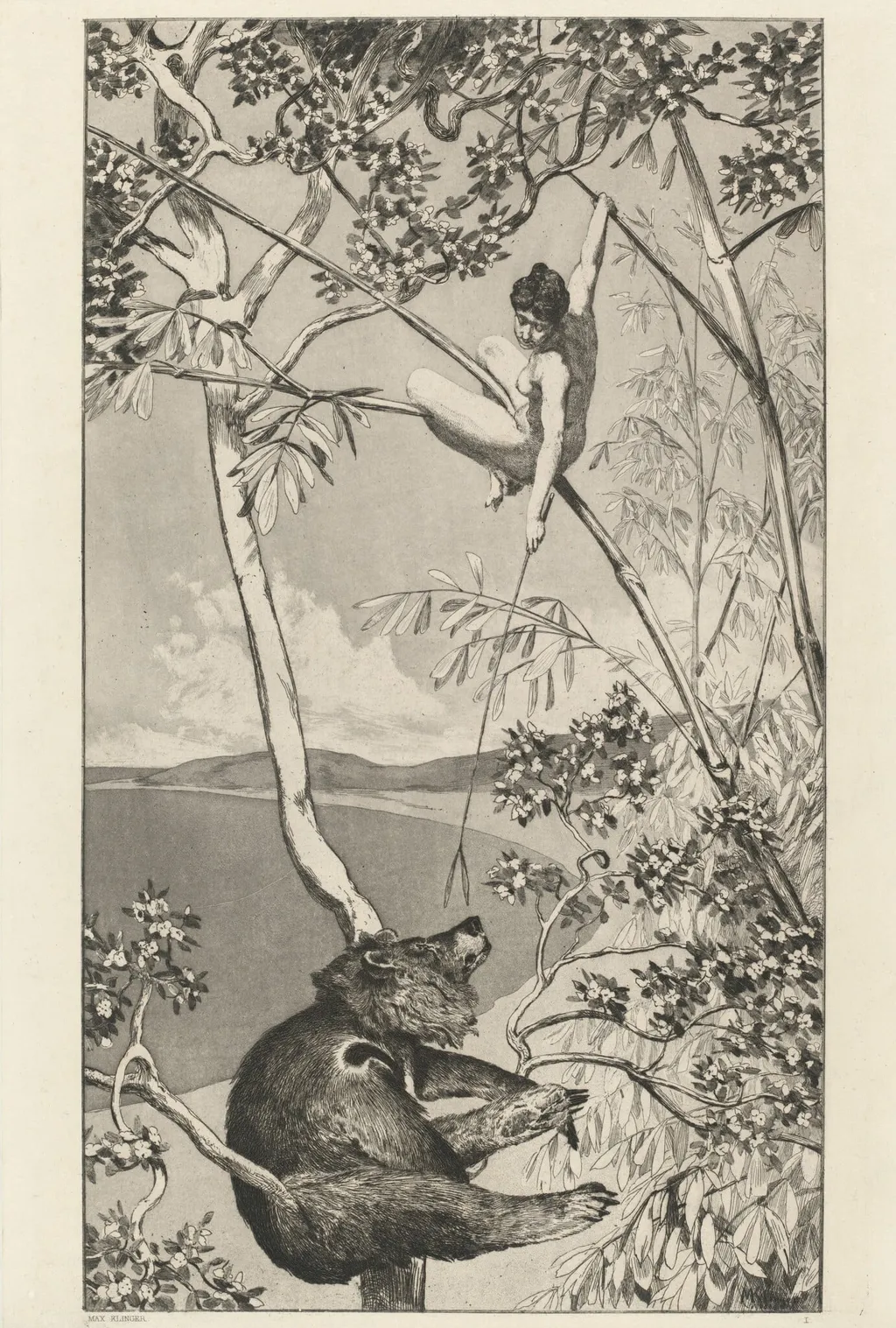
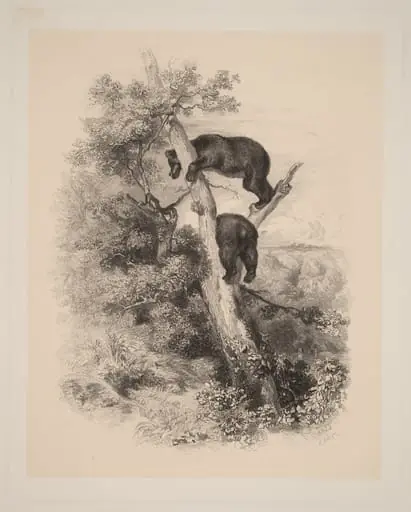
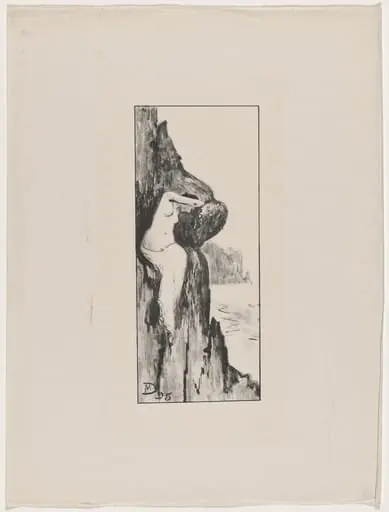
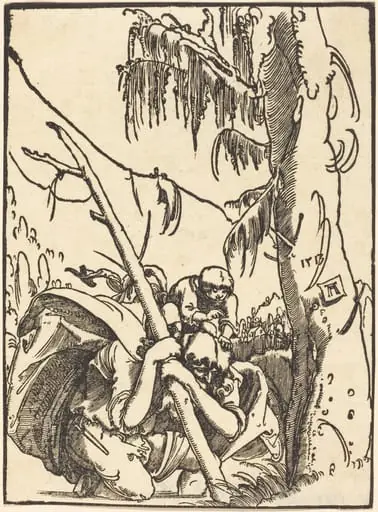
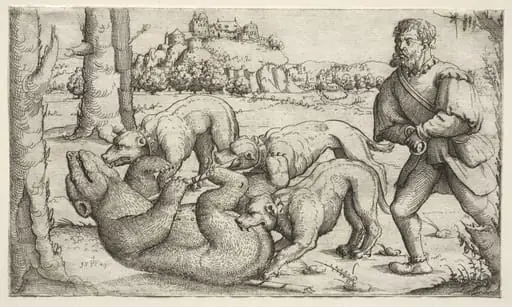
Bear and Elf (Bär und Elfe): pl.1 is an ink print by the Impressionist artist Max Klinger. It dates from 1881 and is held in the collection of the National Gallery of Art.
About this work
Overview
Klinger, known for his engagement with graphic media, used these techniques to achieve nuanced tonal ranges and delicate line work.
Created in 1881 by German artist Max Klinger, *Bear and Elf (Bär und Elfe): pl. 1* is an etching and aquatint print from a larger series. Klinger, known for his engagement with graphic media, used these techniques to achieve nuanced tonal ranges and delicate line work. The image belongs to a body of work that bridges Symbolist themes with emerging Jugendstil aesthetics, reflecting his interest in the expressive potential of printmaking beyond mere reproduction.
Subject & Meaning
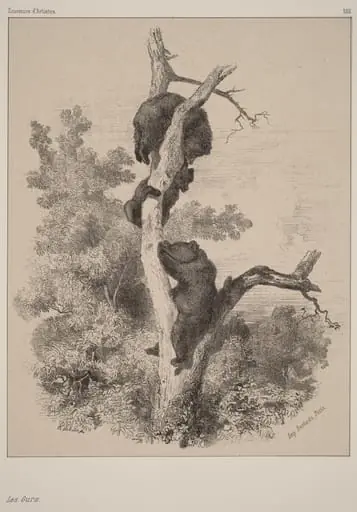
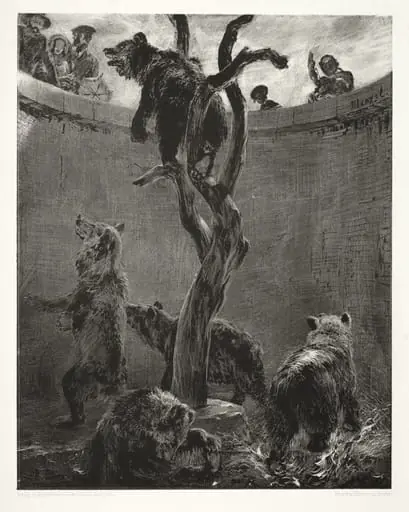
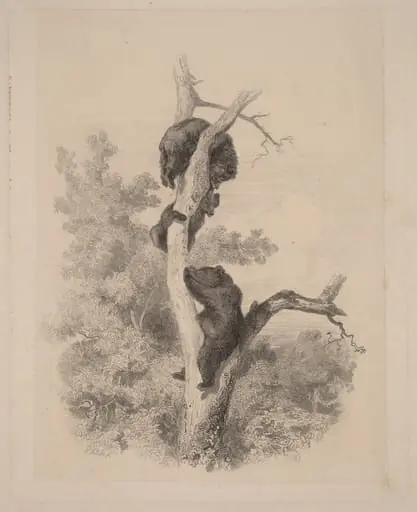
The scene portrays a small, barefoot figure ascending a tree to reach a young koala clinging below. Though the figures are fantastical, their interaction evokes a quiet, almost tender moment of ascent and longing. The absence of overt narrative cues invites interpretation: the elf’s gesture may symbolize aspiration, innocence, or the fragile connection between natural and mythical realms. Klinger avoids moralizing, instead offering an enigmatic vignette rooted in emotional resonance rather than literal storytelling.
Technique & Style
Klinger combined etching’s fine linear precision with aquatint’s soft, atmospheric washes to render depth and texture. Delicate twigs, layered leaves, and hazy distant hills are executed with meticulous control, while the figures emerge from shadowy gradients. The background’s watery tones contrast with the sharp contours of the branches, creating a dreamlike stillness. This technical interplay enhances the scene’s otherworldly quality without sacrificing structural clarity.
History & Provenance
The print was produced as part of Klinger’s early series exploring symbolic narratives through printmaking, circulated among collectors and artists in Germany and Austria. It was not widely exhibited publicly at the time but gained recognition within circles interested in the revival of graphic arts. Its inclusion in private collections and later institutional holdings reflects its role in the broader reevaluation of print as a serious artistic medium in the late 19th century.
Context
Emerging alongside Symbolist movements in Europe, Klinger’s work responded to a cultural shift away from realism toward introspective, mythic imagery. While contemporaries like Redon pursued dreamlike subjects, Klinger grounded his visions in technical mastery of print. His engagement with Jugendstil and the Vienna Secession placed him at the intersection of decorative and fine art, where narrative ambiguity and refined craftsmanship were equally valued.
Legacy
Klinger’s *Bear and Elf* contributed to the legitimization of printmaking as a vehicle for complex, personal expression. Its influence extended to later Symbolist and Expressionist printmakers who adopted his tonal techniques and psychological subject matter. Though not widely reproduced, the work remains a touchstone in studies of fin-de-siècle graphic art, illustrating how technical innovation could serve poetic ambiguity.
Artist & collection
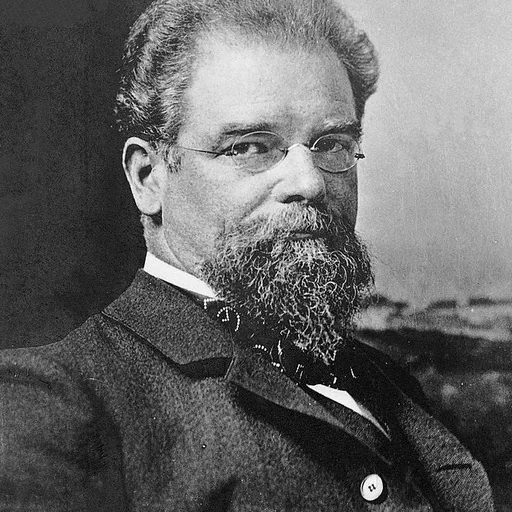
Artist
Max Klinger (18 February 1857 – 5 July 1920) was a German artist who produced significant work in painting, sculpture, prints and graphics, as well as writing a treatise articulating his ideas on art and the role of…