Artwork
Disgrace (Schande): pl. 9
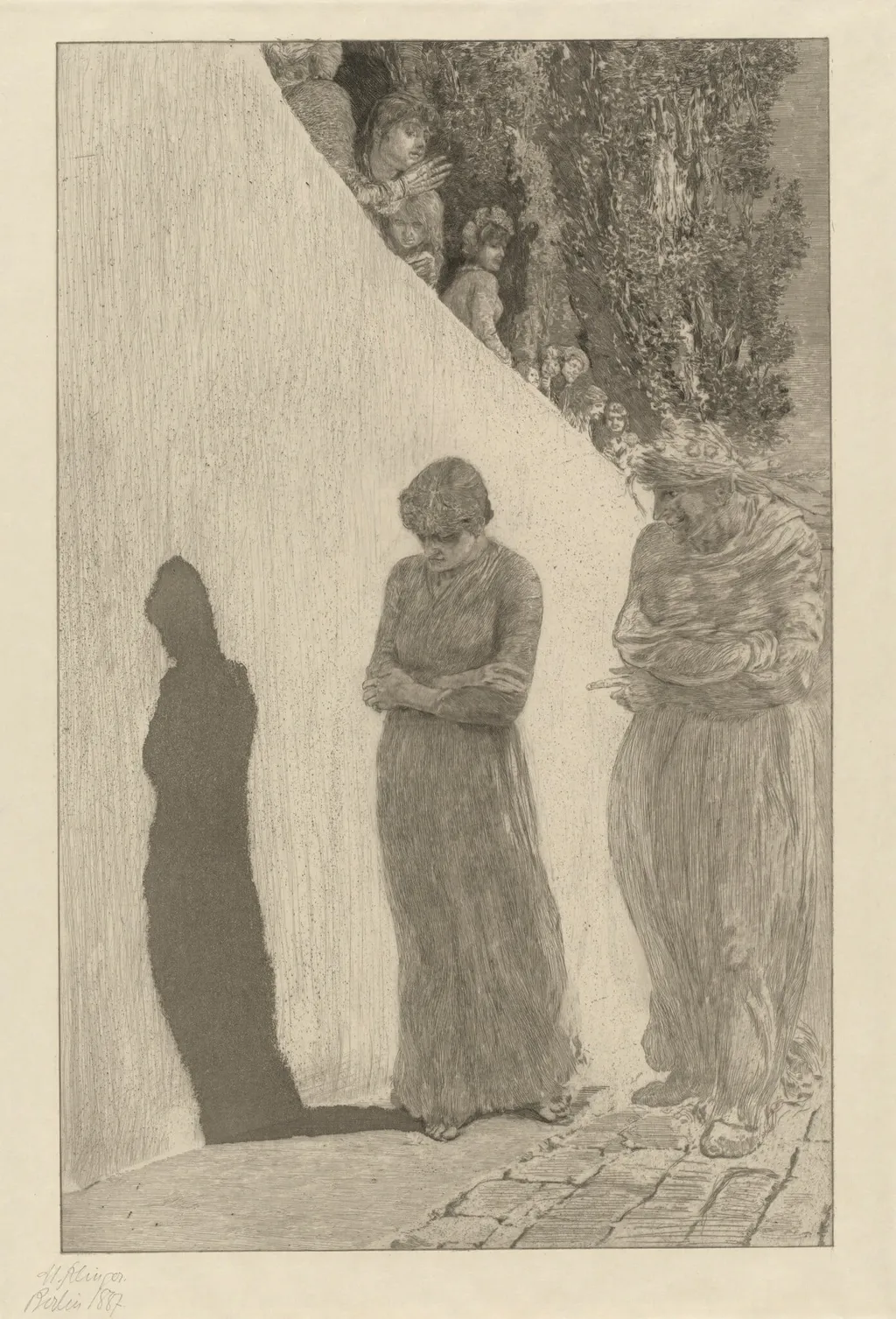
Disgrace (Schande): pl. 9 is an ink print by the Impressionist artist Max Klinger. It dates from 1878 and is held in the collection of the National Gallery of Art.
About this work
Overview
Part of Klinger’s broader engagement with printmaking, the work reflects his interest in translating complex emotional states into visual form.
Created in 1878 by German artist Max Klinger, *Disgrace (Schande): pl. 9* is an etching from a larger series exploring psychological and social themes through graphic art. Part of Klinger’s broader engagement with printmaking, the work reflects his interest in translating complex emotional states into visual form. Though rooted in realism, its mood and composition align with Symbolist tendencies, emphasizing inner experience over literal narrative.
Subject & Meaning
The scene depicts two women in a narrow, shadowed street: one stands motionless, head bowed, hands clasped; the other bears a heavy load on her head, her body bent under its weight. Behind them, a looming figure leans against a wall, while ghostly faces peer from an archway. Together, these elements suggest social isolation, moral judgment, and the burden of stigma, evoking a silent, unspoken condemnation without depicting a specific event.
Technique & Style
Klinger employed fine, incised lines typical of etching to render texture and tension—sharp contours define the weight of the bundle and the rigid posture of the standing woman. The uneven cobblestones and deep shadows of the alley are built through layered aquatint and cross-hatching, creating a sense of claustrophobic depth. The ghostly faces are rendered with minimal detail, enhancing their eerie, almost spectral presence.
History & Provenance
The print was produced as plate nine in Klinger’s series *Paraphrase on the Finding of a Glove*, a narrative cycle begun in 1878 and completed in 1881. Though the series gained attention for its psychological intensity, individual plates like *Disgrace* were often circulated separately. The work entered public collections in the late 19th century, primarily through German and Austrian institutions that recognized Klinger’s contribution to modern printmaking.
Context
Klinger worked during a period when printmaking was being redefined as a medium for serious artistic expression, not merely reproduction. His engagement with Symbolism and emerging Jugendstil reflected broader European interests in the subconscious and emotional atmosphere. In Vienna and Berlin, artists were turning to etching to explore themes of alienation and moral ambiguity, aligning Klinger’s work with a generation seeking new visual languages for modern anxiety.
Legacy
Klinger’s *Disgrace* contributed to the elevation of etching as a vehicle for psychological depth in late 19th-century art. His influence extended to later Expressionists and printmakers who valued narrative ambiguity and emotional resonance over realism. Though less widely known than his full series, this plate remains a quiet but potent example of how graphic art could convey social critique without overt symbolism.
Artist & collection
Artist
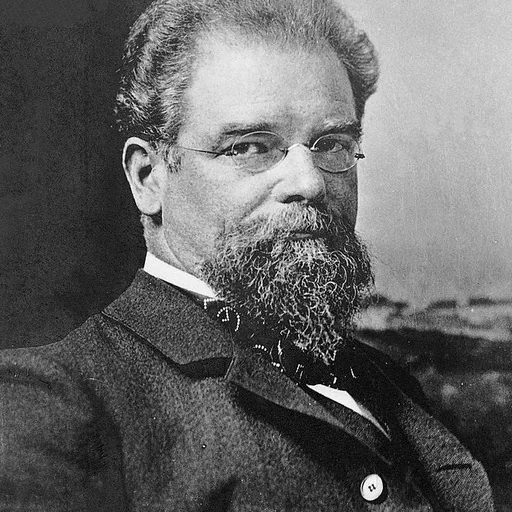
Max Klinger (18 February 1857 – 5 July 1920) was a German artist who produced significant work in painting, sculpture, prints and graphics, as well as writing a treatise articulating his ideas on art and the role of…

 The Tuileries Gardens
 Au pied du Sinaï: La Prière des Juifs Polonais
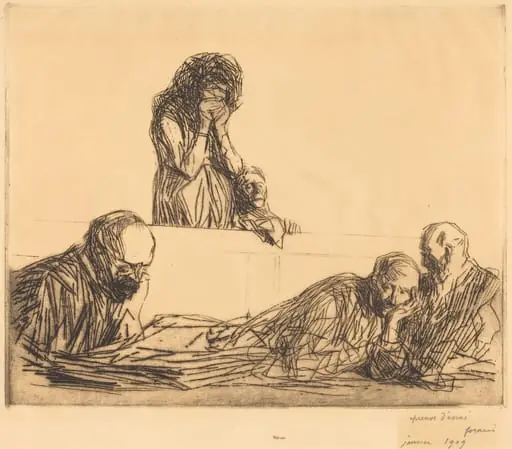 Fille-mère (1ère planche) (Unwed Mother) (first plate)
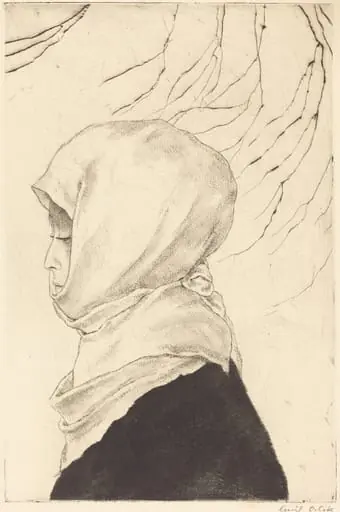 Japanerin im Winterkleid (Japanese Woman in Winter Dress)
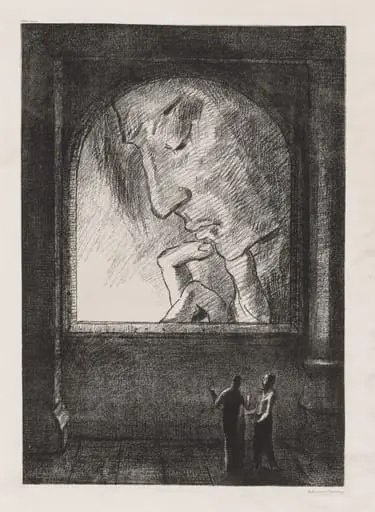 Light
Light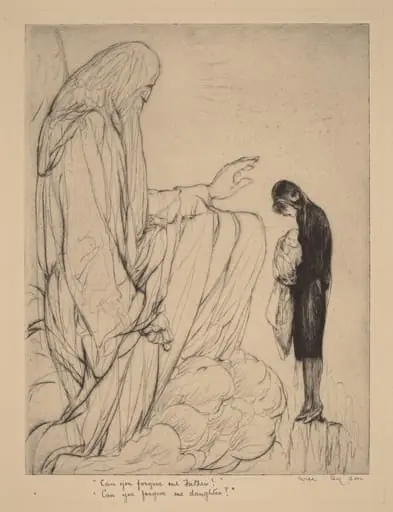 "Can you forgive me Father?" - "Can you forgive me daughter?"
 Two Roman Women
 Etude
Etude La vierge et l'enfant (The Virgin and Child)
 C'est le Diable
 In the Embers (Dans les cendres)
 The Haunting (Hantise)