Artwork
Evocation (Evocation)
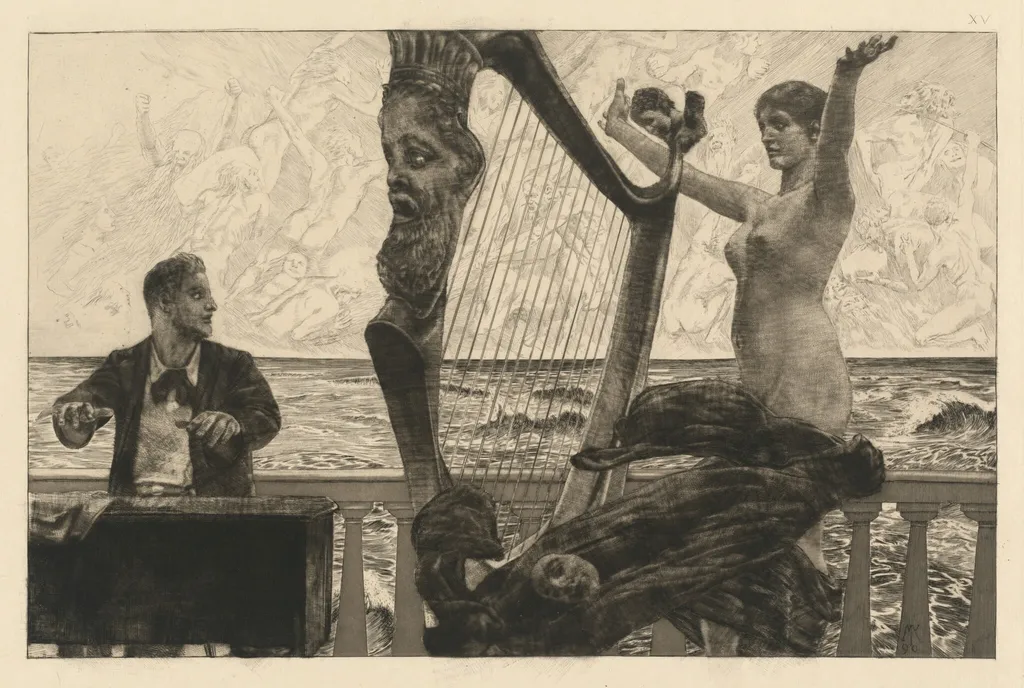
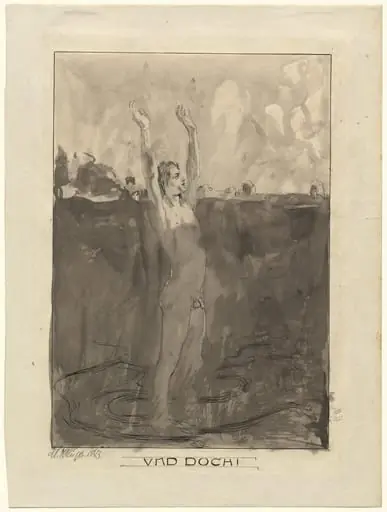
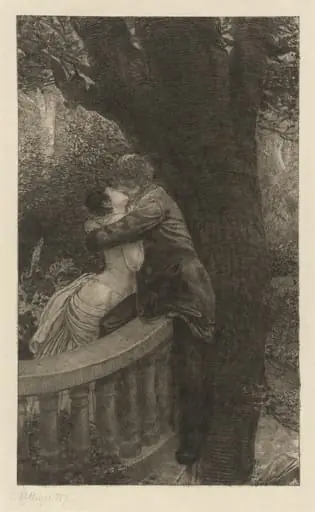
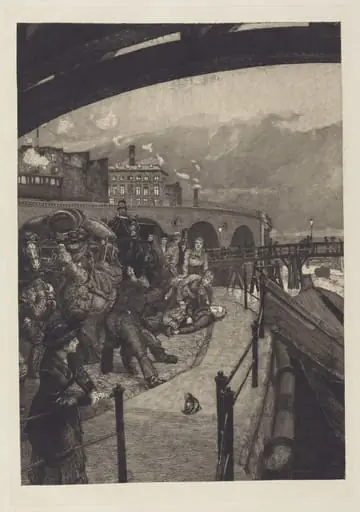
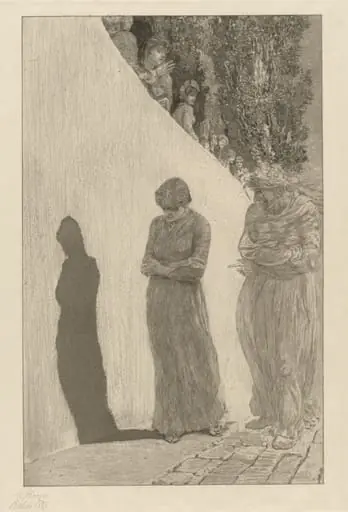
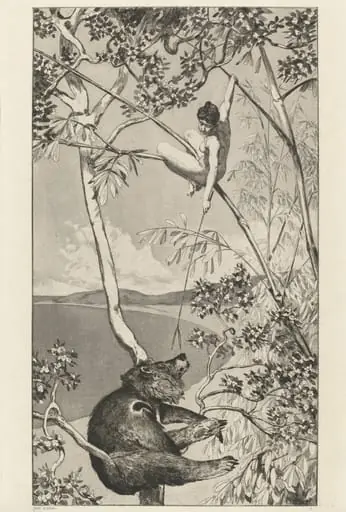
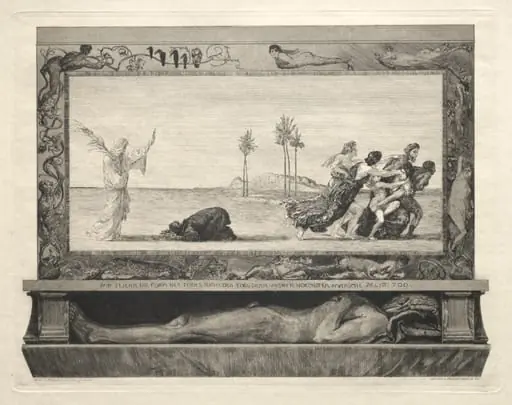
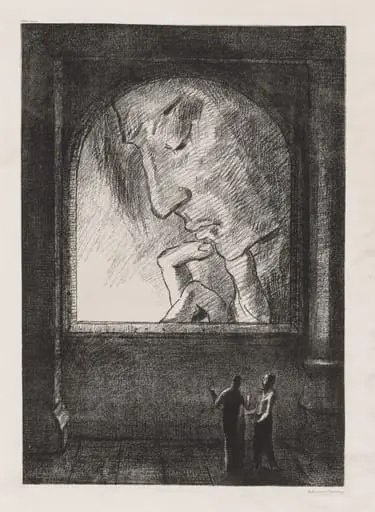
Evocation (Evocation) is a print by the Impressionist artist Max Klinger. It dates from 1888 and is held in the collection of the National Gallery of Art.
About this work
Overview
Evocation, a 1888 print by Max Klinger, exemplifies the artist's exploration of Symbolism and decorative art, characteristic of the Vienna Secession and Jugendstil movements.
Subject & Meaning
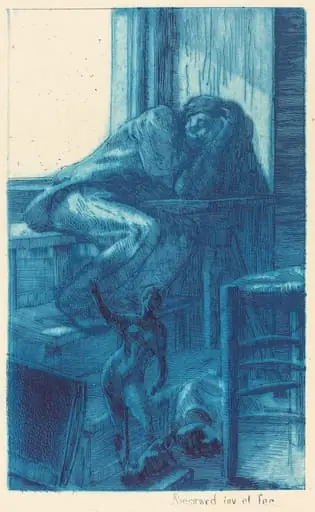
The print depicts a man indoors reading, juxtaposed with an outdoor, dreamlike vision of a nude woman holding a floating harp above water, blending reality and fantasy in a symbolic narrative.
Technique & Style
Klinger employed loose, expressive lines and avoided smooth details, creating a sketchy, ethereal quality that enhances the work's dreamlike atmosphere.
History & Provenance
Created in 1888, Evocation reflects Klinger's theoretical views on printmaking's relation to painting, part of his broader artistic experimentation across mediums.
Context
As a key figure in late 19th and early 20th-century German art, Klinger's work, including Evocation, contributed to the development of Symbolist and Art Nouveau aesthetics.
Legacy
Evocation remains representative of Klinger's symbolic and decorative printmaking style, influencing subsequent generations of artists exploring the intersection of fantasy and reality.
Artist & collection
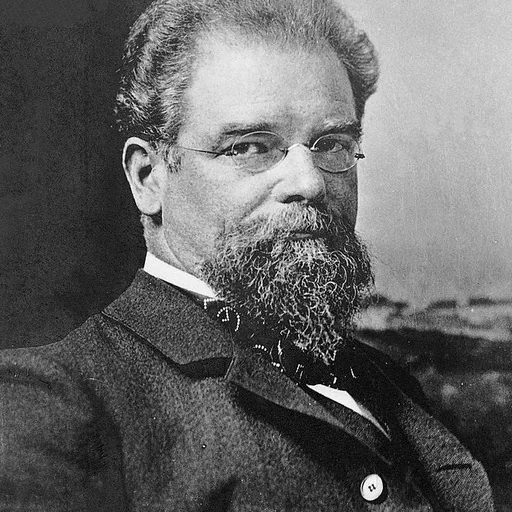
Artist
Max Klinger (18 February 1857 – 5 July 1920) was a German artist who produced significant work in painting, sculpture, prints and graphics, as well as writing a treatise articulating his ideas on art and the role of…