Artwork
Χωρίς τίτλο
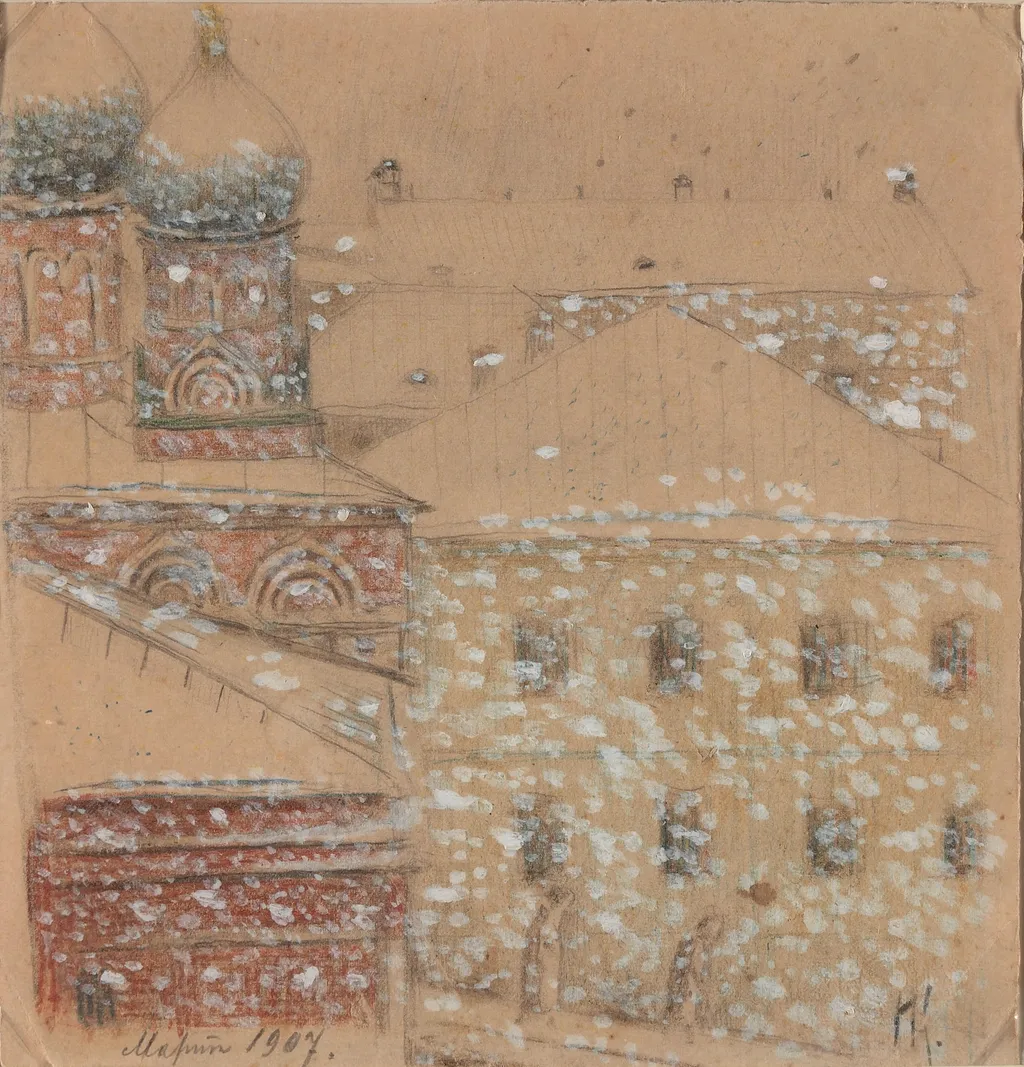
Χωρίς τίτλο is an unspecified painting by the Symbolist artist Ivan Kliun. It dates from 1907 and is held in the collection of the Metropolitan Organisation of Museums of Visual Arts of Thessaloniki – MOMus. Created in 1907, this untitled work consists of a dark square field punctuated by a solitary white circle positioned near the upper edge.
About this work
You see a dark square with a single white circle floating near the top.
This was painted in 1907, when most Russian artists were still filling canvases with saints and generals. Kliun stripped everything away—no story, no face, just shape and light. The circle feels like it’s glowing from inside the paint, not just sitting on top.
If you like how simple shapes can feel alive, look up *impasto*.
Overview
Created in 1907, this untitled work consists of a dark square field punctuated by a solitary white circle positioned near the upper edge. The composition abandons narrative content, focusing instead on the interaction of form and light. Its stark minimalism marks a departure from the prevalent Russian academic subjects of the period, such as religious icons and historical figures.
Subject & Meaning
The lone circle functions as an abstract signifier rather than a representational object. By isolating a single geometric element, the artist invites viewers to contemplate the latent meanings that emerge from pure shape, echoing Symbolist ideas that visual forms can conceal and reveal multiple layers of significance.
Technique & Style
Executed with a thick, impasto application, the white pigment appears to glow from within the paint layer, giving the circle a luminous quality that contrasts with the matte darkness of the surrounding square. The work’s reductive geometry and emphasis on surface texture align it with early Russian avant‑garde experiments that prioritized materiality over figurative depiction.
History & Provenance
The painting emerged at a time when most Russian artists still adhered to conventional subjects. Its creation coincided with the rise of groups such as the “Wanderers’ Society” and the “Blue Rose” circle, which fostered Symbolist and avant‑garde tendencies. The piece was later exhibited by youth collectives in Moscow and St. Petersburg that gathered the nation’s artistic innovators.
Context
The early twentieth‑century Russian art scene was undergoing a rapid transformation, with emerging collectives challenging academic norms. This work reflects that shift, embodying the move toward abstraction and the exploration of visual language as an autonomous entity, separate from narrative or religious content.
Legacy
By reducing visual content to a single illuminated form, the painting anticipates later developments in geometric abstraction and minimalism. Its emphasis on material presence and the psychological impact of simple shapes contributed to the broader trajectory of Russian modernism.
Artist & collection
Artist
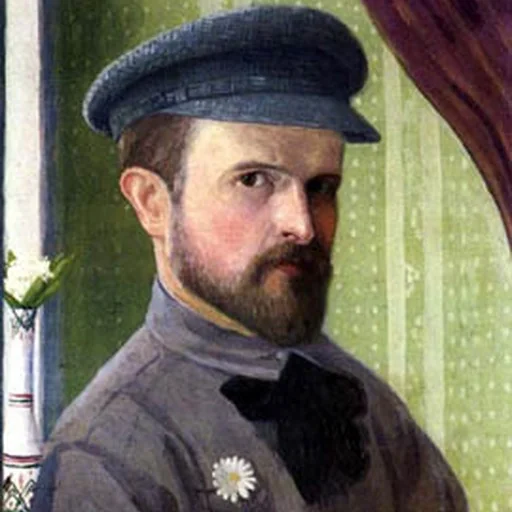
Ivan Vasilievich Kliun, or Klyun, born Klyunkov (Russian: Иван Васильевич Клюн; 1 September 1873, in Bolshiye Gorky, Petushinsky District – 13 December 1943, in Moscow) was a Russian Avant-Garde painter, sculptor and…
Museum
Metropolitan Organisation of Museums of Visual Arts of Thessaloniki – MOMus
Continue through works from the same source collection.