Artwork
Iarna
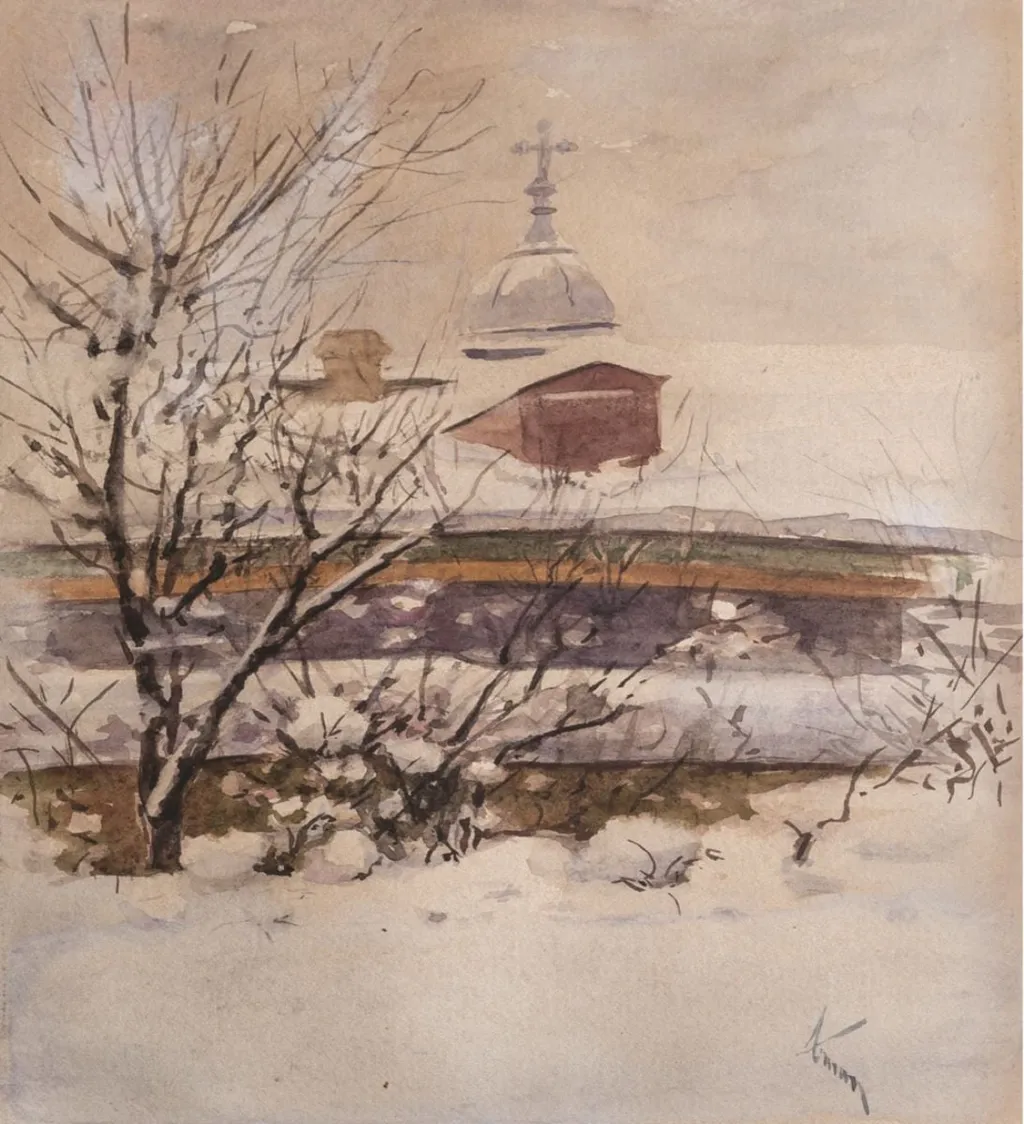
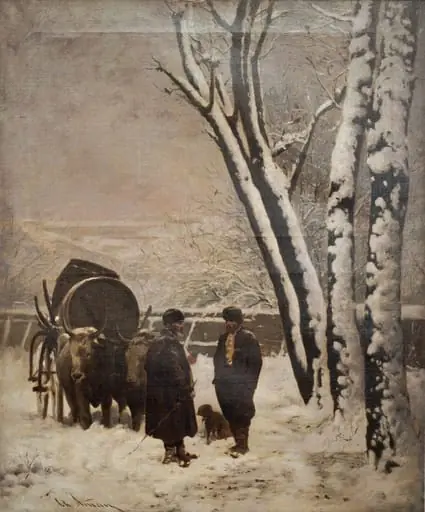
Iarna is a print by Theodor Aman. It dates from 1884 and is held in the collection of the Bucharest Municipality Museum.
About this work
Overview
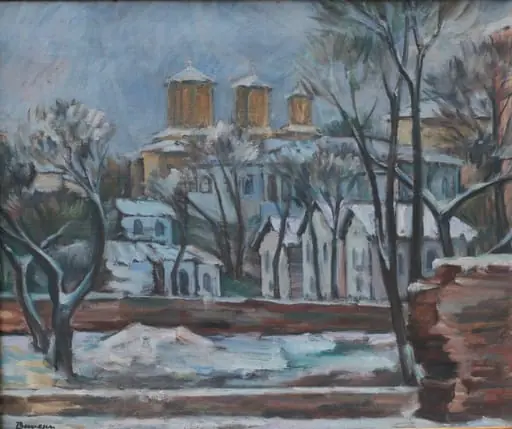
Theodor Aman painted *Iarna* circa 1884, capturing a quiet winter landscape in Romania. Aman, known for his genre and historical subjects, turned here to the natural environment, reflecting his interest in everyday Romanian life. The work is part of the Museum of Ethnography’s collection, where it contributes to a broader documentation of national cultural expression through visual art.
Subject & Meaning
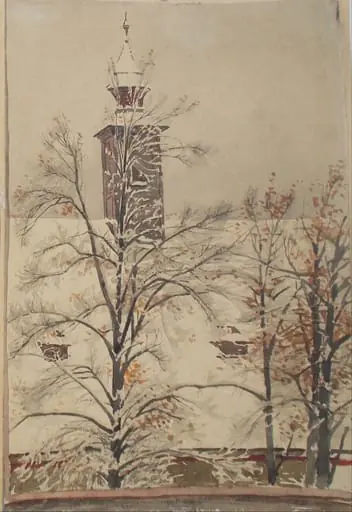
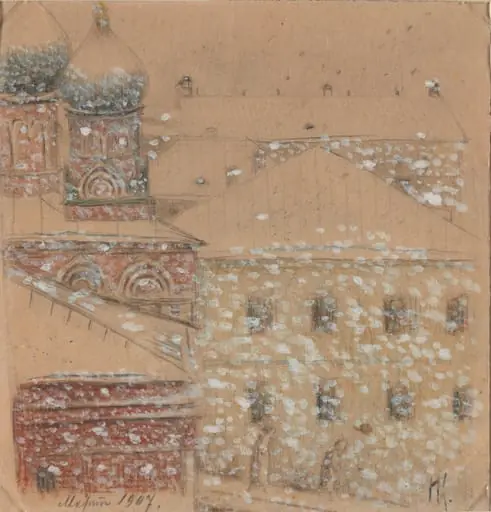
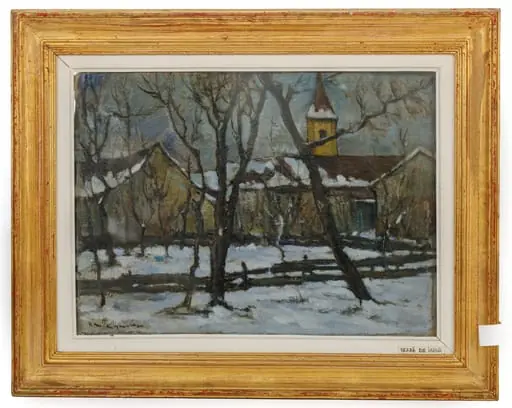
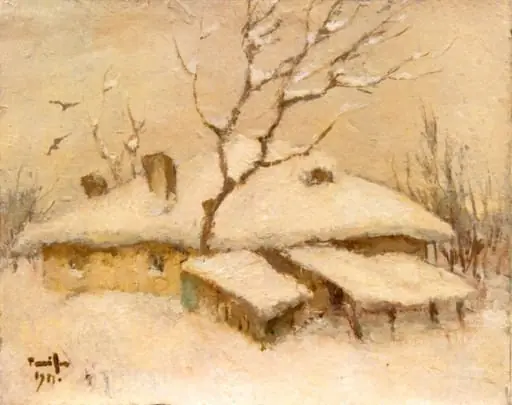
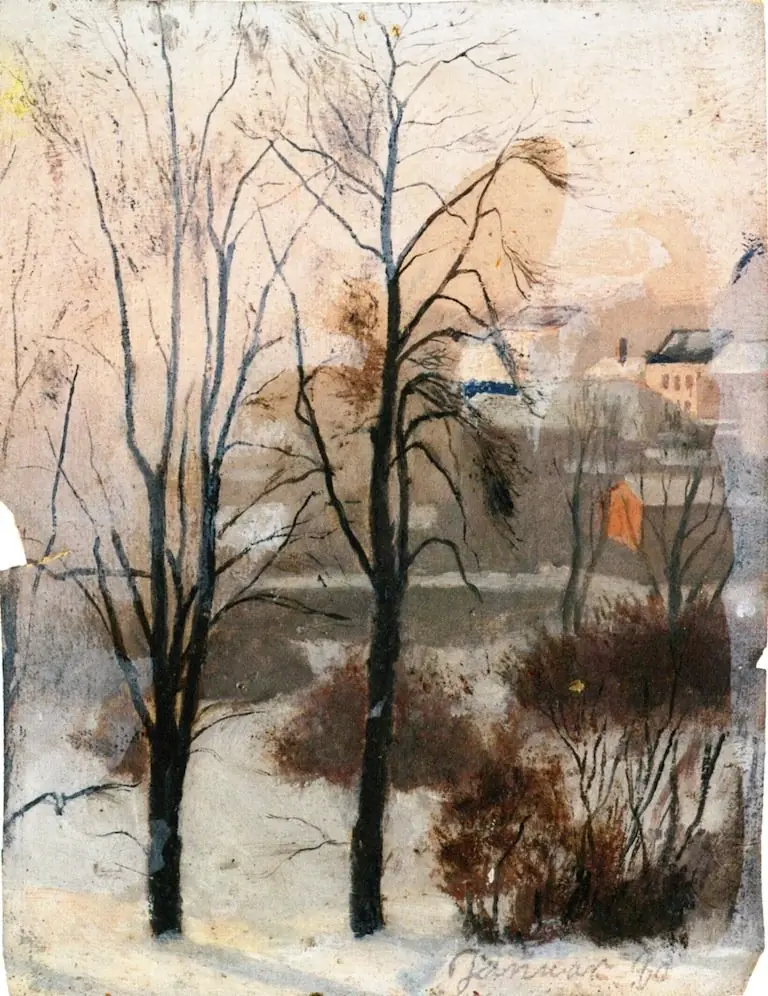
The scene presents a still, snow-dusted rural landscape with a modest church visible in the distance. Bare trees and sparse shrubs emphasize the season’s austerity. The absence of human figures heightens the sense of solitude, suggesting contemplation of nature’s rhythms rather than narrative action. The church, though faint, anchors the composition in local spiritual and communal life.
Technique & Style
The church’s outline is softly rendered, blending into the hazy background, while foreground elements are defined with minimal detail.
Aman employed muted tones—grays, browns, and pale ochres—to convey winter’s subdued palette. Brushwork is restrained, avoiding dramatic contrast or embellishment. The church’s outline is softly rendered, blending into the hazy background, while foreground elements are defined with minimal detail. This approach prioritizes atmosphere over precision, aligning with a quiet realism common in late 19th-century Romanian painting.
History & Provenance
Created during Aman’s mature period, *Iarna* was likely produced after his tenure at the Bucharest School of Fine Arts, where he influenced a generation of Romanian artists. The painting entered the Museum of Ethnography’s holdings in the early 20th century, where it was preserved as part of a collection documenting folk and regional life, rather than as a standalone fine art piece.
Context
In the late 1800s, Romanian artists increasingly turned to domestic landscapes and rural scenes as expressions of national identity. Aman’s work, though less overtly political than his historical paintings, contributed to this trend by portraying the land with dignity and restraint. *Iarna* reflects a broader cultural movement seeking to define Romanian art through its natural and architectural surroundings.
Legacy
Though not among Aman’s most widely exhibited works, *Iarna* remains a quiet example of his engagement with the Romanian countryside. It illustrates his consistent interest in ordinary settings and his ability to convey mood through subtle tonal variation. The painting continues to be studied for its role in shaping a visual language of national landscape during a formative period in Romanian art.
Artist & collection
Artist
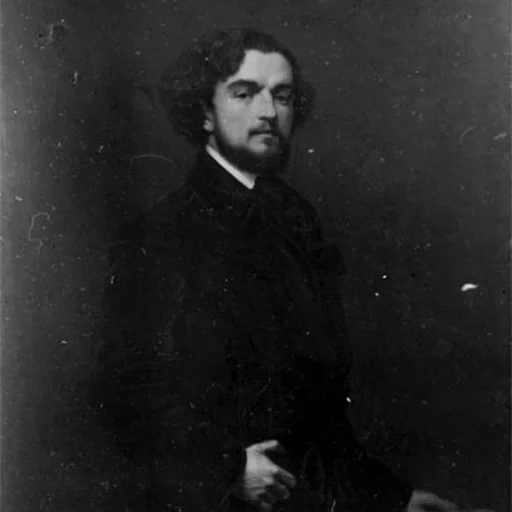
Theodor Aman (20 March 1831 – 19 August 1891) was a Romanian painter, engraver and art professor. He mostly produced genre and history scenes.