Artwork
Πίνακας Ι. Αναφορικά με το πρόβλημα της σύνθεσης: Κατασκευή σύμφωνα με διακοσμητικές και οργανικές αρχές
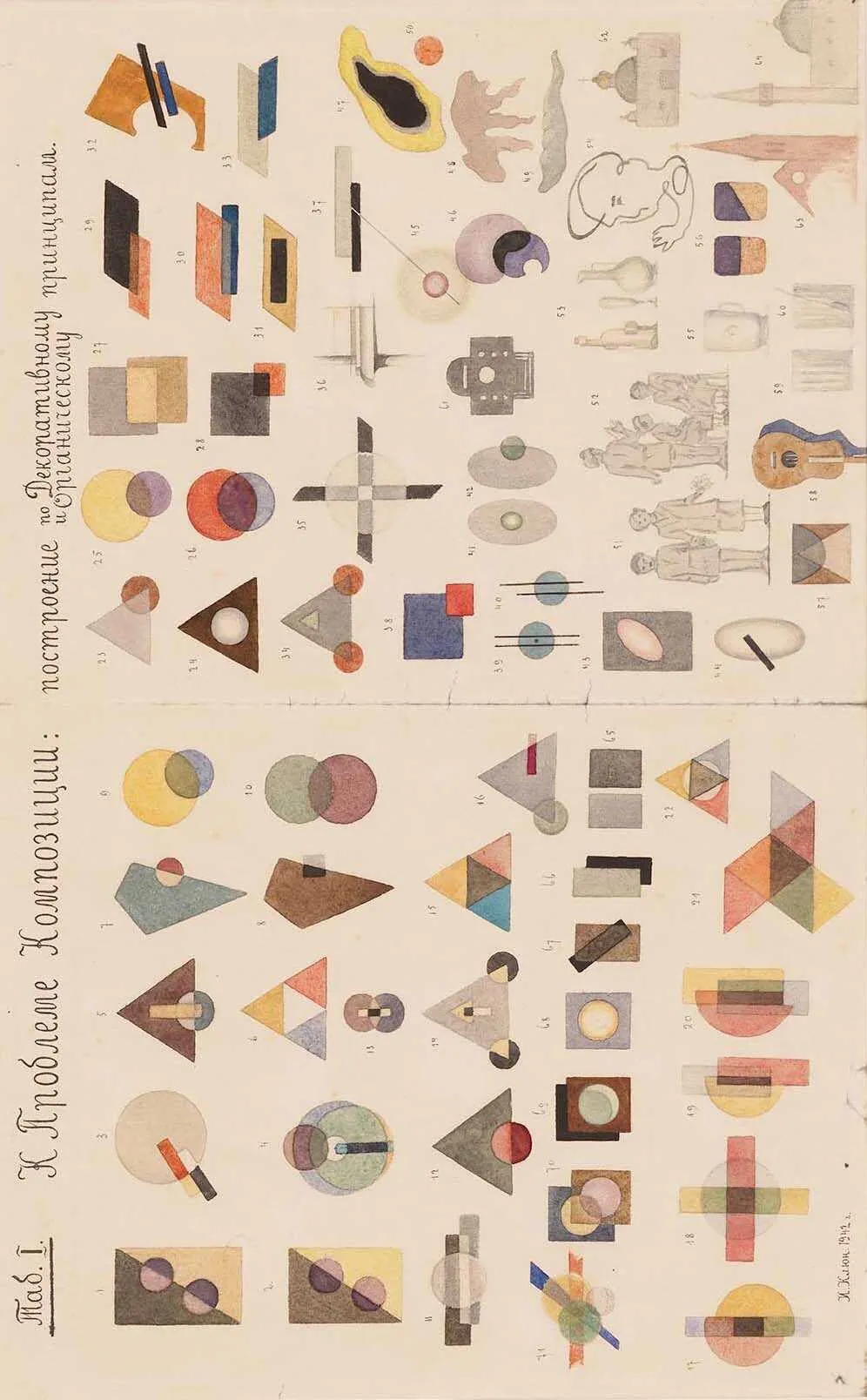
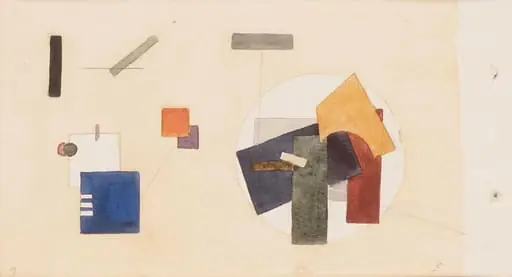
Πίνακας Ι. Αναφορικά με το πρόβλημα της σύνθεσης: Κατασκευή σύμφωνα με διακοσμητικές και οργανικές αρχές is a drawing by Ivan Kliun. It dates from 1942 and is held in the collection of the Metropolitan Organisation of Museums of Visual Arts of Thessaloniki – MOMus. This drawing by Kliun, titled 'Table I.
About this work
Overview
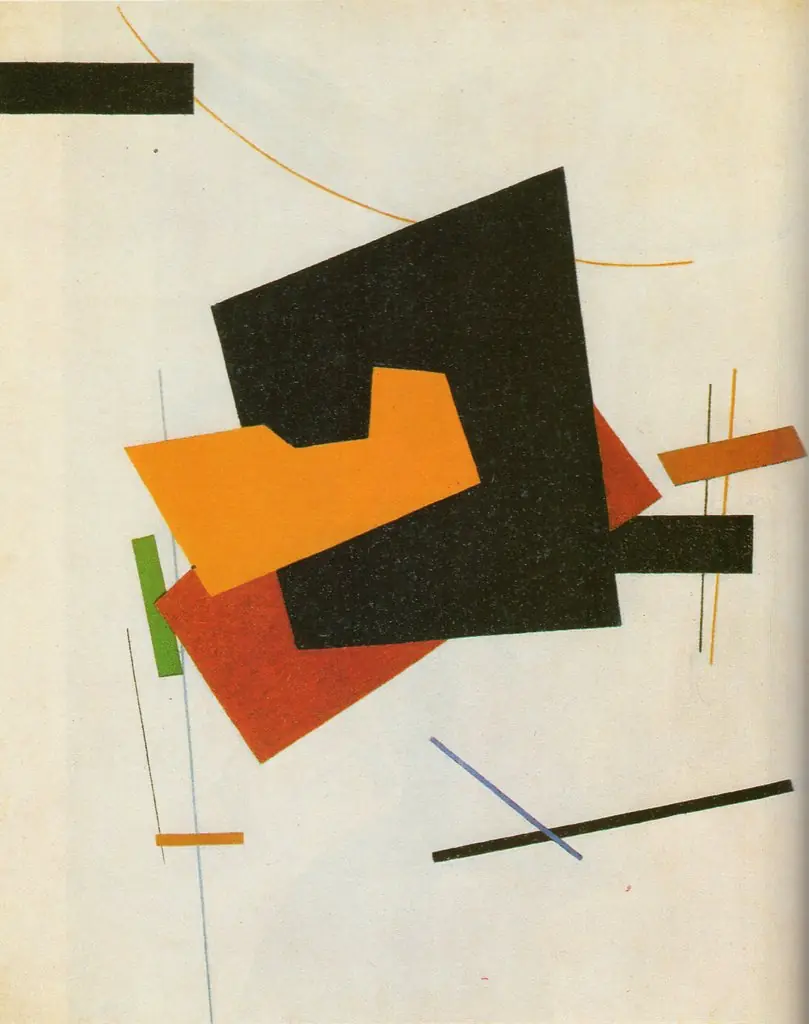
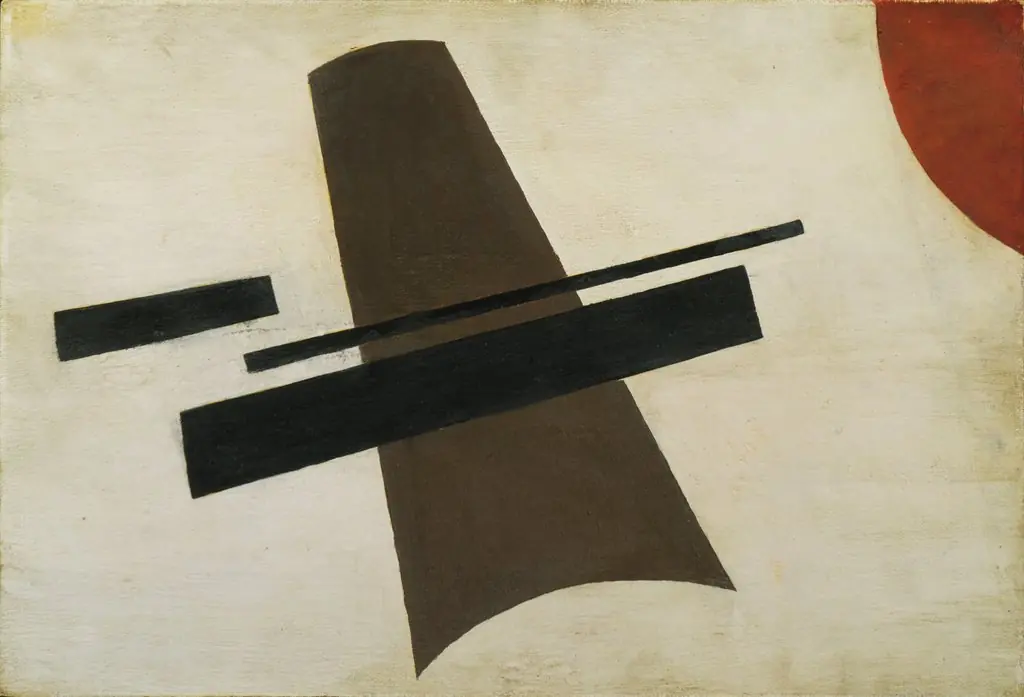
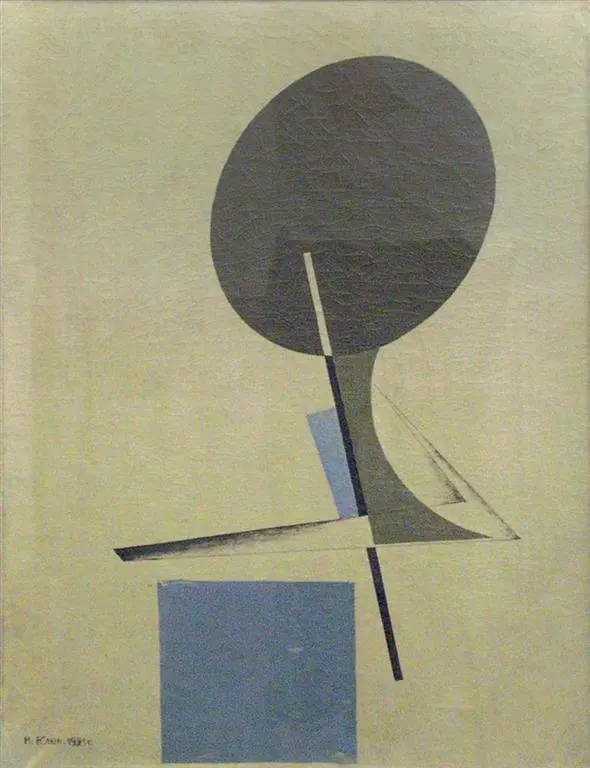
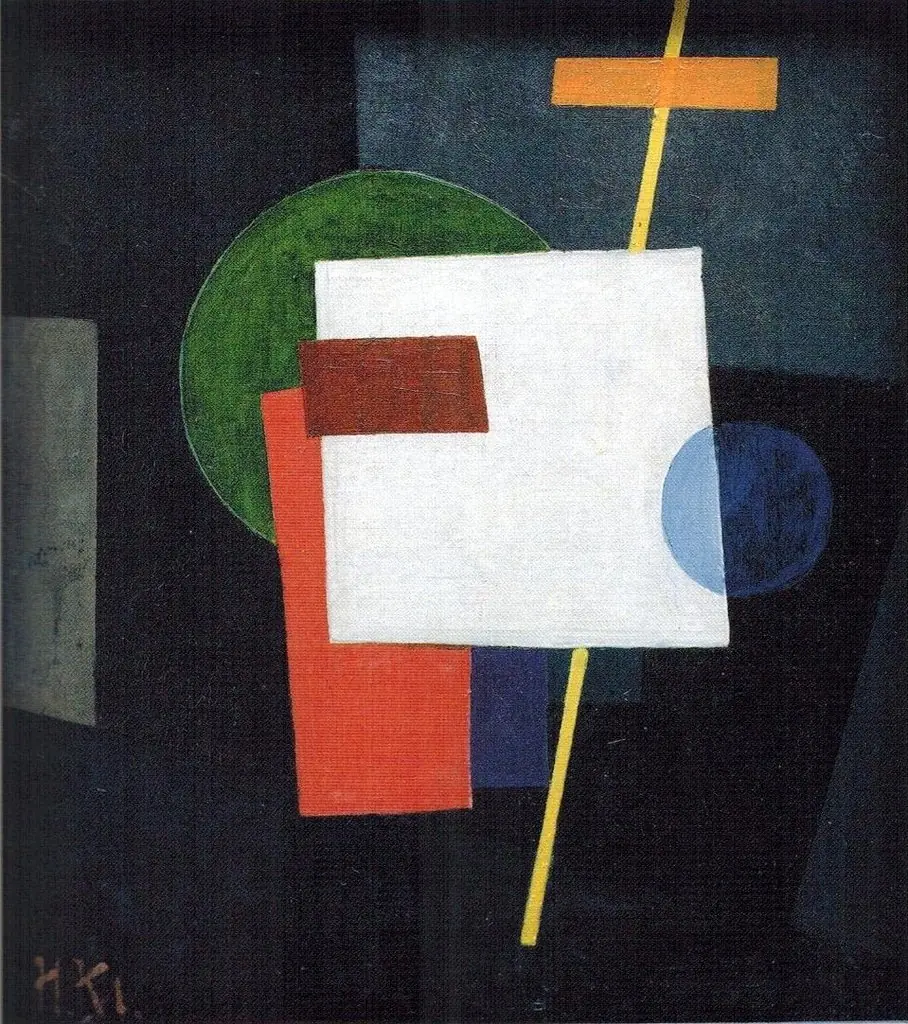
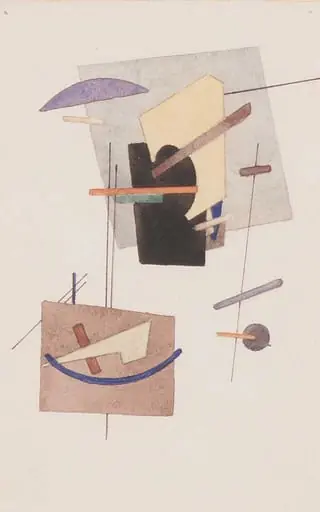
This drawing by Kliun, titled 'Table I. On Composition: Constructing Images according to Decorative and Organic Principles,' functions as a systematic study of formal relationships in non-objective art. It compiles a series of abstract arrangements that test how color and shape influence one another, reflecting the theoretical inquiries of early 20th-century Russian avant-garde workshops in Moscow and Petrograd.
Subject & Meaning
The work does not depict recognizable subjects but explores the interdependence of form and color as autonomous elements. Kliun’s compositions suggest that altering one necessarily demands a corresponding adjustment in the other—color shapes form, and form dictates color. This reciprocal dynamic underpins his investigation into visual harmony beyond representation.
Technique & Style
Executed in pencil and ink, the drawing employs precise, minimalist lines to isolate geometric shapes—circles, squares, and rectangles—against neutral backgrounds. Subtle variations in tone and density, possibly through hatching or stippling, modulate visual weight without introducing narrative. The style is analytical, prioritizing structural clarity over expressive gesture.
History & Provenance
Created during Kliun’s active years in the Russian avant-garde circles of the 1910s and 1920s, the drawing emerged from his participation in art pedagogical experiments at institutions like INHUK. It was likely used as a teaching aid or reference for students grappling with Suprematist principles, though its exact provenance prior to institutional acquisition remains undocumented.
Context
Kliun’s work aligns with broader efforts by Russian artists to systematize abstraction beyond Malevich’s foundational forms. While Suprematism emphasized pure feeling through geometry, Kliun focused on the internal logic of composition—how color and shape mutually define each other. His drawings served as bridges between theory and practice in experimental art schools.
Legacy
Though less widely known than his contemporaries, Kliun’s studies contributed to the codification of abstract principles in early Soviet art education. This drawing remains a key document for understanding how Suprematist ideas were tested, refined, and transmitted through pedagogical practice, influencing later generations’ approaches to non-representational composition.
Artist & collection
Artist
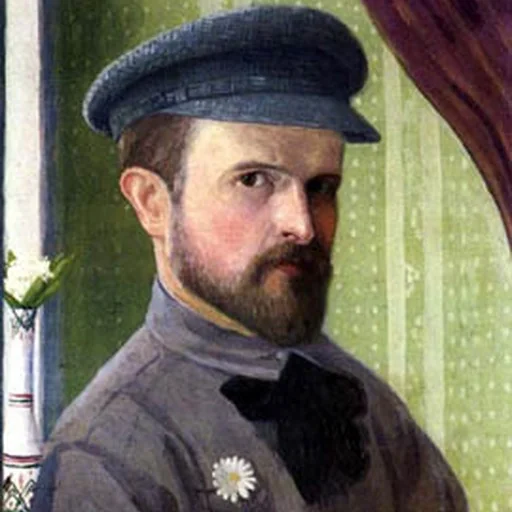
Ivan Vasilievich Kliun, or Klyun, born Klyunkov (Russian: Иван Васильевич Клюн; 1 September 1873, in Bolshiye Gorky, Petushinsky District – 13 December 1943, in Moscow) was a Russian Avant-Garde painter, sculptor and…
Museum
Metropolitan Organisation of Museums of Visual Arts of Thessaloniki – MOMus
Continue through works from the same source collection.