Artwork
Untitled
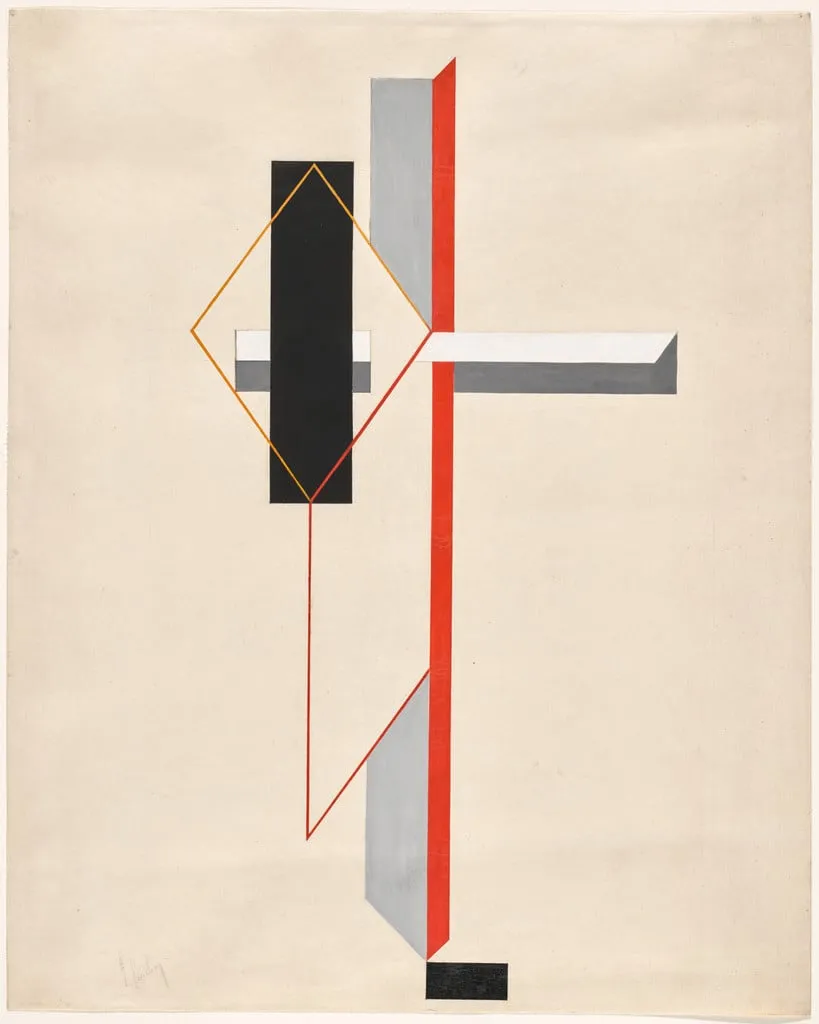
Untitled is a gouache drawing by El Lissitzky. It dates from 1922 and is held in the collection of the Museum of Modern Art.
About this work
Overview
Created circa 1922, this drawing by El Lissitzky is executed in gouache and ink on paper.
Created circa 1922, this drawing by El Lissitzky is executed in gouache and ink on paper. It exemplifies his engagement with geometric abstraction during the early Soviet period. As a figure active across multiple disciplines, Lissitzky used this small-scale work to explore formal relationships between shape, color, and space, reflecting broader avant-garde interests in visual language as a tool for modern thought.
Subject & Meaning
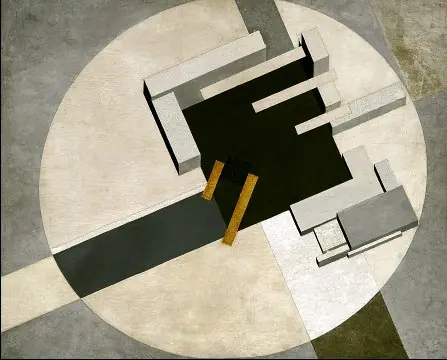
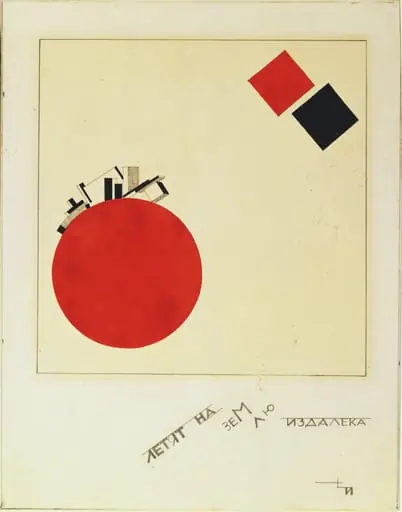
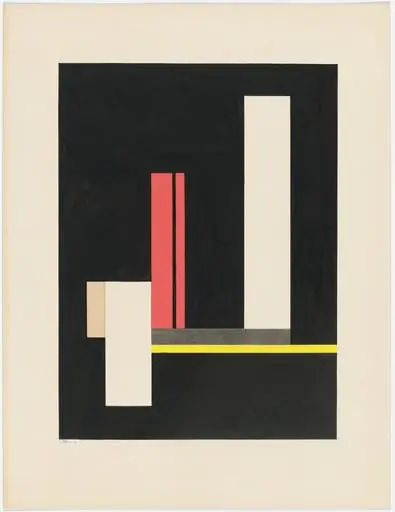
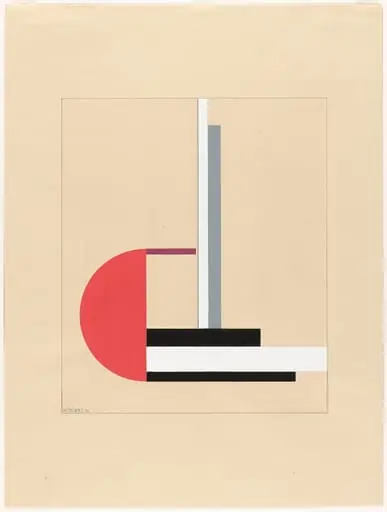
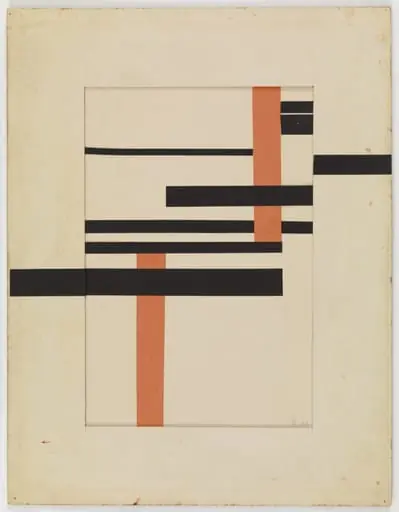
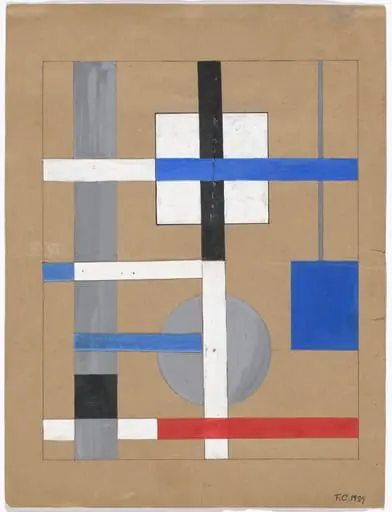
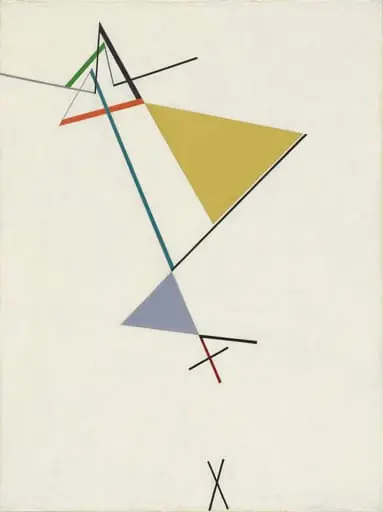
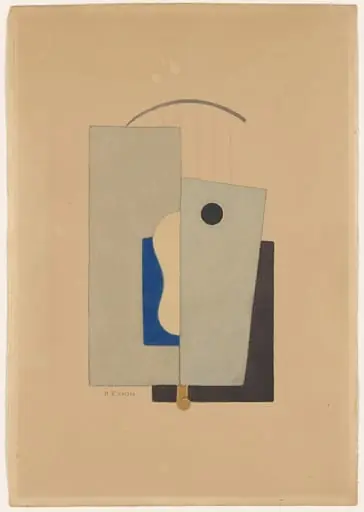
The composition presents no representational imagery but instead arranges abstract forms—a vertical black rectangle containing a diamond, a slanted red band, and a horizontal gray bar—into a structured yet dynamic field. These elements suggest architectural or technical schematics, evoking systems of order without literal reference. The work invites interpretation as a visual equation, where balance and alignment replace narrative content.
Technique & Style
Lissitzky employed flat, opaque gouache to create unmodulated color fields, contrasting with precise ink lines that connect and isolate forms. The absence of shading or texture emphasizes the purity of geometric shapes. Thin ink strokes act as structural guides, suspending elements in space and reinforcing a sense of weightlessness. The method reflects a deliberate reduction to essential visual components, characteristic of Constructivist aesthetics.
History & Provenance
This work emerged during a period of intense artistic experimentation in post-revolutionary Russia, when Lissitzky was actively involved in state-sponsored cultural initiatives. Though unsigned and undated in its original form, its style aligns with his known output from 1921–1923. It likely originated as a study or sketch, later preserved as part of his personal archive before entering institutional collections.
Context
In the early 1920s, Soviet artists sought to redefine art’s role in society through abstraction and functional design. Lissitzky, influenced by Suprematism and Constructivism, moved beyond painting toward systems of visual communication. This drawing reflects that shift—its clarity and economy mirror the era’s interest in visual logic as a means to articulate new social and technological ideals.
Legacy
Though modest in scale, this drawing contributes to Lissitzky’s broader influence on modern graphic design and architectural visualization. Its use of simplified geometry and non-representational composition prefigured later developments in international modernism. The work remains a quiet but significant example of how abstract form was harnessed to explore structure, perception, and the potential of art beyond representation.
Artist & collection
Artist
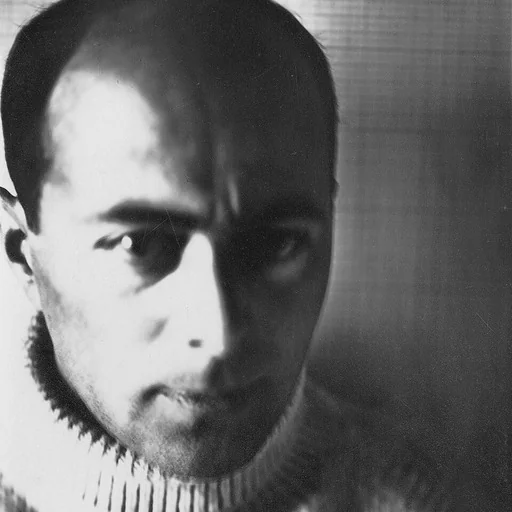
El Lissitzky (Russian: Эль Лиси́цкий, born Lazar Markovich Lissitzky Russian: Ла́зарь Ма́ркович Лиси́цкий, ; 23 November 1890 – 30 December 1941) was a Russian and Soviet artist, active as a painter, illustrator,…