Artwork
Pennsylvania Landscape
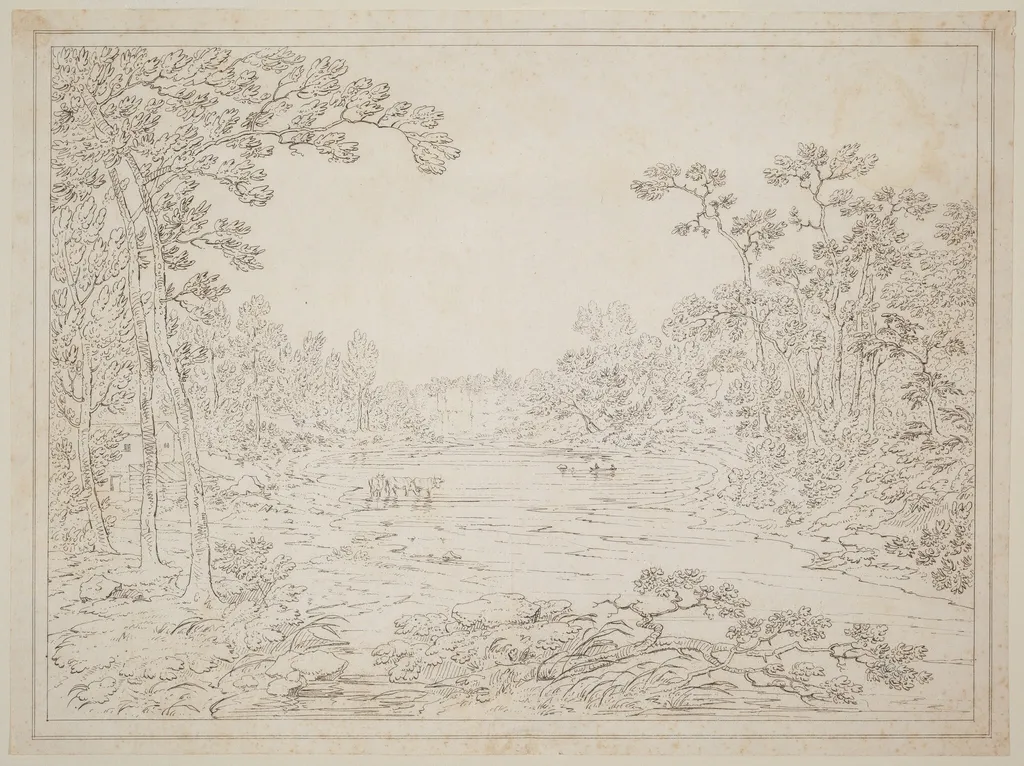
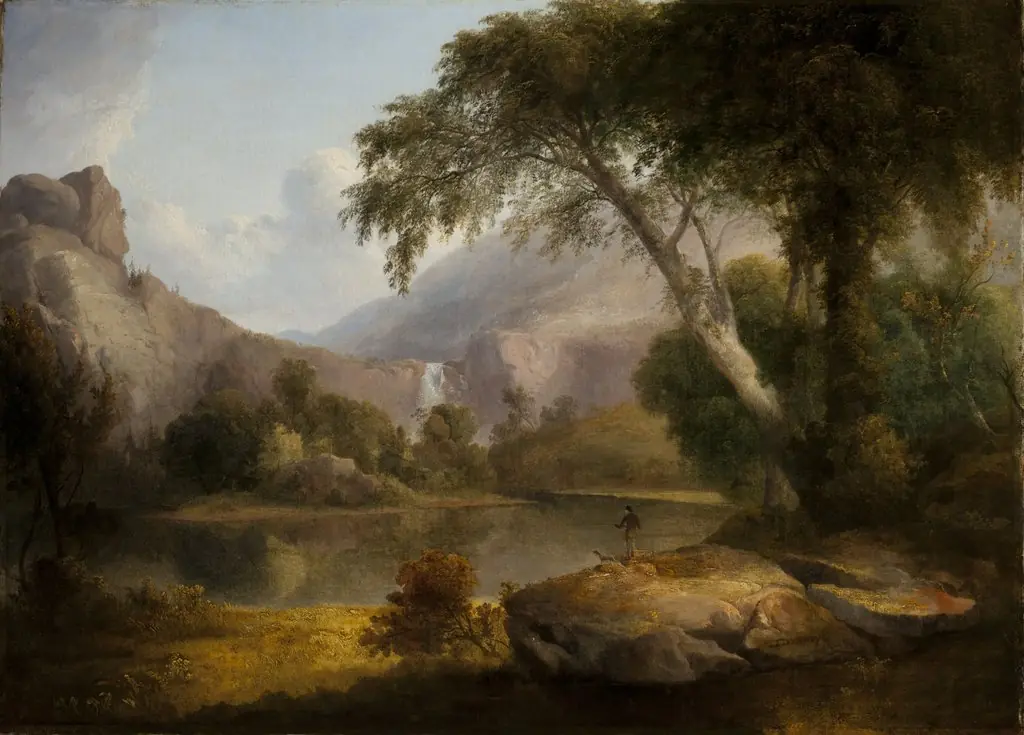
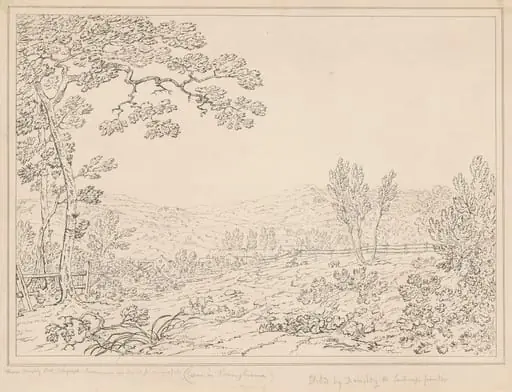
Pennsylvania Landscape is an ink print by the Romanticist artist Thomas Doughty. It dates from 1824 and is held in the collection of the National Gallery of Art.
About this work
Overview
Pennsylvania Landscape is an 1824 etching by Thomas Doughty, depicting a serene natural scene. Although initially described as a painting, it is actually a print, specifically an etching. The composition features a central river, flanked by verdant riverbanks, with figures, distant hills, and scattered buildings under a hazy gray sky.
Subject & Meaning
The subject is a peaceful Pennsylvania landscape, emphasizing the beauty of nature, characteristic of the Romantic movement. The serene atmosphere conveys a sense of calm and tranquility, highlighting the artist's focus on natural beauty.
Technique & Style
Executed in etching, the work adopts a Romantic style. Notably, the description of 'muted colors and soft brushstrokes' appears inconsistent with etching technique; instead, the piece likely utilizes nuanced line work and tonal variations to achieve its serene, naturalistic effect.
History & Provenance
Created in 1824 by Thomas Doughty, an American artist known for his landscapes, the etching's specific provenance details are not provided in the available information.
Context
Pennsylvania Landscape reflects the early 19th-century American Romanticism movement, which often celebrated the sublime and serene in natural landscapes. The choice of etching as a medium allowed for wider dissemination of this vision.
Legacy
While specific legacy details of this etching are not provided, Thomas Doughty's contributions to American landscape art, particularly in capturing serene natural scenes, remain notable within the context of early American Romanticism.
Own this work as a print
Artist & collection


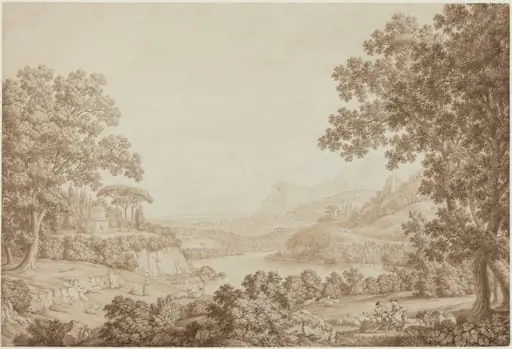 Arcadian Landscape with a Mausoleum
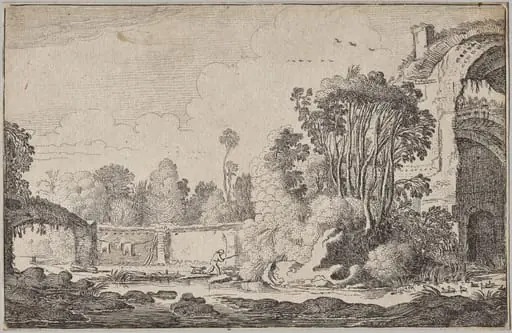 Landscapes, part III: Roman Ruins in Wooded Surroundings
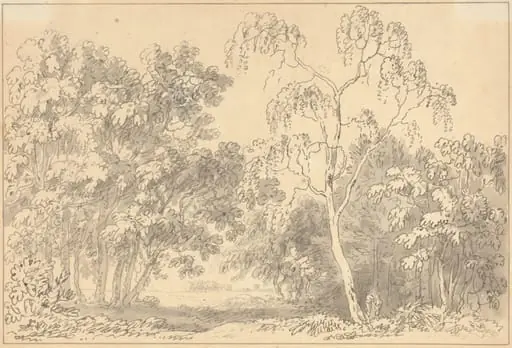 Wooded Landscape
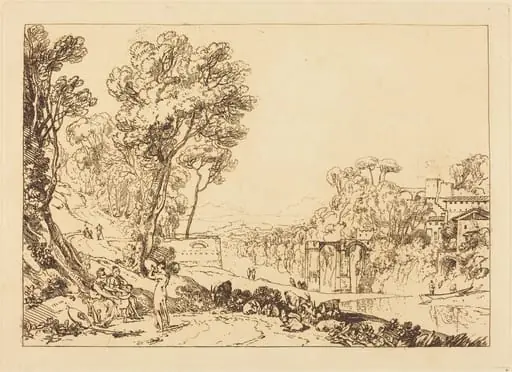 The Woman and Tambourine
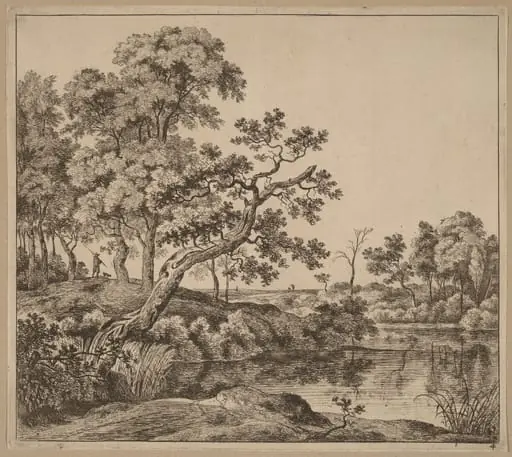 Landscape with a Bending Tree
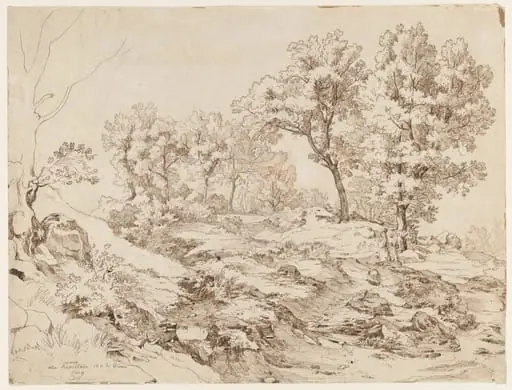 La Serpentara near Olevano
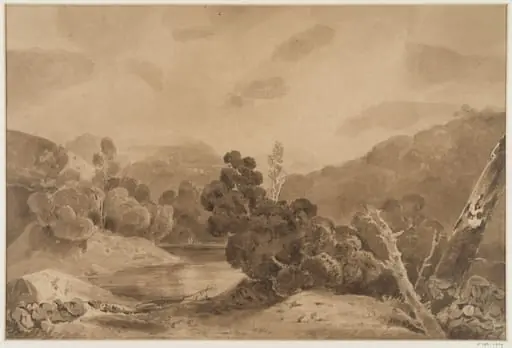 River scene with a temple or palace in the clouds
 The buildings of Macau seen across fields from a tree-lined lane
 Apuleia in Search of Apuleius
 The Cudgel Dam and Covered Bridge
 A Bengal landscape with a village dwelling
 Pennsylvania Landscape