Artwork
Mountain Landscape with Two Men Resting
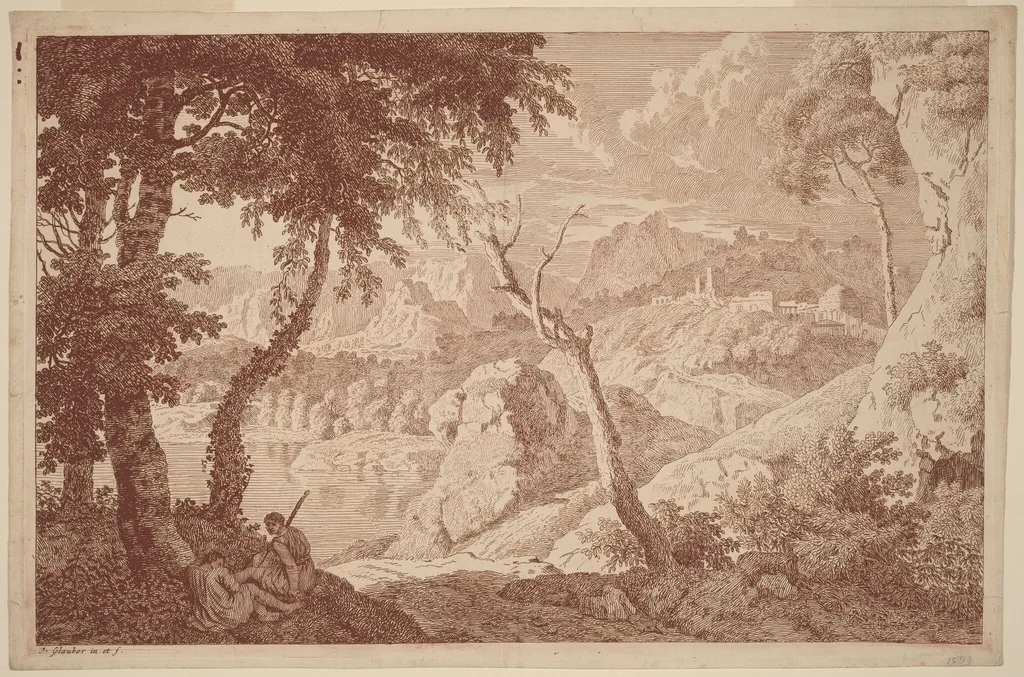
Mountain Landscape with Two Men Resting is an ink print by the Baroque artist Johannes Glauber. It dates from 1686 and is held in the collection of the National Gallery of Art.
About this work
Overview
Created in 1686, this etching by Johannes Glauber depicts a tranquil rural scene rendered in red-brown ink on laid paper.
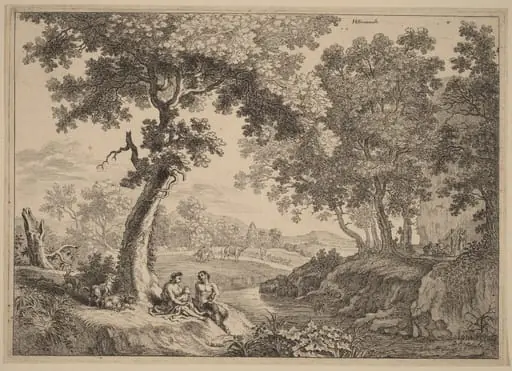
Created in 1686, this etching by Johannes Glauber depicts a tranquil rural scene rendered in red-brown ink on laid paper. The composition centers on two figures resting beneath a substantial tree, their postures suggesting quiet contemplation. The surrounding landscape unfolds with gentle slopes, a distant hamlet, and a meandering trail, all rendered with delicate, incised lines that convey texture and spatial depth without overt detail.
Subject & Meaning
The two figures, one leaning on his elbow and the other with his head resting in his hand, convey a mood of stillness and introspection. Their presence is unobtrusive, harmonizing with the landscape rather than dominating it. The scene evokes a moment of pause within nature, reflecting a 17th-century Dutch sensibility that valued quietude and the dignity of rural life over dramatic narrative.
Technique & Style
Glauber employed etching, using acid to bite fine lines into a metal plate, which was then inked and pressed onto paper. The red-brown ink enhances tonal variation, allowing subtle gradations of shadow and light. Fine cross-hatching and parallel lines build texture in the foliage, hills, and path, creating a sense of atmospheric depth while maintaining a restrained, precise aesthetic characteristic of Dutch printmaking of the period.
History & Provenance
The print dates from the later phase of Glauber’s career, when he focused on landscape subjects after training as a painter. Few of his prints survive, and this work is among the better-documented examples. It was likely produced for a limited audience of collectors and connoisseurs who appreciated intimate, finely executed views of the countryside, a niche market emerging in the late 17th century.
Context
In late 17th-century the Netherlands, landscape prints were widely collected, often serving as affordable alternatives to paintings. Artists like Glauber responded to a growing interest in serene, observational scenes rather than grand historical or religious themes. This work aligns with a broader trend of domesticated nature, where the everyday environment was rendered with quiet precision and emotional restraint.
Legacy
Glauber’s etchings, though not widely known today, represent a quiet strand of Dutch printmaking that emphasized subtlety over spectacle. His use of tone and composition influenced later generations of landscape draftsmen who sought to capture mood through line and ink rather than bold contrast. This print remains a modest but refined example of the period’s contemplative visual culture.
Artist & collection

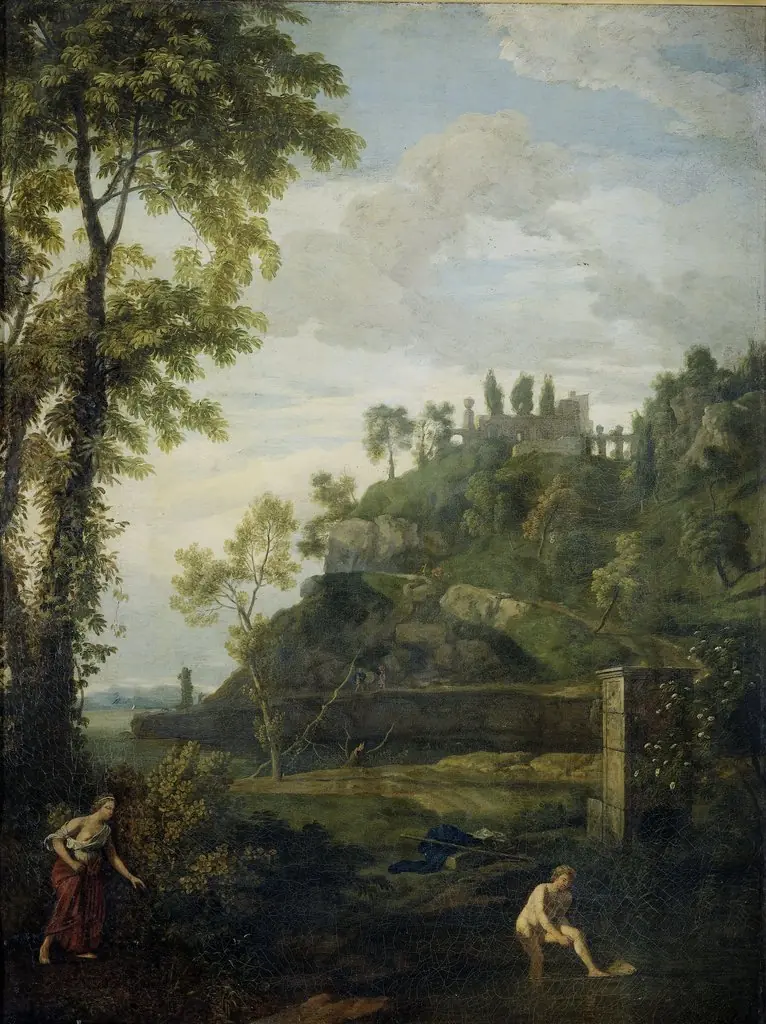 Arcadian landscape with Salmacis and Hermaphroditus
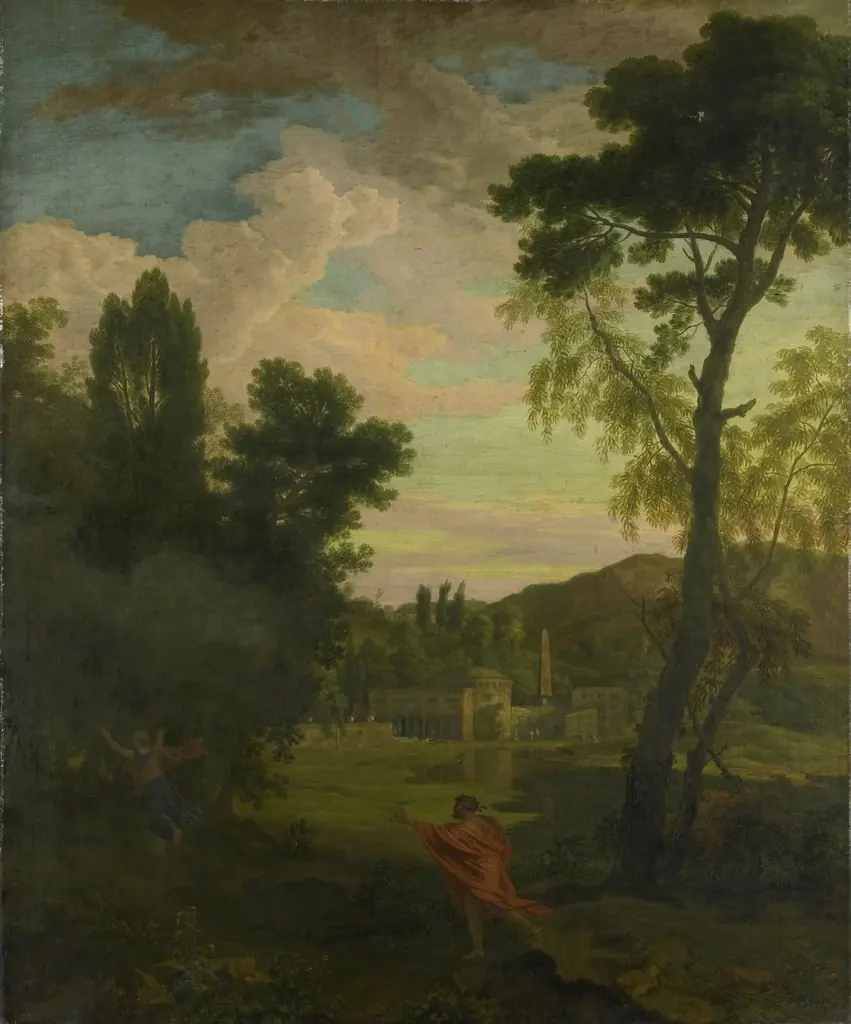 Arcadian landscape with Jupiter and Io
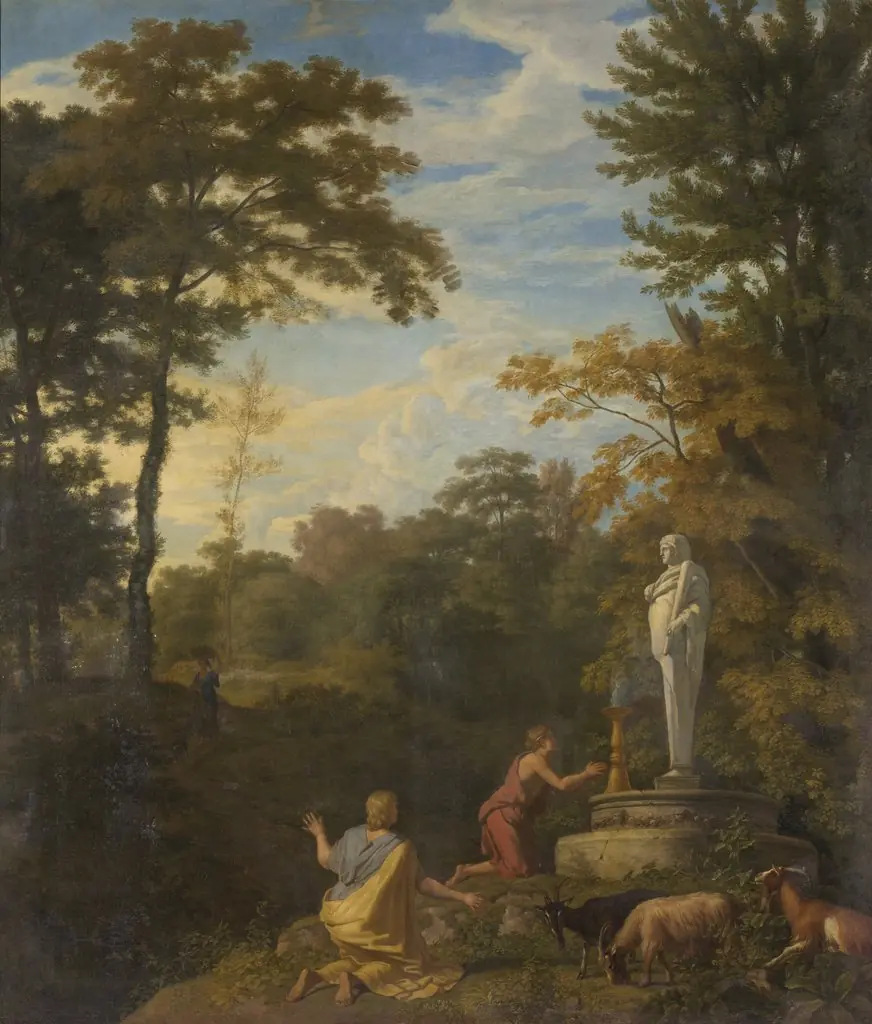 Arcadian landscape
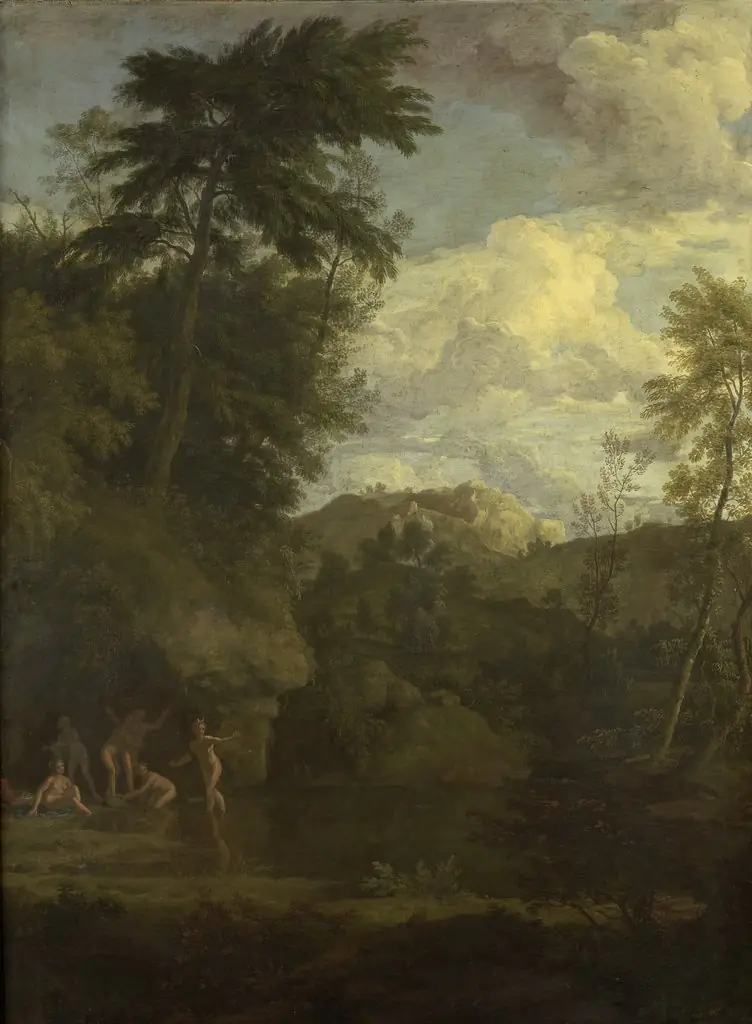 Arcadian landscape with bathing Diana
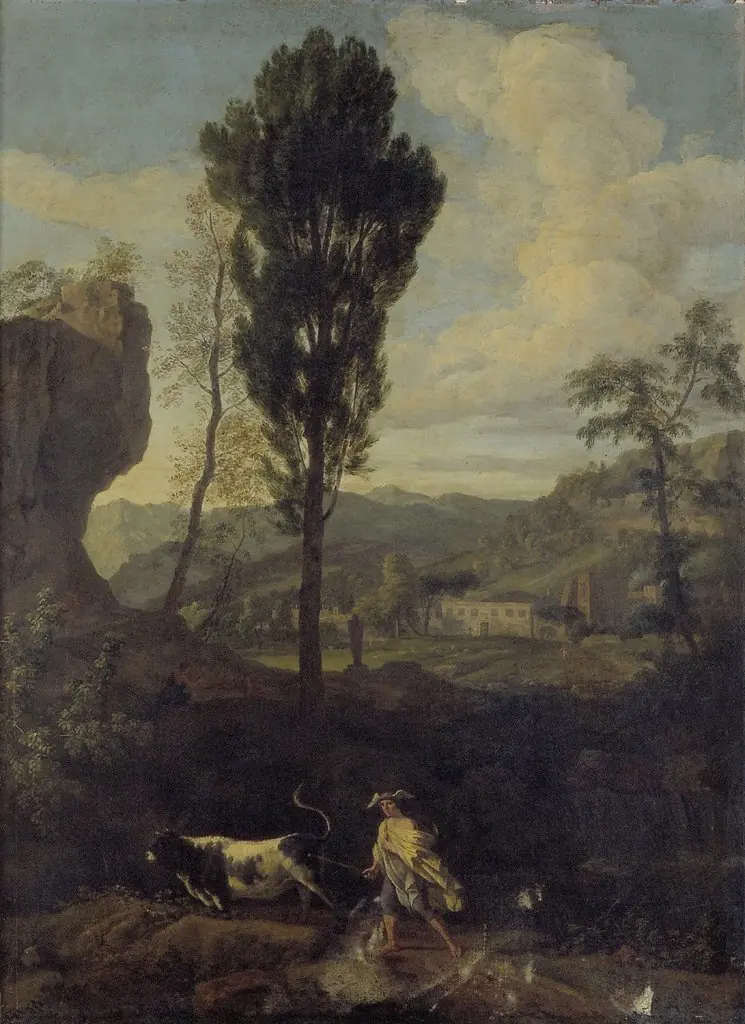 Arcadian landscape with Mercury and Io
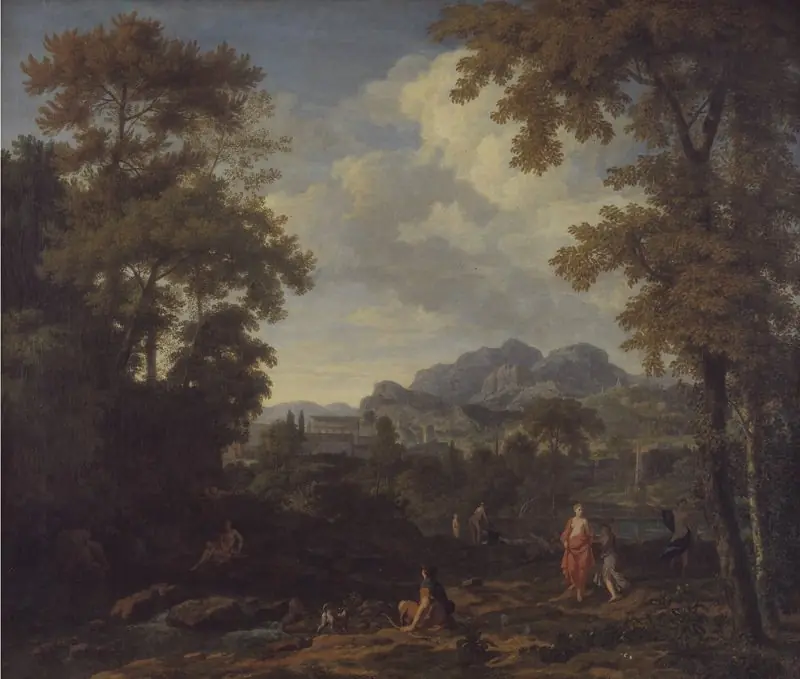 Classical Landscape with Diana (?) and her Nymphs
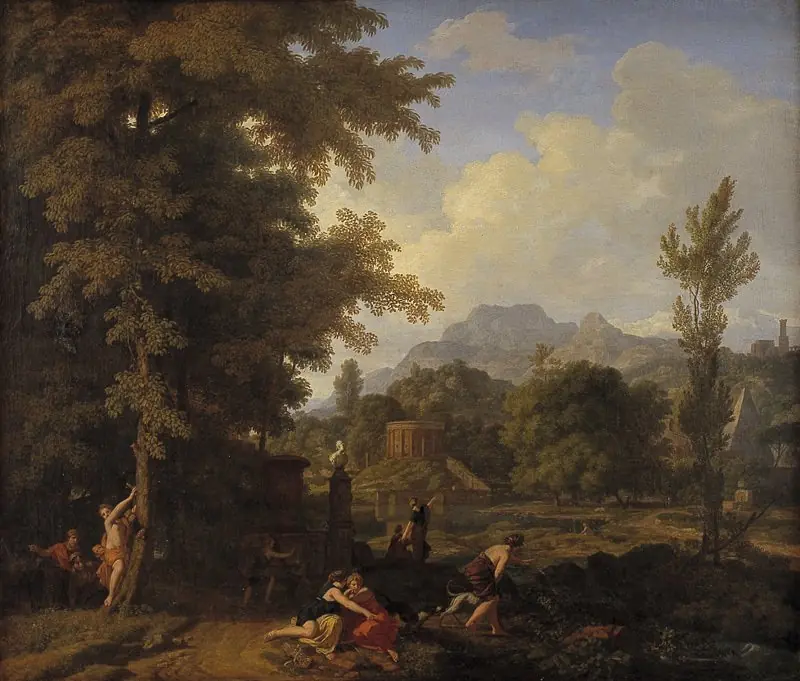 Classical Landscape with Diana (?) and her Nymphs
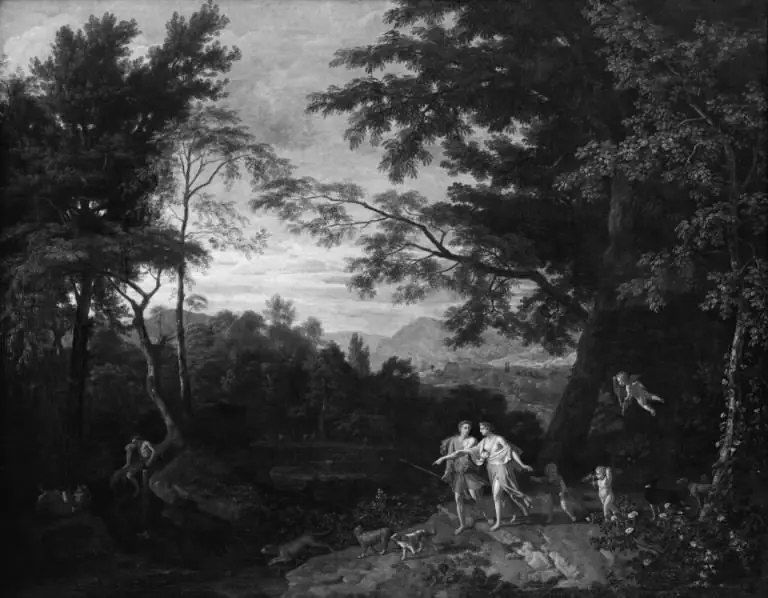 Landscape with Venus and Adonis
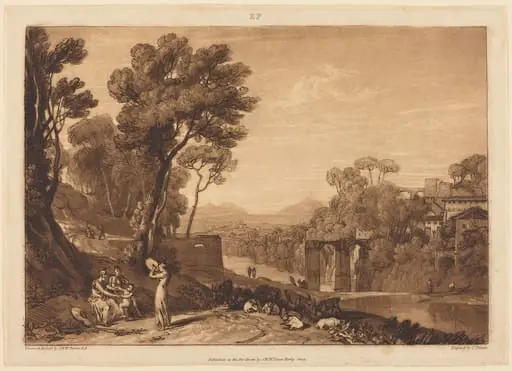 The Woman and Tambourine
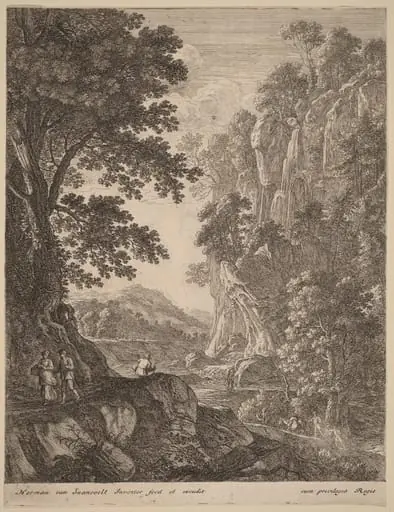 The Large Cascade
 Apollo and the Sibyl
 Satyr Family Seated under a Tree
 The Cave
 Arcadian Landscape with a Mausoleum
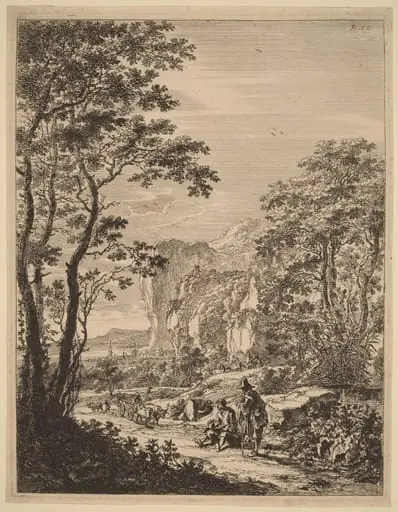 The Ox-Cart: View between Ancona and Sinigaglia
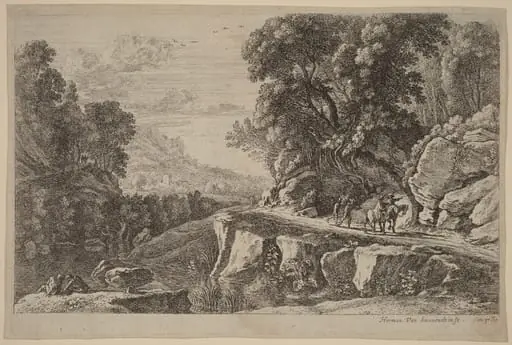 The Two Horsemen
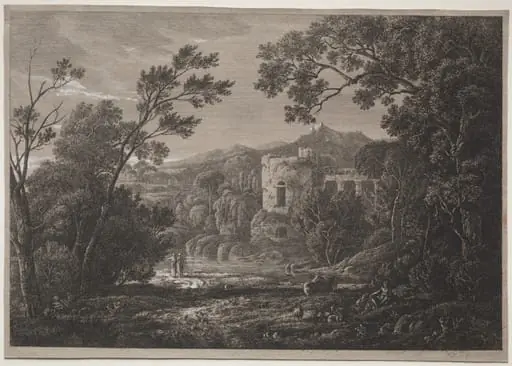 An Italian View
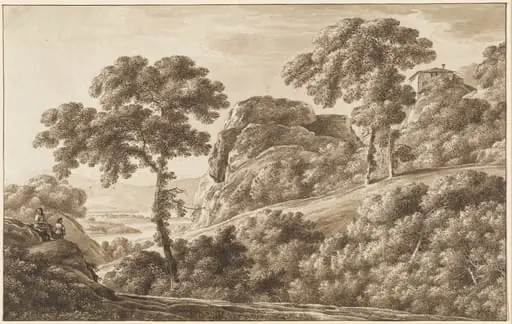 The Isar with Boulders on the Isarhohe
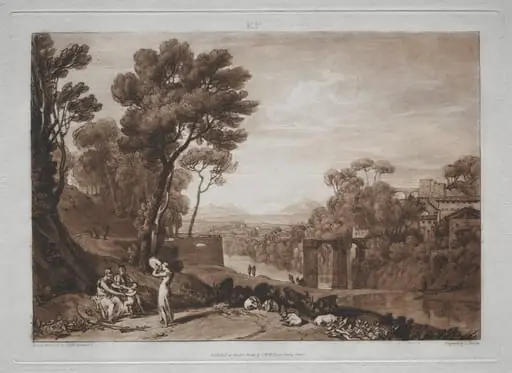 Liber Studiorum: The Woman and the Tambourine
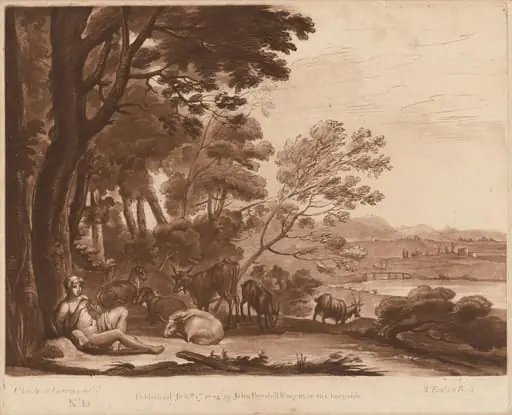 Landscape No. 15 from "Liber Veritatis"