Artwork
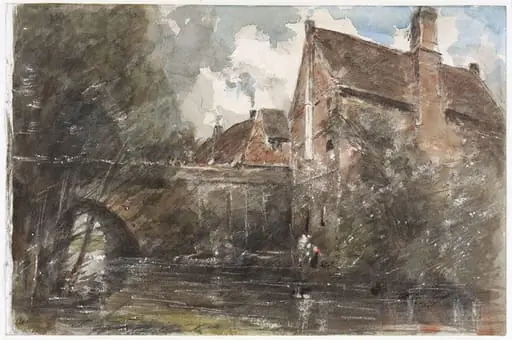
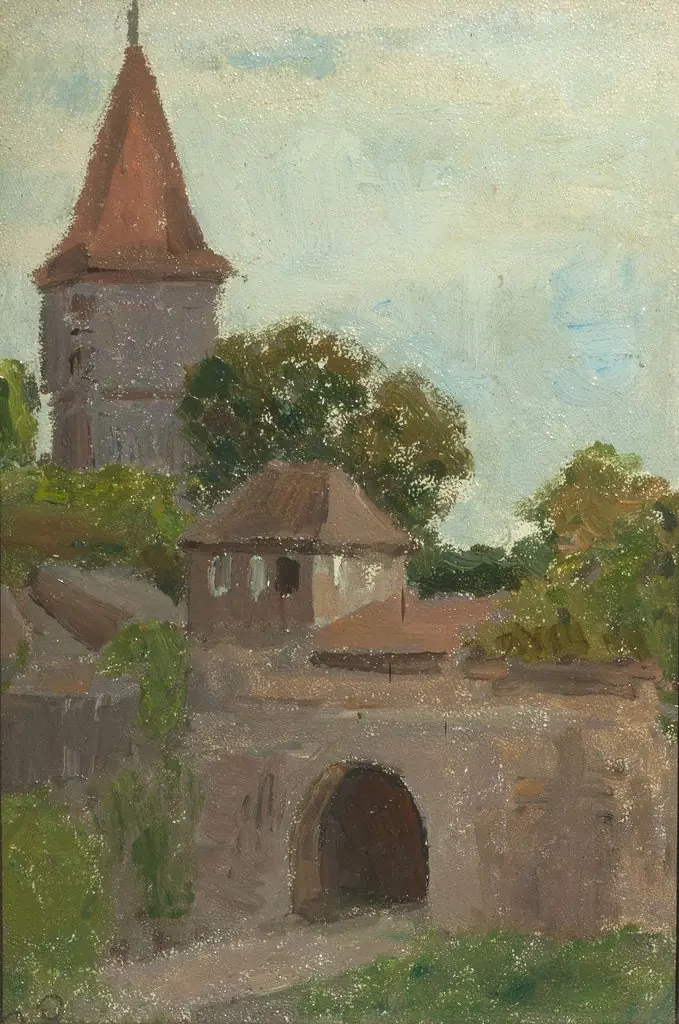
Norman Tower, Old Mill, Oxford
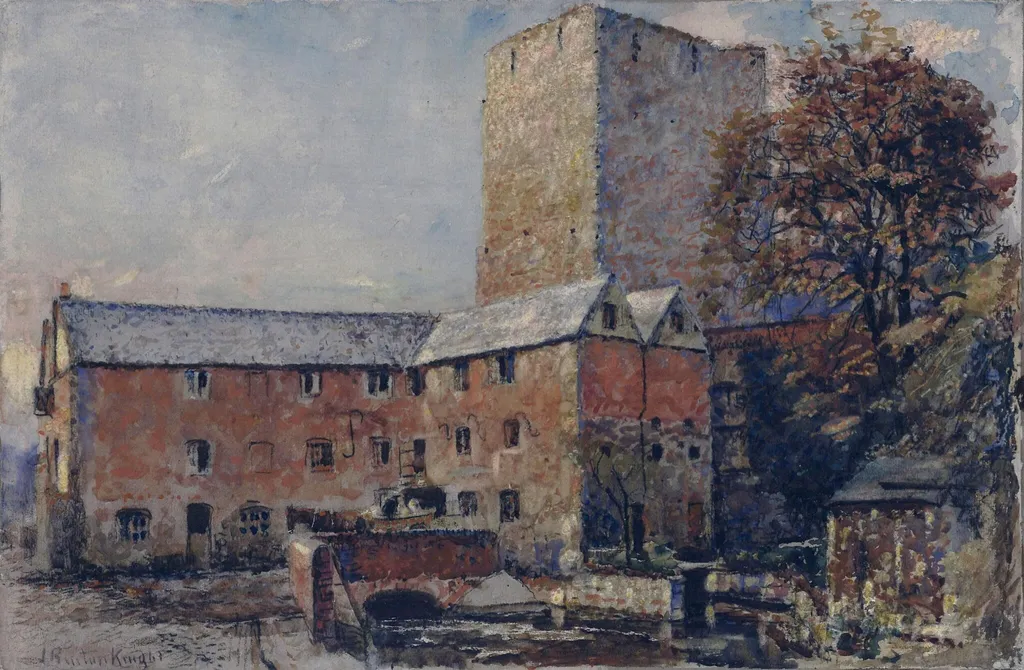
Norman Tower, Old Mill, Oxford is a watercolor work on paper by John William Buxton Knight. It dates from 1850 and is held in the collection of the Victoria and Albert Museum.
About this work
Overview
Delicate washes of watercolour convey a still, overcast day, with subtle shifts in light and tone anchoring the composition.
John William Buxton Knight rendered this watercolour in the late 19th century, capturing a quiet corner of Oxford where medieval architecture meets industrial heritage. The scene centers on St George’s Tower, the last remaining structure of Oxford Castle, and the adjacent Old Mill, linked by a narrow bridge spanning a sluggish stream. Delicate washes of watercolour convey a still, overcast day, with subtle shifts in light and tone anchoring the composition.
Subject & Meaning
The painting juxtaposes the enduring stone tower—once a defensive stronghold—with the utilitarian mill, a symbol of local industry. Their physical connection by bridge suggests a historical interdependence between ecclesiastical authority and economic activity. The absence of human figures amplifies a sense of quiet continuity, as if the structures themselves bear witness to centuries of change.
Technique & Style
Knight employed transparent watercolour layers to achieve atmospheric depth, allowing the paper’s white to suggest highlights and soft shadows. The tower’s pale stone contrasts with the mill’s reddish brick, while autumnal foliage introduces muted bursts of ochre and rust. Brushwork remains restrained, favoring gentle gradients over sharp detail, reinforcing the scene’s calm, introspective mood.
History & Provenance
St George’s Tower, built in the 11th century, survived the demolition of Oxford Castle in the 18th century. The mill, likely dating to the medieval or early modern period, operated until the 19th century. Knight painted the site during a time of growing antiquarian interest in Oxford’s architectural remnants, documenting structures that were increasingly seen as relics rather than functional spaces.
Context
In the Victorian era, artists and scholars began systematically recording England’s medieval and industrial past amid rapid urbanization. Knight’s work aligns with this trend, reflecting a cultural shift toward preserving visual records of fading landscapes. The painting avoids romanticization, instead presenting the site with documentary precision and restrained emotion.
Legacy
The watercolour remains a valuable record of Oxford’s architectural evolution, preserving the appearance of structures now altered or lost. It contributes to the broader corpus of 19th-century topographical art, valued not for dramatic effect but for its quiet fidelity to place and time. The painting is held in institutional collections, where it continues to inform historical and artistic study.
Own this work as a print
Artist & collection
Artist
John William Buxton Knight spent decades wandering the English coast, sketchbook always in hand, painting the same patch of shoreline at different tides.