Artwork
Portrait of Teresa Silberstein née Cohn
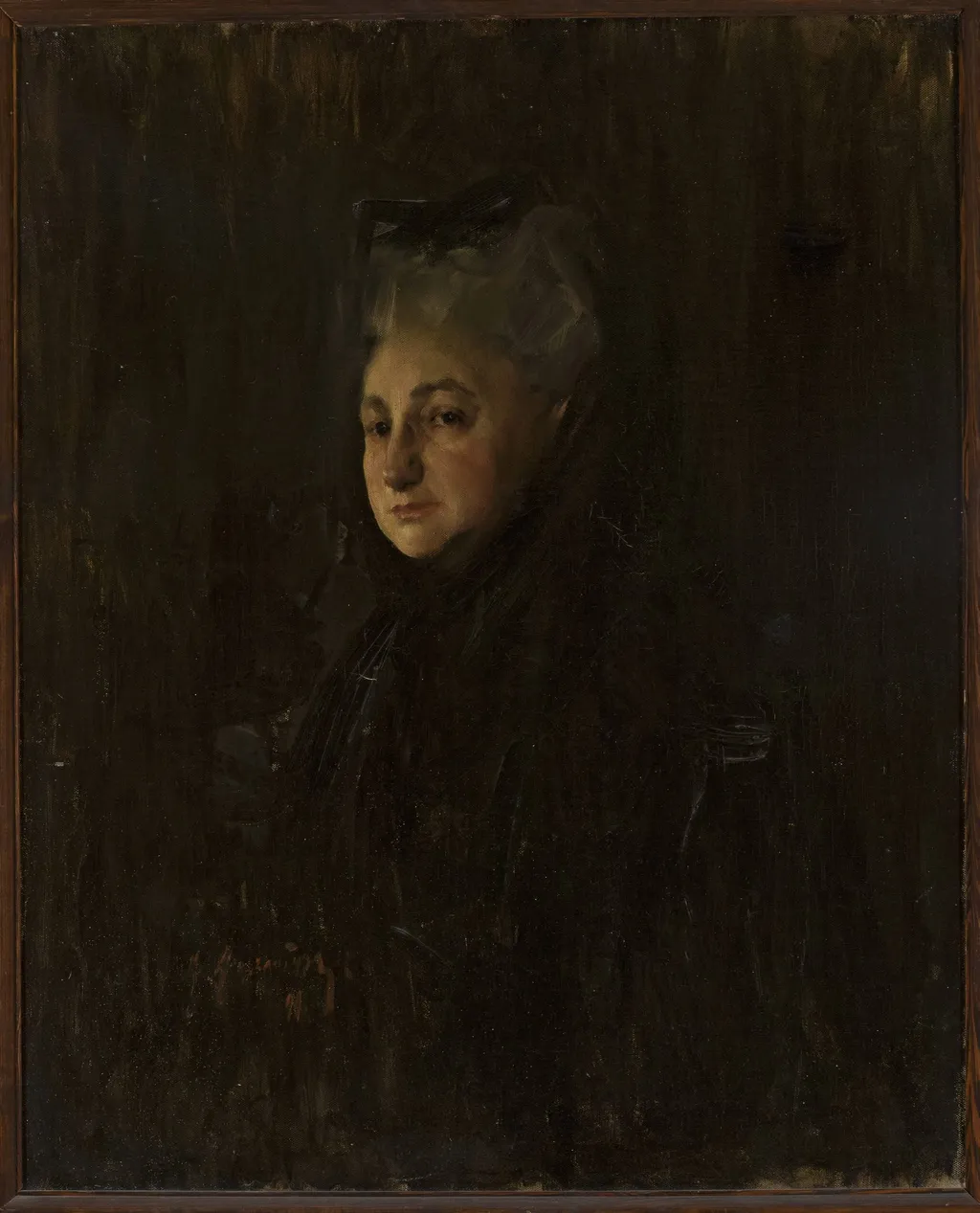
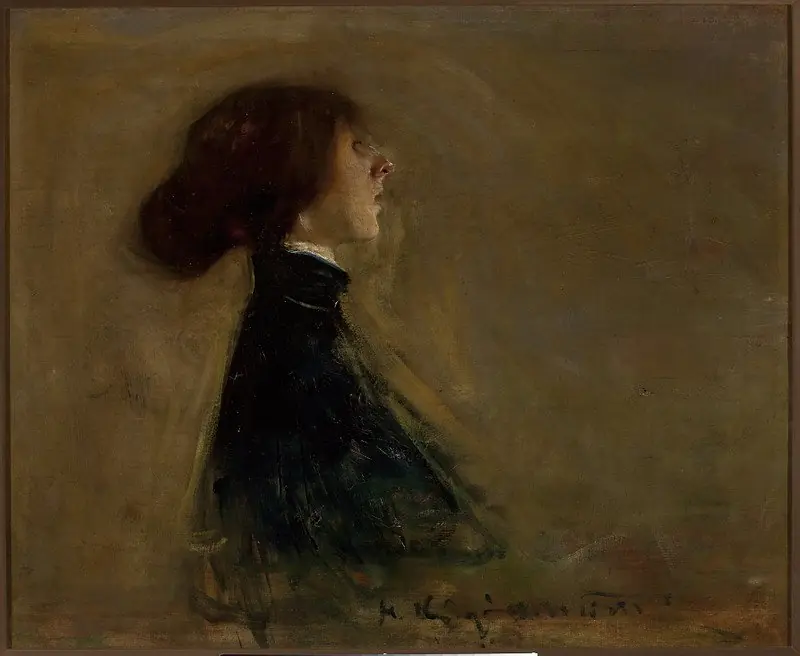
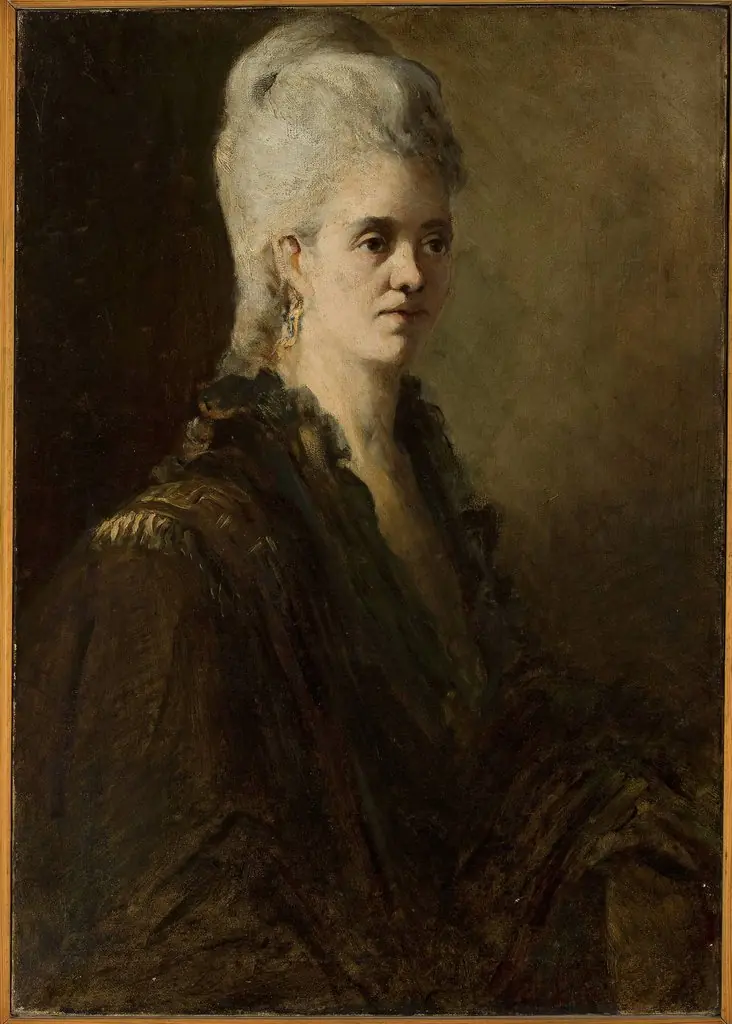
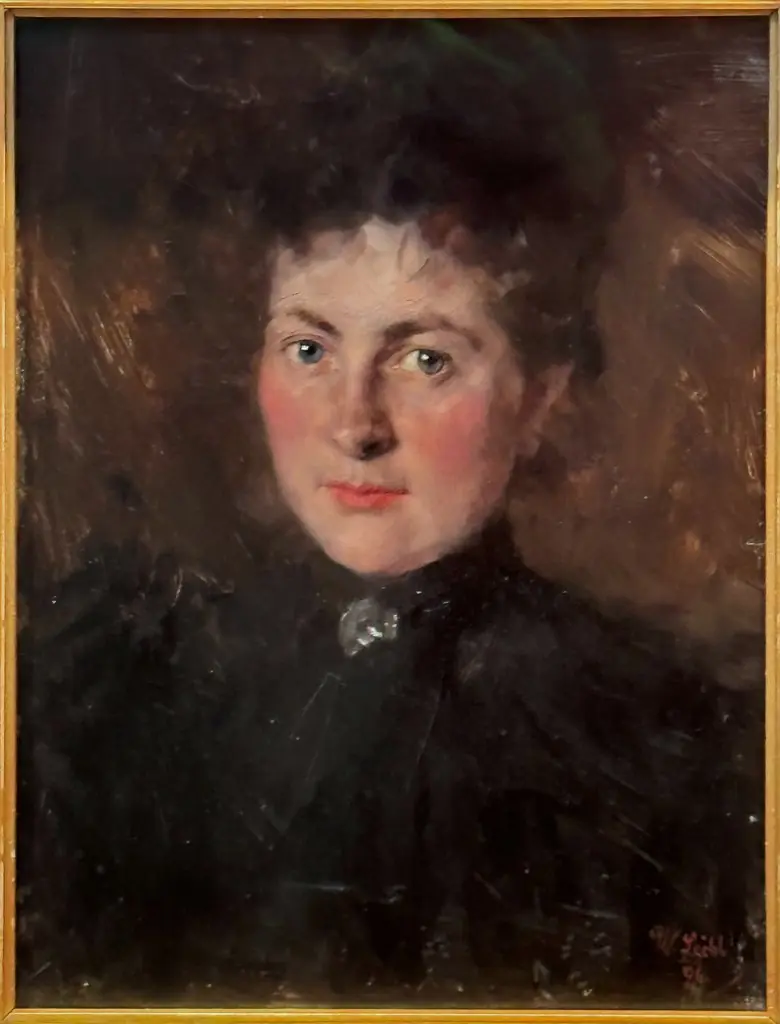
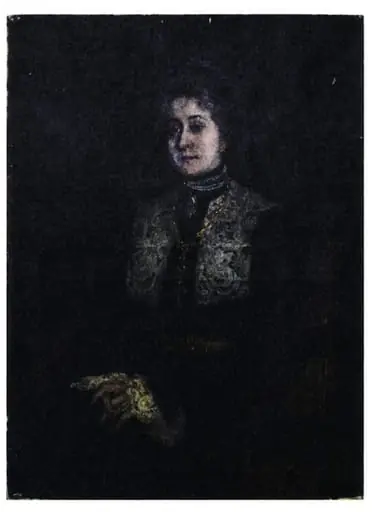
Portrait of Teresa Silberstein née Cohn is an oil painting by the Post-Impressionist artist Konrad Krzyżanowski. It dates from 1900 and is held in the collection of the National Museum in Warsaw.
About this work
The painting's use of chiaroscuro, a technique that emphasizes contrasts between light and dark, adds depth and drama to the portrait.
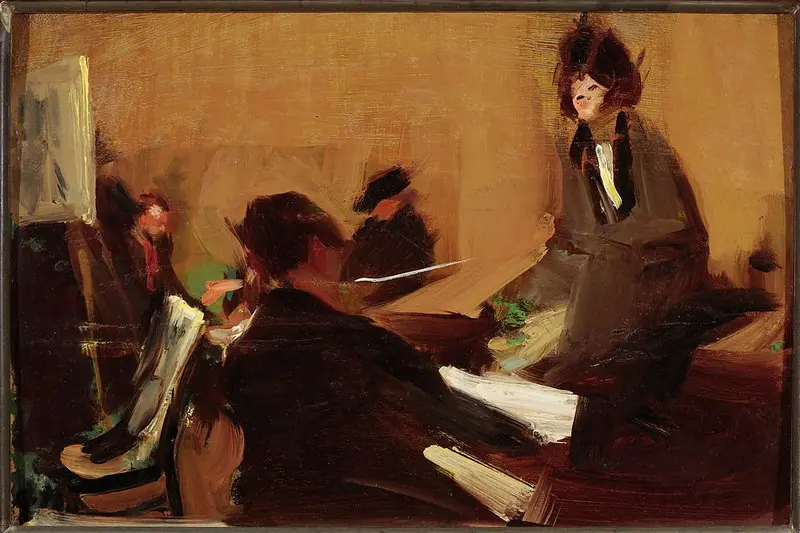
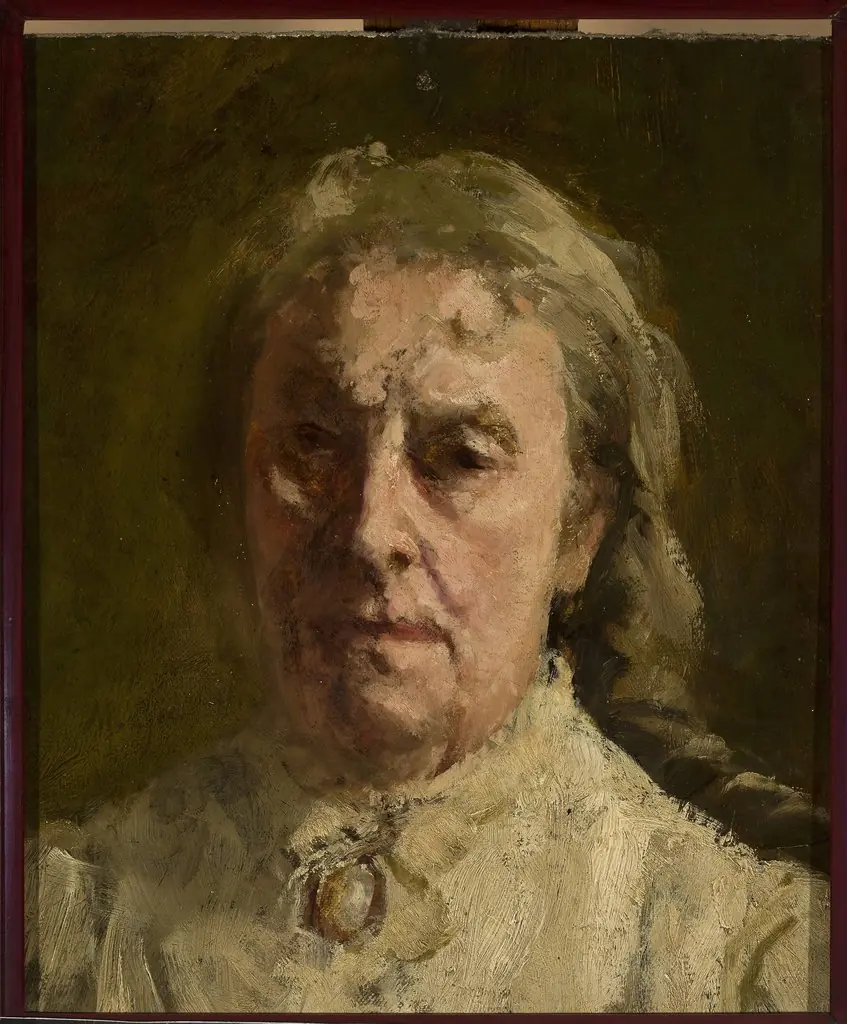
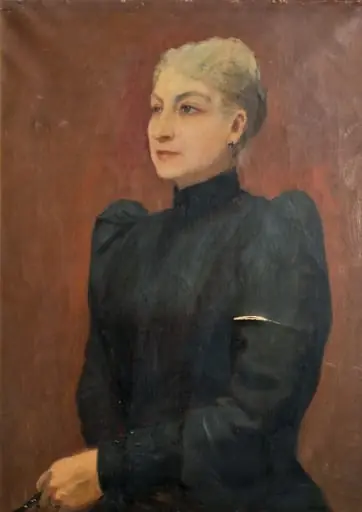
The painting depicts a woman with light skin and dark hair, wearing a dark dress. Her face is blurred, and her gaze is directed slightly to the right. The background is dark, with visible brushstrokes.
The woman's attire and hairstyle suggest a formal or elegant setting, possibly from the late 19th century. The dark background and the woman's blurred face create a sense of mystery and introspection.
The painting's use of chiaroscuro, a technique that emphasizes contrasts between light and dark, adds depth and drama to the portrait. To learn more about this technique, explore the concept of chiaroscuro.
Overview
Konrad Krzyżanowski’s oil portrait of Teresa Silberstein, née Cohn, was completed in 1900. The work belongs to the National Museum in Warsaw and exemplifies the artist’s focus on individual likenesses within a loosely defined genre portrait tradition.
Subject & Meaning
The canvas presents a woman of light complexion and dark hair, dressed in a somber gown. Her eyes glance faintly to the right while her facial features dissolve into soft brushwork, evoking a quiet introspection that invites viewers to contemplate the sitter’s inner life beyond her external appearance.
Technique & Style
Krzyżanowski employs a pronounced chiaroscuro, juxtaposing the illuminated figure against a deep, textured background. Broad, visible strokes convey a sense of movement, while the blurred facial rendering hints at early Expressionist tendencies that were emerging at the turn of the century.
History & Provenance
Created at the close of the 19th century, the portrait entered the National Museum in Warsaw’s collection, where it remains on display. Its acquisition reflects the museum’s commitment to preserving works by Polish artists who contributed to the transition from post‑Impressionism to modernist expression.
Context
The painting emerges from a period when Polish art was negotiating new visual languages after Impressionism. Krzyżanowski, known for his illustrative background, began integrating emotional intensity into portraiture, positioning this work as a bridge between academic representation and the burgeoning Expressionist movement.
Artist & collection
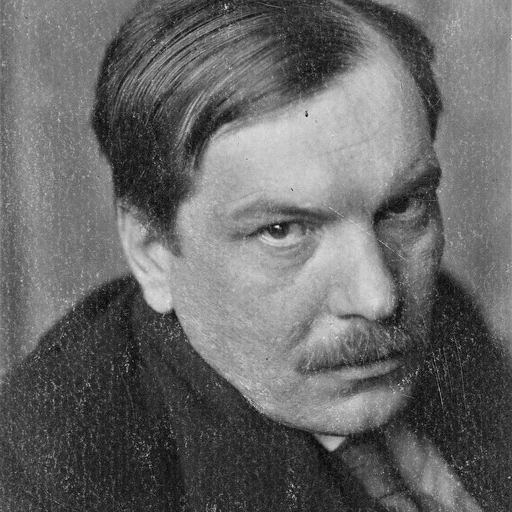
Artist
Konrad Krzyżanowski (15 February 1872 – 25 May 1922) was a Polish illustrator and painter, primarily of portraits, who was considered to be an early exponent of Expressionism.