Artwork
Palingenesis (B1)
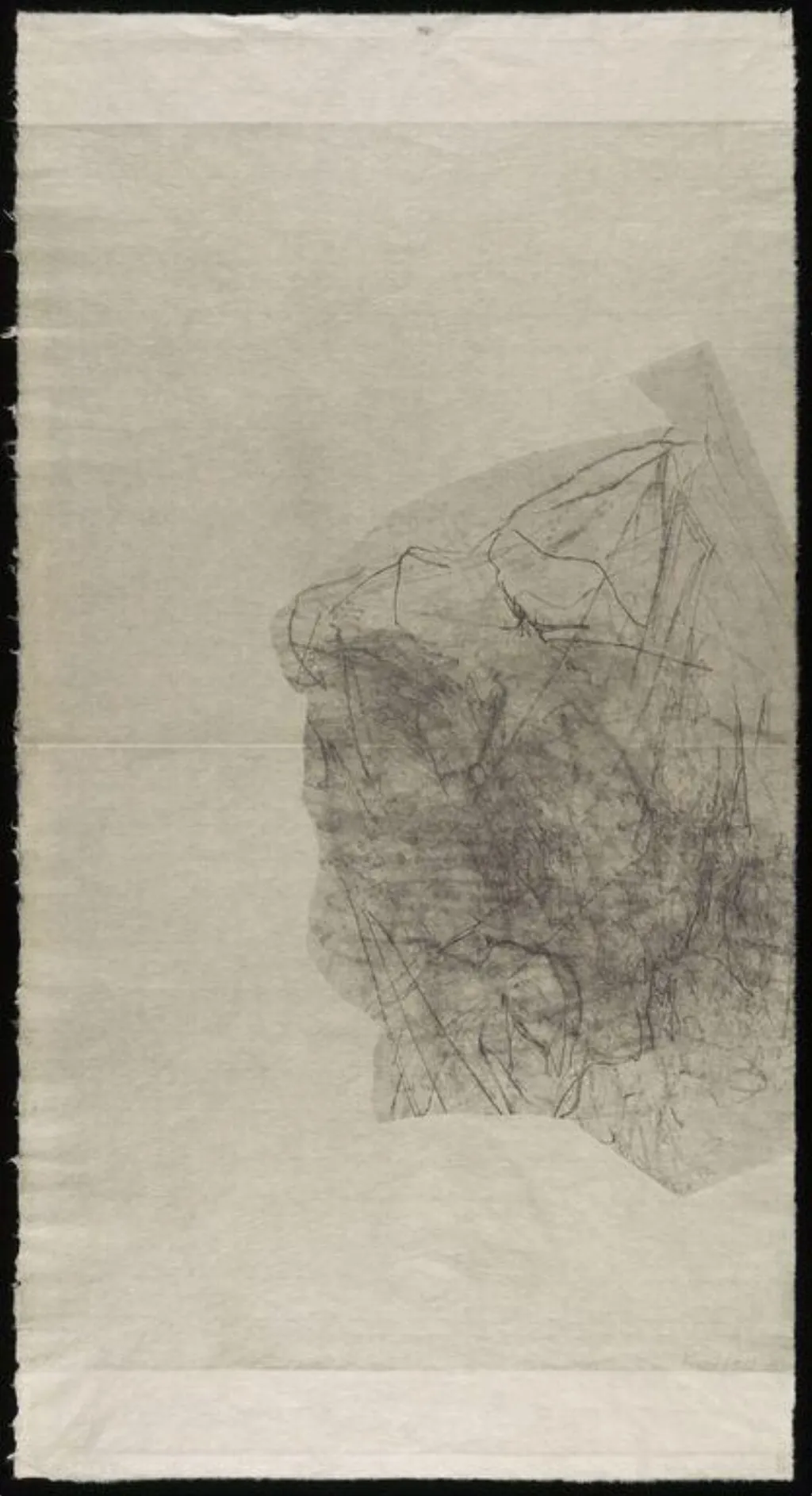
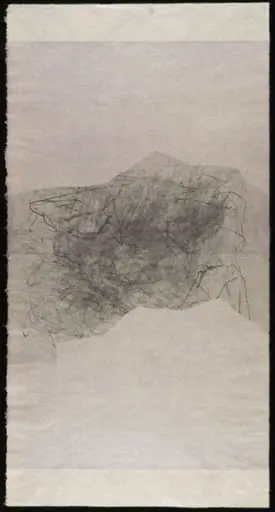
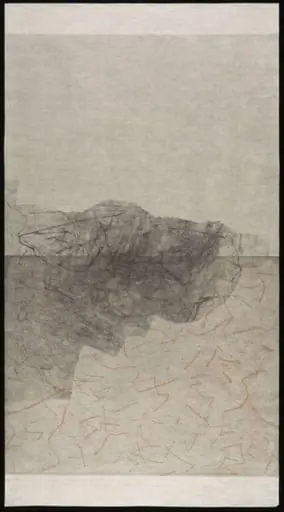
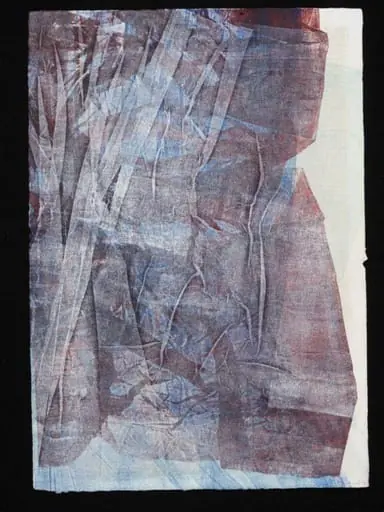
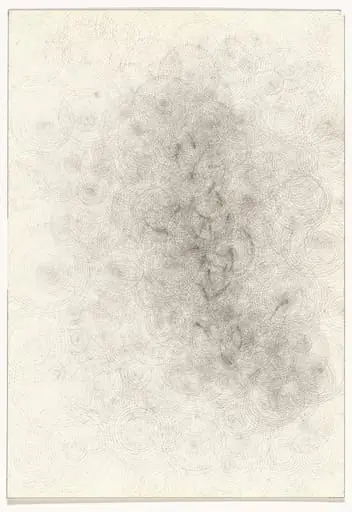
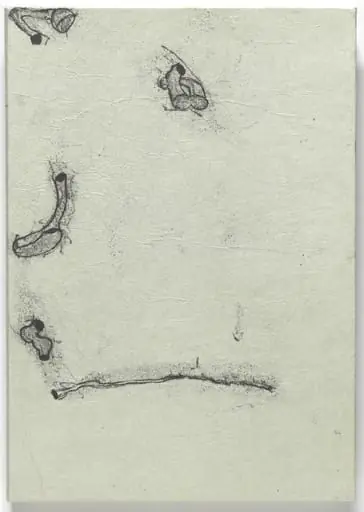
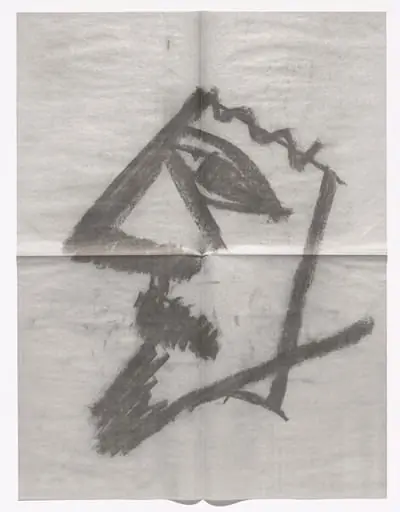
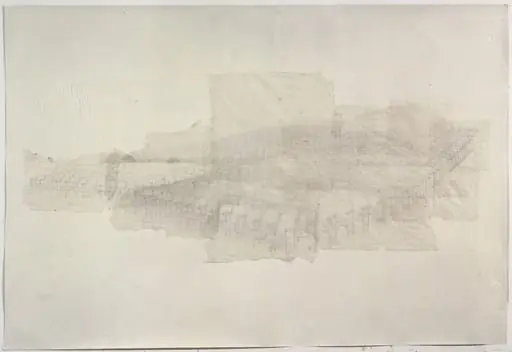
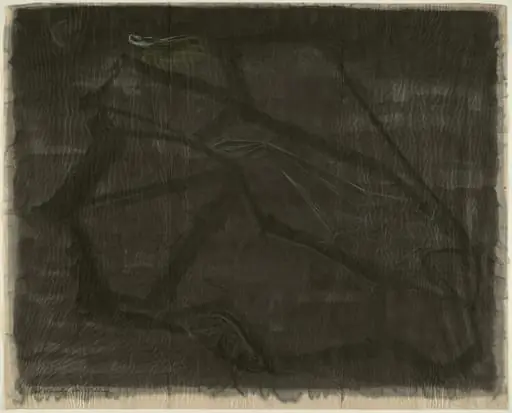
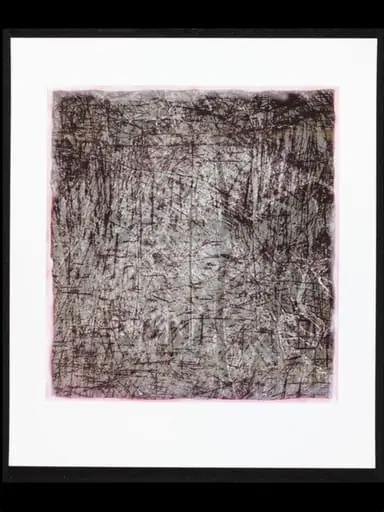
Palingenesis (B1) is a print by Kumi Korf. It dates from 1998 and is held in the collection of the Victoria and Albert Museum.
About this work
The prints connect human survival to image-making, inspired by Herbert Read’s cave art lectures.
Kumi Korf’s *Palingenesis (B1)* is an abstract print from 1998 made with a bone folder. This tool lets her draw fine lines or broad strokes while etching. The prints feel formal but hint at cave paintings.
Korf grew up in Japan and now lives in the USA. She started using the bone folder in 1998 for her *Palingenesis* series. The prints connect human survival to image-making, inspired by Herbert Read’s cave art lectures.
Look up the bone folder technique next.
Overview
Palingenesis (B1) is a 1998 soft-ground etching by Kumi Korf, created using a bone folder—a traditional bookbinding tool—on Japanese paper. This method allowed Korf to produce varied linear textures, from delicate incisions to broad, gestural sweeps. The work belongs to a series exploring renewal through image-making, blending formal abstraction with references to ancient visual traditions. Korf, who was raised in Japan and now resides in the United States, developed this technique specifically for this body of work.
Subject & Meaning
The title Palingenesis—meaning rebirth or regeneration—reflects Korf’s engagement with the origins of human representation. Inspired by Herbert Read’s writings on Altamira’s cave paintings, the work links the emergence of imagery to human survival and cognitive evolution. While each print stands as an abstract composition, their collective arrangement evokes natural landscapes, suggesting a primal connection between mark-making and the environment.
Technique & Style
Korf employed a bone folder to press into an etching plate coated with soft ground, lifting the tool to create lines of varying width and intensity. The resulting marks are spontaneous yet controlled, echoing the fluidity of calligraphy and the immediacy of automatic drawing. The use of thin, absorbent Japanese paper enhances the subtlety of ink transfer, producing a tactile, almost archaeological surface that recalls ancient pictographs and ink scrolls.
History & Provenance
Korf began experimenting with the bone folder technique in 1998, shifting from conventional etching tools to explore more direct, physical methods of mark-making. The Palingenesis series emerged from this period of technical inquiry, with B1 being one of several related works. The prints were initially exhibited in artist book contexts and later as individual pieces, gaining recognition for their unique synthesis of craft, memory, and abstraction.
Context
Korf’s work sits at the intersection of postwar American printmaking and Japanese aesthetic principles. Her use of the bone folder reflects an interest in non-traditional tools, while her formal concerns align with mid-century abstraction. The influence of Japanese scroll painting and calligraphy informs the rhythm and spatial flow of her lines, grounding her abstract forms in a cultural lineage that values restraint, material sensitivity, and implied movement.
Legacy
The Palingenesis series expanded the possibilities of printmaking by repurposing a utilitarian tool into a medium for expressive drawing. Korf’s approach has influenced contemporary artists exploring tactile mark-making and the materiality of print. Her integration of Eastern and Western visual traditions continues to resonate in discussions about the origins of image-making and the role of craft in conceptual art.
Artist & collection
Artist
Japanese-born Kumi Korf made layered prints that play with memory and regeneration.