Artwork
Palingenesis (BII)
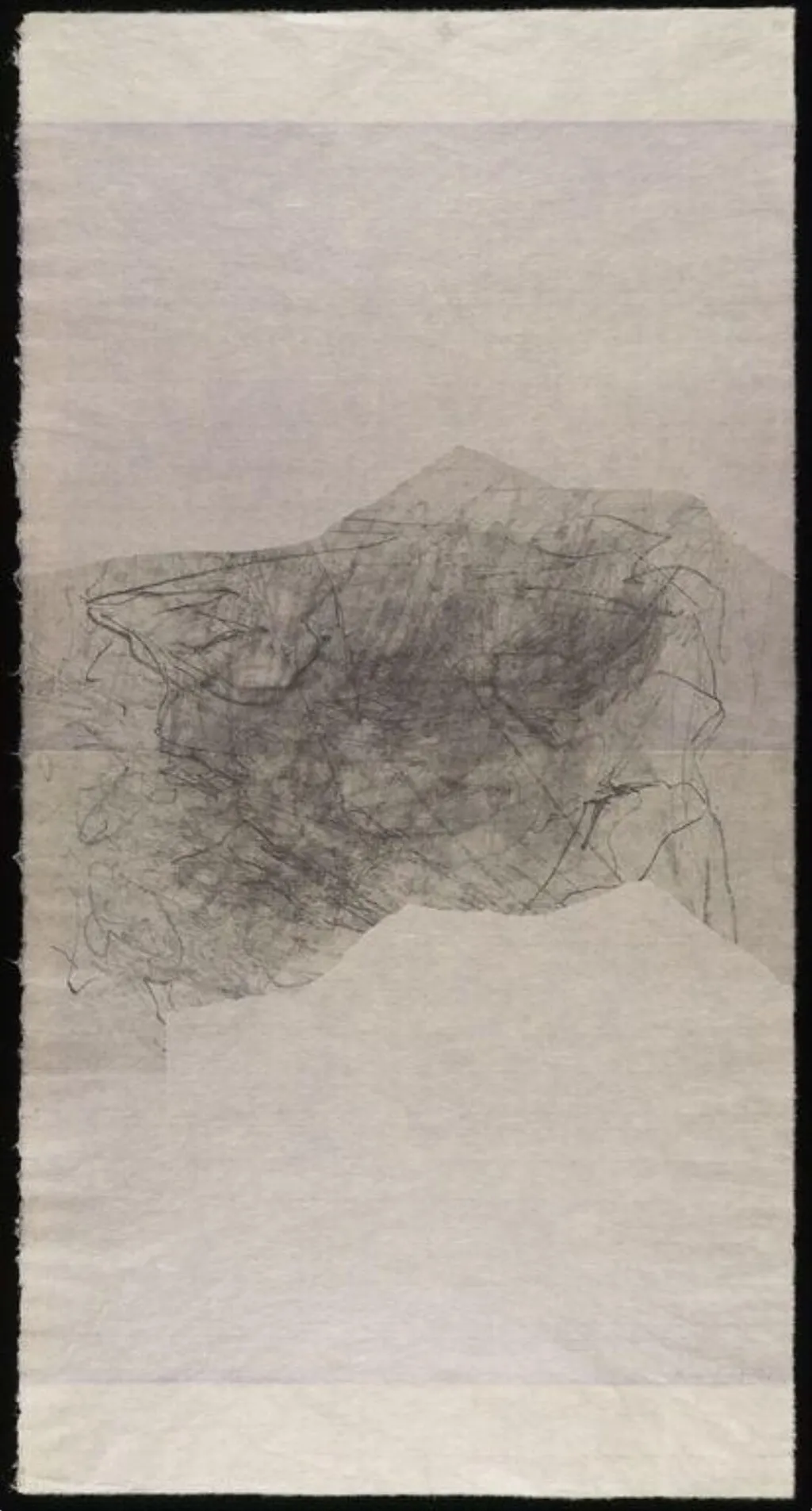
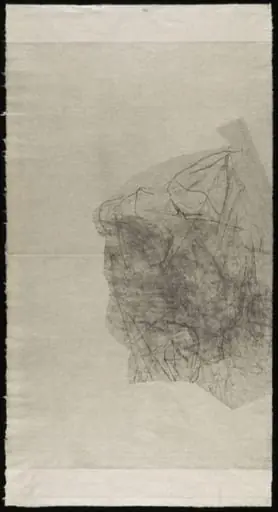
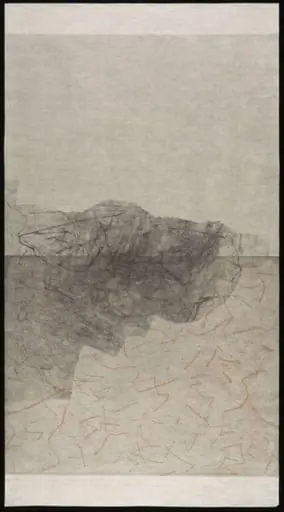
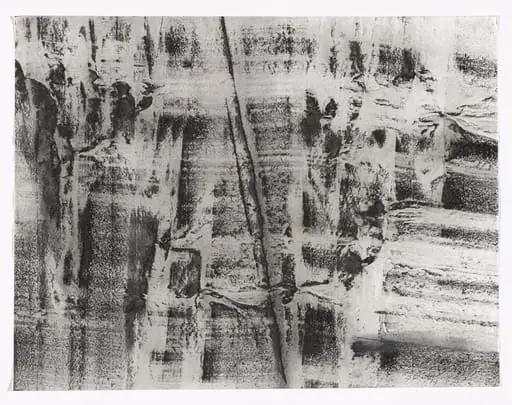
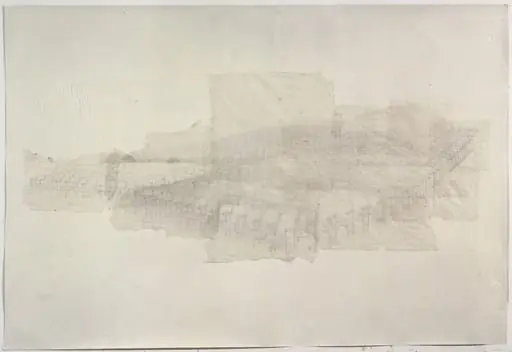
Palingenesis (BII) is a print by Kumi Korf. It dates from 1998 and is held in the collection of the Victoria and Albert Museum.
About this work
Each print stands alone, yet together they nod to cave paintings and the idea that image-making helps humans survive and evolve.
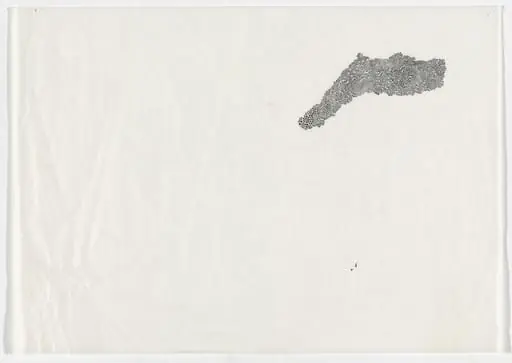
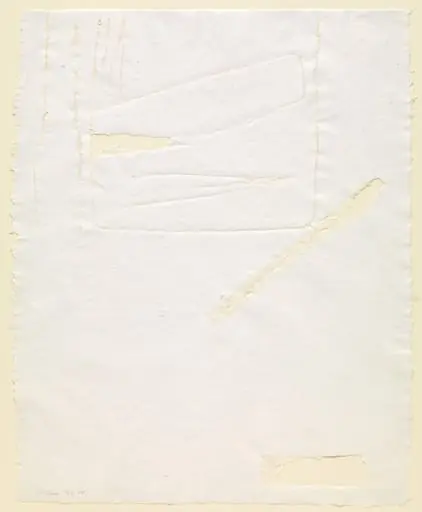
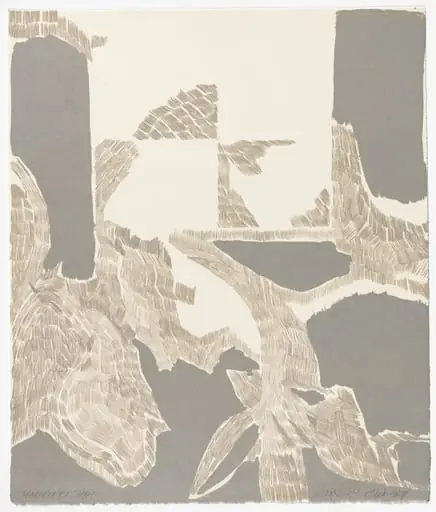
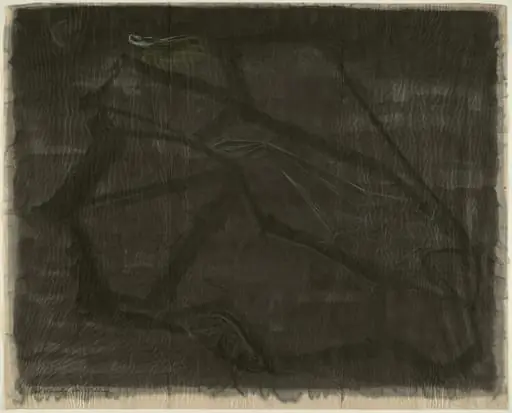
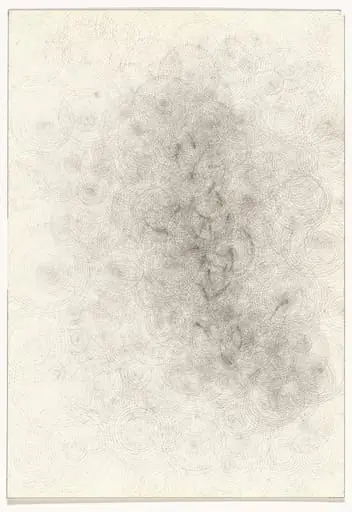
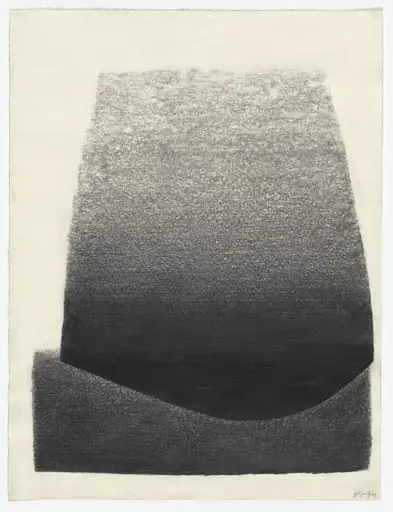
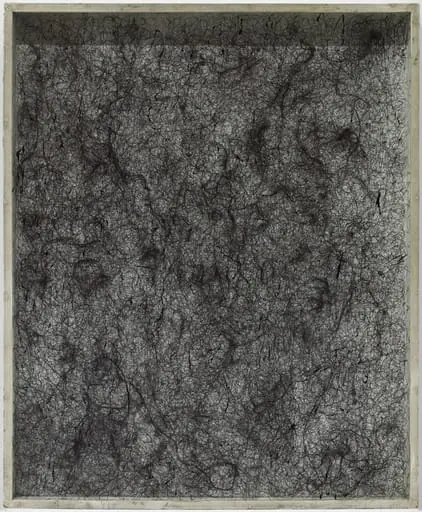
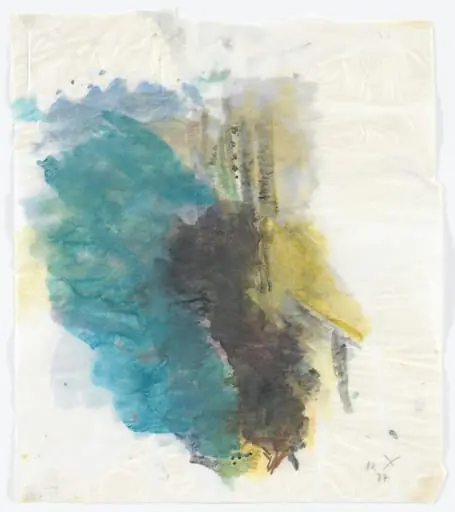
Kumi Korf’s 1998 print *Palingenesis (BII)* belongs to a series of abstract works made with a bone folder on Japanese paper. The tool’s two ends—one sharp, one flat—let her carve fine lines or bold strokes, creating a language of marks. Each print stands alone, yet together they nod to cave paintings and the idea that image-making helps humans survive and evolve.
Korf lived in Japan as a child but now works in the USA. She prints soft-ground etchings and makes artists’ books, often exploring themes of rebirth or renewal.
Next, look up the artist Korf, Kumi.
Overview
Palingenesis (BII) is a 1998 soft‑ground etching printed on Japanese paper. Part of a series titled Palingenesis, the work explores themes of rebirth through abstract mark‑making. Each sheet functions as an individual composition, yet when displayed together they evoke a landscape‑like field of lines that reference prehistoric cave imagery.
Subject & Meaning
The title, meaning “genesis re‑created,” alludes to the notion that image‑making is linked to human survival and evolution, an idea drawn from Herbert Read’s commentary on the Altamira caves. Though abstract, the intersecting strokes suggest a primitive visual language, inviting contemplation of humanity’s enduring impulse to record experience.
Technique & Style
Kumi Korf employs a bone folder—a flat, pointed tool traditionally used in bookbinding—to draw on a soft‑ground ground. The instrument’s dual edges produce both fine lines and broad strokes, yielding a calligraphic quality reminiscent of Japanese scroll painting while also recalling the spontaneous gestures of automatic writing.
History & Provenance
Created after Korf relocated from Japan to the United States, the print reflects her ongoing practice of soft‑ground etching and artist‑book production. The Palingenesis series was produced in 1998 and has been exhibited in contexts highlighting contemporary printmaking and cross‑cultural artistic dialogues.
Context
Korf’s work sits at the intersection of Western modernist formalism and Eastern calligraphic tradition. By referencing cave paintings, the series engages with a lineage of visual expression that spans from prehistoric art to contemporary abstract print, underscoring the continuity of mark‑making across cultures and epochs.
Artist & collection
Artist
Japanese-born Kumi Korf made layered prints that play with memory and regeneration.