Artwork
Bivoli
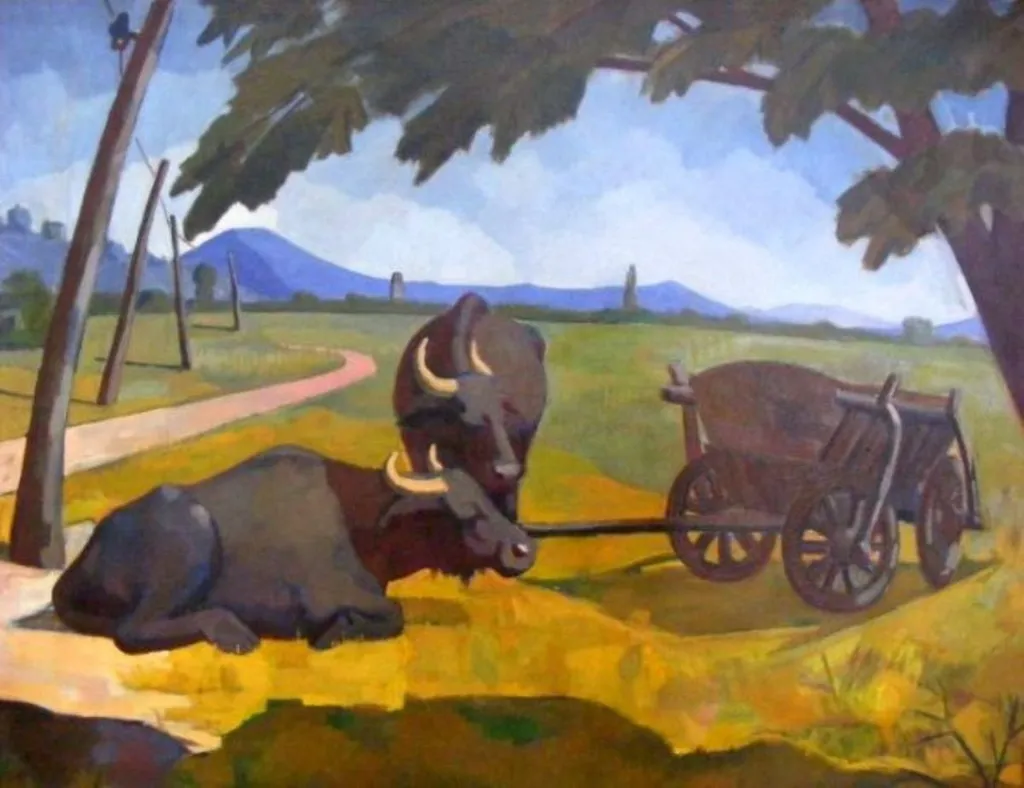
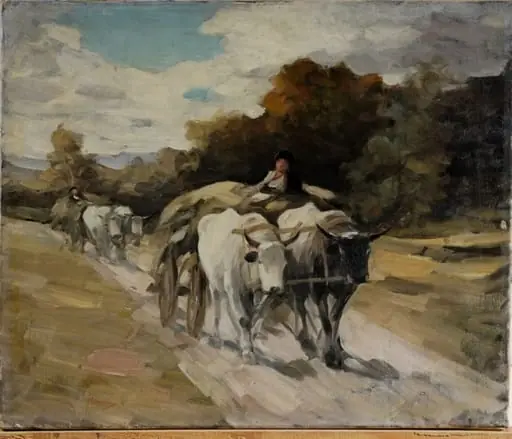
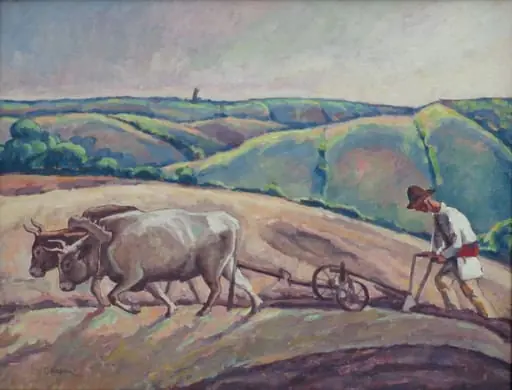
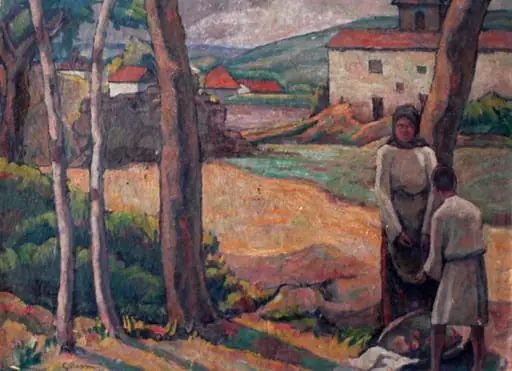
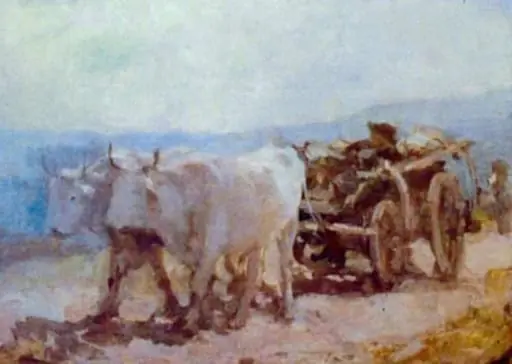
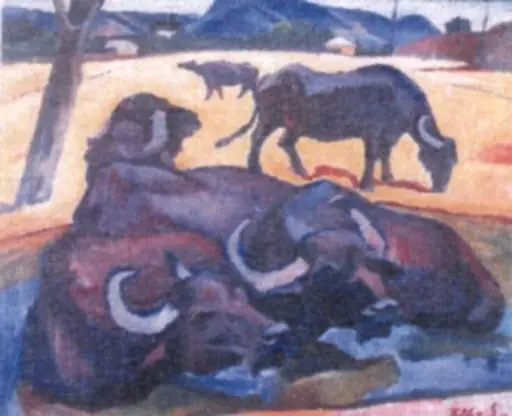
Bivoli is an unspecified painting by Ferenc Kováts. It dates from 1936 and is held in the collection of the Székely National Museum.
About this work
Overview
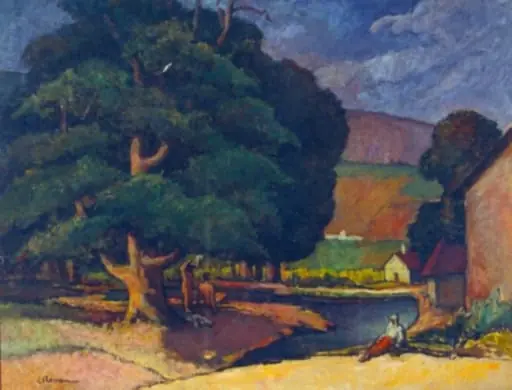
Bivoli is a 1936 oil painting by Hungarian artist Ferenc Kováts, currently held in the collection of the Museum of Ethnography. The work presents a solitary figure moving along a forest path, rendered with subdued tones and quiet composition. Its atmosphere evokes a transitional time of day, neither fully day nor night, emphasizing stillness over action.
Subject & Meaning
The lone figure, small and indistinct against the dense foliage, suggests contemplation or solitude rather than narrative purpose. The path, winding into the trees, implies journey without destination. The absence of human structures or signs of civilization reinforces a sense of withdrawal from society, inviting reflection on isolation and nature’s quiet persistence.
Technique & Style
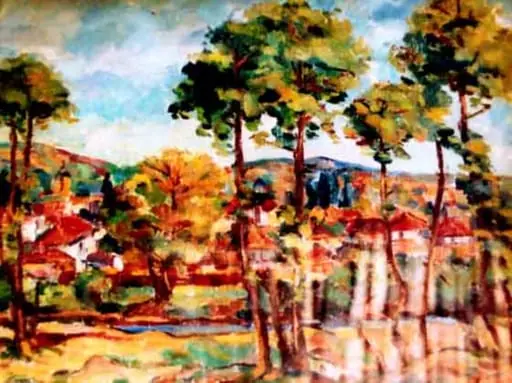
Kováts employs soft brushwork and muted greens and browns to build depth without sharp contrast. Light filters through the canopy in irregular patches, suggesting dappled sunlight. A narrow band of pale blue sky at the top introduces subtle spatial tension, balancing the earth-toned foreground. The technique favors mood over detail, aligning with introspective rather than descriptive aims.
History & Provenance
Created in 1936, Bivoli entered the Museum of Ethnography’s collection shortly after its completion. The museum, focused on cultural artifacts and visual expressions of Hungarian life, acquired the work as part of its broader effort to document domestic artistic responses to rural and natural environments during the interwar period.
Context
In 1930s Hungary, artists increasingly turned to landscape and introspective themes amid rising political tensions. Kováts’s focus on quiet natural scenes reflected a broader cultural retreat from urban modernity. Bivoli aligns with this trend, offering a contemplative alternative to overtly political or nationalist imagery of the era.
Legacy
Bivoli remains a representative example of Kováts’s quieter, nature-centered oeuvre. While not widely exhibited outside Hungary, it continues to be referenced in studies of interwar Hungarian painting for its restrained emotional tone and sensitivity to light and atmosphere. Its preservation in the Museum of Ethnography underscores its role in documenting cultural attitudes toward nature.
Artist & collection
Artist
Ferenc Kováts painted quiet, detailed European scenes in the first half of the 20th century.