Artwork
Fausta
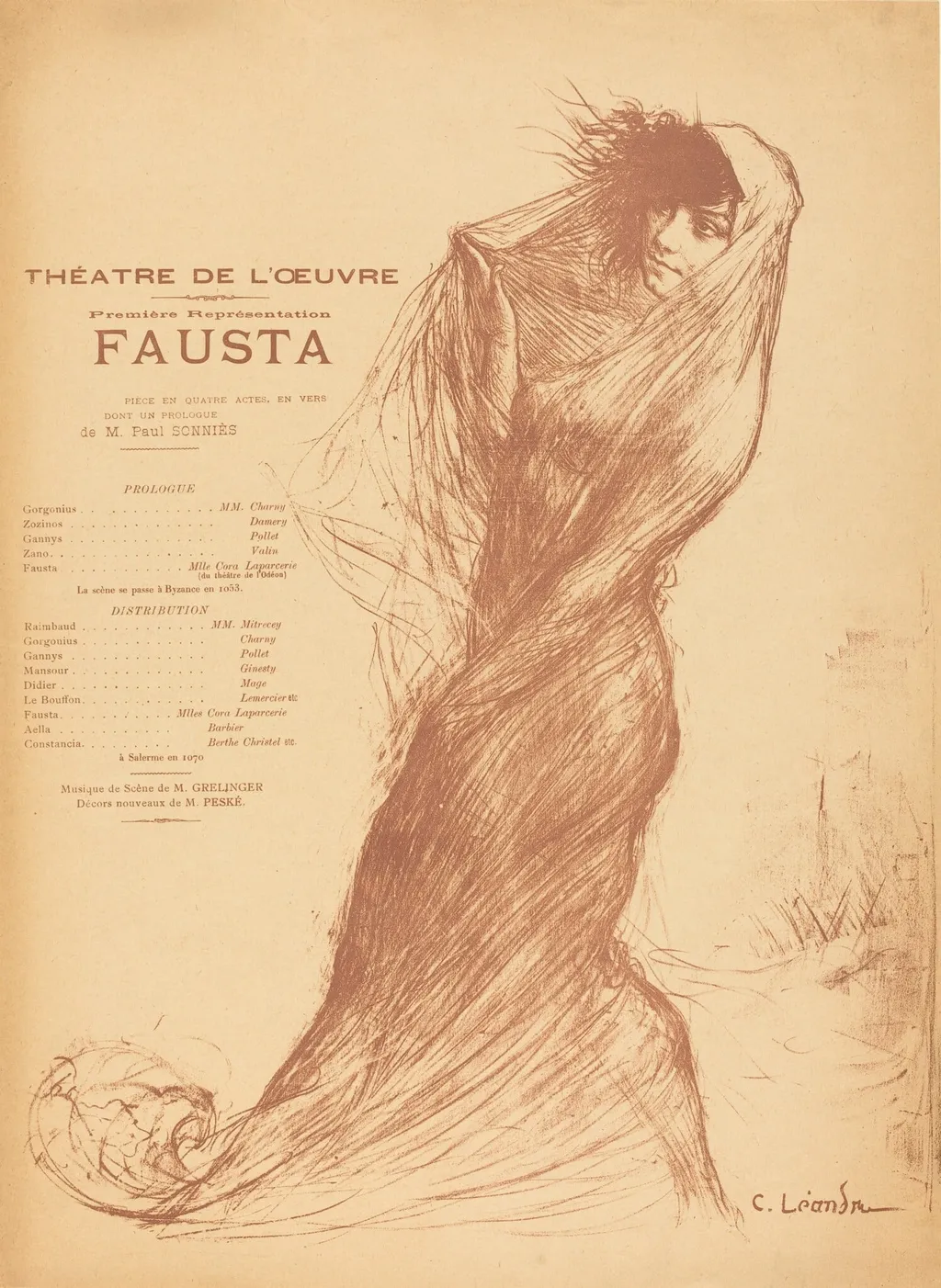
Fausta is an ink print by the Impressionist artist Charles-Lucien Léandre. It dates from 1899 and is held in the collection of the National Gallery of Art.
About this work
Overview
Fausta is a lithograph created by Charles-Lucien Léandre in 1899, produced as a promotional poster for the play of the same name at the Théâtre de l’Œuvre. Rendered in brown ink on wove paper, it features a solitary female figure in a minimalist setting. The composition emphasizes form and movement over detail, with the figure dominating the frame against a nearly blank background.
Subject & Meaning
The curled object at her feet may imply a prop or symbolic element from the narrative, though its exact meaning remains ambiguous.
The figure represents Fausta, the central character of the theatrical production. Her poised stance—sideways, one leg bent—suggests stillness and introspection. The draped fabric enveloping her body evokes both modesty and theatricality, aligning with the play’s emotional tone. The curled object at her feet may imply a prop or symbolic element from the narrative, though its exact meaning remains ambiguous.
Technique & Style
Léandre employed lithography to achieve soft tonal gradients and fluid lines, characteristic of the medium’s capacity for expressive drawing. The loose, flowing contours of the figure’s hair and drapery contrast with the flat, unadorned background, enhancing the sense of isolation. The signature 'C. Léandre' is discreetly placed, consistent with the era’s poster design conventions that prioritized imagery over authorship.
History & Provenance
Created in 1899, the print was commissioned to advertise the play Fausta at the Théâtre de l’Œuvre, a venue known for avant-garde performances. As a promotional piece, it was likely distributed in limited quantities. Its survival reflects its artistic value beyond commercial use, though specific ownership history prior to institutional acquisition remains undocumented.
Context
Léandre’s work emerged during a period when lithographic posters were central to Parisian visual culture, especially for theater. The minimalist aesthetic aligns with Symbolist tendencies, favoring mood over literal representation. Unlike commercial posters of the time that often featured elaborate scenes, this design reduces the image to its essential elements, reflecting a shift toward abstraction in late 19th-century graphic art.
Legacy
Fausta stands as an example of how theatrical promotion evolved into a form of fine art. Léandre’s restrained composition influenced later poster designers who valued suggestion over spectacle. While not widely reproduced, the work is recognized in collections focused on fin-de-siècle graphic design, preserving its role in the transition from illustration to modern visual language.
Artist & collection


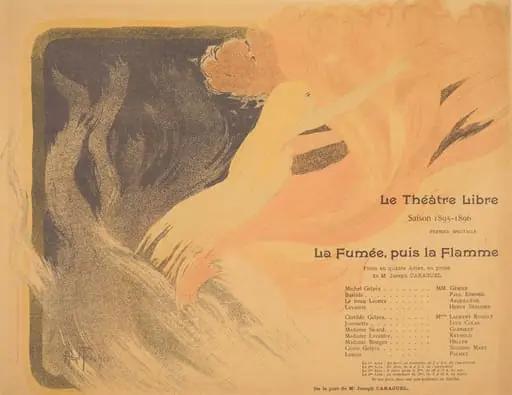 La Fumée, puis la flamme
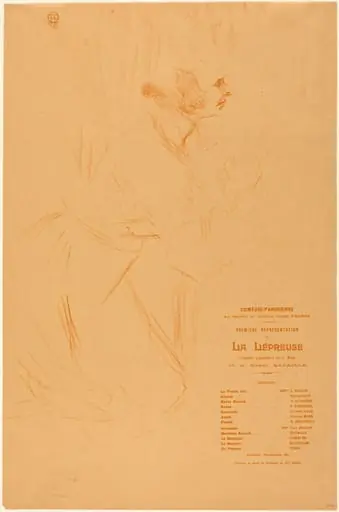 Program for "La lepreuse" (Programme pour "La lépreuse")
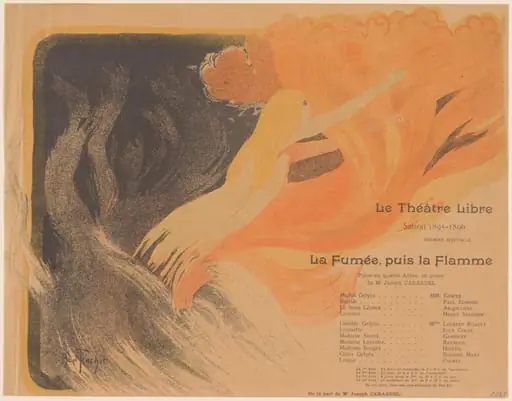 Théâtre Libre: La Fumée, puis la Flamme
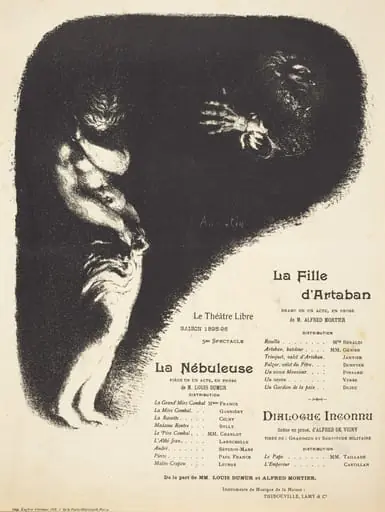 La Fille d'Artaban; La Nébuleuse; Dialogue inconnu
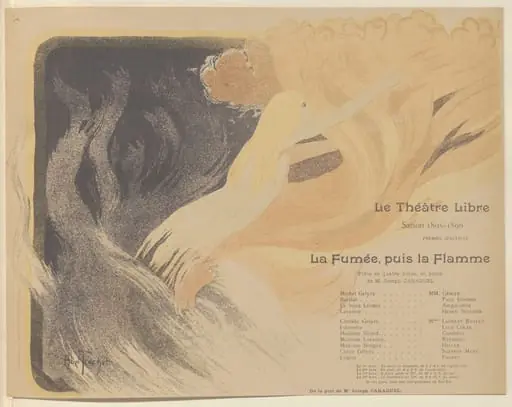 Untitled
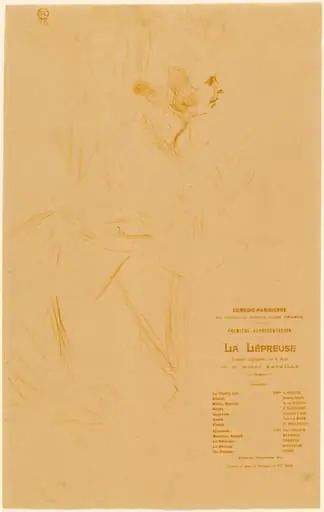 La Lépreuse
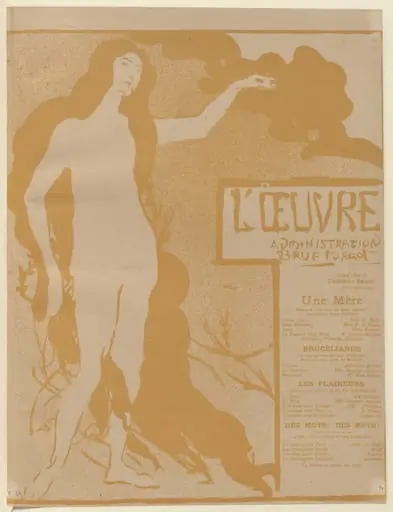 Untitled
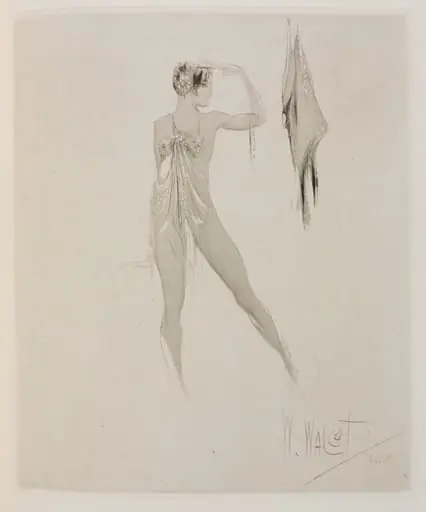 Herodias: Page 47, Her feet stepped one before the other
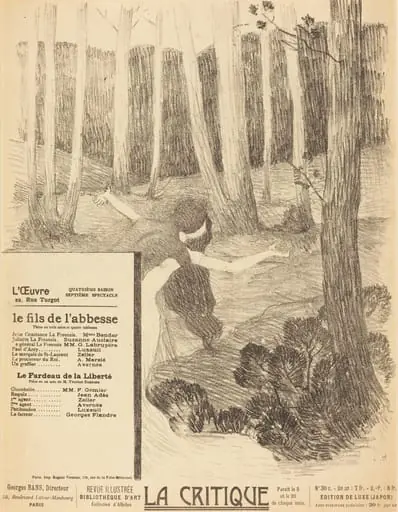 Le Fils de l'abbesse; Le Fardeau de la liberté
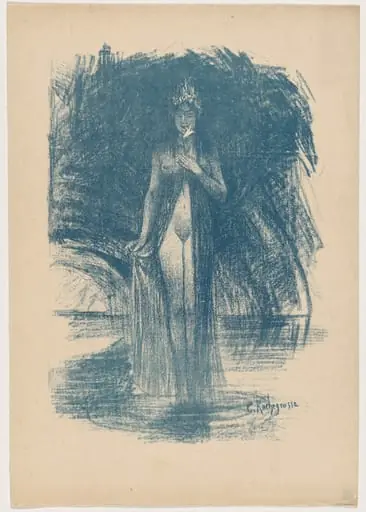 Apparition
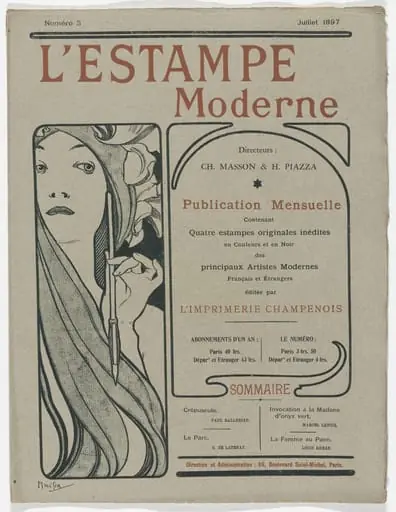 Untitled
 Untitled