Artwork
La Fumée, puis la flamme
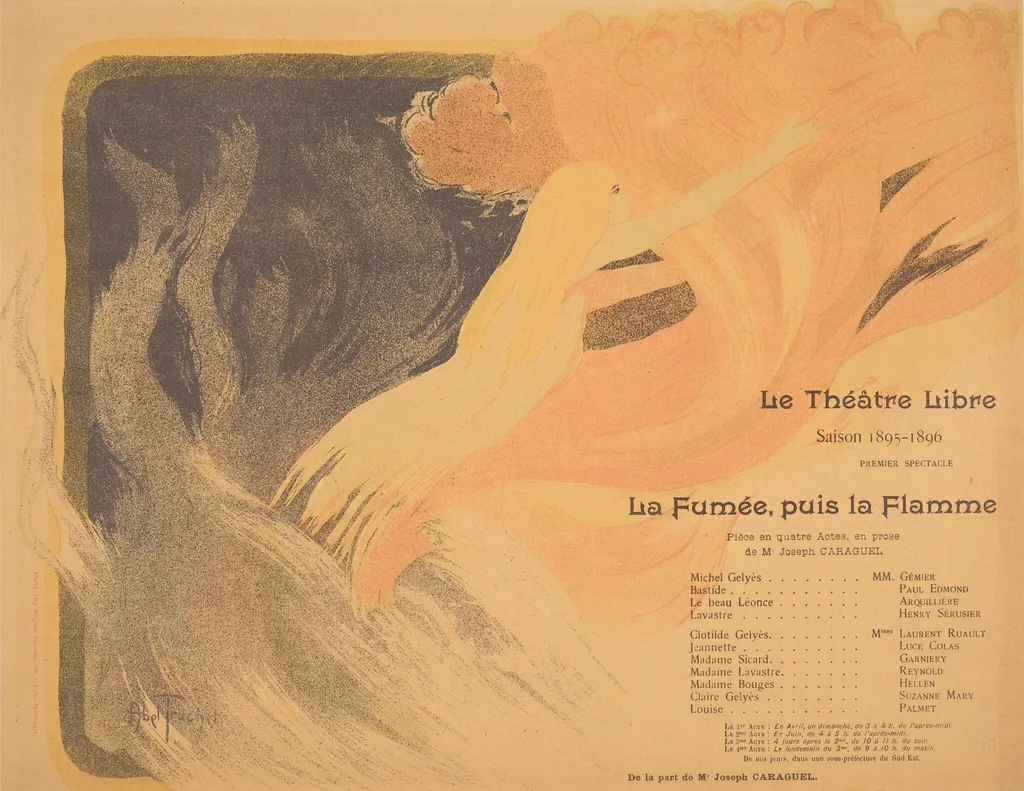
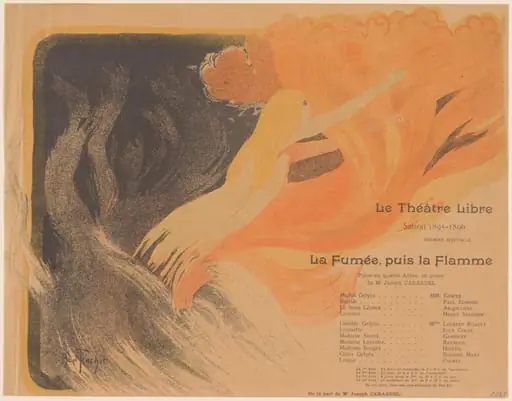
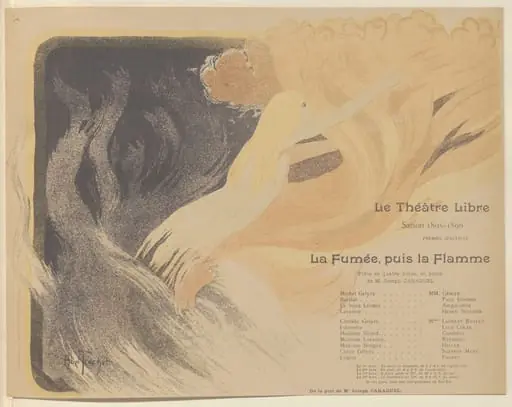
La Fumée, puis la flamme is an ink print by the Impressionist artist Abel-Truchet. It dates from 1895 and is held in the collection of the National Gallery of Art.
About this work
Overview
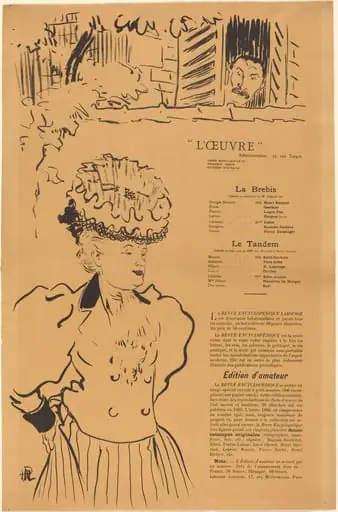
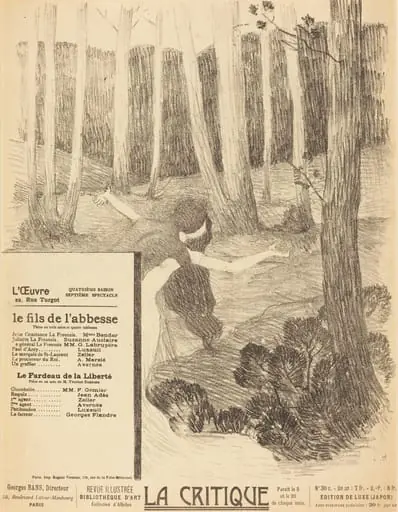
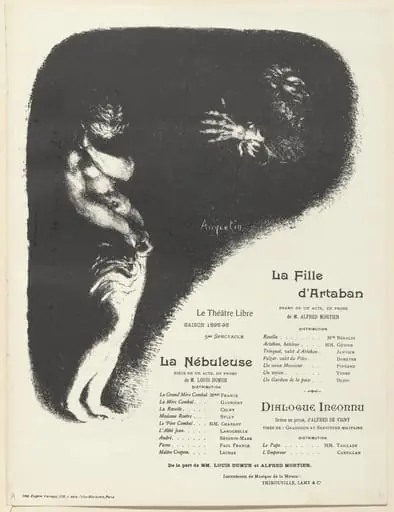
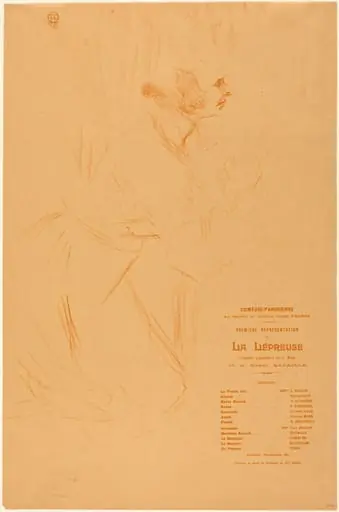
Created in 1895, La Fumée, puis la flamme is a four-color lithograph on wove paper by French artist Abel-Truchet. Designed as a theatrical poster, it advertises a play of the same name, featuring key performers and performance dates. The composition relies on minimal detail and atmospheric tones to evoke mood rather than literal representation, characteristic of late 19th-century poster design.
Subject & Meaning
The image centers on a silhouette of a figure standing on stage, backlit by a warm, diffused glow. The figure’s identity is obscured, emphasizing the ephemeral nature of performance. The title, translating to 'The Smoke, Then the Flame,' suggests a transition from concealment to revelation, mirroring the theatrical arc of drama and the fleeting presence of actors under stage lights.
Technique & Style
Using lithography, Abel-Truchet employed bold, simplified forms and uneven edges to suggest movement and texture. Warm hues of yellow and brown dominate, with soft gradients mimicking stage lighting. The loose, almost sketch-like handling of the background evokes smoke or fading light, enhancing the dreamlike quality while maintaining the functional clarity needed for a promotional poster.
History & Provenance
The print was produced in 1895 to promote a theatrical production in Paris, a period when lithographic posters were becoming central to urban visual culture.
The print was produced in 1895 to promote a theatrical production in Paris, a period when lithographic posters were becoming central to urban visual culture. Though not widely documented in major collections, it reflects the collaborative nature of theater advertising at the time, where artists like Abel-Truchet worked closely with directors and printers to translate performance into public imagery.
Context
This work emerged during the height of the Belle Époque, when Parisian theaters thrived and poster art gained legitimacy as a visual medium. Artists blended commercial needs with aesthetic experimentation, often drawing from Symbolist and Impressionist influences. La Fumée, puis la flamme exemplifies this convergence—its poetic ambiguity aligning with broader cultural interests in mood, memory, and the transient nature of live performance.
Legacy
While not as widely recognized as posters by Toulouse-Lautrec or Mucha, Abel-Truchet’s work contributes to the broader archive of fin-de-siècle theatrical graphics. Its restrained palette and atmospheric composition influenced later designers seeking emotional resonance over literal depiction. The print remains a quiet example of how commercial art could capture the intangible essence of theater.
Artist & collection