Artwork
Nainen 1700-luvun puvussa (Nainen ruusu kädessä)
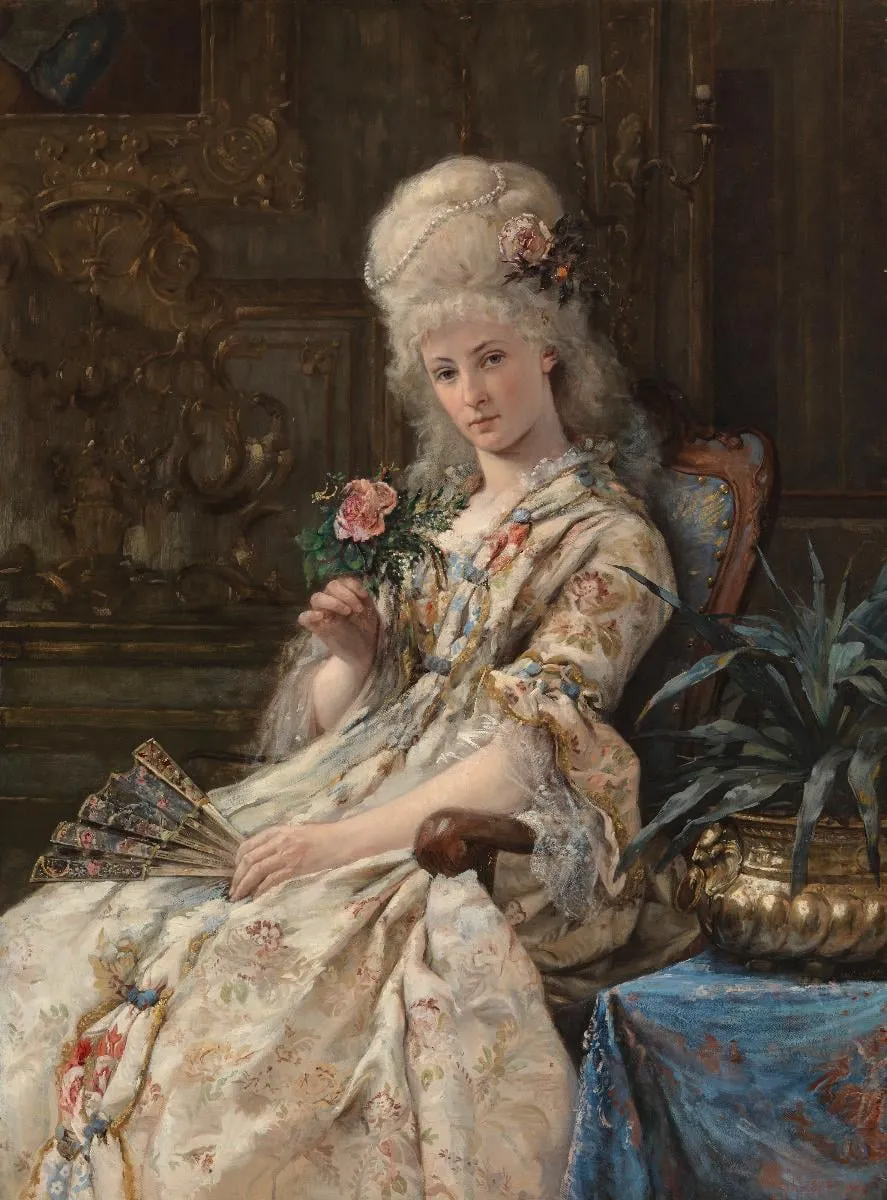
Nainen 1700-luvun puvussa (Nainen ruusu kädessä) is an unspecified painting by Erik Johan Löfgren. It is held in the collection of the Finnish National Gallery. This portrait captures a woman seated in a chair, dressed in 18th-century fashion, holding a rose in her right hand and a fan in her left.
About this work
Overview
This portrait captures a woman seated in a chair, dressed in 18th-century fashion, holding a rose in her right hand and a fan in her left.
This portrait captures a woman seated in a chair, dressed in 18th-century fashion, holding a rose in her right hand and a fan in her left. Her hair is arranged in an elaborate updo decorated with blossoms, and her direct gaze meets the viewer with quiet composure. The dark background, a large mirror, and a potted plant beside her frame the figure without distraction, emphasizing her presence and the stillness of the moment.
Subject & Meaning
The woman’s attire and accessories suggest aristocratic refinement, typical of early 18th-century European portraiture. The rose, often symbolizing beauty or transience, and the fan, a marker of social grace, introduce subtle layers of meaning. Her calm demeanor and unflinching gaze convey self-possession rather than mere ornamentation, hinting at an individual identity beyond conventional roles.
Technique & Style
The painting employs soft modeling of form and muted tonal contrasts to render fabric and skin with quiet realism. Brushwork is precise yet unobtrusive, particularly in the rendering of lace and hair. The mirror in the background reflects light and space, deepening the sense of depth without drawing attention to itself. The composition balances stillness with delicate detail, characteristic of Nordic portraiture of the period.
History & Provenance
Attributed to Erik Johan Löfgren, a Swedish artist active in the mid-1700s, the work reflects the growing interest in intimate portraiture among the educated classes. While specific ownership records are limited, its stylistic alignment with Löfgren’s known works and its preservation in Swedish collections suggest it originated in a domestic or aristocratic setting during the reign of Adolf Frederick.
Context
In early 18th-century Sweden, portraiture increasingly served personal rather than purely dynastic purposes. Women’s images often emphasized elegance and moral virtue through symbolic objects like flowers and fans. This painting aligns with a broader trend of domestic portraiture that valued subtlety and psychological presence over grandeur, reflecting shifting cultural values in Nordic society.
Legacy
Though not widely exhibited, the painting contributes to the understanding of Swedish portraiture beyond royal commissions. It exemplifies how everyday elegance was captured with restraint and dignity during a period of cultural transition. Its survival offers insight into the visual language of private life among the Swedish elite in the Age of Enlightenment.
Artist & collection
Artist
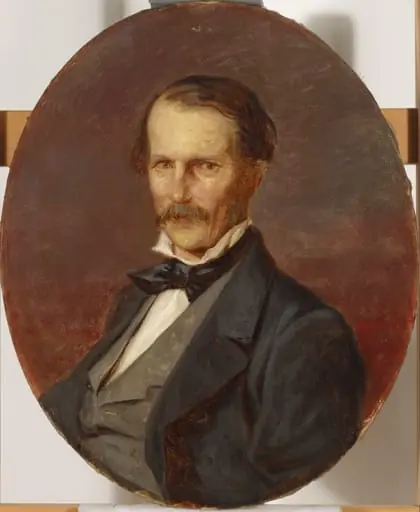
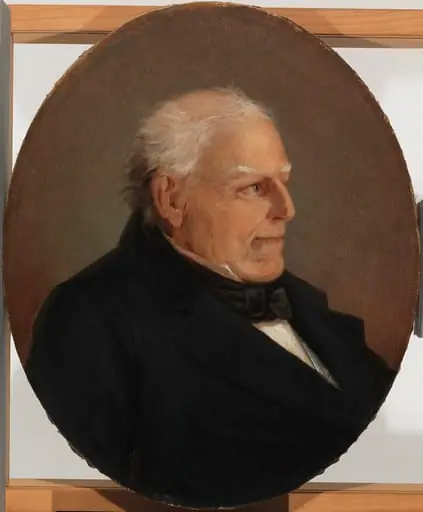
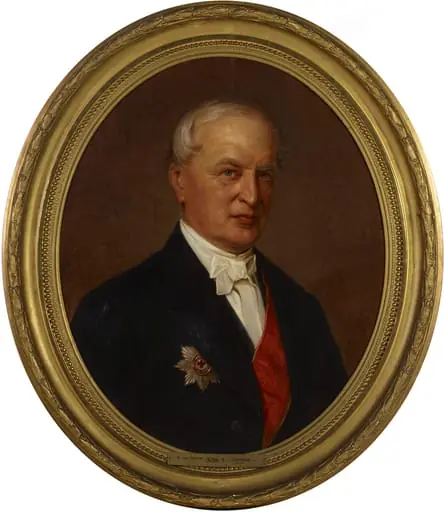
Erik Johan Löfgren painted quiet portraits of mid-1800s Finland. His brush captured Magnus von Wright, a Finnish naturalist, H. Rosenberg in his admiral’s coat, and Robert von Trapp in sober official dress. Another…

 The Attentive Listener
 Desperate
 Souvenir of an "International Ball" (Portrait of Miss Kathleen Bruce)
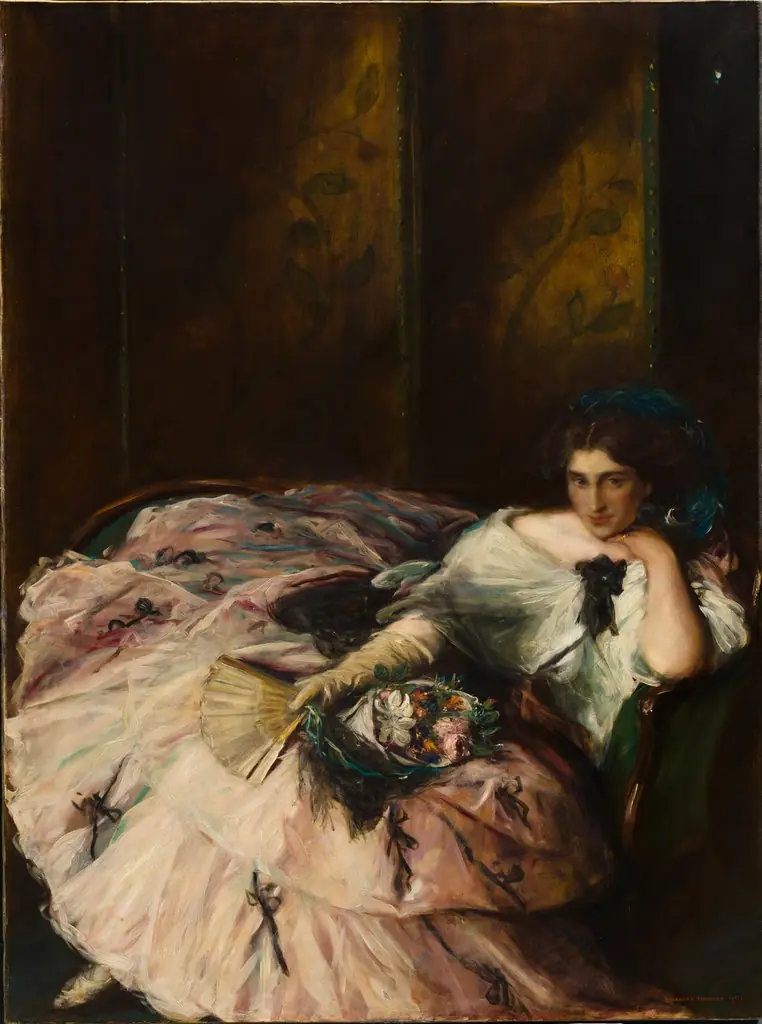 Souvenir of an "International Ball" (Portrait of Miss Kathleen Bruce)
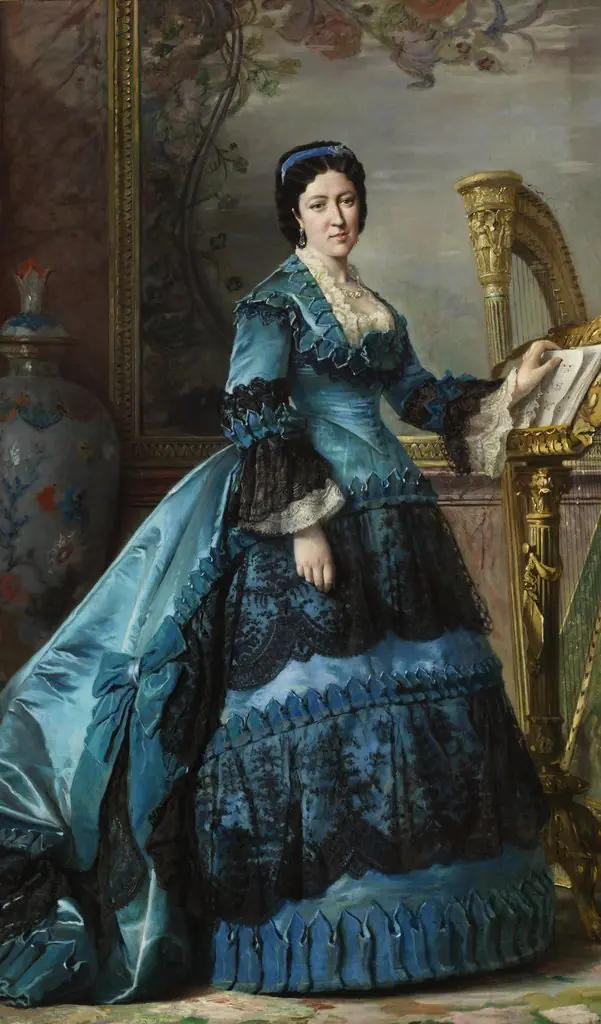 María de los Dolores Collado y Echagüe, duchess of Bailén
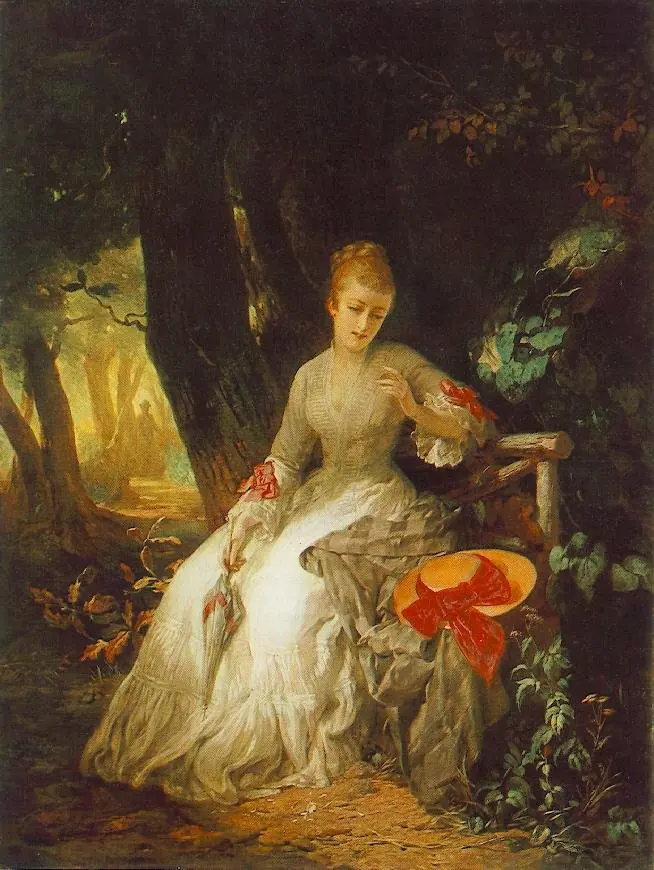 Randezvous
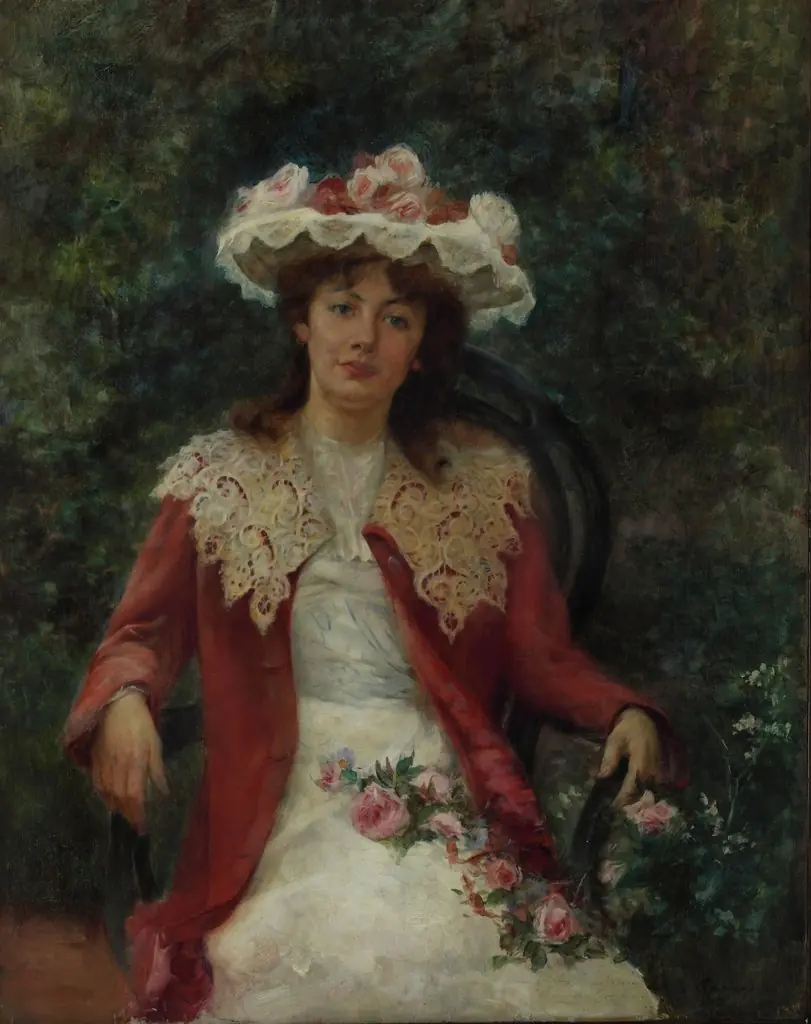 In the Garden
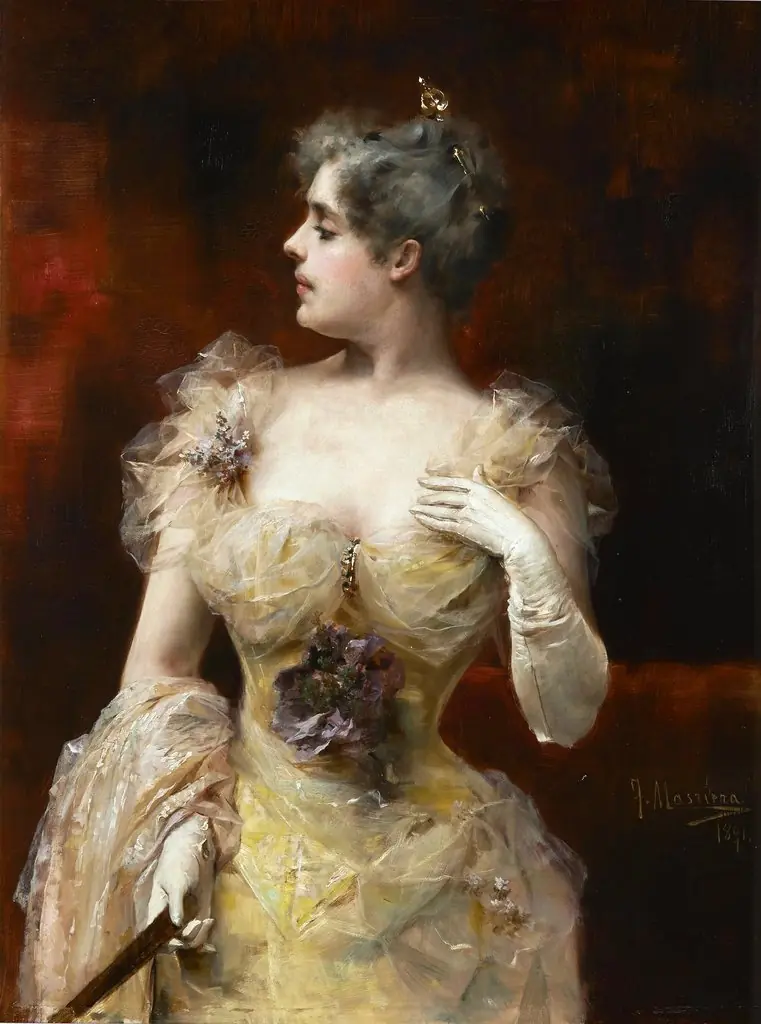 La ofendida
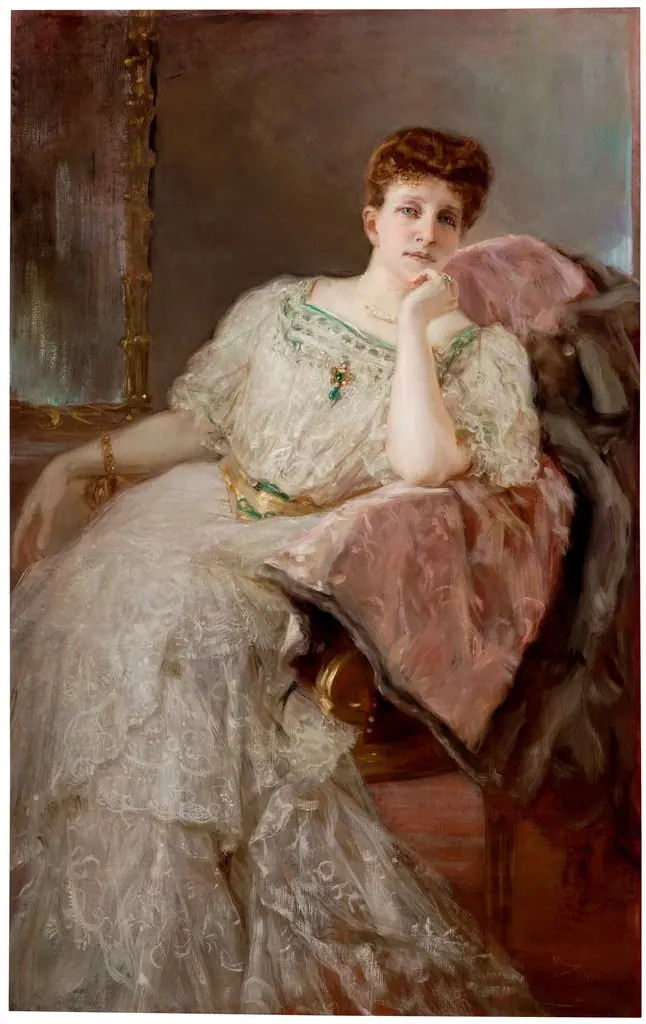 Matilde Noever de Vogel
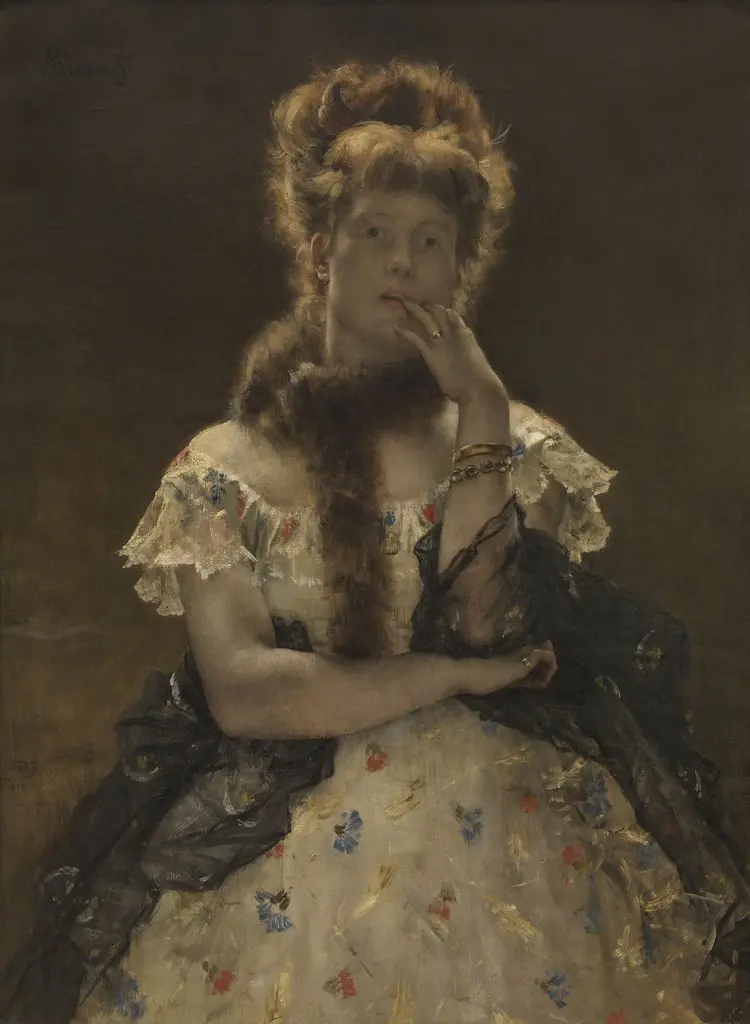 The Parisian Sphinx
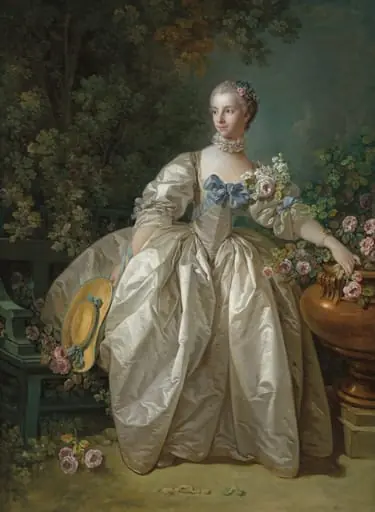 Madame Bergeret
 Portrait of Dora of Leuchtenberg