Artwork
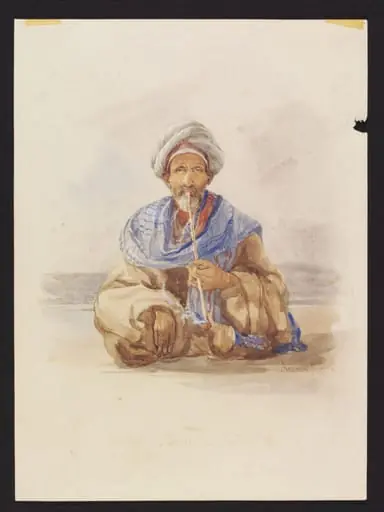
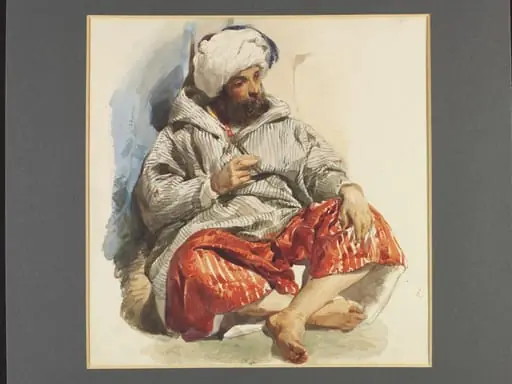
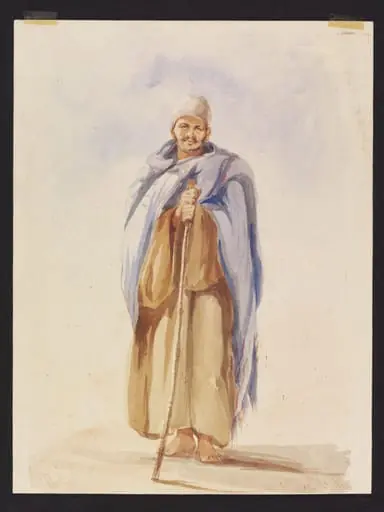
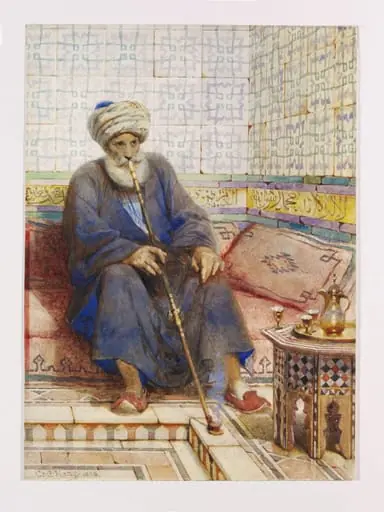
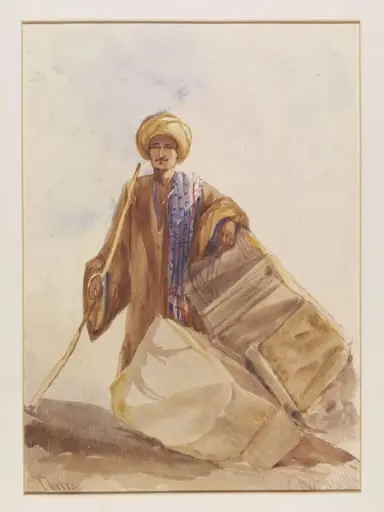
Figure of a Man in Arab dress, seated, holding a spear
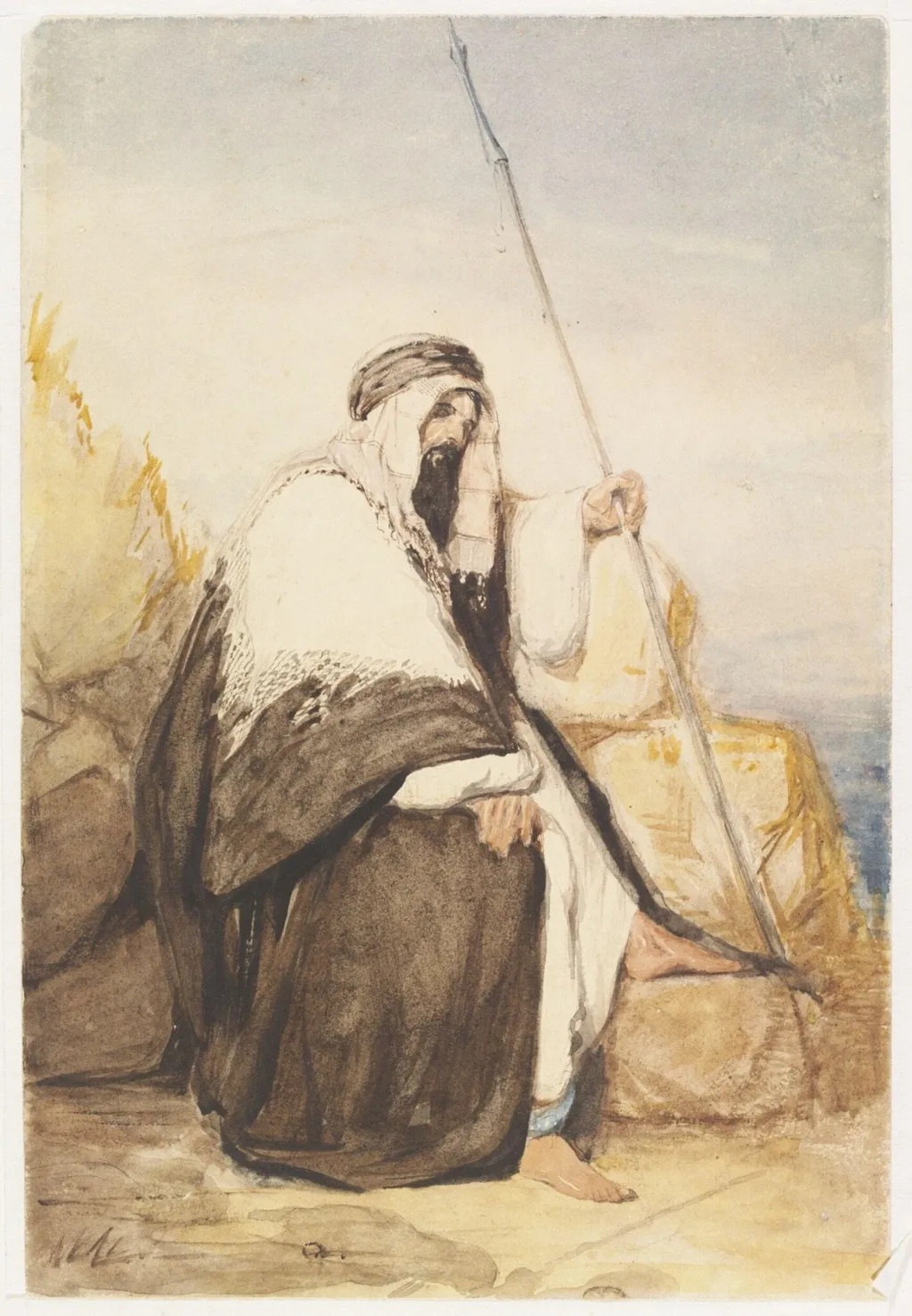
Figure of a Man in Arab dress, seated, holding a spear is a watercolor work on paper by the Impressionist artist Unknown. It dates from 1850 and is held in the collection of the Victoria and Albert Museum. This watercolour depicts a seated Arab man in traditional dress, holding a raised spear.
About this work
Overview
This watercolour depicts a seated Arab man in traditional dress, holding a raised spear. Rendered with restrained detail and a muted palette, the composition centers entirely on the figure against a neutral beige background. Subtle shading around the edges suggests spatial depth without distraction, emphasizing stillness and presence over narrative action.
Subject & Meaning
The figure, partially veiled and seated in a posture of quiet readiness, conveys dignity through stillness. The spear, held aloft, implies vigilance or authority rather than aggression. The absence of context or environment focuses attention on personal bearing, suggesting a portrait of individual character rather than a scene from daily life.
Technique & Style
The artist employs delicate watercolour washes to define form, with minimal linework and no heavy outlines. The robe’s folds are suggested through tonal shifts, while the white undergarment contrasts subtly against darker fabric. The restrained use of colour and soft edges align with observational realism, avoiding embellishment or dramatic lighting.
History & Provenance
No documented provenance or exhibition history is available for this work. It lacks signature or date, and its origin remains unattributed. It likely stems from a 19th-century artistic engagement with Middle Eastern subjects, possibly by a European or colonial-era artist working from direct observation or sketches.
Context
During the 19th century, Western artists increasingly depicted figures from the Arab world, often through ethnographic or romanticized lenses. This work diverges from exoticism by focusing on quiet individuality, aligning more closely with emerging realist tendencies that valued truthful representation over idealized stereotypes.
Legacy
Though unsigned and unattributed, the piece contributes to a broader corpus of modest, observational watercolours that documented cultural dress and posture without theatricality. Its quiet composition reflects a shift toward intimate portraiture within travel-based art practices, preserving visual records of everyday presence over spectacle.
Artist & collection

 Domestic Scene
 Giacomo and Cardinal Marco, investing Andrea, Abbot of San Zeno, with his Benefice
 The Nymph of Fontainebleau
 Portrait of a Woman
 Madonna and Child with Saints in the Enclosed Garden
 Venus and Minerva
 Family Group of Four on Sofa
 Wall painting from Room H of the Villa of P. Fannius Synistor at Boscoreale