Artwork
Study for the Pawnbroker's Shop
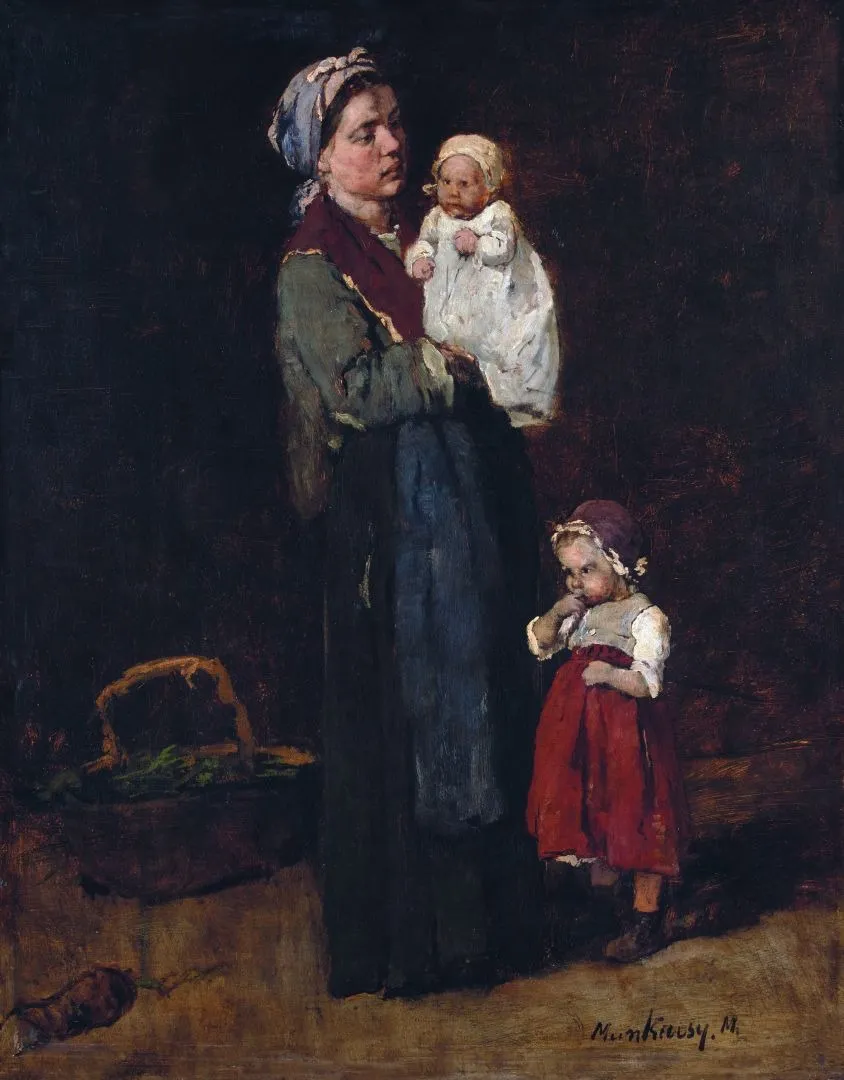
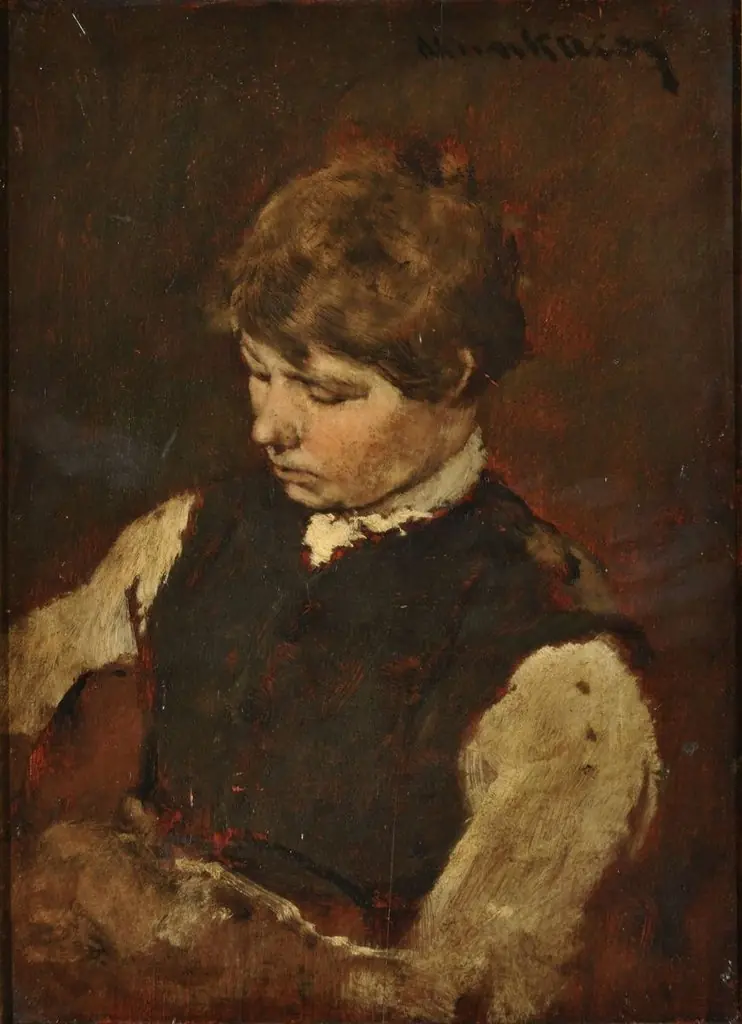
Study for the Pawnbroker's Shop is an oil painting by the Realist artist Mihály Munkácsy. It dates from 1873 and is held in the collection of the Hungarian National Gallery.
About this work
Overview
Created in 1873, *Study for the Pawnbroker’s Shop* is an oil painting by Hungarian realist Mihály Munkácsy. Executed as a preparatory work for a larger composition, it is part of the collection of the Hungarian National Gallery. The piece exemplifies Munkácsy’s focus on everyday interior scenes rendered with meticulous observation.
Subject & Meaning
The canvas presents a domestic interior in which a dark‑clad woman cradles an infant dressed in white, while a young girl in a red dress and headscarf stands nearby. The figures are bathed in gentle illumination, suggesting a moment of quiet reflection and emphasizing the tender bonds among the characters.
Technique & Style
Munkácsy employs a restrained palette and careful chiaroscuro, allowing the warm, soft light to model the figures against a deep, shadowed background. The handling of oil paint captures subtle textures of fabric and skin, while the composition’s tight framing underscores the realist aim of portraying ordinary life with fidelity.
History & Provenance
Originally conceived as a study for a larger painting of a pawnbroker’s shop, the work remained in the artist’s studio before entering the Hungarian National Gallery’s holdings. Its presence in the national collection reflects the importance placed on Munkácsy’s contributions to 19th‑century Hungarian art and the realist tradition.
Artist & collection
Artist
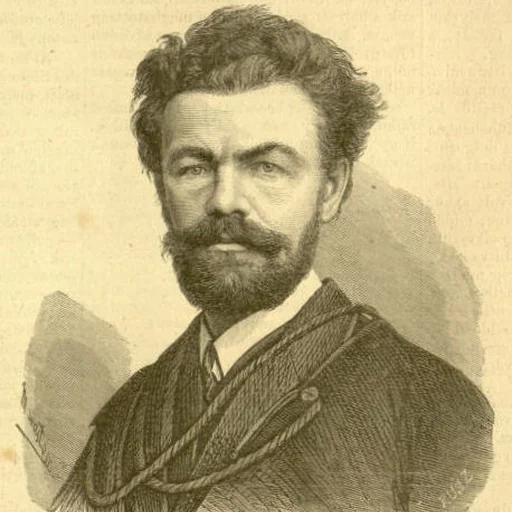
Mihály Munkácsy (Hungarian pronunciation: ; 20 February 1844 – 1 May 1900) was a Hungarian painter. He earned international reputation with his genre pictures and large-scale biblical paintings.

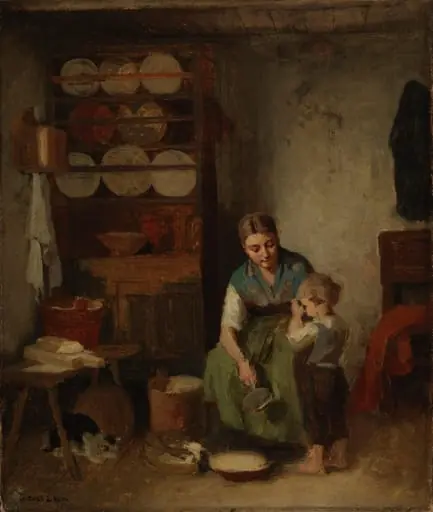 Poika saa maitoa, luonnos I
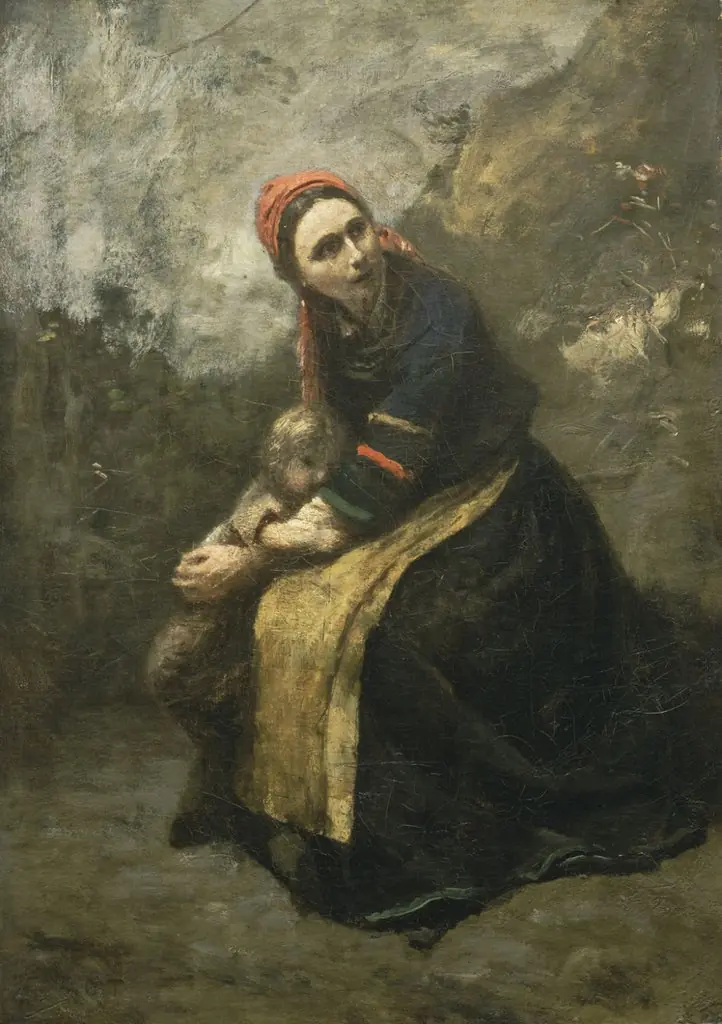 Mother Protecting Her Child
 A Mother with her Child
 Peasant cottage interior
 In front of the Collecting Box
 Poika saa maitoa, luonnos II
 Kunstnerens hustru med to børn
 Mother's Happiness
 Meisje bij een deuropening.
 Kunstnerens hustru med to børn
 The Evening Prayer
 Male Study for the Pawnbroker's Shop