Artwork
Untitled
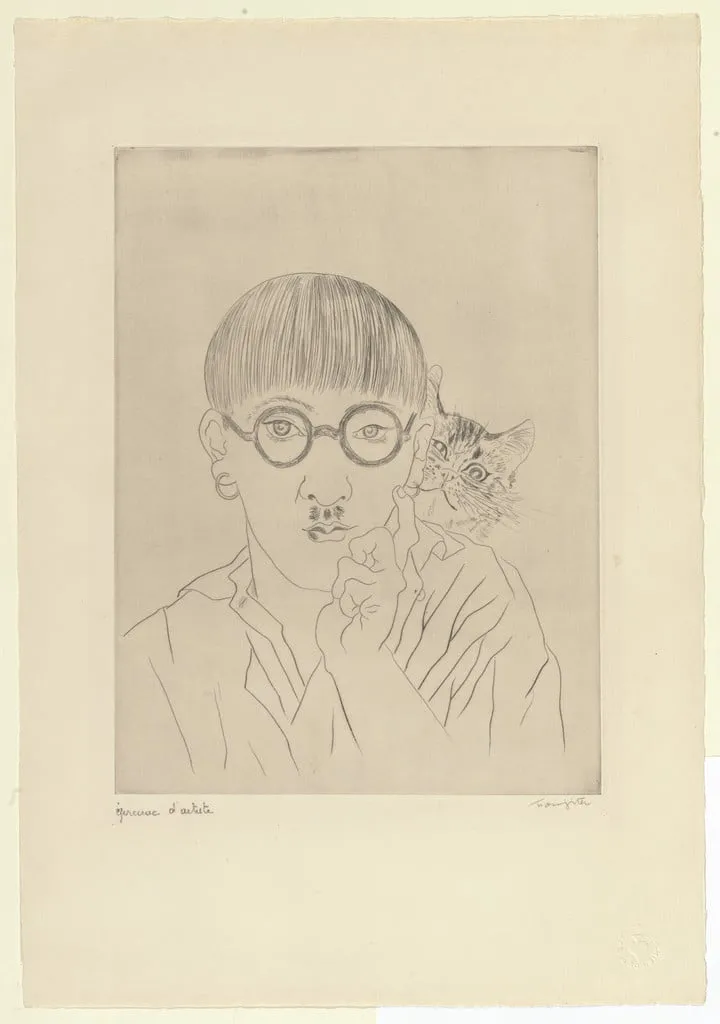
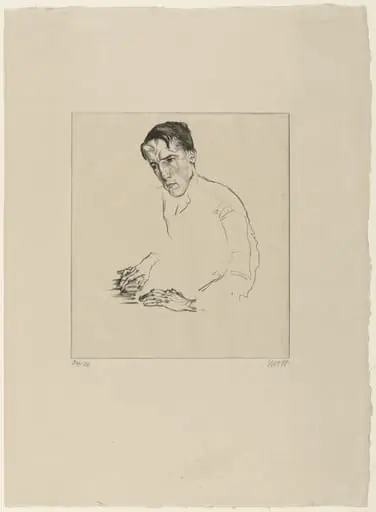
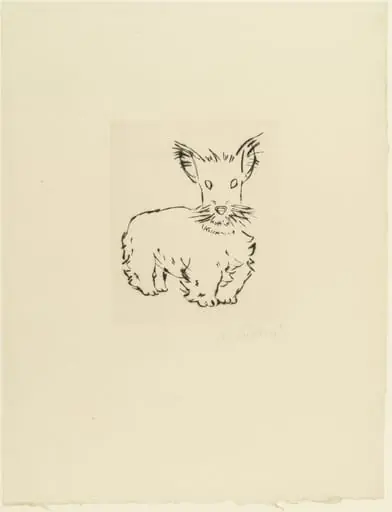
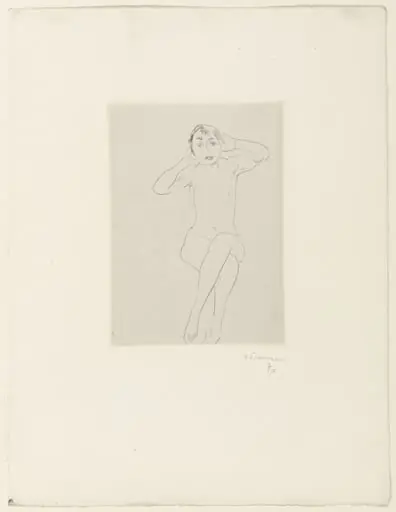
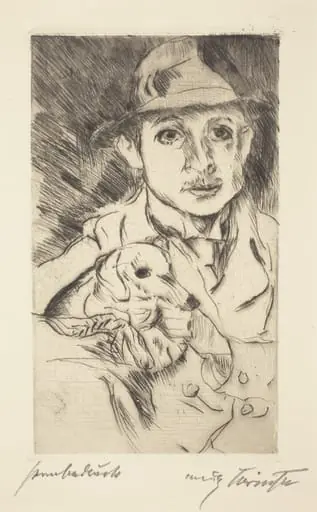
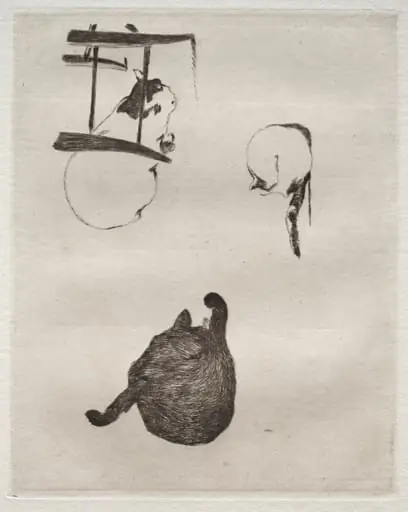
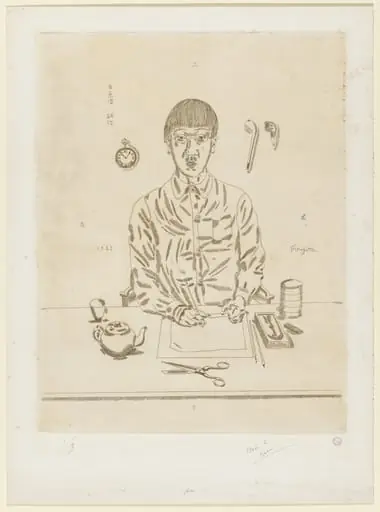
Untitled is an ink print by Léonard Tsuguharu Foujita. It dates from 1927 and is held in the collection of the Museum of Modern Art.
About this work
Overview
The work is part of The Museum of Modern Art’s collection, reflecting its significance in early 20th-century modernist printmaking.
Created in 1927, this drypoint print by Léonard Tsuguharu Foujita is a quiet, intimate portrait rendered in fine, incised lines. The artist, originally from Japan, had settled in Paris by this time and was actively engaging with European printmaking traditions while retaining elements of his cultural background. The work is part of The Museum of Modern Art’s collection, reflecting its significance in early 20th-century modernist printmaking.
Subject & Meaning
The figure, seated with chin resting on fingers, conveys contemplation. A small cat perches on the shoulder, its gaze directed away, adding a subtle sense of detachment. The absence of context or background focuses attention on the quiet interaction between human and animal. The composition suggests introspection, perhaps reflecting the artist’s own position as a cultural observer navigating between worlds.
Technique & Style
Foujita employed drypoint, scratching directly into a metal plate to produce lines that hold ink and print with a soft, slightly blurred edge. The result is a stark contrast between bold black strokes and uninked paper, with no tonal gradations. The precision of the lines reveals his training in both Japanese ink drawing and Western etching, creating a refined, minimalist aesthetic that emphasizes form over atmosphere.
History & Provenance
Foujita produced this work during a period of international acclaim in Paris, where his distinctive style and public persona drew attention across artistic circles. The print was acquired by The Museum of Modern Art in its early years, aligning with the institution’s interest in modern European and transnational artists. Its inclusion in the collection underscores its role in documenting cross-cultural artistic exchange in the interwar period.
Context
In the 1920s, Paris was a hub for artists experimenting with identity and form. Foujita, as a Japanese expatriate, stood apart from both traditional Japanese art and dominant Western modernist trends. His work, including this print, contributed to a broader dialogue about hybridity in art—blending Eastern linearity with Western subject matter, and personal symbolism with universal themes of solitude and companionship.
Legacy
This print exemplifies Foujita’s enduring contribution to modern printmaking through his synthesis of techniques and cultural references. While less known today than some of his contemporaries, his precise, emotionally restrained imagery influenced later generations interested in the intersection of Asian aesthetics and Western modernism. The work remains a quiet but significant artifact of transnational artistic practice in the early 20th century.
Artist & collection
Artist
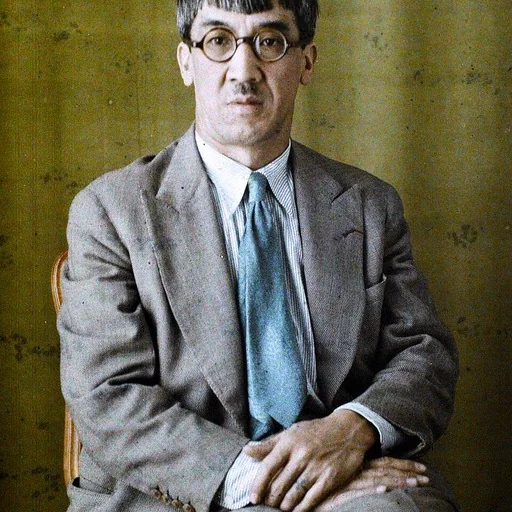
Léonard Tsuguharu Foujita (藤田 嗣治, Fujita Tsuguharu; 27 November 1886 – 29 January 1968) was a Japanese-French painter.