Artwork
Jeune fille au volant (Jeune fille a la raguette)
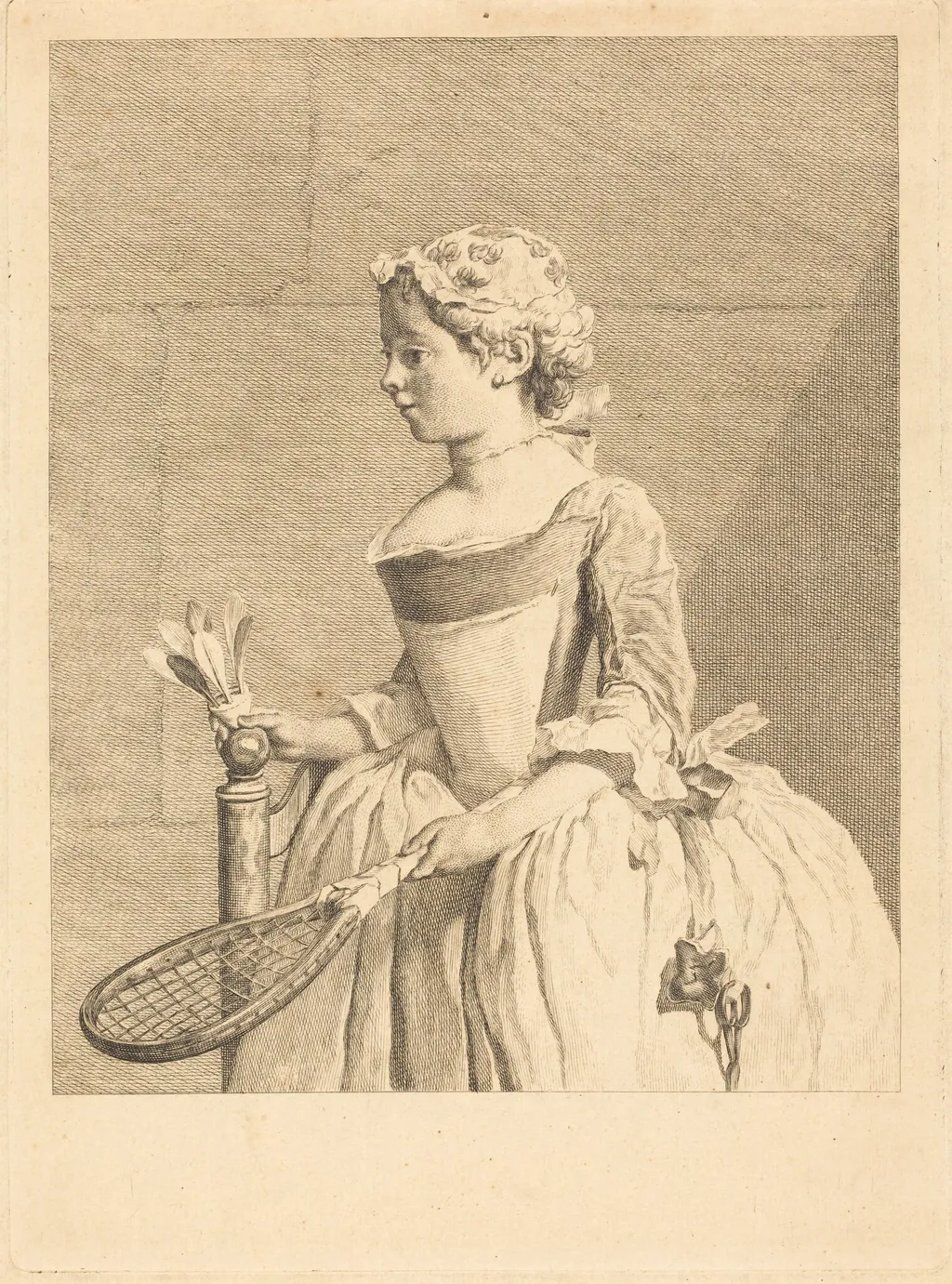
Jeune fille au volant (Jeune fille a la raguette) is an ink print by the Baroque artist Bernard Lépicié. It dates from 1742 and is held in the collection of the National Gallery of Art.
About this work
Overview
The work depicts a young woman engaged in a light, domestic pastime, rendered with delicate line work typical of 18th-century printmaking.
Created in 1742 by Bernard Lépicié, this engraving is a progress proof, indicating it was made during the printing process to assess the image before final production. The work depicts a young woman engaged in a light, domestic pastime, rendered with delicate line work typical of 18th-century printmaking. Its intimate scale and focused composition reflect the era’s interest in private, genteel activities.
Subject & Meaning
The figure holds a shuttlecock and a racket, suggesting a casual game akin to badminton or a similar indoor pastime popular among women of the French bourgeoisie. Her downward gaze and subtle smile convey quiet concentration, not performance. The absence of a setting emphasizes her personal moment, framing leisure as a refined, inward experience rather than a public spectacle.
Technique & Style
Lépicié employed fine, controlled engraving lines to model form and texture, using hatching and cross-hatching to suggest the folds of fabric and the softness of hair. The plain background enhances the figure’s presence, while the sketch-like quality of the proof reveals the artist’s hand—lines remain unpolished, capturing the immediacy of the initial impression before final inking.
History & Provenance
As a progress proof, this impression was likely retained by the artist or printer to evaluate tonal balance and detail before issuing the final edition. Few such proofs survive, making this an uncommon record of the print’s development. Its attribution to Lépicié aligns with his known output in portraiture and genre scenes during the 1740s.
Context
In mid-18th-century France, depictions of women in domestic recreation became increasingly common in print culture, reflecting shifting ideals of femininity and leisure. Games like shuttlecock were seen as suitable, modest pursuits for young women, blending physical grace with social decorum. Lépicié’s work fits within this trend, offering a quiet, observational portrait rather than a moralizing narrative.
Legacy
Though not widely reproduced, this proof offers insight into the working methods of French engravers and the visual culture of private life in the Ancien Régime. Its preservation allows scholars to trace the evolution of a single image from initial concept to final print, highlighting the craftsmanship behind seemingly simple genre scenes of the period.
Artist & collection


 Le Jeune Soldat
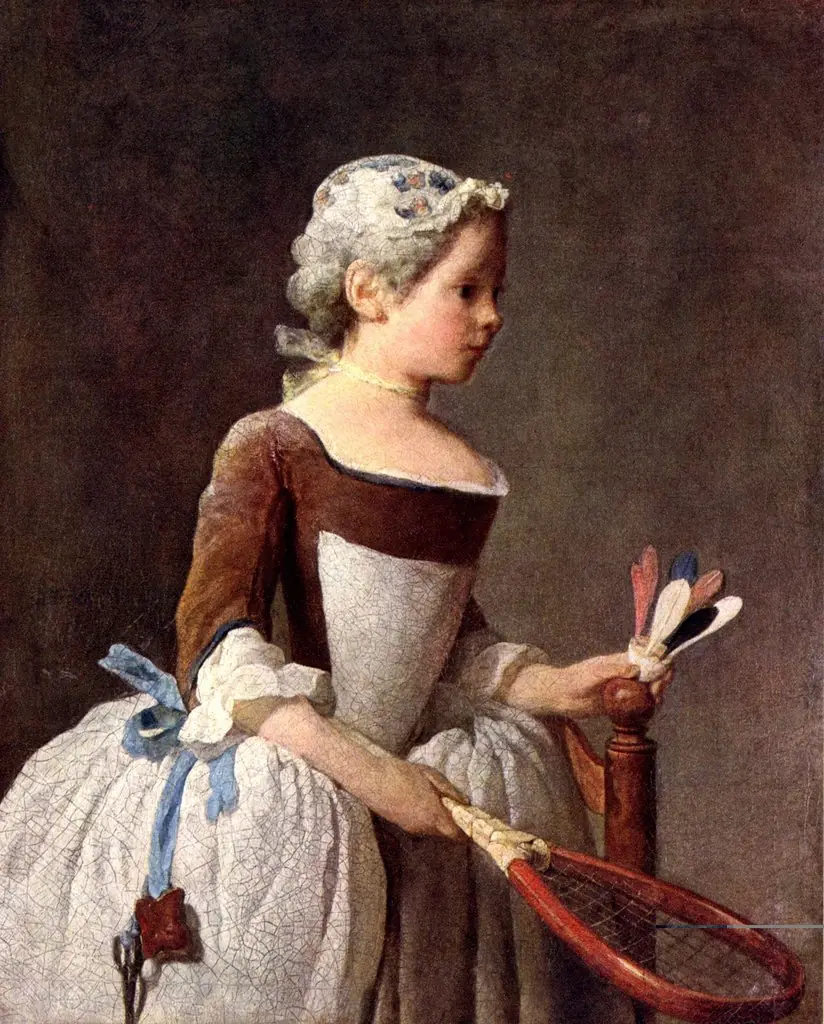 Girl with Racket and Shuttlecock
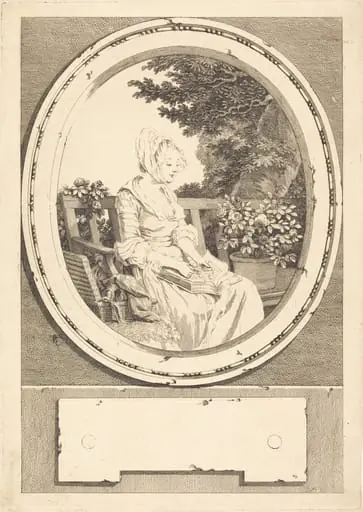 Jusques dans la moindre chose
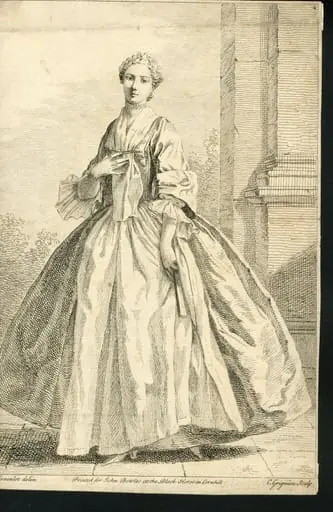 H Beard Print Collection
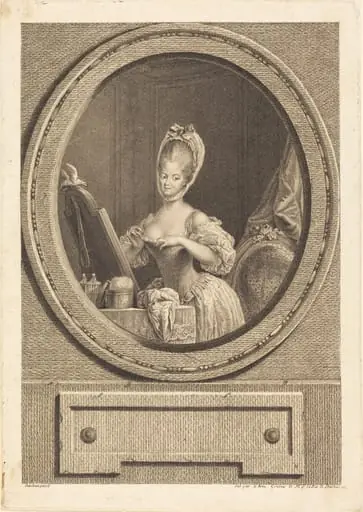 Sa taille est ravissante
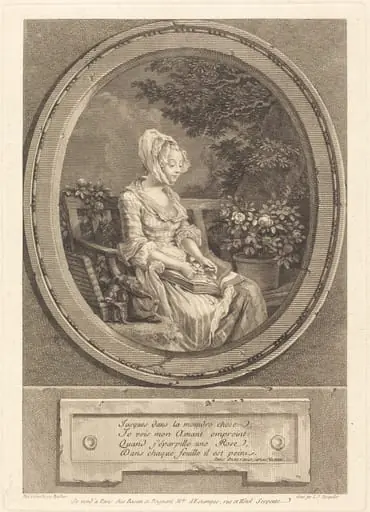 Jusques dans la moindre chose
 Mulier Generosa Gallica
 Standing Young Peasant Woman
 Marton
 H Beard Print Collection
 L'innocence en danger
 Lady Mary Coke, Wife of Edward, Viscount Coke