Artwork
La Maitresse d'ecole
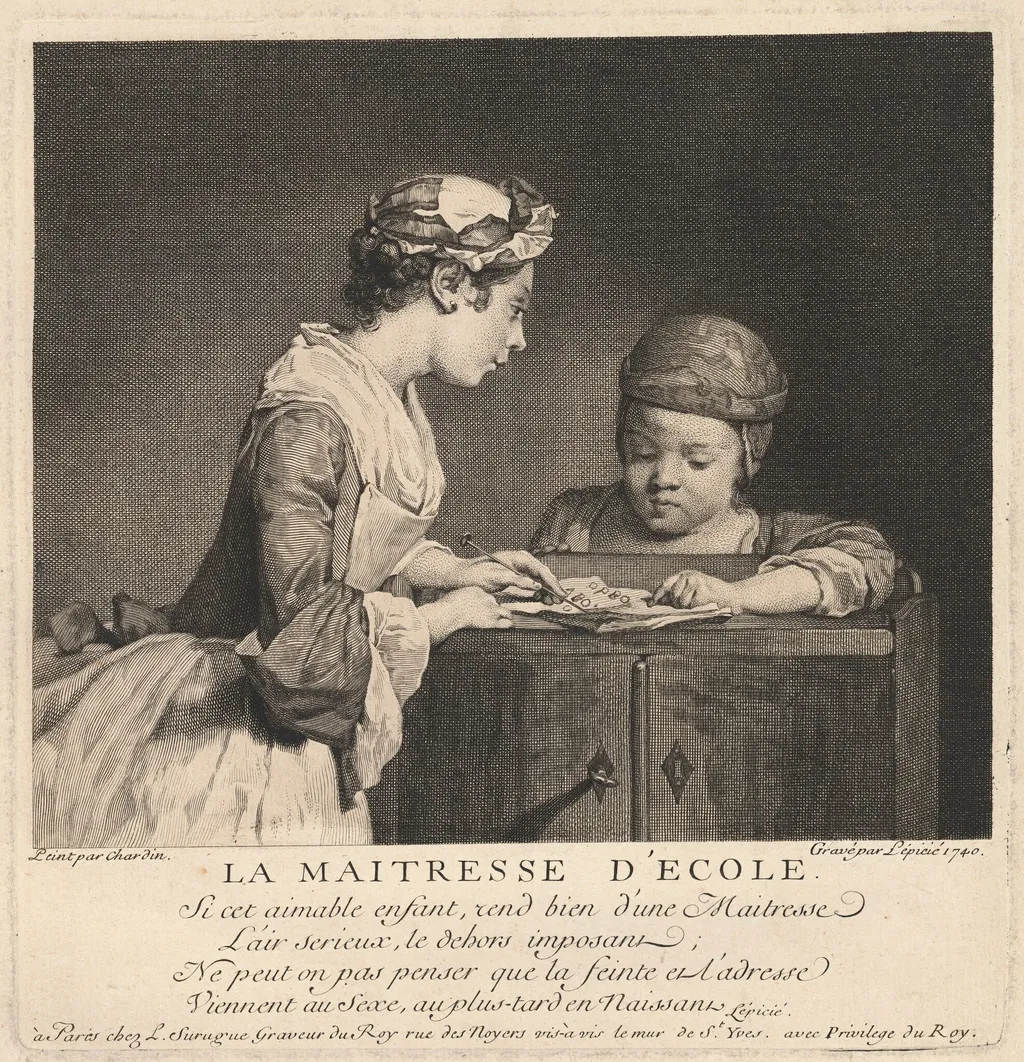
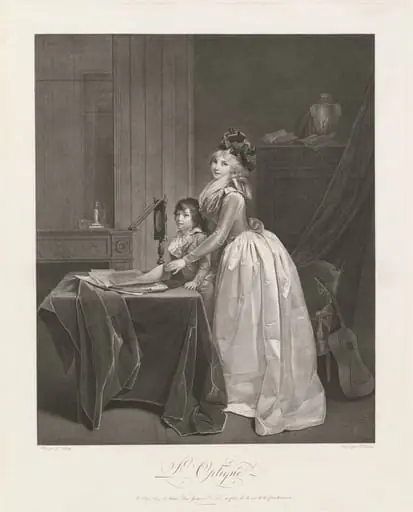
La Maitresse d'ecole is an ink print by the Baroque artist Bernard Lépicié. It dates from 1740 and is held in the collection of the National Gallery of Art.
About this work
Overview
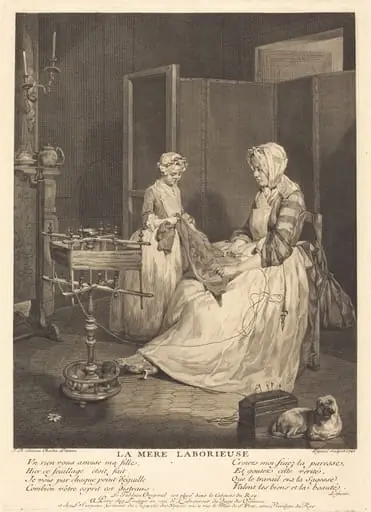
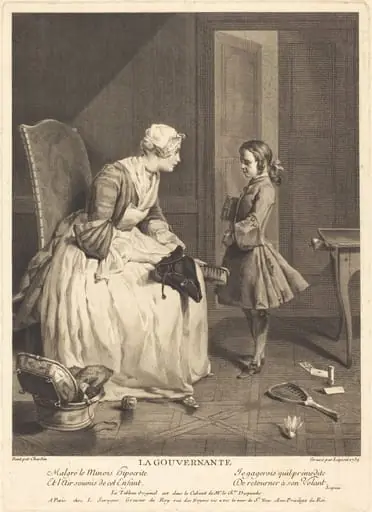
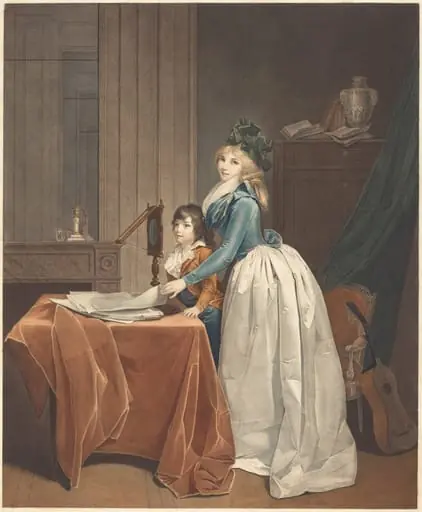
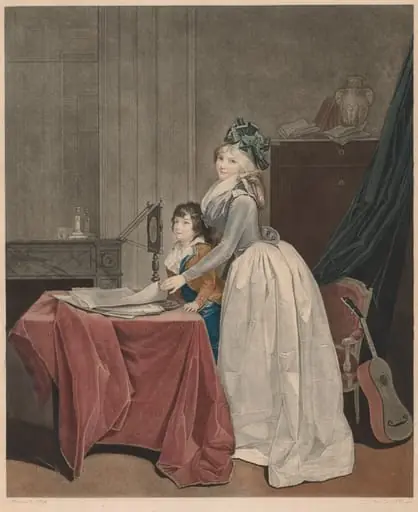
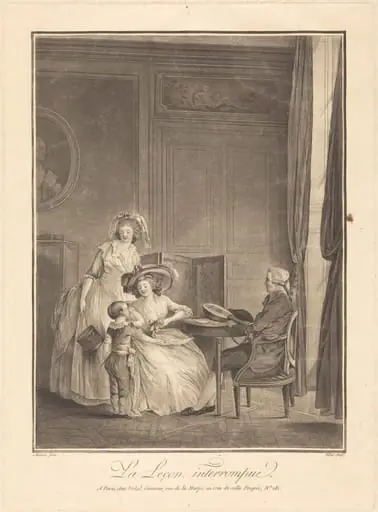
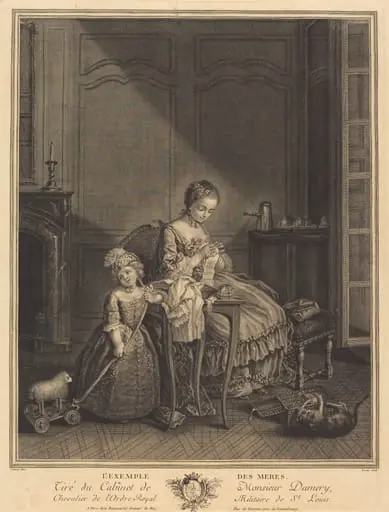
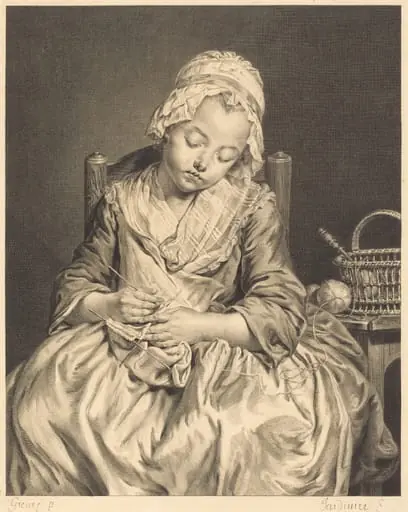
It depicts a quiet moment between a woman and a child at a modest table, rendered with fine linear detail typical of 18th-century printmaking.
La Maitresse d'ecole is a black-and-white engraving produced by Bernard Lépicié in 1740. It depicts a quiet moment between a woman and a child at a modest table, rendered with fine linear detail typical of 18th-century printmaking. The composition is tightly focused, eliminating extraneous elements to emphasize the interaction between the two figures. The work belongs to a tradition of domestic and educational scenes popular in French print culture of the period.
Subject & Meaning
The scene portrays a schoolmistress instructing a young pupil, likely in reading or writing. The woman’s gesture—leaning forward, finger pointing at a text—conveys active teaching, while the child’s attentive gaze suggests absorption. The title and accompanying French inscription frame the moment as evidence of the teacher’s effectiveness, reflecting contemporary values that linked pedagogy with moral discipline and quiet diligence.
Technique & Style
Lépicié employed engraving, a technique involving incised lines on a metal plate inked and pressed onto paper. His use of fine, controlled strokes defines textures in fabric, hair, and paper, while subtle tonal variations model form without shading. The absence of background detail directs attention to the figures’ expressions and gestures, aligning with the restrained aesthetic of French academic printmaking of the mid-18th century.
History & Provenance
Created in 1740, the print was likely produced for a broad audience, as engravings were affordable and widely distributed. Lépicié, active in Paris, often illustrated literary and moral subjects for print publishers. While specific early ownership records are sparse, the work appears in collections of French graphic arts from the late 18th century, suggesting its circulation among educated middle-class households.
Context
In mid-18th-century France, education—especially for girls—was increasingly seen as a moral and social duty. Images of schoolrooms and female teachers appeared in prints and literature, reinforcing ideals of domestic virtue and intellectual cultivation. Lépicié’s engraving reflects this cultural shift, portraying teaching not as labor but as a refined, quiet vocation aligned with Enlightenment values of reason and order.
Legacy
Though not widely exhibited today, La Maitresse d'ecole remains a representative example of French reproductive printmaking from the Ancien Régime. It contributes to the historical record of how pedagogy was visually constructed, offering insight into gender roles and educational ideals. The work is preserved in institutional collections as a document of social history rather than as a singular artistic achievement.
Artist & collection