Artwork
La Comédie de l'amour
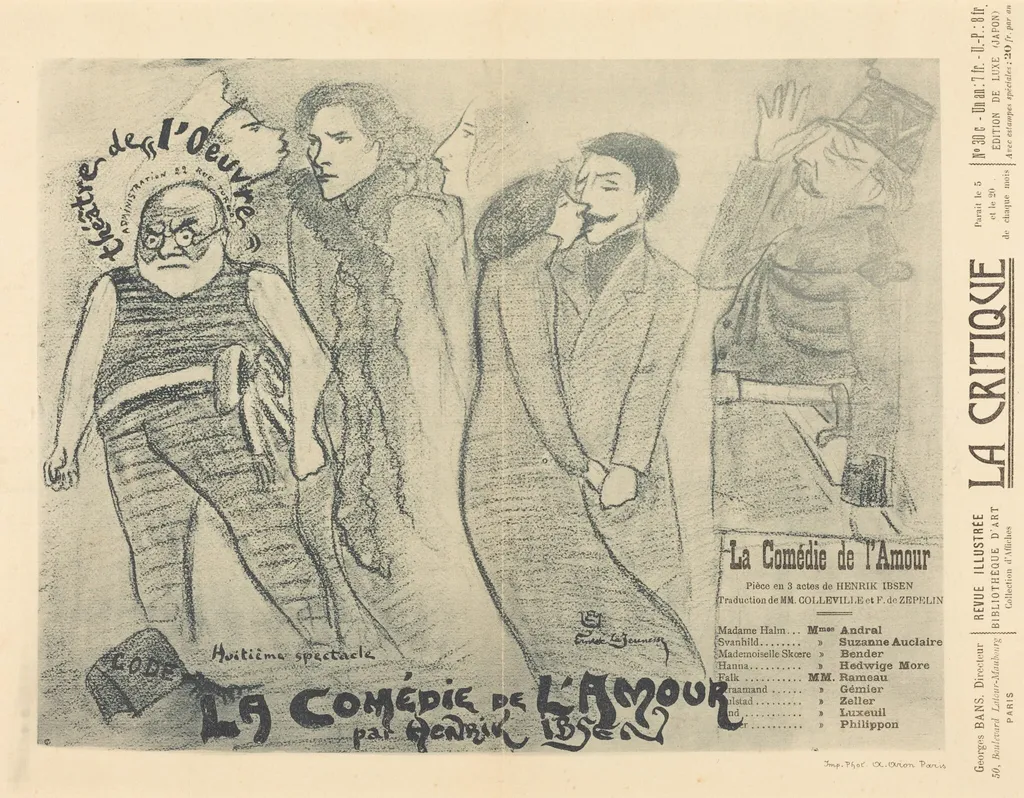
La Comédie de l'amour is a print by the Impressionist artist Ernest La Jeunesse. It dates from 1897 and is held in the collection of the National Gallery of Art.
About this work
Overview
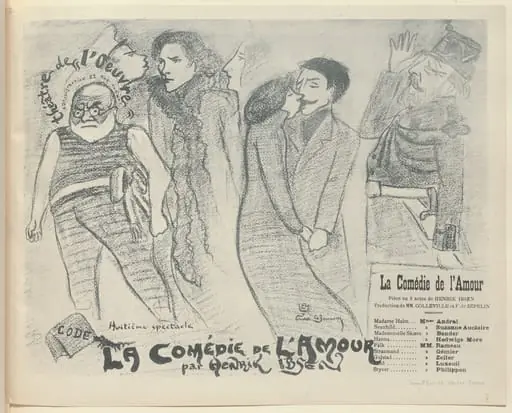
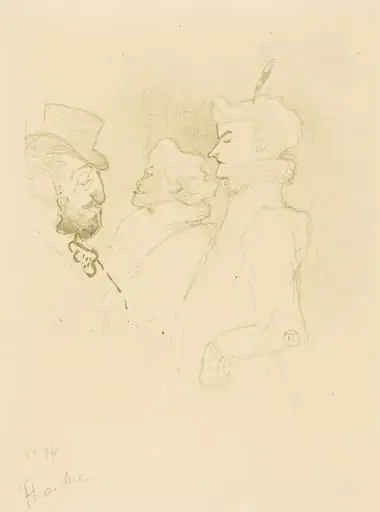
Created in 1897 by Ernest La Jeunesse, this collotype print depicts a theatrical scene from Henrik Ibsen’s play *La Comédie de l’Amour*.
Created in 1897 by Ernest La Jeunesse, this collotype print depicts a theatrical scene from Henrik Ibsen’s play *La Comédie de l’Amour*. Printed in green-black ink on simili-japon paper, it functions as a promotional poster. The composition centers on three performers in stylized poses, with a faint, shadowy figure in the background, suggesting layered narrative tension without literal representation.
Subject & Meaning
The poster illustrates three actors from Ibsen’s drama, each embodying distinct emotional states: one adjusts his glasses with a cane, another stands rigidly with hands on hips, and the third gestures mid-sentence, cigarette in hand. The ambiguous, looming figure behind them introduces an element of unease, reinforcing the play’s thematic blend of romantic idealism and social critique. The exaggerated expressions hint at theatricality rather than realism.
Technique & Style
La Jeunesse employed collotype, a photomechanical process known for fine tonal gradations, to render the scene in muted green-black tones. The use of simili-japon paper, thin and slightly translucent, enhances the delicate contrast between figures and background. Lines are simplified, forms flattened, and details minimized—reflecting Art Nouveau’s decorative tendencies while retaining a sense of theatrical immediacy.
History & Provenance
Produced in 1897, the print was likely commissioned to advertise the play’s performance in Paris. As a poster, it was distributed publicly and may have been displayed briefly before being discarded or archived. Few examples survive, and its current whereabouts are undocumented in public records, though it is occasionally referenced in studies of fin-de-siècle theatrical graphics.
Context
In late 19th-century Paris, theatrical posters merged advertising with artistic expression, often commissioned from illustrators rather than commercial studios. Ibsen’s plays, translated and staged widely, attracted avant-garde audiences. La Jeunesse’s design aligns with contemporaries like Mucha, yet avoids ornamental excess, favoring psychological suggestion over floral decoration, reflecting the play’s modernist tone.
Legacy
Though not widely reproduced, the poster remains a rare example of La Jeunesse’s graphic work and a testament to the intersection of literature and visual culture in Belle Époque France. It contributes to the broader understanding of how Ibsen’s themes were visually interpreted outside the theater, influencing later poster design through its restrained symbolism and emotional ambiguity.
Artist & collection