Artwork
Untitled
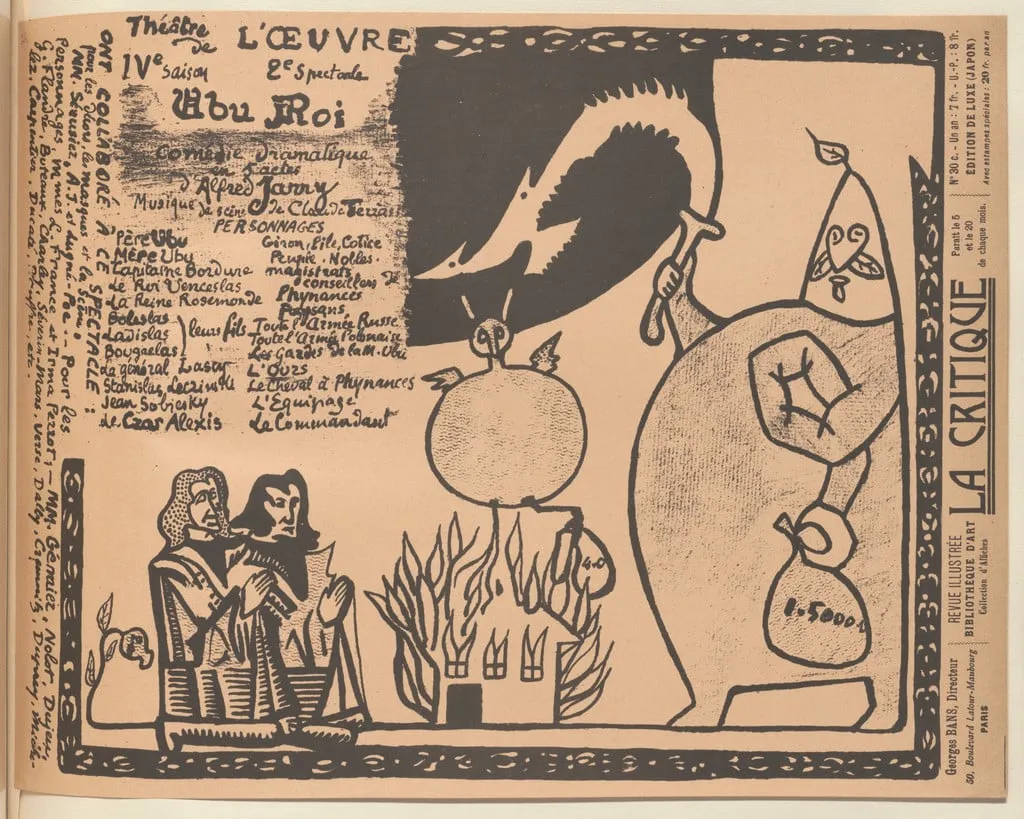
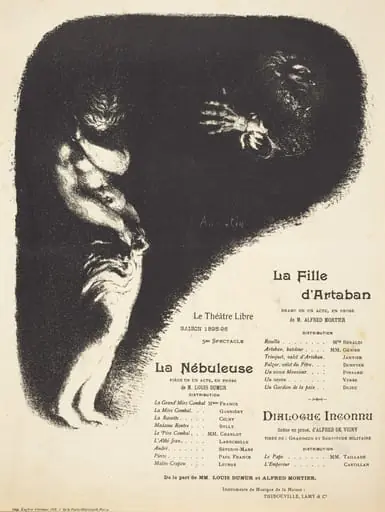
Untitled is an ink print by the Impressionist artist Alfred Jarry. It dates from 1896 and is held in the collection of the Museum of Modern Art.
About this work
Overview
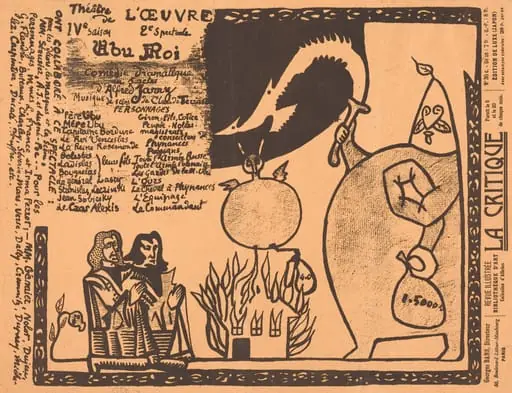
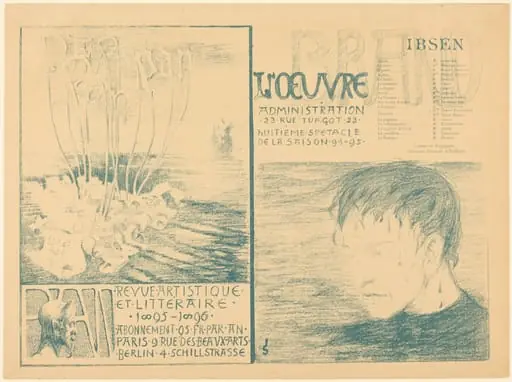
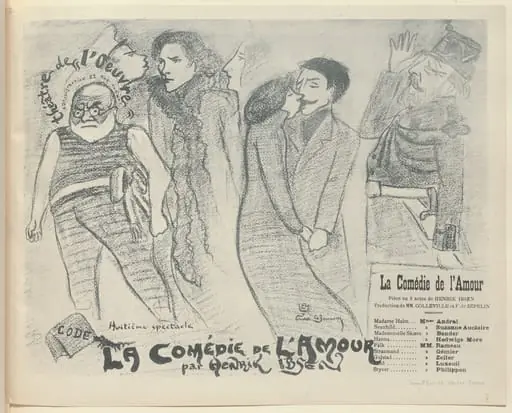
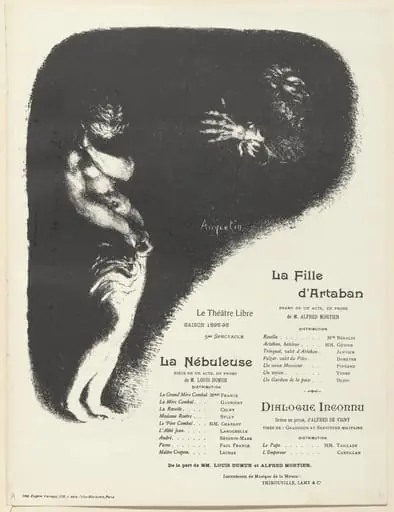
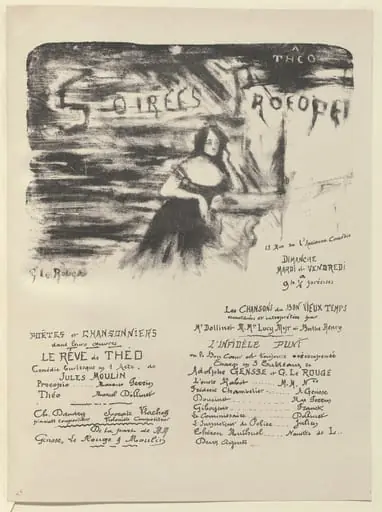
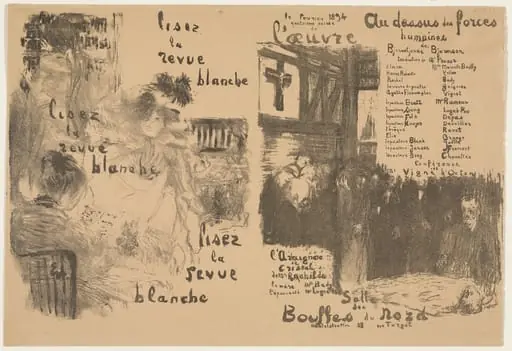
This lithograph, dated 1896, is one of fifty prints in an album by Alfred Jarry. Produced as part of a promotional series for his play *Ubu Roi*, it functions as both an image and a fragment of theatrical advertising. The work is held in the collection of The Museum of Modern Art, where it is recognized for its unconventional visual language and its role in early avant-garde print culture.
Subject & Meaning
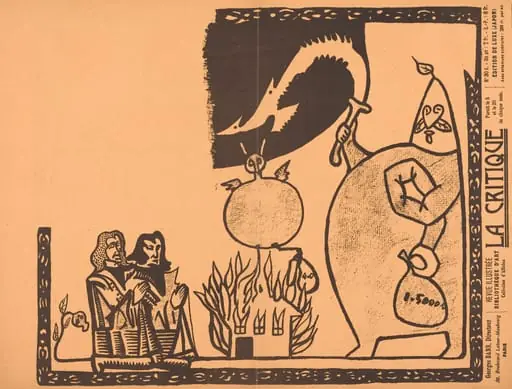
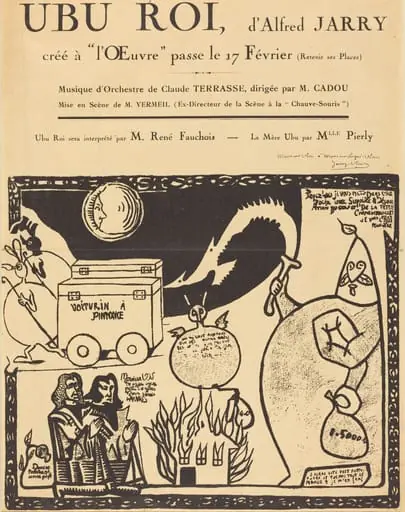
To the right, a massive, distorted head looms over a modest dwelling with a flickering light, suggesting an overwhelming, perhaps absurd authority.
The scene depicts two robed figures on the left, one holding a book, the other leaning as if receiving instruction. To the right, a massive, distorted head looms over a modest dwelling with a flickering light, suggesting an overwhelming, perhaps absurd authority. The presence of names like 'Père Ubu' and 'Mère Ubu' ties the image to Jarry’s grotesque theatrical world, where familial roles are twisted into symbols of chaos and irrational power.
Technique & Style
Executed in lithography, the print uses coarse, energetic lines and smudged tonal areas to create a sense of unease. The background is composed of jagged, irregular shapes that lack spatial coherence, evoking a hallucinatory atmosphere. Text is integrated as a visual element—ticket prices and character names are scrawled like graffiti, blurring the boundary between advertisement and dream imagery.
History & Provenance
Created in 1896 to accompany the premiere of *Ubu Roi*, the lithograph was part of a limited album distributed to generate interest in the controversial play. Its survival in institutional collections, including MoMA, reflects its significance as a rare artifact of Symbolist and proto-Dadaist experimentation. The album’s rarity and Jarry’s limited output in print make this work a key document of his interdisciplinary artistic practice.
Context
Jarry’s work emerged during a period of artistic rebellion against naturalism, aligning with Symbolist and Decadent movements that favored the irrational and the grotesque. *Ubu Roi* itself shocked audiences with its vulgar language and absurd plot, and this print extends that disruption into the visual realm. The integration of commercial text into an eerie scene challenges traditional distinctions between art and propaganda.
Legacy
The lithograph anticipates later surrealist and Dadaist strategies of dislocation and textual intrusion. Its raw aesthetic and thematic defiance of logic influenced artists seeking to dismantle conventional narrative and compositional norms. As one of the earliest visual responses to *Ubu Roi*, it remains a touchstone for understanding the intersection of performance, print, and psychological disturbance in modern art.
Artist & collection

Artist
Alfred Jarry was a French symbolist writer who is best known for his play Ubu Roi (1896), often cited as a forerunner of the Dada, Surrealist, and Futurist movements of the 1920s and 1930s and later the theatre of the absurd in the 1950s…