Artwork
Bas-relief of a figure with bust, vessels and columns in terra cotta
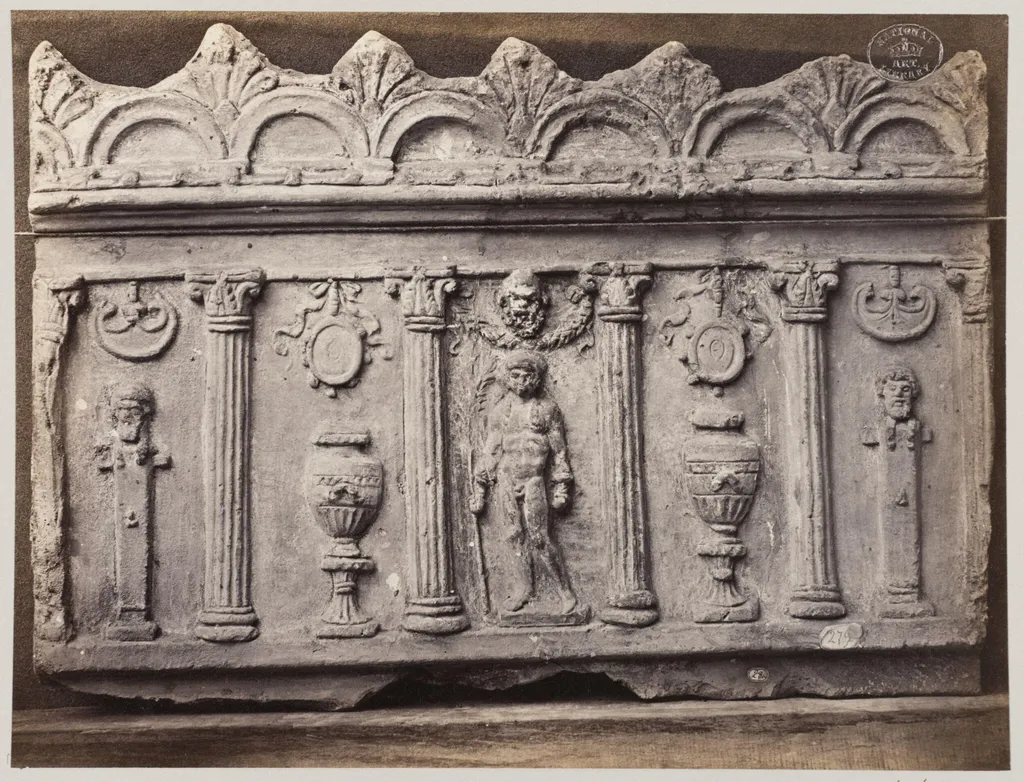
Bas-relief of a figure with bust, vessels and columns in terra cotta is a photographic photography by the Impressionist artist Louise Laffon. It dates from 1864 and is held in the collection of the Victoria and Albert Museum. This photograph, taken in 1863–64, documents a terra cotta bas-relief depicting a figure flanked by vessels and architectural columns.
About this work
This photo is a terra cotta bas-relief from 1863–64 by Louise Laffon. It shows a figure with vessels and columns. It’s a photograph, which might surprise you—it’s rare to see photos from this era.
The Victoria and Albert Museum started collecting photos in 1852. They used them to help artists and students study techniques.
Want to see more early photos? Look up the Victoria and Albert Museum.
Overview
The image was produced by Louise Laffon, a French photographer whose work supported the museum’s mission to expand visual resources for artists and designers.
This photograph, taken in 1863–64, documents a terra cotta bas-relief depicting a figure flanked by vessels and architectural columns. Created as part of the Victoria and Albert Museum’s early photographic archive, it was not intended as fine art but as an educational tool. The image was produced by Louise Laffon, a French photographer whose work supported the museum’s mission to expand visual resources for artists and designers.
Subject & Meaning
The relief portrays a classical composition—likely drawn from ancient Roman or Etruscan sources—with a central human form surrounded by ceremonial vessels and vertical columns. These elements suggest ritual or domestic use, common in antiquity. The photograph preserves the object’s form and detail for study, emphasizing its structural and decorative qualities rather than its original cultural context.
Technique & Style
Laffon employed the albumen print process, common in mid-19th-century photography, to capture fine surface textures and tonal gradations. The composition is carefully framed to highlight the relief’s symmetry and depth, using controlled lighting to reveal carved details without glare. The image’s clarity reflects the technical precision required for museum documentation at the time.
History & Provenance
In 1864, the V&A acquired 500 photographs from Laffon’s series documenting the Campana Collection in Paris, purchased through agent E. Cappe. Laffon, one of the earliest female members of Le Société Française de la Photographie, was commissioned to record artifacts for scholarly use. This photograph entered the museum’s collection as part of that acquisition, later transferred from the National Art Library to the photographic archive.
Context
The V&A, then the South Kensington Museum, began collecting photographs in 1852 to aid artistic education. Staff and students used these images to study form, ornament, and technique across cultures. Laffon’s work was part of a broader effort to supplement physical collections with reproducible visual records, especially for objects inaccessible to British institutions.
Legacy
Laffon’s photographs remain among the earliest systematic visual records of classical antiquities in British collections. Her role as a female photographer in a male-dominated field highlights the often-overlooked contributions of women to institutional scholarship. These images continue to serve as reference material for art historians and conservators studying 19th-century collecting practices.
Artist & collection
Artist
Louise Laffon (1828–1885), was a French photographer and painter. She was one of the first female professional photographers in France. She had a studio in Paris between 1859 and 1876.

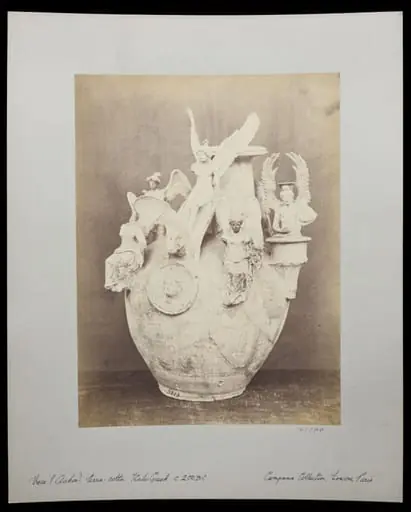 Perfume Burner in terra cotta
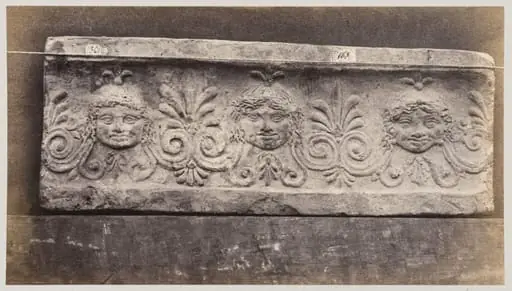 Three masques of gorgons in terra cotta
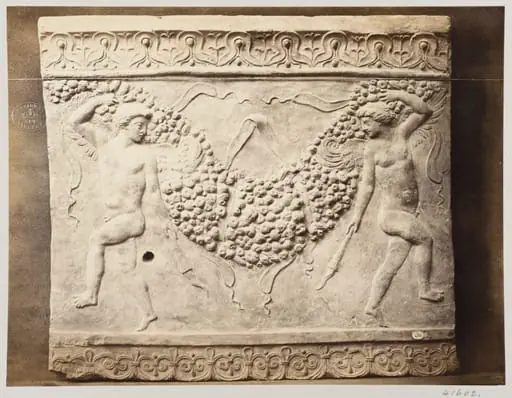 Bas-relief of portion of frieze of dancing figures with torches bearing festoon of fruit in terra cotta
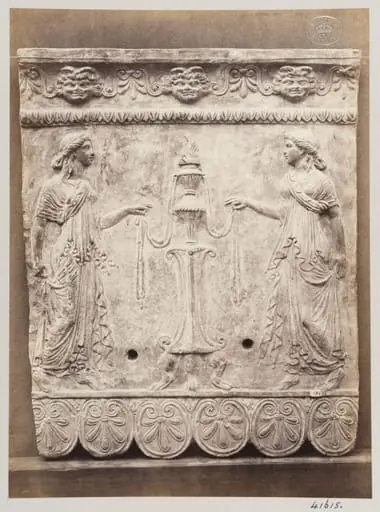 Bas-relief portion of a frieze of two draped females and an altar in terra cotta
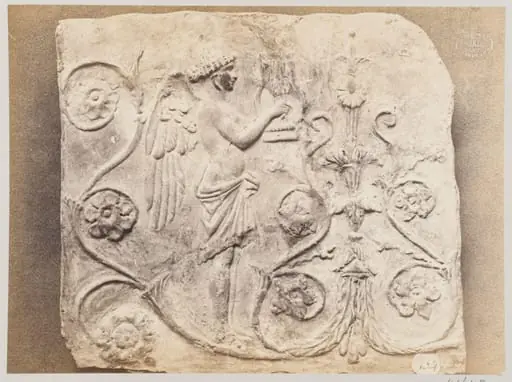 Bas-relief of a geni and a lyre in terra cotta
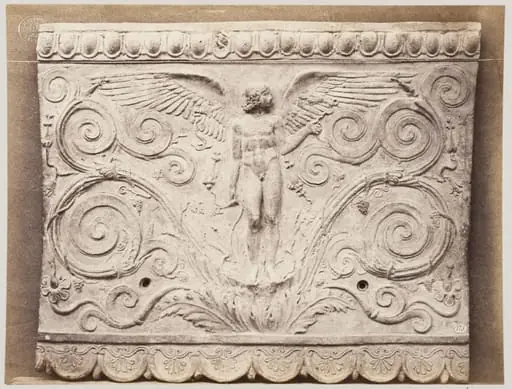 Bas-relief of a portion of frieze of Eros with scrollwork in terra cotta
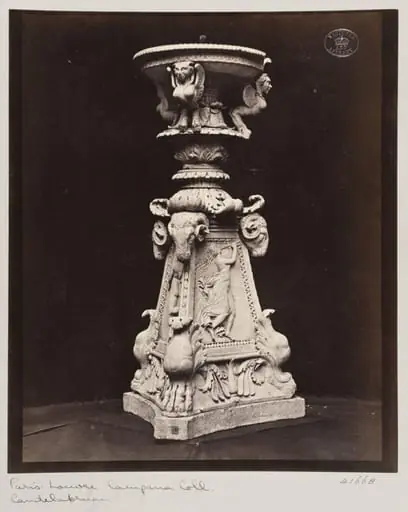 Marble sculptured fountain
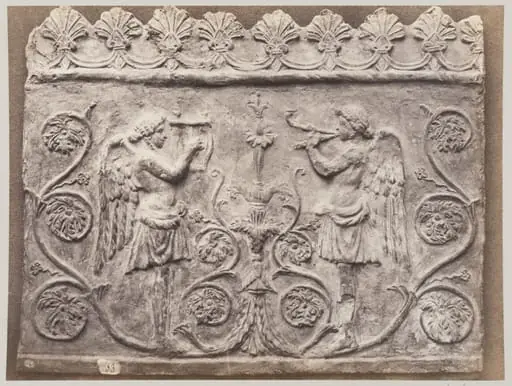 Bas-relief portion of frieze of Genii with double flutes and lyre
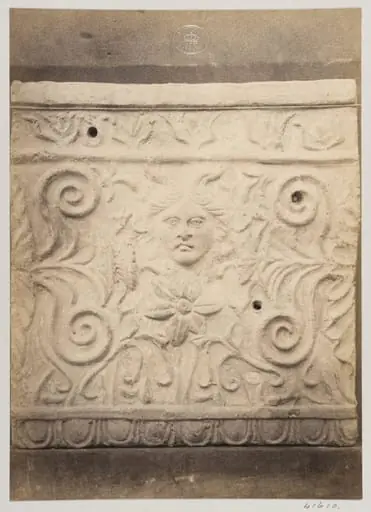 Bas-relief portion of a frieze with a mask in terra cotta
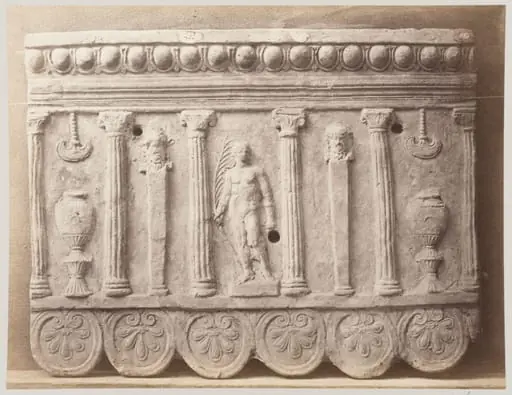 Bas-relief portion of a frieze of Cestiphore conqueror in terra cotta
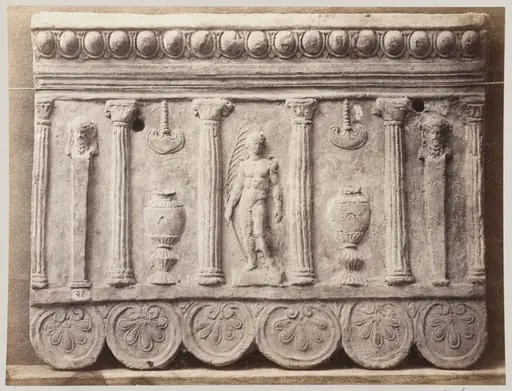 Bas-relief portion of a frieze of Hercules the conqueror in terra cotta
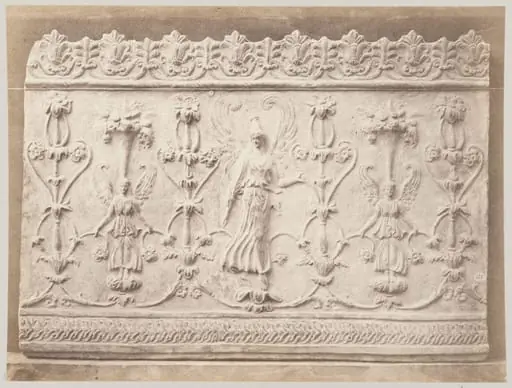 Bas-relief of a portion of a frieze of 'The Victors' in terra cotta
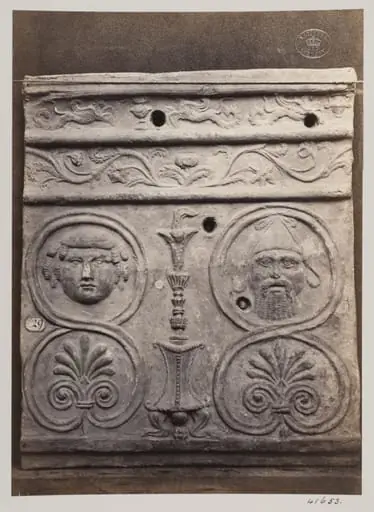 Bas-relief of a portion of a frieze of a thymiaterion and bacanallian masks in terra cotta
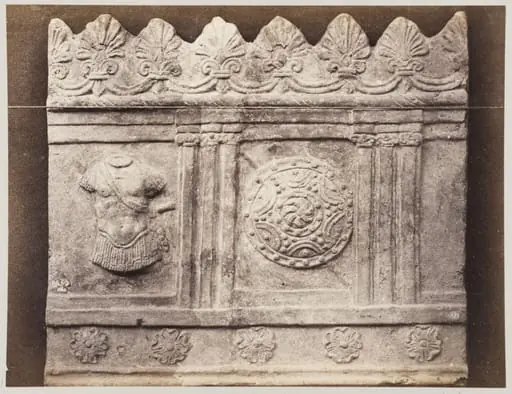 Bas-relief portion of a frieze of with trophies in terra cotta