Artwork
Three masques of gorgons in terra cotta
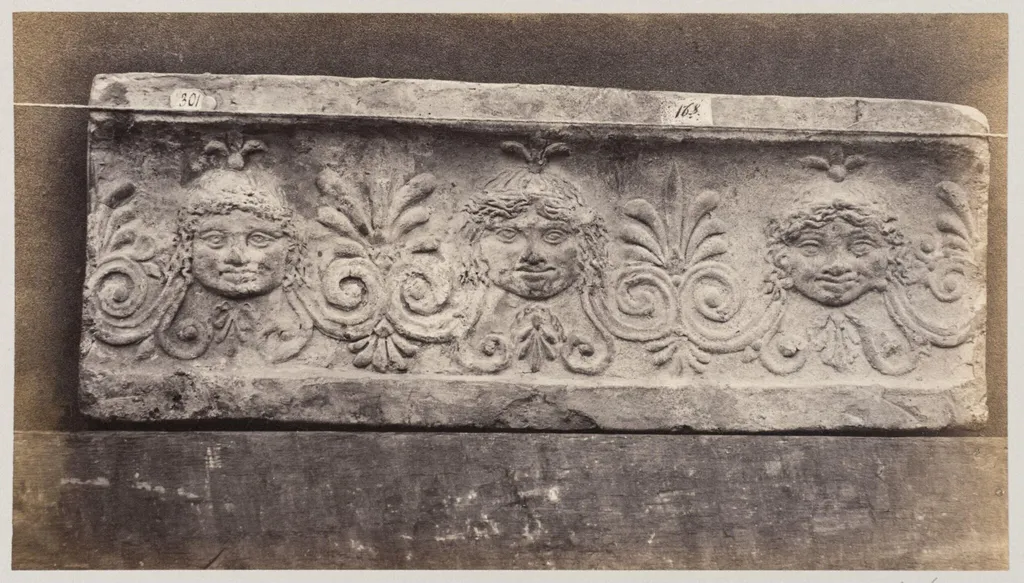
Three masques of gorgons in terra cotta is a photographic photography by the Impressionist artist Louise Laffon. It dates from 1864 and is held in the collection of the Victoria and Albert Museum.
About this work
Louise Laffon took photos of three gorgon masks in terra cotta around 1863-64. Made right as photography was getting popular, this image shows how early photographers mixed art and science.
The Victoria and Albert Museum started collecting photos in 1852 and even displayed them six years later. Henry Cole saw photos as a way for artists and students to learn.
Look up the artist next.
Overview
This photograph, taken around 1863–64 by Louise Laffon, captures three terra cotta gorgon masks from the Campana Collection.
This photograph, taken around 1863–64 by Louise Laffon, captures three terra cotta gorgon masks from the Campana Collection. Acquired by the Victoria and Albert Museum in 1864 through agent E. Cappe, it was one of five hundred images purchased from Laffon’s series. The work reflects the museum’s early commitment to using photography as an educational tool, integrating visual documentation into its mission alongside traditional art objects.
Subject & Meaning
The three terra cotta gorgon masks depict mythological guardians with snarling features, typical of ancient Greek and Etruscan decorative art. Their presence in the Campana Collection signals their value as archaeological artifacts, studied for stylistic and symbolic insight. Laffon’s photograph preserves their form with clinical precision, emphasizing their role as models for artistic study rather than as objects of aesthetic admiration.
Technique & Style
Laffon employed the albumen print process, common in mid-19th-century photographic practice, to produce sharp, tonally rich images. Her composition is direct and unadorned, focusing on the masks’ frontality and surface detail. The lighting is even, minimizing shadow to aid in visual analysis. This approach aligns with the museum’s goal of creating objective records for academic use, blending scientific documentation with artistic reference.
History & Provenance
The gorgon masks originated in the Campana Collection, assembled by Italian nobleman Giampietro Campana and later acquired by Napoleon III’s museum in Paris. Laffon, one of the earliest professional female photographers in France, documented these artifacts in the early 1860s. The V&A acquired her photographs through Monsieur E. Cappe, integrating them into its growing photographic archive, which had been formally established in 1852.
Context
During the 1850s and 60s, the Victoria and Albert Museum, under Henry Cole’s leadership, pioneered the use of photography in art education. Photographs were treated as instructional materials, supplementing casts and drawings. Laffon’s work was part of a broader international network of documentation, where institutions collaborated to build visual archives. Female photographers like her were instrumental yet often unacknowledged in this system.
Legacy
Laffon’s photographs helped establish photography’s legitimacy as a tool for scholarly and administrative purposes within museums. Her contribution, though historically overlooked, exemplifies the quiet but vital role women played in early institutional photography. The V&A’s retention of these images underscores their enduring value as both historical records and artifacts of photographic practice in the 19th century.
Artist & collection
Artist
Louise Laffon (1828–1885), was a French photographer and painter. She was one of the first female professional photographers in France. She had a studio in Paris between 1859 and 1876.

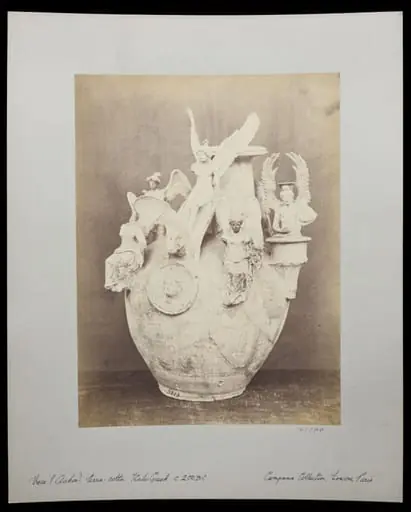 Perfume Burner in terra cotta
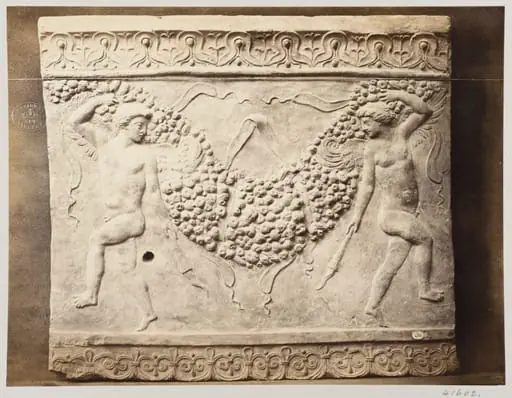 Bas-relief of portion of frieze of dancing figures with torches bearing festoon of fruit in terra cotta
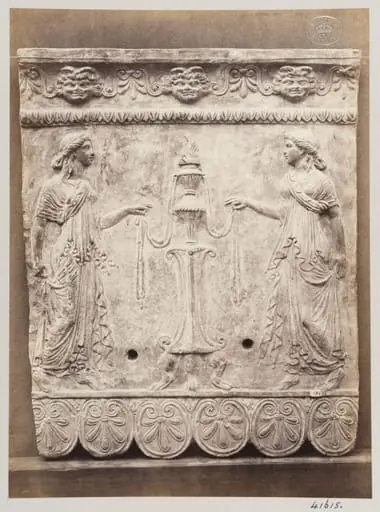 Bas-relief portion of a frieze of two draped females and an altar in terra cotta
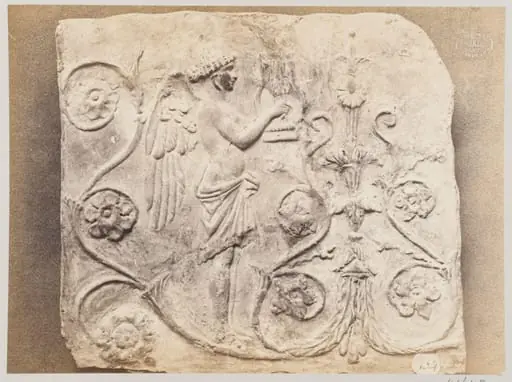 Bas-relief of a geni and a lyre in terra cotta
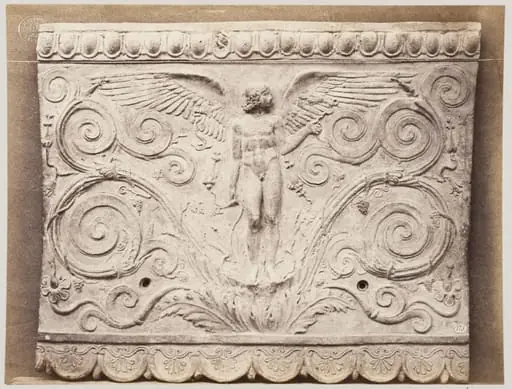 Bas-relief of a portion of frieze of Eros with scrollwork in terra cotta
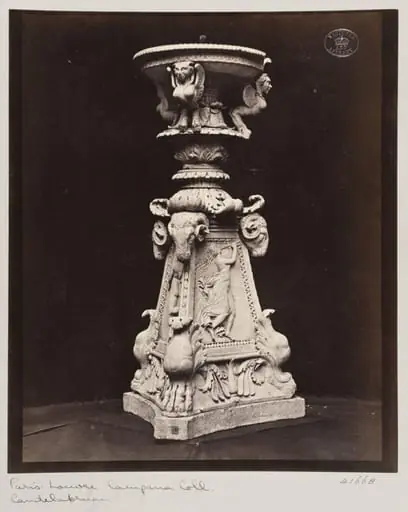 Marble sculptured fountain
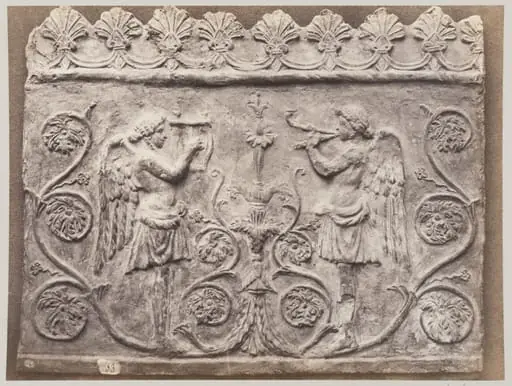 Bas-relief portion of frieze of Genii with double flutes and lyre
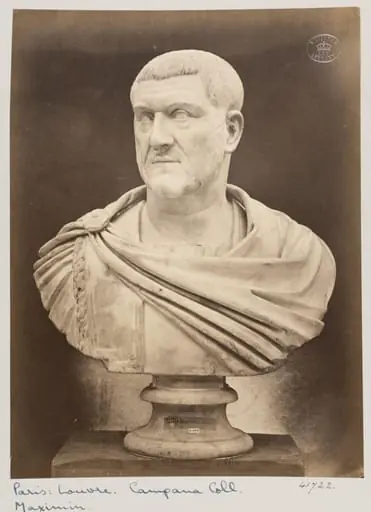 Marble bust of the Emperor Maximian
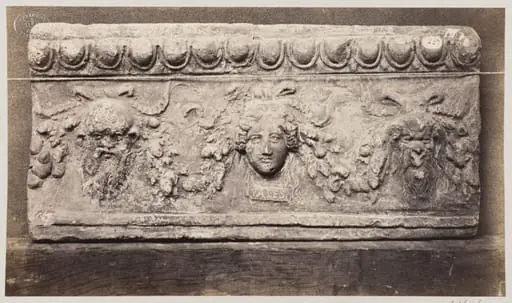 Bas-relief of three baccanalian masques in terra cotta
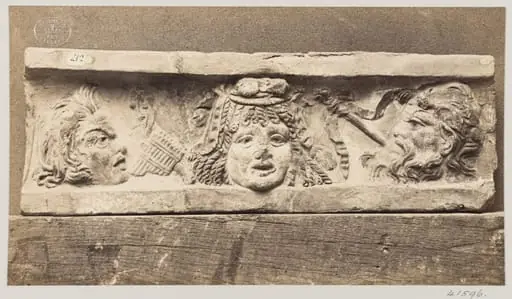 Bas-relief of three masques in terra cotta
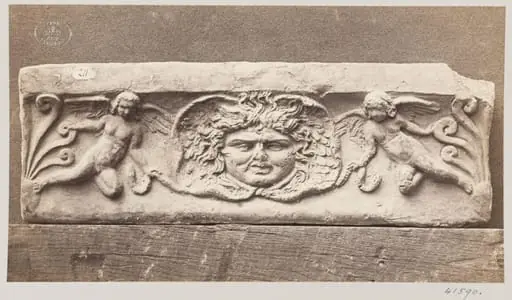 Bas-relief depicting a Gorgon Head in terra cotta
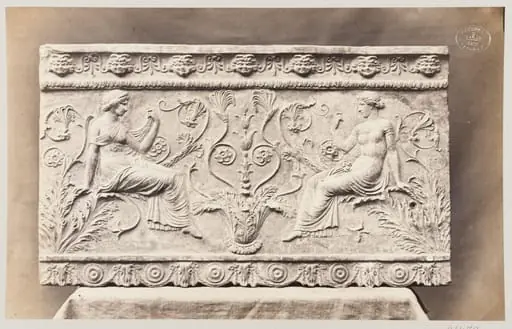 Two female figures seated on foliage ornament, bas-relief in terra cotta
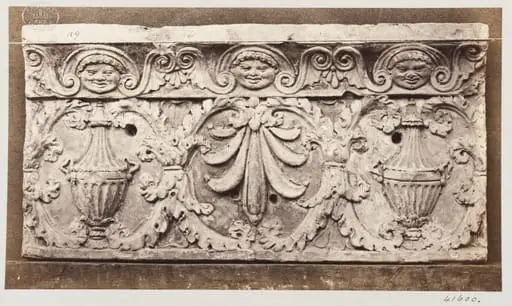 Bas-relief of portion of frieze with acanthus ornament enclosing vases and honesuckle in terra cotta
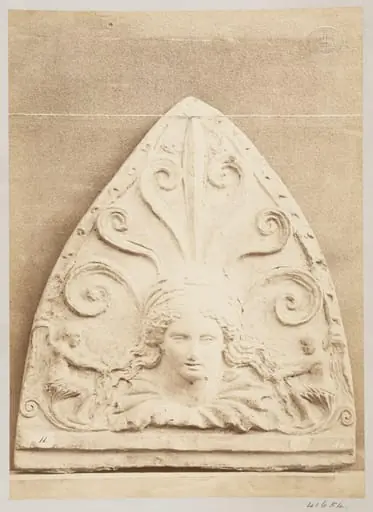 Antifixa of Venus in terra cotta
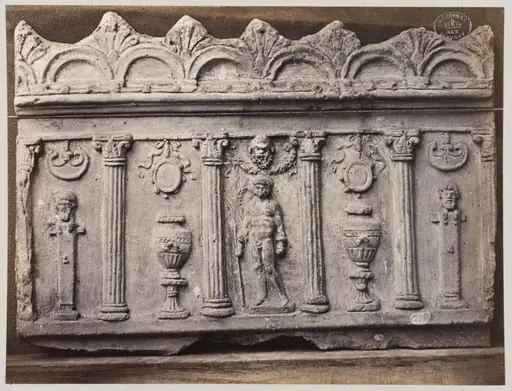 Bas-relief of a figure with bust, vessels and columns in terra cotta
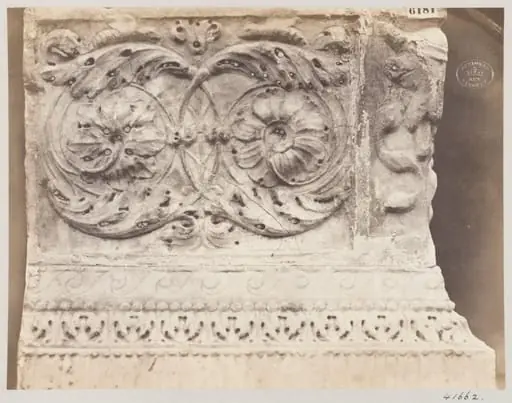 Marble portion of a sacophagus ornamented with bas-relief foliage
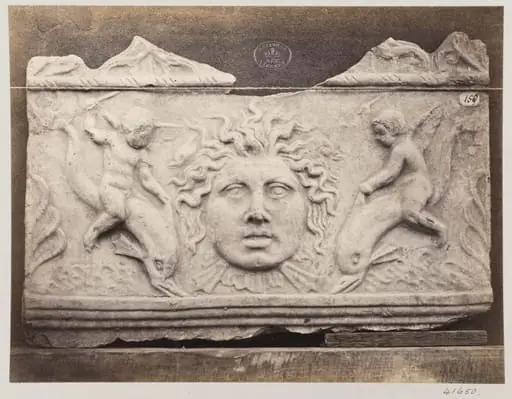 Bas-relief of two sea genies in terra cotta
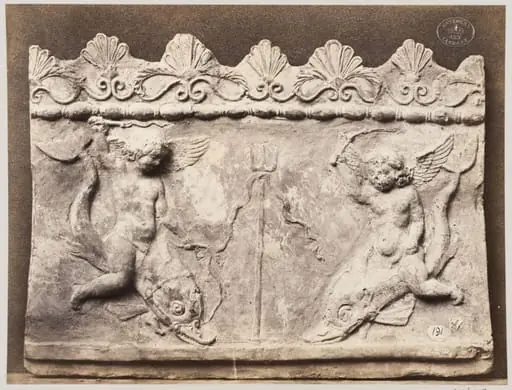 Bas-relief of two figures of Neptune in terra cotta
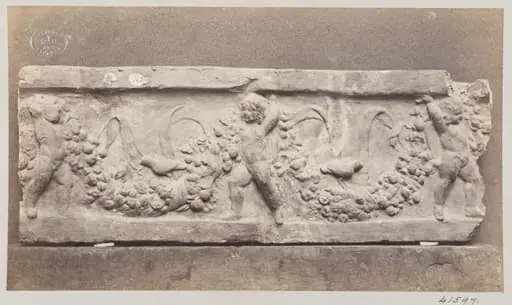 Bas-relief of Cupids with garlands in terra cotta
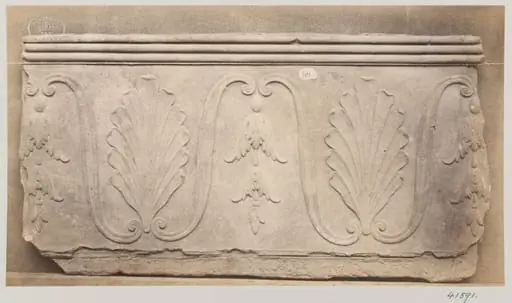 Bas-relief of a portion of a frieze depicting a palmetto and foliage in terra cotta