Artwork
Perfume Burner in terra cotta
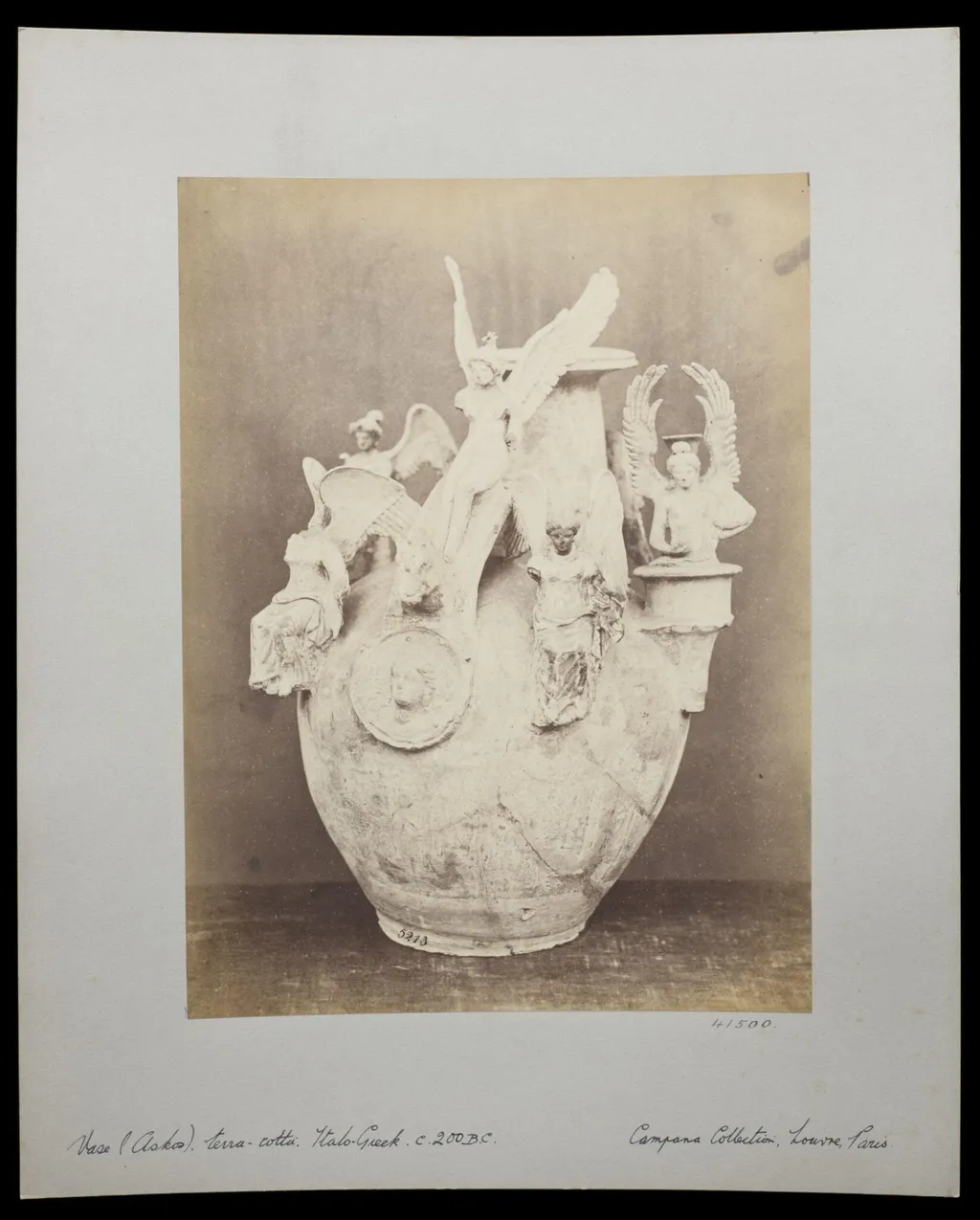
Perfume Burner in terra cotta is a photographic photography by the Impressionist artist Louise Laffon. It dates from 1864 and is held in the collection of the Victoria and Albert Museum. This photograph, taken between 1863 and 1864, captures a terra cotta perfume burner from the Campana Collection.
About this work
Louise Laffon made this photograph in 1863–64. It’s a terra cotta perfume burner in a simple, soft print. Impressionism and Realism shaped how she lit the object.
The V&A opened its doors to photos early. In 1852 it started collecting photos, then in 1858 became the first museum to show them. Henry Cole believed cameras could teach artists and students.
Check out the Victoria and Albert Museum.
Overview
It was acquired by the Victoria and Albert Museum in 1864 as part of a batch of 500 images purchased through Parisian agent E.
This photograph, taken between 1863 and 1864, captures a terra cotta perfume burner from the Campana Collection. It was acquired by the Victoria and Albert Museum in 1864 as part of a batch of 500 images purchased through Parisian agent E. Cappe. The work is one of several produced by Louise Laffon, a French photographer whose contributions to institutional documentation were significant yet historically underrecognized.
Subject & Meaning
The object depicted is a functional ancient vessel, likely used in ritual or domestic settings for burning perfumed materials. Its simple form and muted surface reflect classical Mediterranean craftsmanship. Laffon’s photograph does not idealize the object but presents it as a material artifact, aligning with the museum’s goal of using photography to support scholarly study rather than aesthetic display.
Technique & Style
Laffon employed a soft-focus, tonally restrained approach influenced by emerging Realist and early Impressionist sensibilities. Lighting was carefully modulated to reveal texture without harsh contrast, emphasizing the burner’s clay surface and subtle contours. The print’s delicate gradations suggest a gelatin silver or albumen process, typical of mid-century photographic practice in France.
History & Provenance
The photograph originated in a series documenting objects from the Musée Napoléon III in Paris, now part of the Louvre. Louise Laffon, one of the first women admitted to Le Société Française de la Photographie, produced these images under commission. The V&A acquired them through Monsieur E. Cappe, integrating them into its growing photographic archive, which was then managed by the National Art Library for educational use.
Context
In the 1850s and 60s, the V&A pioneered the use of photography as an educational tool, collecting images to aid artists and designers. While male photographers dominated institutional roles, women like Laffon and Isabel Agnes Cowper contributed significantly to this effort. Laffon’s work exemplifies how European museums relied on independent professionals, especially abroad, to document collections beyond their own reach.
Legacy
Laffon’s photographs helped establish photography’s role in museum scholarship, bridging art history and technical documentation. Though her name faded from institutional memory, her images remain part of the V&A’s foundational photographic holdings. They represent an early, quiet revolution: the use of the camera not for spectacle, but for systematic, pedagogical record-keeping.
Artist & collection
Artist
Louise Laffon (1828–1885), was a French photographer and painter. She was one of the first female professional photographers in France. She had a studio in Paris between 1859 and 1876.

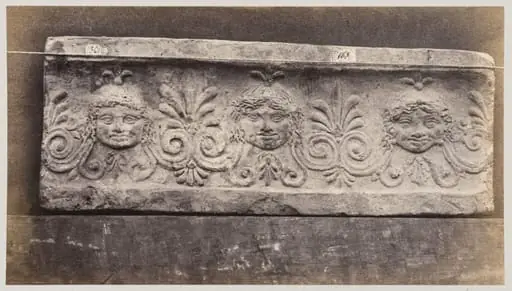 Three masques of gorgons in terra cotta
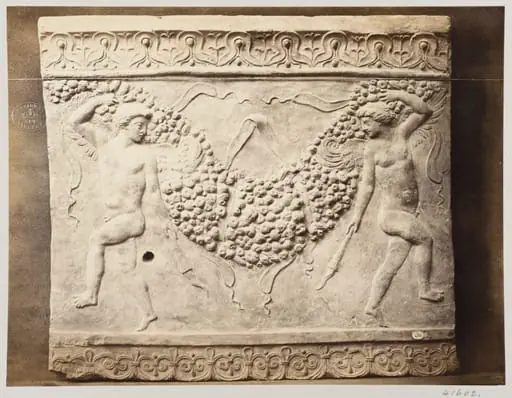 Bas-relief of portion of frieze of dancing figures with torches bearing festoon of fruit in terra cotta
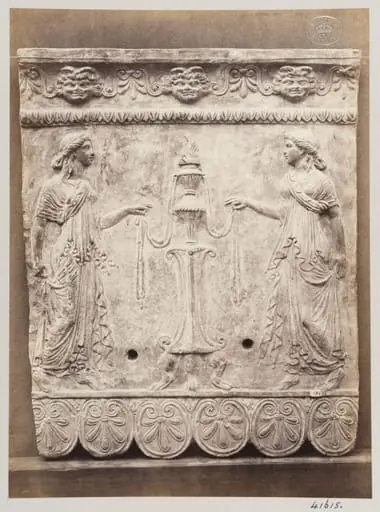 Bas-relief portion of a frieze of two draped females and an altar in terra cotta
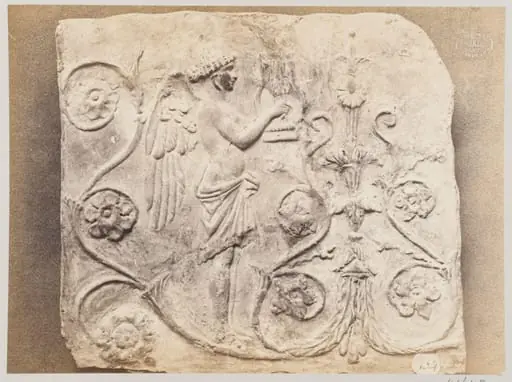 Bas-relief of a geni and a lyre in terra cotta
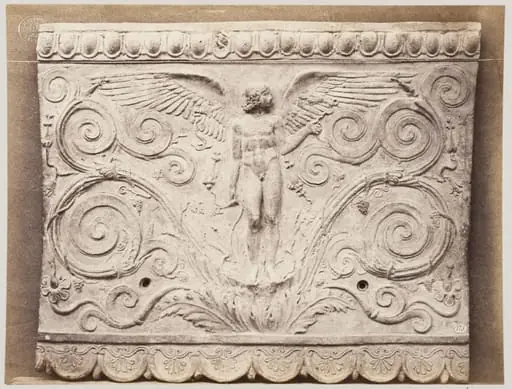 Bas-relief of a portion of frieze of Eros with scrollwork in terra cotta
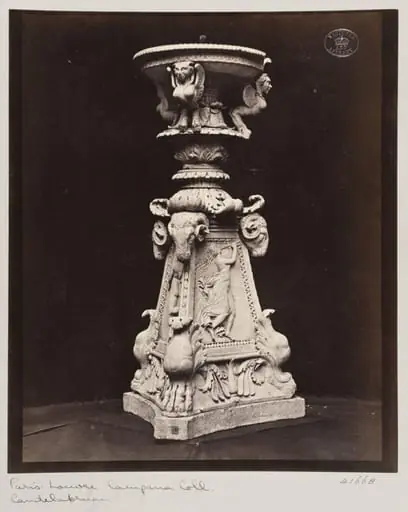 Marble sculptured fountain
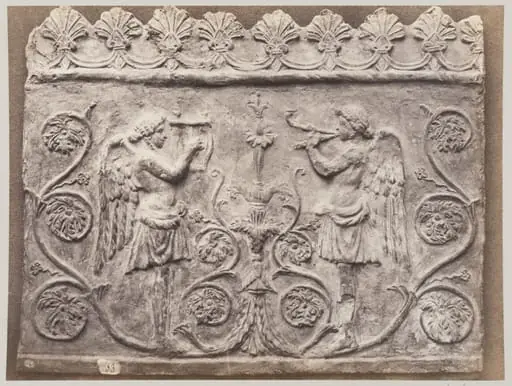 Bas-relief portion of frieze of Genii with double flutes and lyre
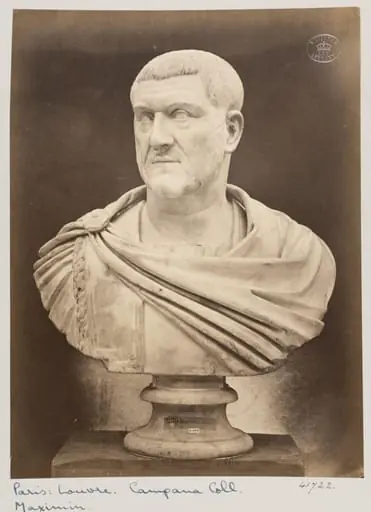 Marble bust of the Emperor Maximian
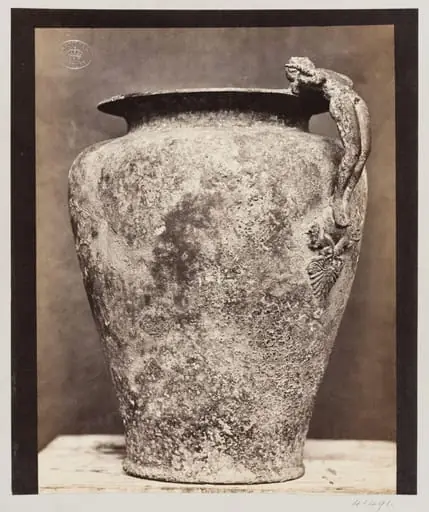 Etrusco-Greek Bronze Vase
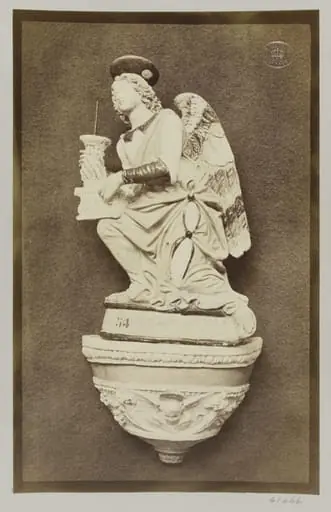 Figure of an Angel holding pricket candlestick by Luca della Robbia Ware
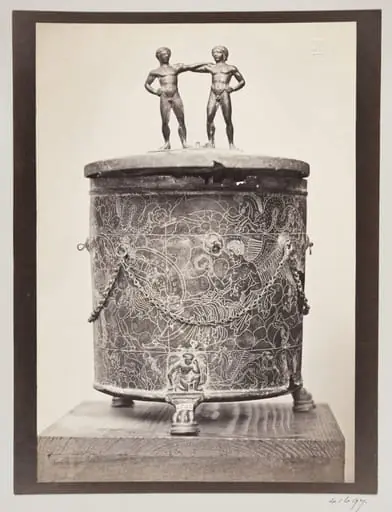 Etruscan cyste in bronze
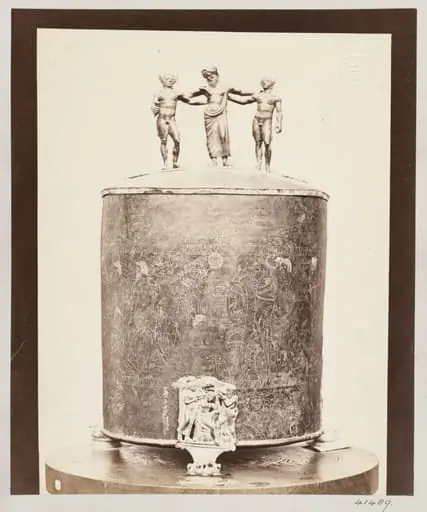 Large Etruscan Cista in bronze
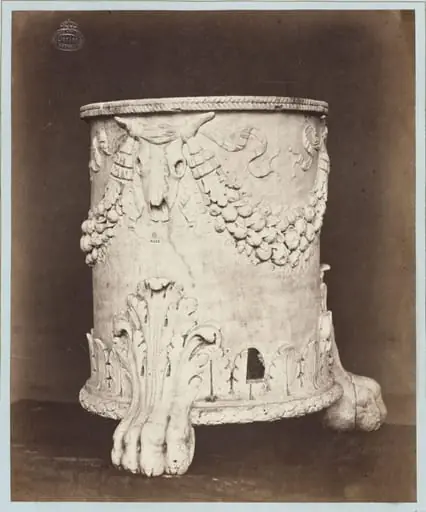 Marble socle ornamented in bas-relief
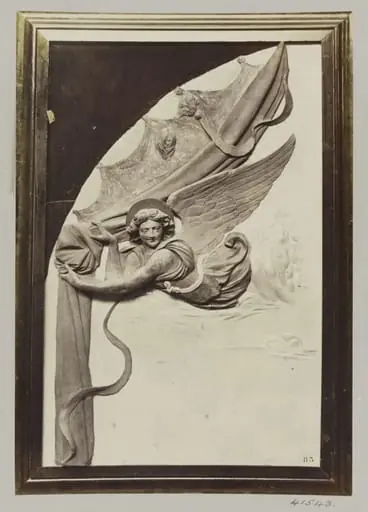 Bas-relief detail depicting an Angel drawing back a curtain in enamelled terra cotta and gilt
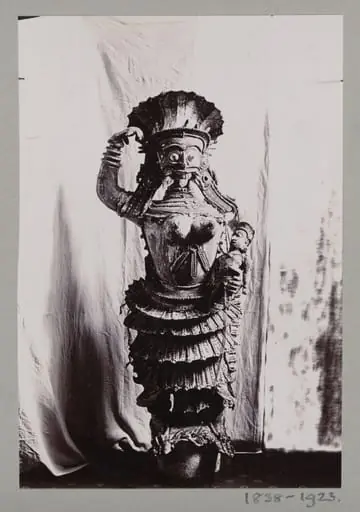 Carved wood sculpture, Goddess, Javanese (?)